Overview
Dry chilli forms the base of nearly every chilli powder on the market, and its quality directly determines the final product’s colour, aroma, heat, and shelf stability. In fact, it serves as an essential spice foundation for many traditional Indian foods, where authentic flavour relies heavily on precise heat and rich colour. Poorly dried or badly stored chilli produces dull, inconsistent powder, which is why understanding how dry chilli is selected and processed matters for anyone serious about cooking.
What Makes Dry Chilli Different From Fresh?
Fresh chilli contains high moisture content, which makes it perishable within days. Dry red chilli, by contrast, has most of its water content removed through sun drying or controlled dehydration, allowing it to be stored for months without spoiling. This transformation is what makes large-scale chilli powder production possible in the first place.
The drying process also concentrates flavour compounds, which is why properly dried chilli often tastes more intense than its fresh counterpart, even before it reaches the grinding stage.
Here are some more differences between dry and fresh chillies:
| Feature | Fresh Chilli | Dry Red Chilli |
|---|---|---|
|
Texture & Appearance
|
Plump, firm, and glossy with high moisture
|
Wrinkled, tough, and brittle with water removed
|
|
Flavour Profile
|
Bright, sharp, grassy, and crisp
|
Deep, concentrated, earthy, or smoky
|
|
Heat Delivery
|
Delivers an immediate, sharp bite
|
Provides a slower, lingering warmth
|
|
Vitamin C Content
|
High (dehydration destroys heat-sensitive vitamin C)
|
Lower
|
|
Preparation
|
Requires washing, chopping, and seed removal
|
Used whole, crushed, or rehydrated in hot water
|
How Is Dry Chilli Quality Judged?
The quality of dry chilli depends on several factors, including colour, moisture, cleanliness, pod condition, and variety. Before dried red chilli is processed into chilli powder, buyers and processors typically check the following:
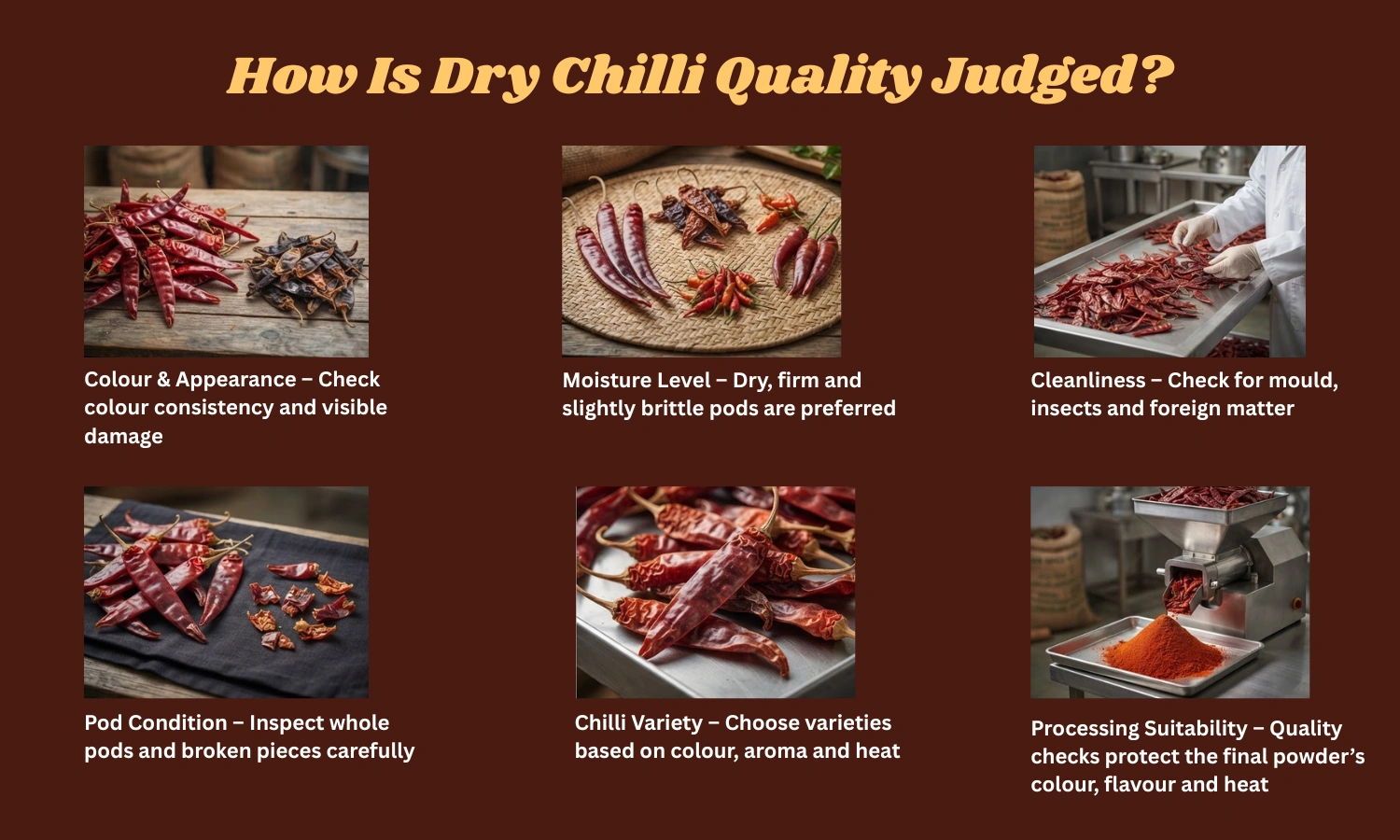
- Colour and Appearance: Good-quality dry chilli should have a reasonably consistent colour and appearance suited to its variety. Dull colour, excessive dark spots, or visible damage can indicate poor handling or storage.
- Moisture Level: Properly dried red chilli should be dry, firm, and slightly brittle, without excess moisture. High moisture can affect storage quality and increase the risk of mould.
- Whole Pods vs. Broken Pieces: Whole, intact pods make sorting and quality inspection easier. Broken or damaged chilli pieces should be checked carefully before grinding.
- Variety: Different types of dry chilli naturally vary in colour, aroma, and heat. Round dry chilli varieties may be used for tempering and whole-spice applications, while other varieties may be selected for making chilli powder based on the desired colour and heat.
These checks help determine whether the dry chilli is suitable for processing into chilli powder while maintaining the desired colour, aroma, flavour, and heat.
Dry Chilli in India: Regional Sources and Market Dynamics
India’s dry chilli market activity is concentrated in states like Andhra Pradesh, Karnataka, and Madhya Pradesh, where large-scale cultivation and drying infrastructure support consistent supply. This steady availability is crucial, as dry chilli is a staple ingredient used daily to add flavour and heat to everyday dishes like Indian subji. Prices for dry chilli fluctuate based on seasonal harvest volume, weather conditions during the growing season, and overall demand from both domestic and export buyers.
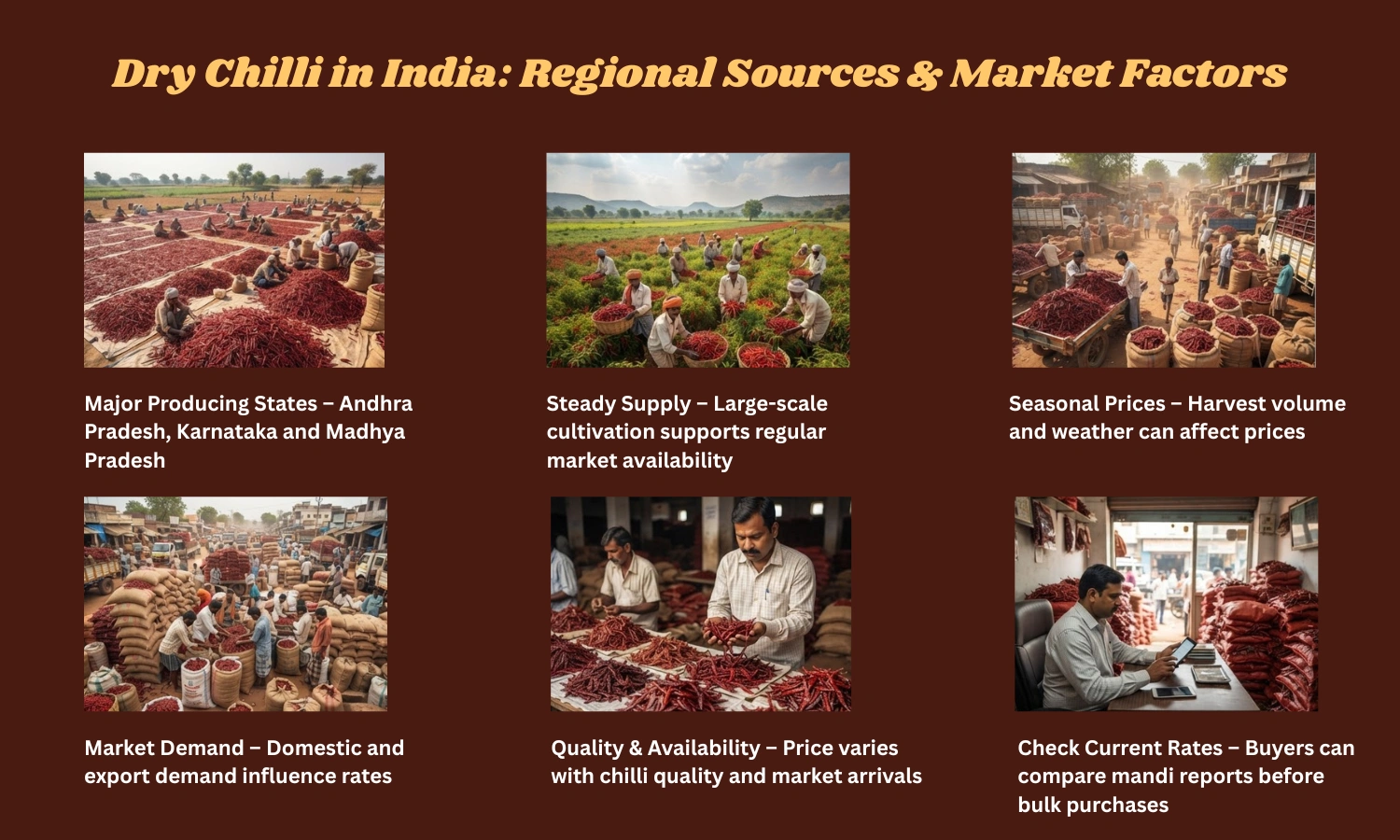
Many buyers check the dry chilli rate today or dry chilli market price today through local mandi reports and market sources before making bulk purchases. Prices can vary depending on harvest volumes, chilli quality, weather conditions, market arrivals, and domestic or export demand. For household and bulk buyers, comparing the current dry chilli price with quality and availability can help in making a more informed purchase decision.
Types of Dry Chilli Used in Indian Kitchens
There is significant variety among dry red chilli types available in Indian markets. Some are chosen specifically for their deep colour, like Kashmiri and Byadgi, while others like Guntur and Sannam are valued primarily for their heat. Understanding the different types of dry chillies in India helps cooks choose the right variety depending on whether they want colour, heat, or a balance of both in their final dish.
Exploring the types of dry red chillies in India further shows that some varieties are better suited to whole use, such as tempering in oil, while others are milled almost exclusively into powder because of their thinner skin and higher heat concentration.
Using Dry Red Chilli Types in Everyday Cooking
Whole dry mirchi is a staple in South Indian tempering, added to hot oil along with mustard seeds and curry leaves to release aroma before it is mixed into the main dish. This technique remains one of the most common uses of dry chillies across Indian kitchens, distinct from their use as ground powder.
Dry chillies are also central to spice blends, pickles, marinades, and many vegetarian snacks, where their concentrated flavour adds depth that fresh chilli alone cannot replicate. This versatility is part of why dry chillies remain a pantry essential rather than an occasional ingredient.
Dry Mirchi: Wholesale Buying and Storage Considerations
For businesses and larger households, understanding dry red chilli wholesale price trends helps with planning bulk purchases more efficiently. Buying in bulk during peak harvest season, when supply is highest, often results in better value compared to purchasing smaller quantities throughout the year.
Proper storage remains critical regardless of purchase volume. Dry chilli should be kept in airtight containers away from direct sunlight and moisture, since exposure to humidity can cause mould growth even in fully dried batches, undermining the dry red chilli benefits that careful drying originally provided.
Dry Chilli Benefits: Health and Nutritional Angle
Dry red chilli benefits mainly come from compounds such as capsaicin, along with the nutrients naturally present in chillies. Capsaicin is responsible for the characteristic heat of chilli and has been studied for various potential health effects.
However, drying can reduce some heat-sensitive nutrients, including vitamin C. Since dried chilli is usually consumed in small amounts as a spice, it is best viewed as a flavouring ingredient rather than a major source of nutrients. People who are sensitive to spicy foods should also consume it in moderation.
Choose the Right Dry Chilli for Powder
Quality dry chilli is the starting point for making good chilli powder. Properly dried chillies are cleaned, sorted, and ground to create powder with the right colour, aroma, flavour, and heat.
777 Foods Premium Red Chilli Powder brings this chilli flavour to your kitchen in a convenient, ready-to-use form. It can be used in curries, gravies, marinades, chutneys, and other everyday Indian dishes.
Key Takeaways
- Dry chilli quality depends on colour consistency, moisture level, mould absence, and pod uniformity.
- Regional sourcing from states like Andhra Pradesh and Karnataka supports much of India's dry chilli supply.
- Different dry chilli varieties suit different purposes, from tempering to powder production.
- Buying during peak harvest season generally offers better value for bulk purchases.
- Proper airtight storage protects dry chilli from moisture and mould long after drying is complete.
FAQs
Why does dry chilli matter more than fresh chilli for making powder?
Dry chilli has reduced moisture content, which concentrates flavour and allows for stable storage and grinding. Fresh chilli spoils quickly and cannot be reliably milled into shelf-stable powder without proper drying first.
How can I tell if dry chilli is good quality?
Look for consistent colour, whole unbroken pods, absence of mould or dark spots, and a dry, slightly brittle texture without excess moisture, which are all signs of properly dried, well-stored chilli.
Does the price of dry chilli change throughout the year?
Yes, prices generally shift with harvest cycles, tending to be more favourable shortly after peak harvest season and rising during periods of lower supply or higher demand from bulk buyers.
What is the best way to store dry chilli at home?
Store dry chilli in airtight containers away from direct sunlight and humidity, since moisture exposure can lead to mould growth even in chillies that were properly dried initially.