Introduction
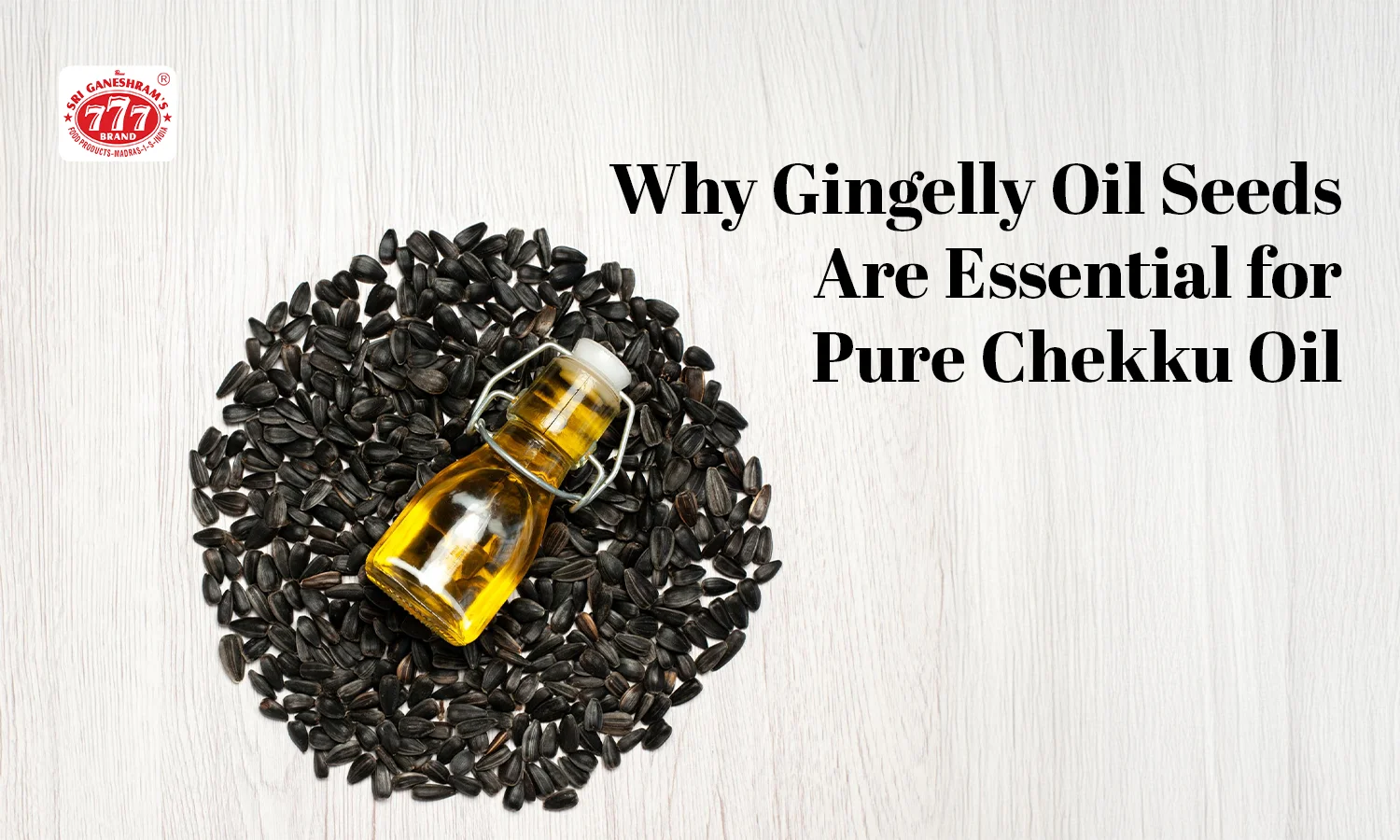
When people talk about Chekku oil, most attention goes to the wooden press or the slow extraction method. But the true quality of Chekku oil begins much earlier—with the Gingelly Oil Seed. The seed decides how the oil smells, tastes, and performs during cooking.
Even the best traditional process cannot compensate for poor-quality seeds. Knowing why seed selection matters helps you understand what separates genuine Chekku oil from ordinary seed-based oils sold in the market.
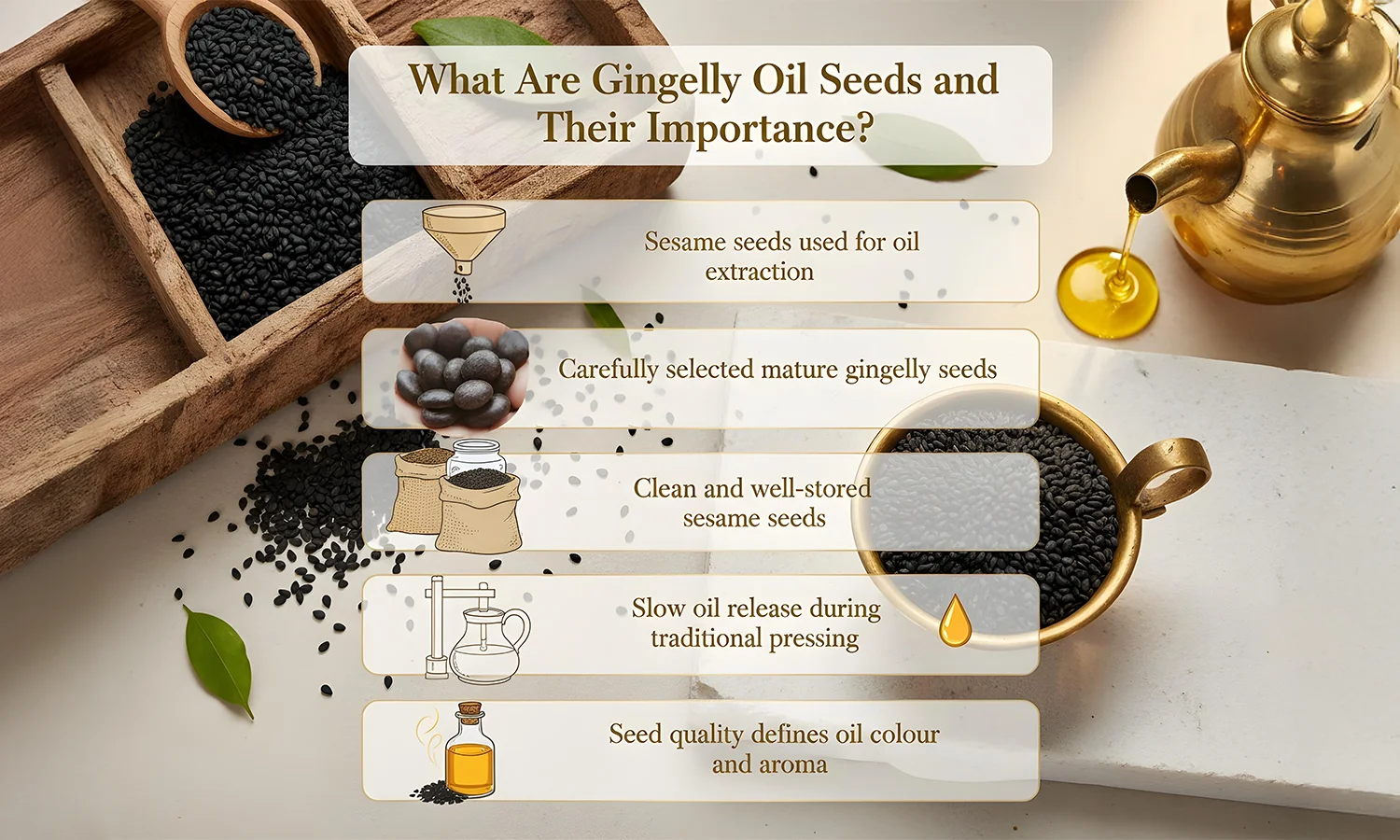
What Are Gingelly Oil Seeds and Their Importance?
The Gingelly Oil Seed comes from the sesame plant and has been used in Indian households for centuries. Commonly known as a sesame seed, it is valued for its natural oil content and ability to release oil slowly when pressed.
Traditional oil makers pay close attention to seed maturity, cleanliness, and storage conditions. This careful handling ensures that the oil extracted is consistent in colour, aroma, and texture. Seed quality is treated as the foundation of oil making, not just a raw input.
How Gingelly Oil Seed Extraction Produces Pure Chekku Oil
Pure Chekku oil is made by pressing the Gingelly Oil Seed in a wooden mill that rotates at a slow and steady pace. This method prevents excess heat and allows the oil to flow naturally.
Such slow extraction reflects the values of traditional seed oil preparation, where patience and care are prioritised over speed. Compared to fast mechanical methods, this process helps maintain the oil’s natural thickness and aroma, avoiding the neutral feel often associated with mass-produced seed oil.
Health Benefits of Gingelly Seeds You Should Know
The nutritional value of Chekku oil starts at the seed level. Many people are familiar with gingelly seed benefits, which include naturally occurring fats and plant compounds. These properties are passed into the oil, contributing to recognised Gingelly oil benefits when used in daily cooking.
This direct link between seed quality and oil value explains why traditional diets have continued to rely on sesame-based oils for generations rather than frequently changing cooking fats.
The efficacy of the oil is deeply rooted in how gingelly oil is made, specifically through the pressing of high-quality sesame oil seeds. By using a traditional stone or wooden press, the seeds are crushed at room temperature to prevent the loss of heat-sensitive vitamins. This is important while extracting black sesame seeds oil, as the dark husks are loaded with calcium and magnesium that refined methods often discard.
Choosing a Chekku Gingelly oil ensures that these micronutrients remain bioavailable for your body, rather than being destroyed by chemical solvents.
Beyond the kitchen, the versatility of these seeds makes them a staple for holistic grooming. For instance, black sesame seed oil for hair is a wonderful remedy for maintaining scalp health and promoting natural shine due to its high penetration ability. When looking for the best sesame oil for cooking or topical use, focusing on the extraction method is key; a minimally processed oil acts as both a nutrient-dense food and a powerful natural antioxidant.
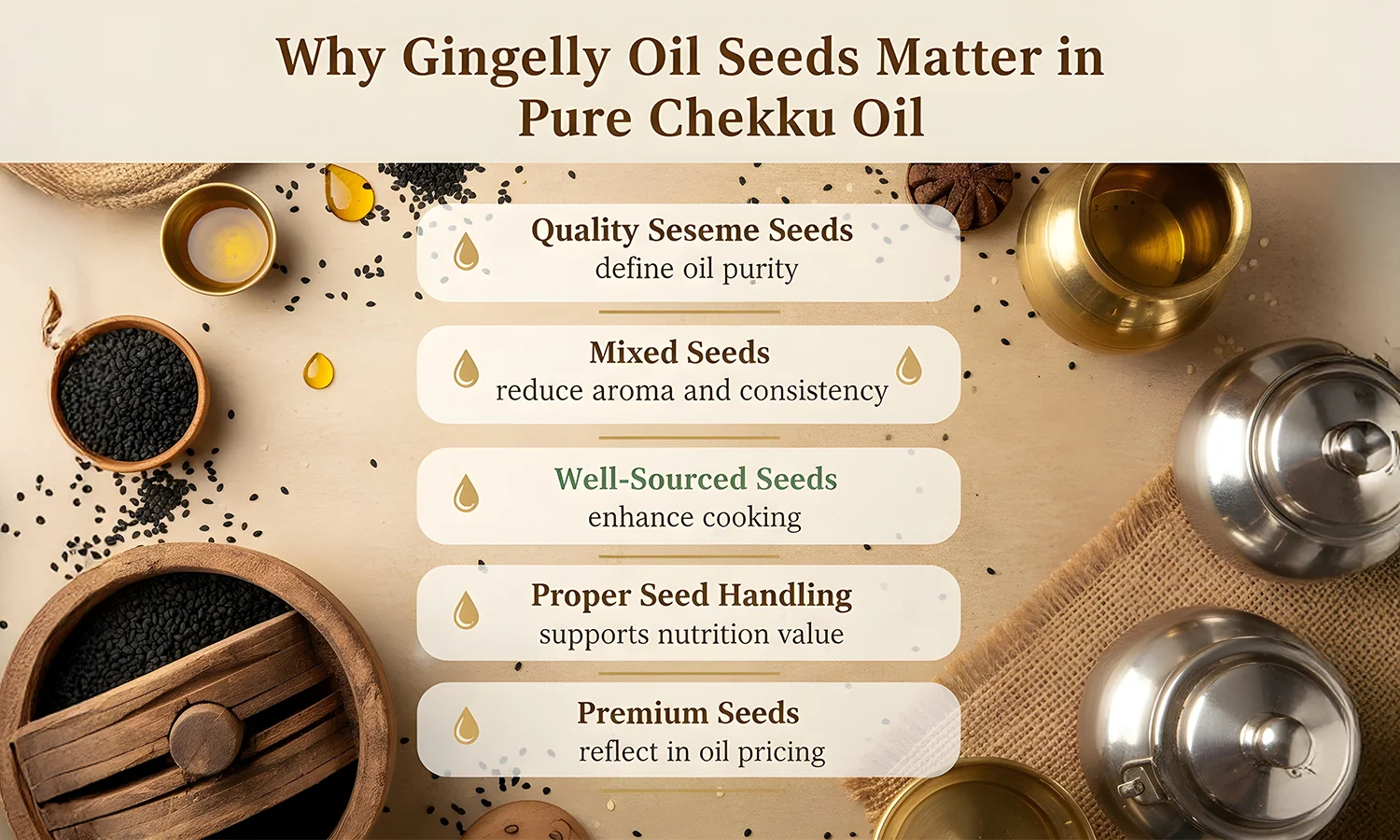
Why Gingelly Oil Seeds Matter in Pure Chekku Oil
Not every oil labelled Chekku delivers the same experience, and the difference often lies in the Gingelly Oil Seed used. Oils produced from mixed or low-grade seeds tend to lack consistency in aroma and performance.
In contrast, carefully sourced seeds produce stable gingelly sesame oil that works well for everyday cooking. The overall Gingelly oil nutrition depends heavily on seed handling, from sourcing to storage.
Factors like sesame oil price also reflect this effort, as better seeds and slower extraction naturally increase production costs. Over time, consistent use highlights real seed benefits rather than short-term impressions.
Conclusion
Pure Chekku oil is not just about the wooden press; it begins with respect for the Gingelly Oil Seed. From selecting mature seeds to pressing them slowly, every step depends on seed quality.
This is why traditional producers and trusted brands like SGR 777 place strong emphasis on sourcing and handling seeds carefully. When the seed is right, the oil naturally delivers consistency, nutrition, and trust in everyday cooking.
Key Takeaways
- Gingelly Oil Seed quality is the foundation of pure Chekku oil
- Slow extraction protects the natural character of the oil
- Health value begins with careful seed selection
- Consistent aroma and texture depend on seed handling
- Traditional oil making focuses on patience and reliability
FAQs
Is sesame oil better than olive oil?
Both oils suit different cuisines. Oil made from Gingelly Oil Seed is better aligned with Indian cooking styles and regular heating.
Can we fry in gingelly oil?
Yes. Gingelly oil is commonly used for frying at steady temperatures in traditional cooking.
Who should not have sesame oil?
People with sesame allergies should avoid it. Others usually consume it in moderation.
What are the side effects of sesame seeds?
Excess intake may cause digestive discomfort for some individuals.
When to avoid sesame seeds?
Avoid them if you have allergies or if advised by a healthcare professional.