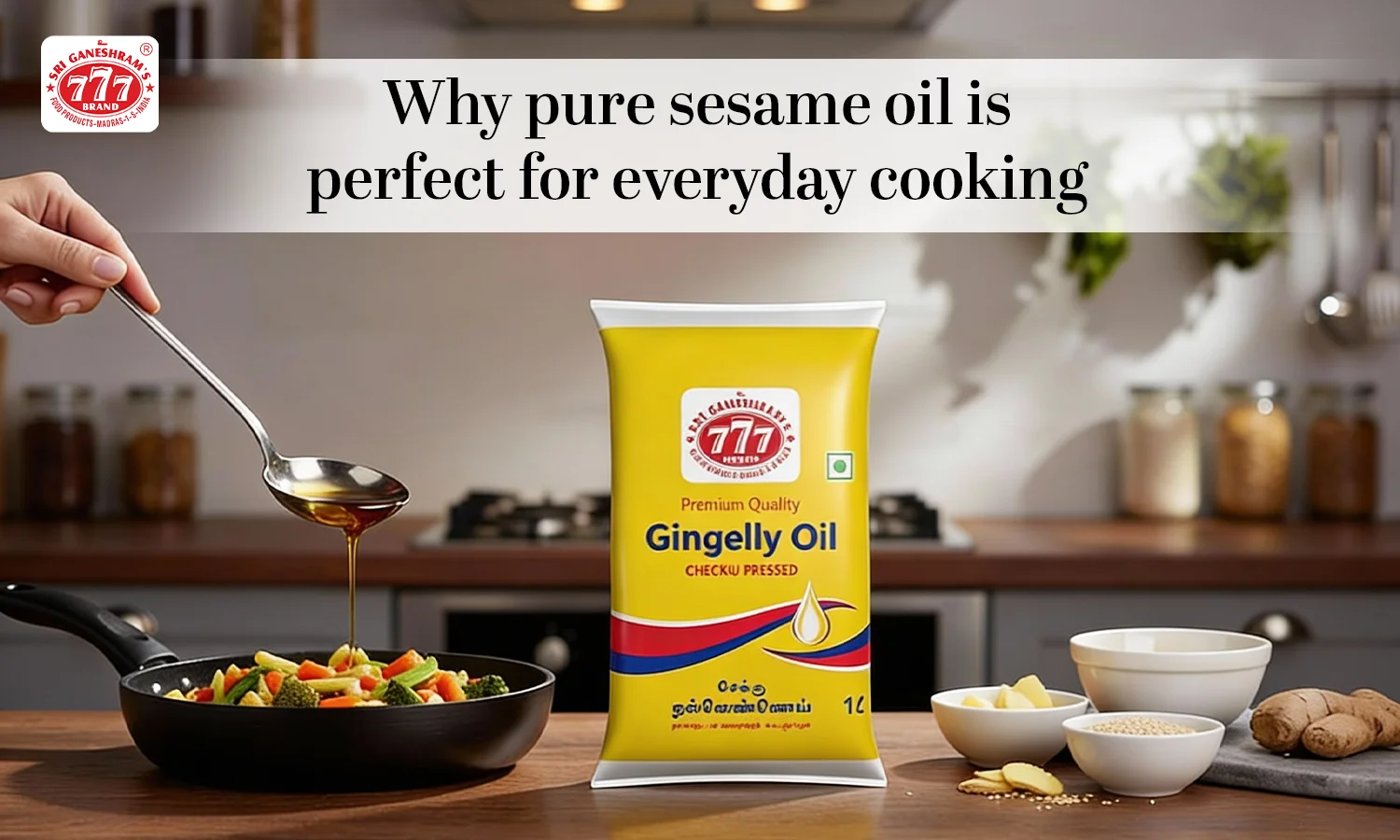
Introduction :
Choosing the right cooking oil reflects not just taste, but also how food feels after a meal. In many Indian homes, pure sesame oil has remained a steady choice for generations. It is not selected because of trends or advertising, but because families have seen how it performs in everyday cooking.
From simple vegetable dishes to traditional gravies, this oil fits naturally into daily meals. Understanding why it works so well can help you make better choices for your kitchen.
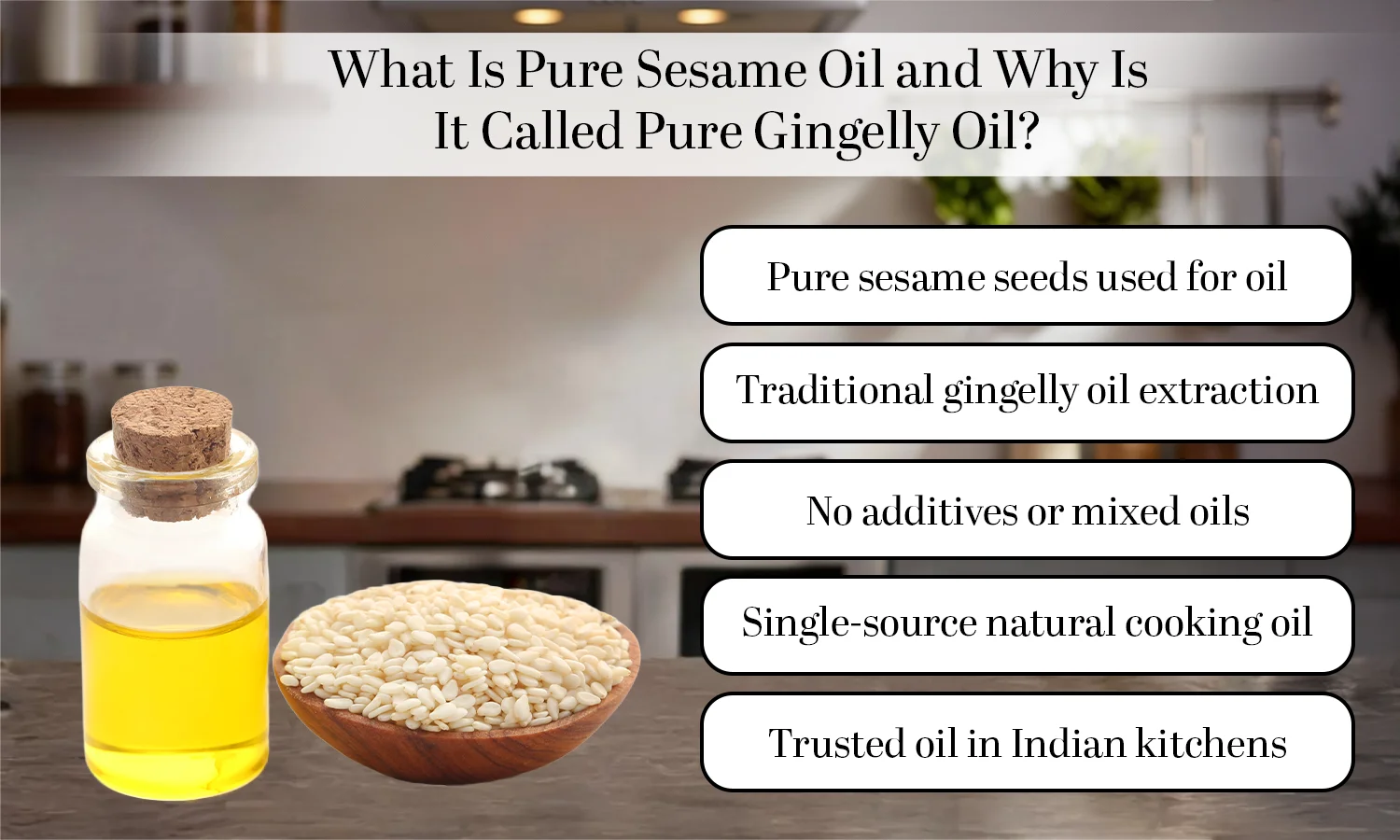
What Is Pure Sesame Oil and Why Is It Called Pure Gingelly Oil?
Pure sesame oil is extracted directly from sesame seeds without mixing or heavy processing. In many regions, it is also known as pure gingelly oil, referring to the same oil prepared using traditional methods.
The word “pure” matters because it indicates that the oil comes from a single source and does not contain added oils or chemicals. This simplicity is why it has remained part of Indian kitchens for so long.
Is Pure Sesame Oil Good for Daily Cooking?
For regular meals, pure sesame oil works well because it handles steady heat without breaking down quickly. Many households prefer it as a healthy Indian oil since it suits common cooking styles like sautéing, frying, and slow cooking.
Its familiarity makes it easy to use daily without constantly switching oils. Over time, this consistency supports balanced eating habits rather than occasional use.
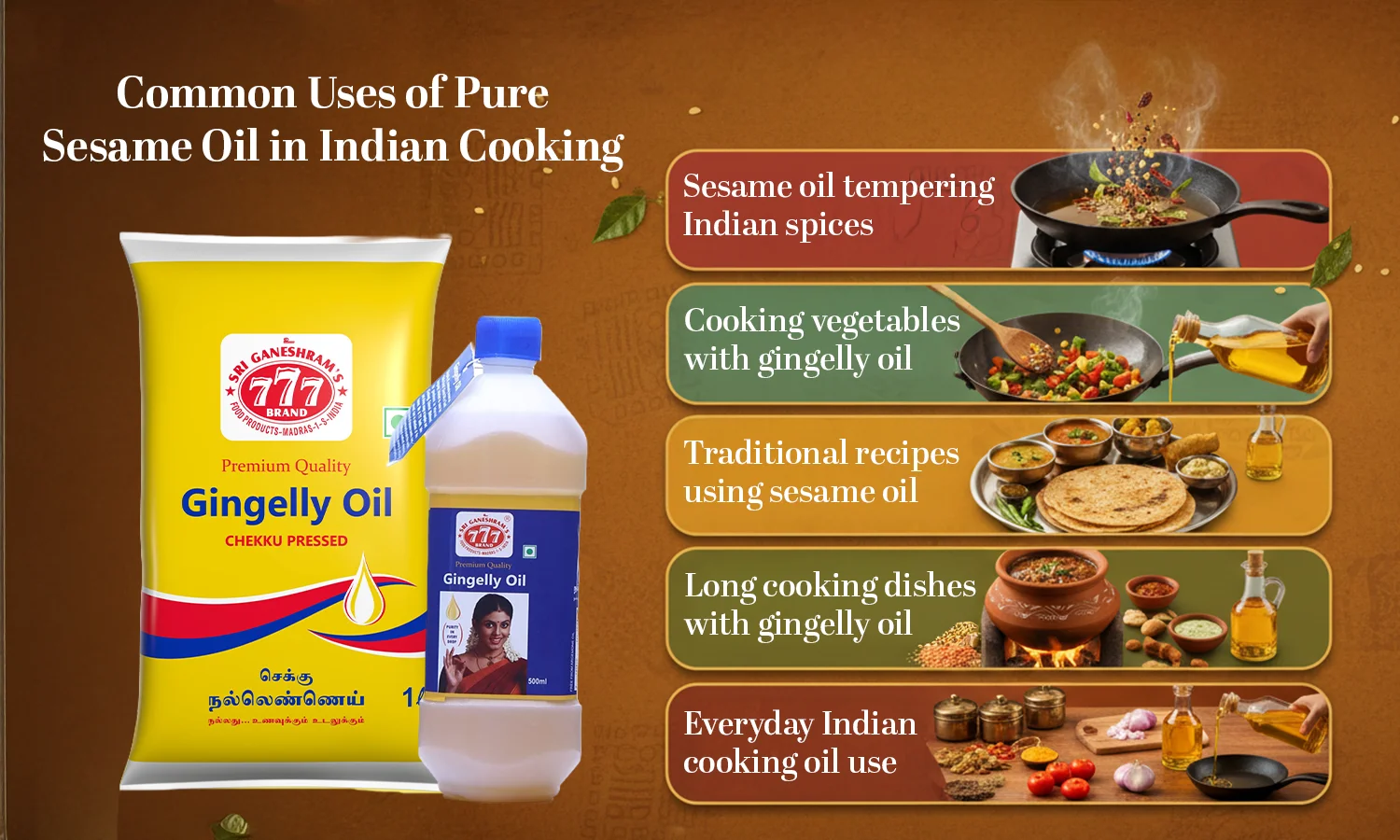
Common Uses of Pure Sesame Oil in Indian Cooking
The strength of pure sesame oil lies in how versatile it is. It blends naturally into many dishes without overpowering flavours. Some common Gingelly oil uses include tempering spices, cooking vegetables, and preparing traditional recipes that require longer cooking time.
Because of this flexibility, it continues to be a trusted Indian cooking oil across different regions.
How to Choose the Best Pure Gingelly Oil
Not every bottle labelled sesame oil offers the same quality. When buying pure sesame oil, check how clearly the product explains its sourcing and extraction.
The best gingelly oil usually comes from brands that focus on traditional preparation rather than speed. Look for consistency in colour, a natural aroma, and transparent labeling. Many families rely on experience to identify a pure oil rather than marketing claims.
Conclusion
The continued use of pure sesame oil in Indian kitchens comes from years of everyday experience. Its ability to handle regular cooking, support familiar flavours, and fit into traditional meals makes it a reliable choice.
Brands like SGR 777 follow these long-standing practices by focusing on quality and consistency, helping households continue cooking the way they always have—with confidence.
Key Takeaways
- Pure sesame oil is valued for its simplicity and single-source extraction
- It suits daily Indian cooking styles and regular meals
- Versatility makes it useful across many traditional dishes
- Quality depends on preparation and clarity of ingredients
- Consistent use matters more than occasional switching
FAQs
How to check pure gingelly oil?
Pure oil usually has a natural aroma and consistent texture. When checking pure sesame oil, labels and sourcing details help confirm authenticity.
Which sesame oil is pure?
Oils made from only sesame seeds without additives are considered pure. Many households rely on trusted local or traditional brands.
Why is gingelly oil so expensive?
The price reflects seed quality and slower extraction methods. These steps help retain natural Gingelly oil benefits.
How to tell if sesame oil is good?
Good oil should not smell artificial or feel overly thin. Observing colour and aroma helps judge quality.
Can everyone consume gingelly oil daily?
Many people include Gingelly oil for daily use as part of balanced meals. As with any oil, moderation is important.