

Indian Sweets and Snacks
The Complete Guide to the Flavours That Raised Us
Indian sweets and snacks carry the memory of festivals, rainy evenings, and grandmother’s kitchens. Here are the most loved Indian sweets, the savoury favourites found in every region, the stories behind them, and simple ways to keep making them at home with trusted ingredients from 777 Foods.
Why Indian Sweets and Snacks Feel Like Home
Ask anyone about their childhood and the answer usually arrives with a smell. It might be ghee melting into roasted gram flour. It might be the hiss of batter hitting hot oil while the rain falls outside. Indian sweets and snacks are rarely about hunger alone. They mark the first day of school, the arrival of relatives, and the late-night chats that stretch past midnight.
Every Indian family keeps a mental recipe book for its favourite Indian snacks and sweets. One aunt makes the softest laddus. A neighbour fries murukku so crisp that it shatters at a touch. These dishes travel through generations by watching and tasting, often without a single written measurement.
That bond is also why people still trust the taste of home over anything new on the shelf. At 777 Foods, we have worked with South Indian kitchens since 1954, and we see the same pattern every festive season. Families want the flavour they grew up with, made faster and made safely.
The Growing Love for Indian Sweets and Indian Snacks in Numbers
The emotion is backed by real demand, especially for Indian snacks. According to IMARC Group, the Indian snacks market reached about INR 50,590 crore in 2025 and is projected to cross INR 1,03,556 crore by 2034. That is a growth rate of roughly 8.28 percent a year.
Packaged Indian sweets are moving even faster. IMARC estimates the Indian packaged sweets market at about INR 8,431 crore in 2025, with a forecast of over INR 30,500 crore by 2034. That works out to a yearly growth of more than 15 percent.
What drives these numbers? Smaller households, more working parents, and easier online ordering all play a part. Yet the heart of the demand stays the same. People want Indian sweets and snacks that taste the way they remember.
A Journey Through Indian Sweets
Across the country, Indian sweets are tied to rituals, seasons, and the act of giving. No wedding, puja, or housewarming feels complete without a box of mithai passed from hand to hand. Each region has its own pride and its own secrets, and the regional Indian sweets below show how widely the tradition has spread.
South Indian Sweets That Define Festivals
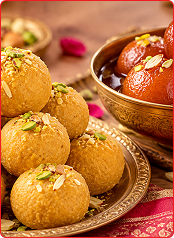
South Indian sweets lean on rice, jaggery, coconut, and ghee.
- Mysore pak with its porous golden bite
- Delicious Adhirasam made for Deepavali
- Creamy semiya payasam served at every wedding feast
Tamil Nadu homes also make kozhukattai for Vinayaka Chathurthi and sakkarai pongal for Pongal mornings.
Many of these South Indian sweets begin with simple pantry items. A pack of 777 Roasted Vermicelli becomes a festive payasam in under twenty minutes with milk, sugar, and a handful of cashews fried in ghee.
North Indian Sweets and Their Rich Traditions
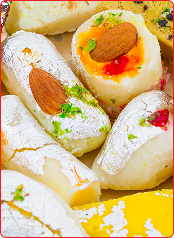
North Indian sweets are often built on milk solids, gram flour, and dry fruits. Kaju katli, rasmalai, peda, jalebi and barfi are among the most gifted mithai and rule the sweet shops of Delhi, Lucknow and Jaipur. Winter brings gajar ka halwa, while summer belongs to kulfi.
Families in the south now enjoy North Indian sweets at celebrations too, and a mixed tray from both regions has become common at weddings. The result is a festive plate that tells the story of a whole country in a few bites.
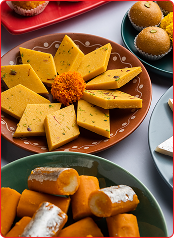
Different Types of Sweets Across India
South Indian sweets lean on rice, jaggery, coconut, and ghee.The variety is huge. Broadly, the main types of sweets fall into a few families.
- Milk-based sweets like peda, rasgulla and kalakand
- Flour-based sweets like besan laddu, Mysore pak and soan papdi
- Fried sweets like jalebi, gulab jamun and adhirasam
- Puddings and kheers like payasam, phirni and rice kheer
- Dry fruit and jaggery sweets like chikki and dates laddu
Each family of Indian sweets has dozens of local versions. A laddu in Bengal tastes very different from one in Andhra Pradesh, so knowing the main types of sweets makes it easier to plan a festive menu.
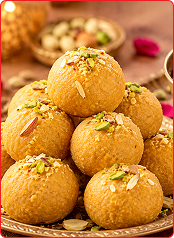
Types of Laddu Every Family Should Know
Laddus are the most shared sweet in India. They are easy to carry, last for days, and suit every occasion. Laddus may have more versions than any other sweet. Popular types of laddu include besan laddu, boondi laddu, rava laddu, coconut laddu, sesame laddu, ragi laddu and dry fruit laddu.
Besan laddu remains the favourite in most homes. The trick lies in roasting the gram flour slowly until it smells nutty. The 777 Besan Ladoo Instant Mix takes care of the measuring, so you only need ghee, patience and a few minutes of shaping. It is one of the easiest ways to bring back all the familiar types of laddu to a busy kitchen.
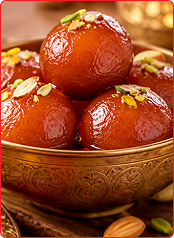
Types of Gulab Jamun Loved Across India
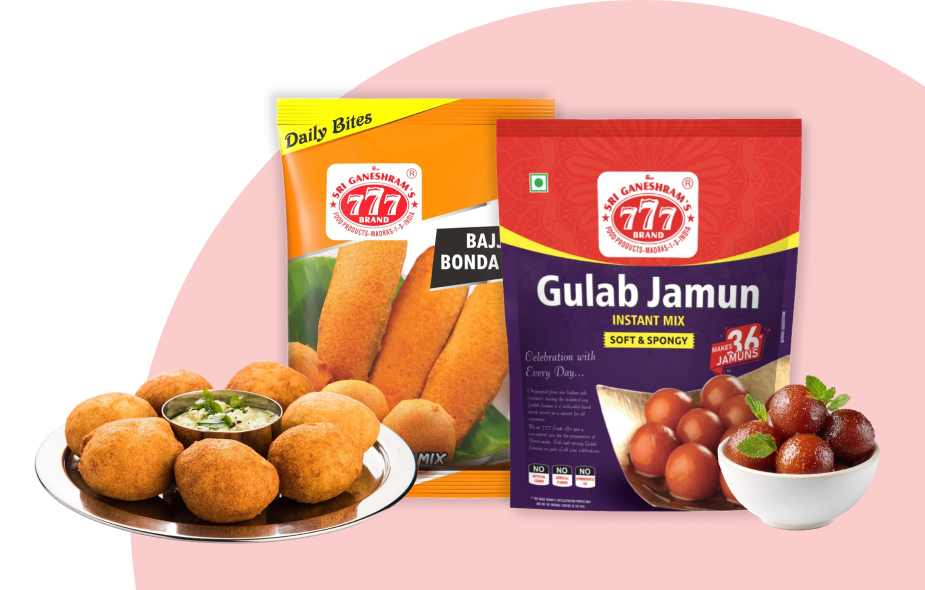
Gulab jamun is perhaps the most recognised of all Indian sweets. It also comes in more forms than most people realise. Common types of gulab jamun include khoya gulab jamun, dry gulab jamun, black jamun or kala jamun, bread gulab jamun and stuffed gulab jamun.
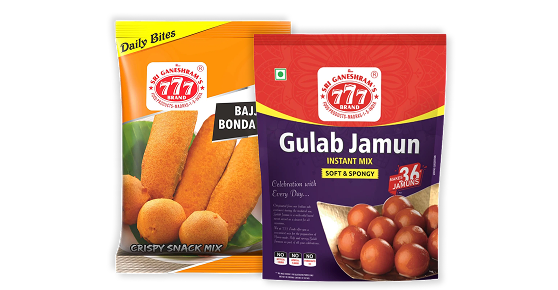
Tamil Nadu homes also make kozhukattai for Vinayaka Chathurthi and sakkaraOf all the types of gulab jamun, the classic homemade version still wins hearts. Soft, syrup soaked and fragrant with cardamom, it is the sweet children fight over at parties. The 777 Gulab Jamun Mix gives you that dependable texture every time, which is a relief when guests are already at the door.i pongal for Pongal mornings.
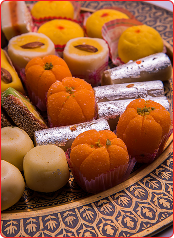
Traditional Sweets for Weddings and Festivals
Traditional sweets carry meaning. In Tamil weddings, the seer bakshanam includes laddu, mysore pak and murukku packed in large decorated baskets. Across the country, Indian sweets announce good news, welcome a bride and thank the gods.
A typical wedding sweets list in the south includes laddu, jangiri, badam halwa, Mysore pak and payasam. In the north it often features kaju katli, gulab jamun, rasmalai and moong dal halwa.
These traditional sweets are as much about blessing as they are about taste. Families often refine their wedding sweets list for months before the big day.
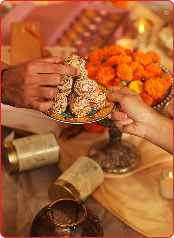
Diwali Sweets and the Joy of Sharing
No season sells more mithai than Deepavali, when festive boxes travel furthest between homes. Diwali sweets fill steel tins weeks before the festival. Homes make athirasam, laddu, mysore pak and coconut burfi, then pack them for relatives and neighbours.
The Confederation of All India Traders reported record Diwali trade of ₹6.05 lakh crore in 2025, with sweets and namkeen accounting for about 5 percent of it. Those numbers show how central Diwali sweets remain to Indian celebrations.
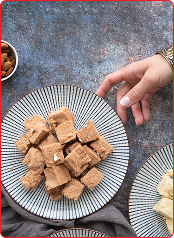
Homemade Sweets and Easy Sweet Recipes
There is a special pride in serving homemade sweets. Children remember who made them long after they forget what was bought. Even a simple kesari made at home feels more personal than an expensive box from a shop. The good news is that many favourites need only a few ingredients.
Some easy sweet recipes for beginners include semiya payasam, rava kesari, coconut laddu and quick gulab jamun from a mix. These homemade sweets suit students, working mothers and anyone who wants a sweet ending to dinner without spending the whole evening in the kitchen.
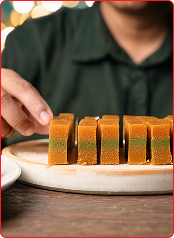
Healthy Indian Sweets for Mindful Eating
More families now look for healthy Indian sweets that still feel festive. Ragi laddu, dates and nuts laddu, millet payasam and jaggery-based chikki are popular swaps. The ICMR and NIN dietary guidelines released in 2024 suggest keeping added sugar under 5 percent of total daily energy, so smaller portions and natural sweeteners help.
Healthy Indian sweets also benefit from good base ingredients. Even classic favourites can be lighter with a few smart swaps. Millet vermicelli, jaggery and roasted nuts give you flavour without needing heavy sugar syrups.
A Journey Through Indian Snacks
If sweets are for celebrations, Indian snacks are for everyday comfort. They fill the space between lunch and dinner, keep children going after school and turn a cup of tea into a small event.
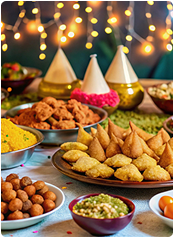
Evening Snacks That Bring Everyone Together
The 4 pm hunger pang is a national habit. Evening snacks in Indian homes include bajji, bonda, vada, sundal, murukku and the ever loyal plate of biscuits. In Chennai, the smell of frying bajji on a rainy evening is almost a ritual.
Many families keep a fixed list of evening snacks for the week, built around what their children like best. Monday could be sundal, Wednesday could be onion pakoda, and Friday is often bonda with coconut chutney. Routine makes the day feel settled.
Indian Evening Tea Snacks and the Chai Ritual
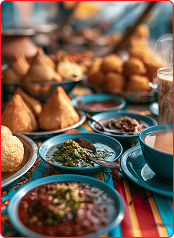
Tea without a bite to go with it feels incomplete. Classic Indian evening tea snacks include rusk, mixture, masala vada, samosa, ribbon pakoda, and banana chips. Filter coffee in the south pairs beautifully with crisp murukku or thattai.
These Indian evening tea snacks are also what we offer visitors. Many of the best Indian snacks were first made just to go with a hot cup. The tea tray becomes a quiet sign of welcome.
South Indian Snacks and Their Regional Pride
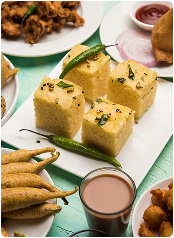
South Indian sweets lean on rice, jaggery, coconut, and ghee.The variety is South Indian snacks have a character all their own. Tamil Nadu gives us kai murukku, thattai, seedai and ribbon pakoda. Kerala brings banana chips and unniyappam. Andhra Pradesh is known for spicy mirchi bajji, and Karnataka loves its Maddur vada.
Many South Indian snacks were created to last. Murukku and thattai were fried in big batches before festivals and stored in airtight tins for weeks. That habit of planning ahead still shapes how families cook their favourite Indian snacks today.huge. Broadly, the main types of sweets fall into a few families.
Indian Snacks List by Occasion
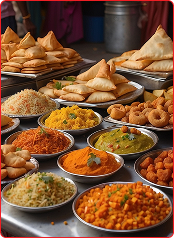
Here is a quick Indian snacks list grouped by when people usually enjoy them.
- Morning or brunch: poha, upma, vada, idli fry
- After school: sundal, banana chips, mini dosa, bread pakoda
- Evening tea: bajji, bonda, samosa, mixture
- Festivals: murukku, thattai, seedai, ribbon pakoda
- Travel: khakhra, thepla, dry mixture, roasted peanuts
This Indian snacks list is only a starting point. Every town has a local special worth tasting, and most of these snacks items can be recreated at home.
Veg Snacks and Spicy Snacks for Every Palate
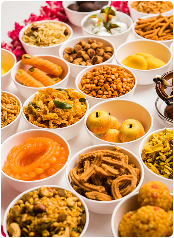
India has one of the richest ranges of veg snacks in the world. Vegetable cutlet, cauliflower pakoda, paneer tikka, aloo tikki and corn chaat are only a few. Lentils, flours and vegetables give these veg snacks both nutrition and texture.
Then come the fiery favourites that many households simply cannot do without. Spicy snacks like mirchi bajji, masala peanuts and kara sev are some of the most ordered snacks items on any street food menu. Our 777 Bajji Bonda Mix is a pantry favourite for this reason. It turns onions, raw banana or chillies into a hot plate of spicy snacks in minutes.
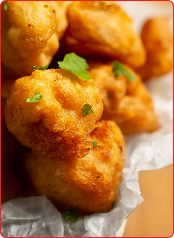
Crispy Snacks That Make Every Bite Count
Some snacks are judged entirely by sound. Texture is what makes many snacks memorable. Crispy snacks like appalam, murukku, onion pakoda and thattai must crackle when you bite them. A soft murukku is a disappointment no one forgets.
Fried appalam is the simplest of all crispy snacks. Our 777 Appalam puffs up within seconds in hot oil and works as a side with rice or as a crunchy snack on its own.
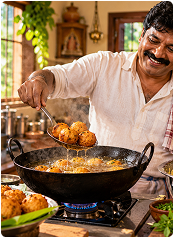
Homemade Snacks and Healthy Evening Snacks
Homemade snacks give families control over oil, salt and freshness. A 2024 ICMR and NIN report linked about 56.4 percent of India’s disease burden to unhealthy diets, so knowing what goes into your food matters more than ever.
Healthy evening snacks can be just as exciting as fried ones. Sundal, sprouts chaat, roasted makhana, steamed kozhukattai and millet dosa are filling and light. Keeping a few homemade snacks ready helps avoid reaching for packaged chips late in the day. These healthy evening snacks also suit people watching their weight.
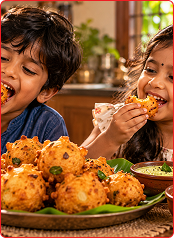
Easy Snacks for Kids and Instant Snacks Recipe Ideas
Children need food that is quick, fun and nourishing. Easy snacks for kids include mini idlis, vegetable poha, ragi semiya, cheese corn balls and fruit chaat. Bright colours and small shapes make them more appealing.
When time is short, an instant snacks recipe saves the day. A poha mix, a bajji batter mix or a ready upma mix can be cooked in under ten minutes. These are also handy easy snacks for kids after tuition classes. On days when the pantry runs low, it helps to have one dependable instant snacks recipe you can make without thinking.
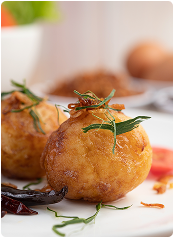
Snacks for Guests and Festive Occasions
Indian hospitality demands a full plate. Good snacks for guests are those you can prepare quickly and serve warm. Bajji, cutlet, mini samosa and a glass of chilled sharbat are a classic combination.
Festivals raise the bar. Diwali snacks like murukku, mixture, ribbon pakoda and thattai are made in bulk and gifted with sweets. Good Diwali snacks also keep well for two weeks or more. Together they form the sweets and snacks box that relatives look forward to every year. Thoughtful snacks for guests often decide how warmly a visit is remembered.
How to Choose Quality Ingredients for Indian Sweets and Snacks
The best Indian sweets and snacks begin with clean ingredients. Here is what to look for.

Check for an FSSAI licence number on every pack

Pick spices and flours with a short ingredient list.

Use fresh, good quality oil and avoid reusing it many times.

Choose brands with a long track record in your region.

Store mixes in airtight containers away from moisture.
These habits keep homemade Indian sweets consistent and the family safe. They also explain why heritage brands remain the first choice for many households.

Bringing Back the Taste of Home with 777 Foods
777 Foods began in Chennai in 1954 and has spent over 70 years serving South Indian households, retail stores, and food businesses. Our range covers pickles, masala powders, sharbat, appalams, instant mixes, and rice pastes, all made at our facilities in Tamil Nadu. Our batter mixes and appalams in particular are crafted for the everyday Indian snacks that South Indian homes love.
Many of our customers tell us the same thing. They want to cook the Indian sweets and snacks their parents made, but they no longer have hours to spare. Our mixes and essentials are made for exactly that moment. If you want to start today, you can browse our instant mixes and pantry staples and pick the ones that match your family’s favourites.
Key Takeaways
Indian sweets and snacks are tied to memory, ritual and hospitality, which is why families still seek familiar flavours.
The India snacks market is projected to roughly double by 2034, while packaged sweets are growing at more than 15 percent a year.
Start with simple easy sweet recipes like payasam or besan laddu before moving to festive specials.
Keep a weekly rotation of homemade snacks to control oil, salt and freshness.
Choose trusted, FSSAI licensed ingredients to keep both taste and safety consistent.
Conclusion
The flavours of childhood can return to your kitchen. With a little planning and a pantry stocked with honest ingredients, every home can bring back the laddus, murukkus and evening bajjis that once made ordinary days special. Indian sweets and snacks are how families say welcome, congratulations and I missed you.
Frequently Asked Questions
What are the most popular Indian sweets and snacks?
The most popular Indian sweets and snacks include gulab jamun, besan laddu, Mysore pak, kaju katli and jalebi on the sweet side. Among Indian snacks, murukku, samosa, bajji, vada and banana chips lead the list. Popularity changes by region, so a Chennai favourite may differ from one in Delhi. Most homes keep at least one sweet and one snack ready during festivals.
How can I make Indian sweets and snacks quickly at home?
The easiest way is to use good quality instant mixes for the base. A gulab jamun mix, a besan laddu mix or a bajji bonda mix cuts preparation time to under 30 minutes. You still control the ghee, sugar and frying, so the result tastes homemade. Planning a batch on the weekend also helps with Indian sweets and snacks for the week ahead.
Which Indian sweets and snacks are good for festivals like Diwali?
For Deepavali, families usually prepare Indian sweets and snacks like laddu, Mysore pak, adhirasam, gulab jamun, murukku, thattai and ribbon pakoda. These items store well for a week or more in airtight tins. They are also easy to pack in gift boxes for relatives. Adding one healthy option like a millet laddu keeps the spread balanced.
Are there healthy options among Indian sweets and snacks?
Yes, there are many healthy Indian sweets and snacks to choose from. Ragi laddu, dates and nuts laddu, sundal, roasted makhana and steamed kozhukattai are light and nourishing. Cooking at home lets you cut sugar and oil without losing flavour. Smaller portions also help you enjoy festive treats without overdoing it.
How long do homemade Indian sweets and snacks stay fresh?
Most fried snacks like murukku and thattai stay fresh for two to three weeks in airtight containers. Milk based sweets usually last only two to four days and are best kept in the fridge. Dry laddus can last about a week at room temperature. Storing Indian sweets and snacks away from heat and moisture keeps them tasting fresh for longer.