Enjoy FREE SHIPPING on orders ₹300 and above! Track your orders easily by clicking here: My Account > Orders > Track Now Get 25% Off On Your 1st Order: Shop Now Enjoy FREE SHIPPING on orders ₹300 and above! Track your orders easily by clicking here: My Account > Orders > Track Now Get 25% Off On Your 1st Order: Shop Now
Best Sellers You’ll Love
sgr777foodssgr777foodssgr777foods
+91 44 48506487
sgr777foodssgr777foodssgr777foods
Cart: 0 - 0.00

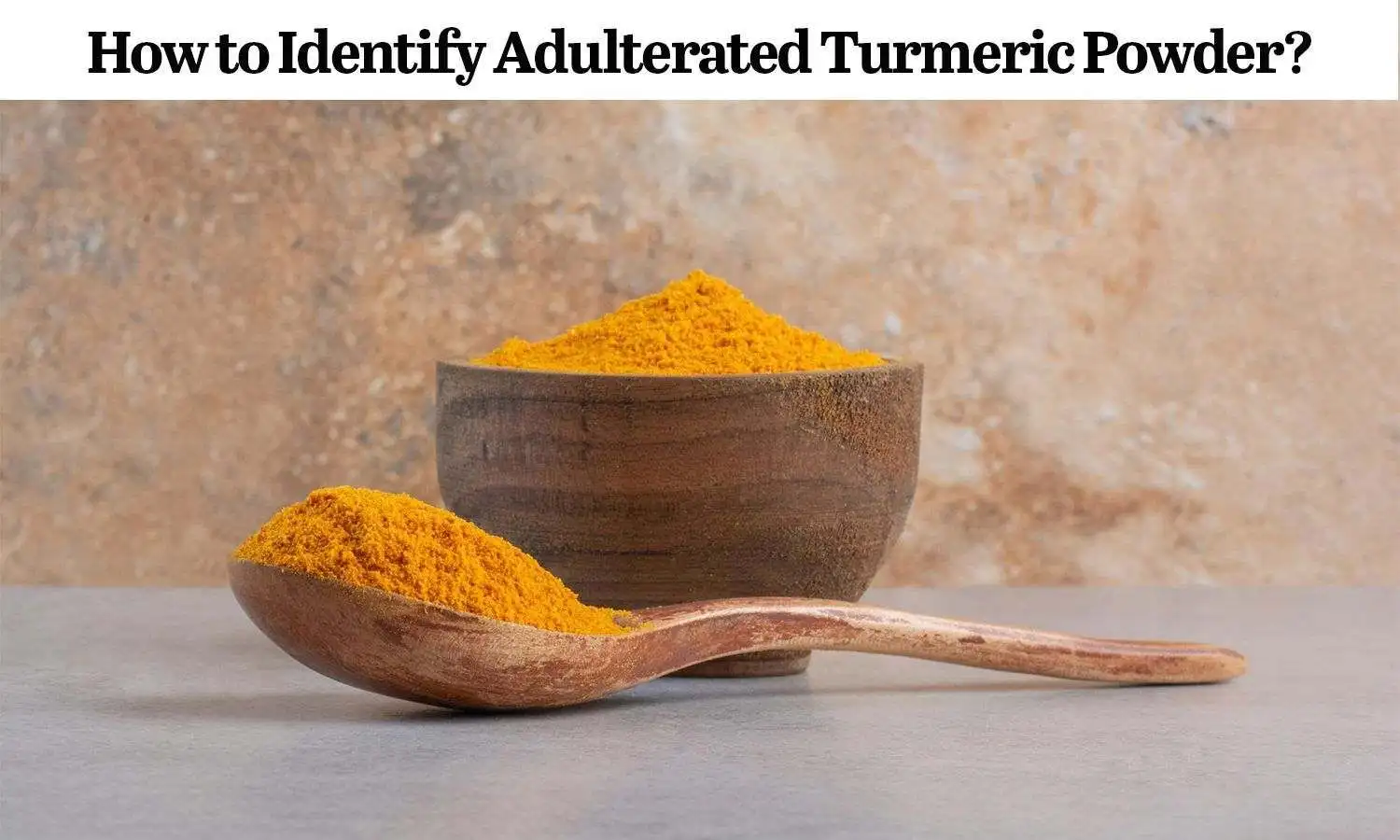
How to Identify Adulterated Turmeric Powder?

Adulterated Turmeric Powder

How to Identify Adulterated Turmeric Powder?

Introduction

Turmeric is the heart of Indian cooking. From golden dals to rich curries, this vibrant spice does more than just add color—it carries tradition, health, and warmth. But what if the turmeric you’re using every day is not as pure as it seems? With increasing cases of adulterated turmeric powder in the market, it’s essential to know what’s really going into your food.

Whether you’re a home cook or someone who values purity in your plate, this guide will walk you through how to test turmeric at home, understand its natural properties, and make sure you’re choosing quality over compromise. Knowing how to identify adulterated turmeric powder will help you safeguard your health and cooking.

The presence of adulterated turmeric powder in everyday kitchens is an unseen risk many families face without realizing it.

Turmeric: The Golden Spice

Turmeric, or haldi, has been a part of Indian kitchens and healing practices for centuries. Known for its bold color, earthy aroma, and medicinal properties, it holds a sacred place in our culinary traditions. But not all turmeric on store shelves lives up to its heritage. And sadly, the bright yellow you see might not come from nature alone.

But What Gives Turmeric Its Potency?

The power of turmeric lies in curcumin, the compound that gives it its color and healing potential. Curcumin is a natural antioxidant and anti-inflammatory agent, making turmeric popular in wellness spaces. The higher the curcumin content, the better the quality.

So, What Exactly is Turmeric Adulteration?
Turmeric adulteration means mixing the spice with cheap, often harmful substances to increase weight, enhance color, or reduce production costs. Sadly, it’s more common than we think—and many don’t realize that their “pure” turmeric is diluted or even toxic.
This is where understanding adulteration in turmeric powder becomes crucial—not just for taste but for your health.
Adulterated Turmeric Powder

What Types of Chemical Adulterants Can Be Found in Turmeric?

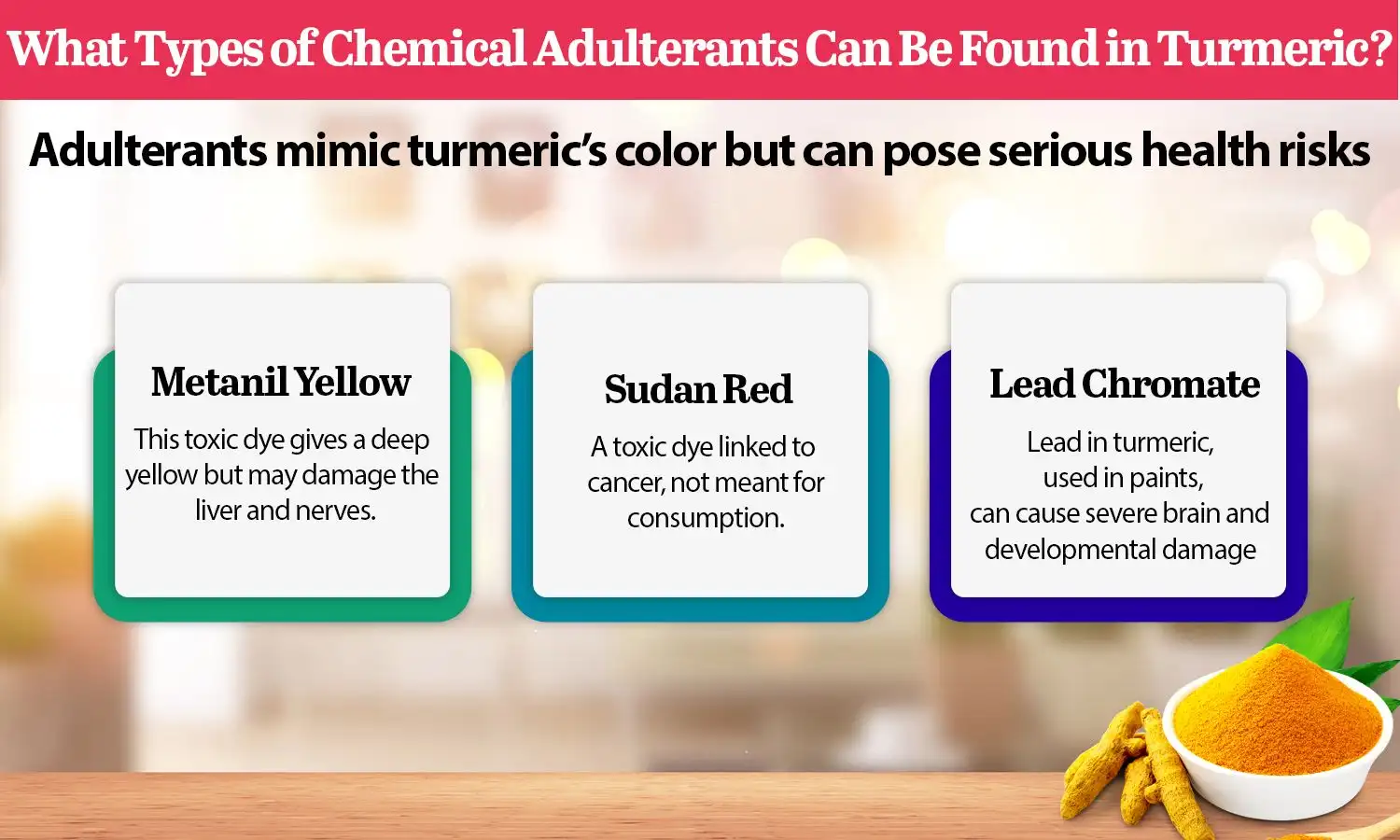
Adulterants are usually added to mimic the bright yellow of pure turmeric. But these chemicals can pose serious health risks:

Metanil Yellow

A synthetic dye not approved for food use. It gives a deep yellow hue but is known to be toxic turmeric powder that may affect the nervous system and liver.

Sudan Red

A dangerous coloring agent used in dyes and paints. It’s not edible and has been linked to cancer risk.

Lead Chromate
A bright yellow compound used in industrial paints. Lead in turmeric powder is extremely harmful and may cause developmental and neurological damage.
Adulterated Turmeric Powder

6 Simple Methods for Checking for Adulteration in Turmeric Powder

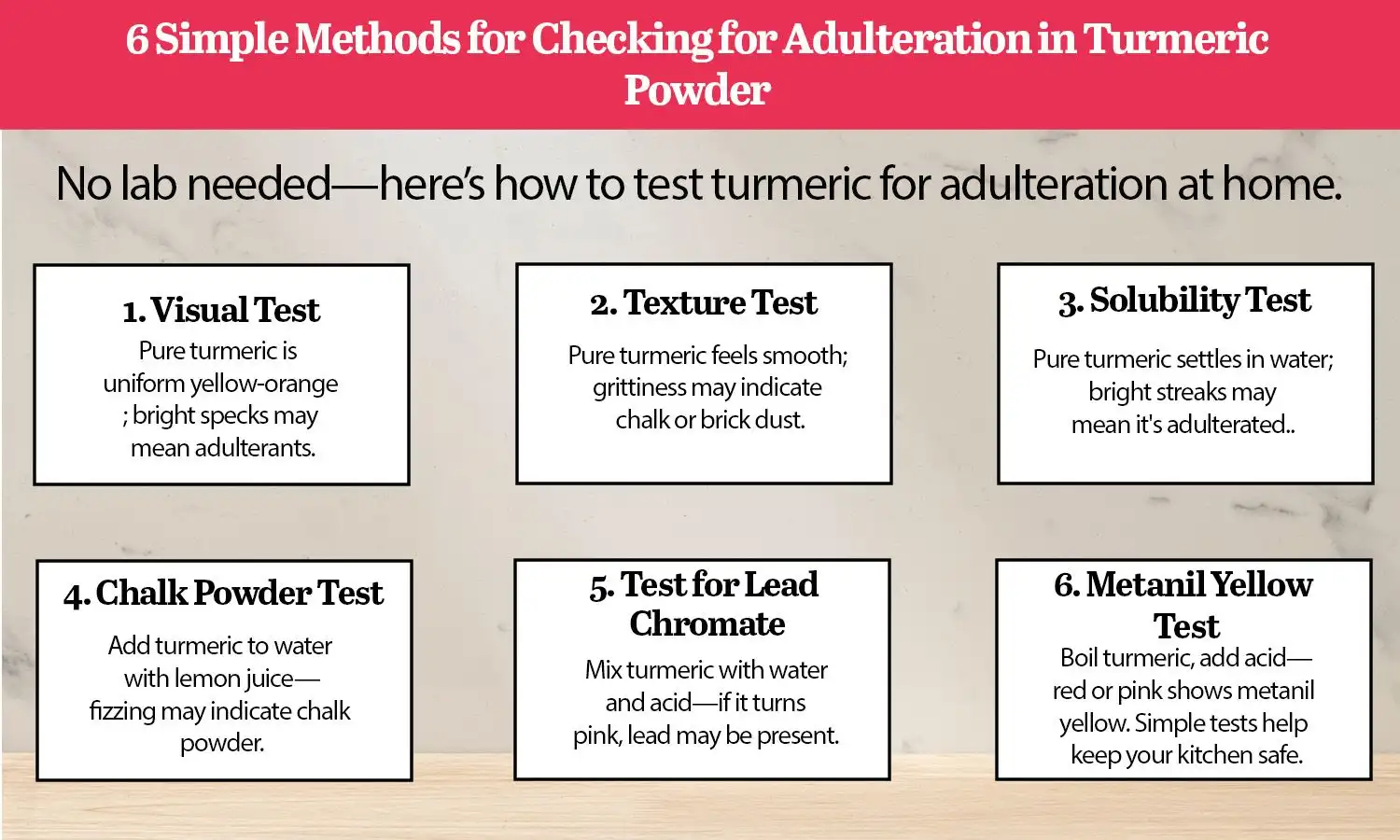
You don’t need a lab to spot fake turmeric. Here’s how to perform a turmeric adulteration test at home:

1. Visual Test

Spread a pinch of turmeric on a white plate. Pure turmeric will have a uniform yellow-orange color. Any reddish or bright yellow specks could point to adulterants like Sudan Red or lead chromate.

2. Texture Test

Take a pinch and rub it between your fingers. Pure turmeric feels smooth. If it feels gritty or sandy, it may contain chalk powder or brick dust.

3. Solubility Test

Drop a pinch in a glass of warm water without stirring. Pure turmeric settles at the bottom and leaves light yellow water. If the water turns bright or has streaks of red or orange, adulterated turmeric powder may be to blame.

4. Chalk Powder Test

Add turmeric to a glass of water and drop in a few drops of hydrochloric acid or lemon juice. If you see fizzing, chalk powder may be present.

5. Test for Lead Chromate

Mix turmeric in water and add a few drops of concentrated hydrochloric acid. If the solution turns pink, it may indicate lead in turmeric.

6. Metanil Yellow Test

Boil a teaspoon of turmeric in water and add a few drops of hydrochloric acid. If it turns red or pink, metanil yellow may be present—a clear turmeric powder adulteration test result.
These adulteration tests for turmeric powder can be done easily at home and are especially helpful if you’re unsure about the source. Regularly checking for adulterated turmeric powder is a simple yet powerful step to protect your kitchen from harmful additives.
Adulterated Turmeric Powder

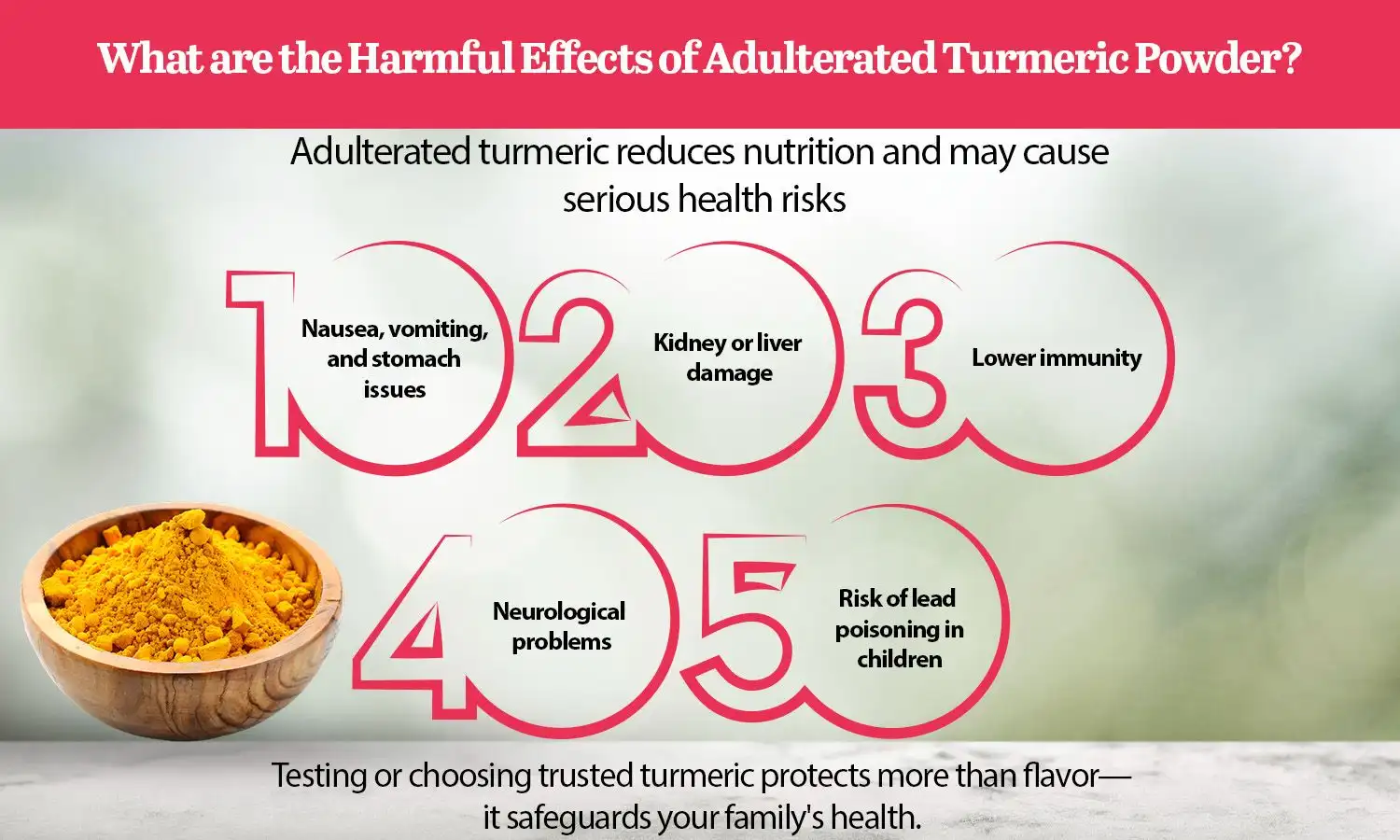
What are the Harmful Effects of Adulterated Turmeric Powder?

Adulterated turmeric doesn’t just reduce the nutritional value of your food—it can severely affect your health. Depending on the adulterants in turmeric powder, the side effects include:
That’s why it’s important to perform a turmeric purity test or rely on brands that ensure chemical-free products. Long-term consumption of adulterated turmeric powder can lead to chronic health complications, making awareness and prevention essential.
Keeping adulterated turmeric powder off your shelf isn’t just about flavor—it’s a commitment to your family’s well-being.adulterated turmeric powder off your shelf isn’t just about flavor—it’s a commitment to your family’s well-being.

Why 777 Foods?

At SGR 777 Foods, we believe that what you eat should come with peace of mind. Our turmeric powder is lab-tested, free from harmful chemicals, and made using traditional grinding techniques to preserve the natural oils and curcumin content. We’ve been a part of Indian kitchens for decades—because purity, trust, and tradition are the ingredients we never compromise on.
With 777 Foods, you’re not just adding a spice—you’re preserving your family’s health, one meal at a time. Choosing us means saying no to adulterated turmeric powder and yes to authenticity.

Key Takeaways

FAQs

How to Choose Turmeric Powder?
Always check for brand credibility, packaging date, and certifications. Avoid powders with overly bright yellow color. Choosing trusted names like 777 Foods helps ensure purity.
Is There Fake Turmeric Powder?
Yes. Many local brands mix cheap ingredients like chalk powder or synthetic dyes to increase volume and color. That’s why knowing how to test turmeric at home is essential.
How to Know if Turmeric Is Good Quality?
High-quality turmeric has a warm, earthy smell and a deep yellow-orange hue. It should feel smooth to touch and settle evenly in water. You can also try the turmeric purity test shared above.
What to Look for When Buying Turmeric Powder?
Check for FSSAI certification, sourcing details, and whether the brand conducts adulteration test for turmeric powder. Natural aroma and color also matter.

Recent Comments

No comments to show.

Recent Post

Cart

Create your account

Select the fields to be shown. Others will be hidden. Drag and drop to rearrange the order.
  • Image
  • SKU
  • Rating
  • Price
  • Stock
  • Availability
  • Add to cart
  • Description
  • Content
  • Weight
  • Dimensions
  • Additional information
Click outside to hide the comparison bar
Compare