Introduction :
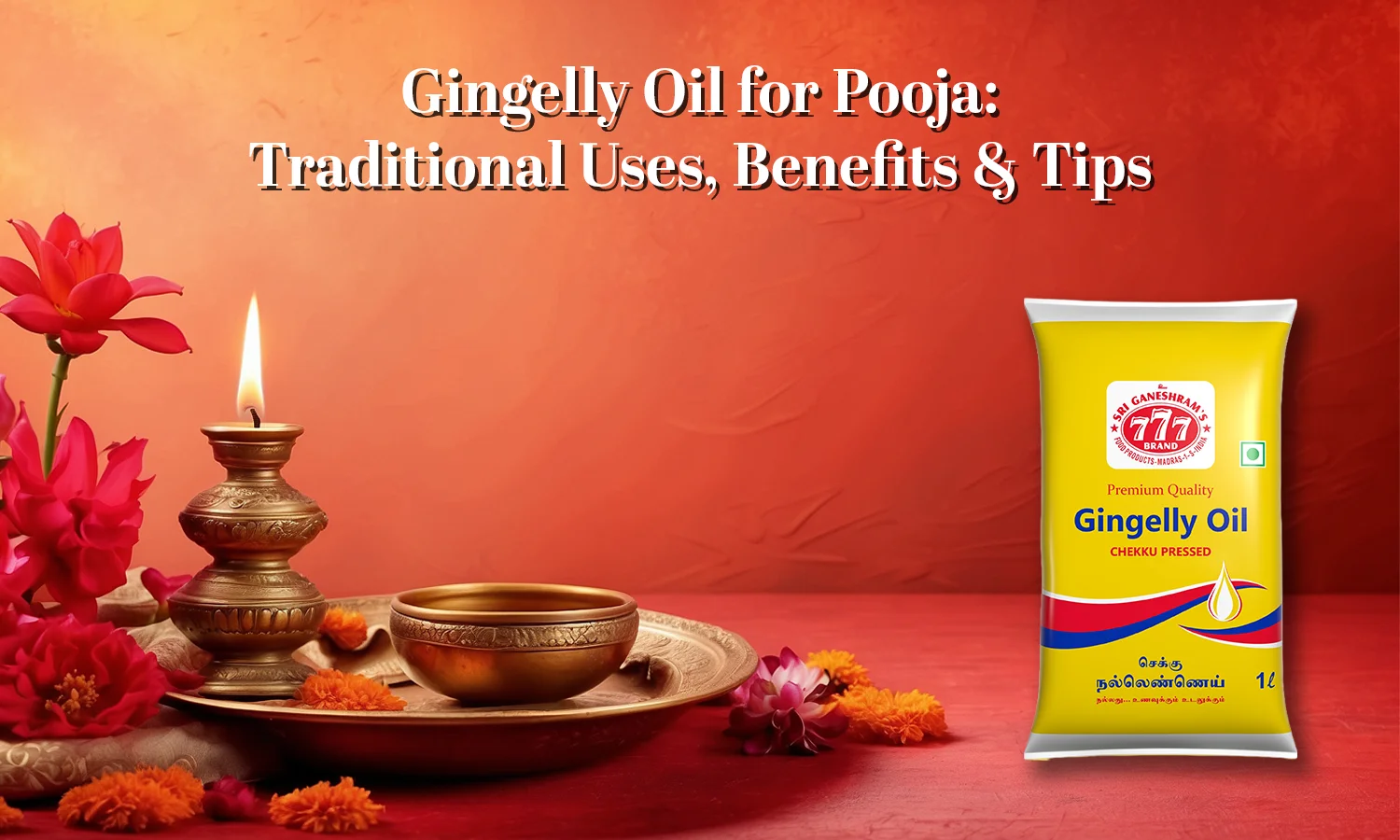
From lighting lamps to sacred offerings, gingelly oil continues to be trusted for its purity and purpose. This guide explains why it is used, how it supports rituals, and what to look for when buying it.
Why Is Gingelly Oil Traditionally Used in Pooja?
How Does Gingelly Oil Bring Positivity to Pooja?
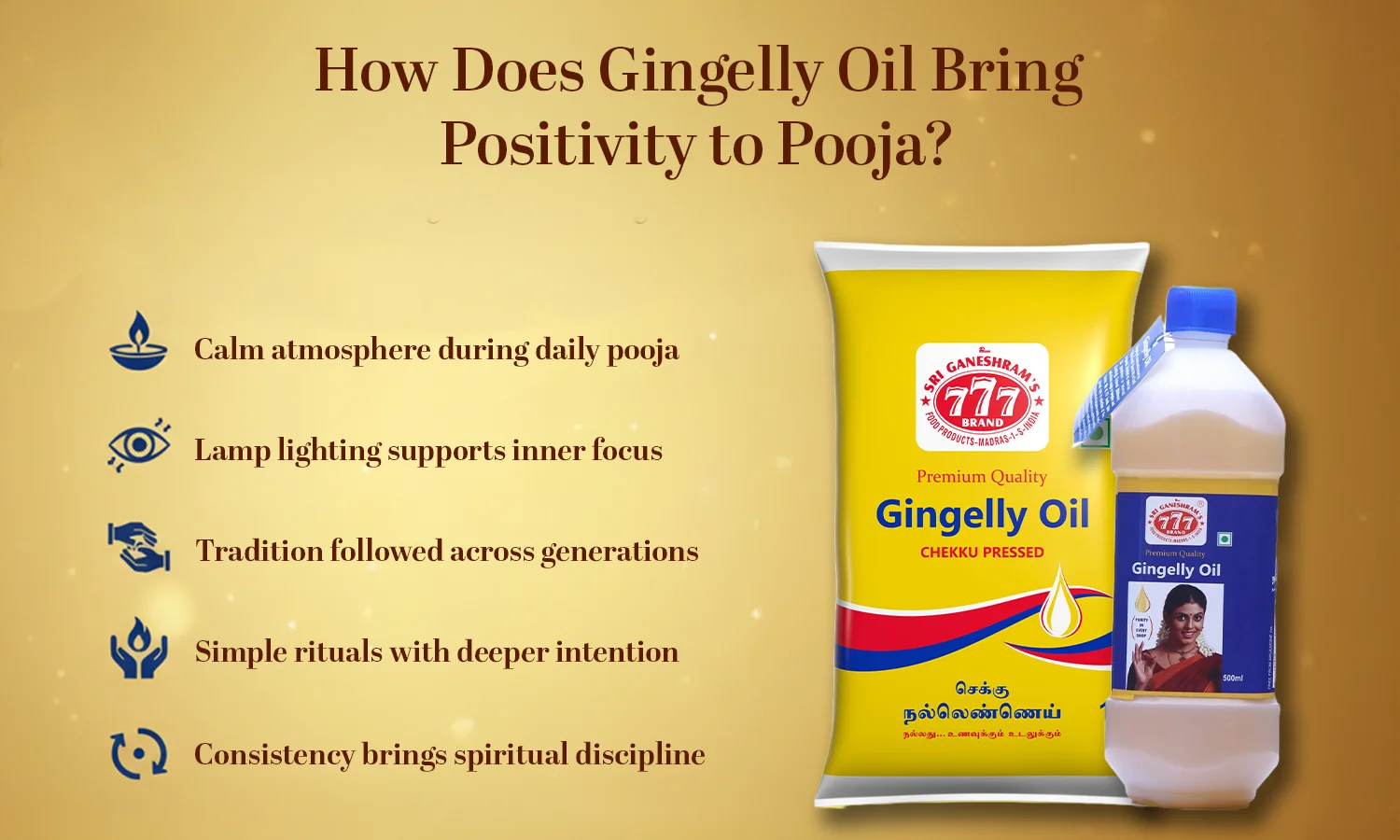
Lighting a lamp with Gingelly oil for pooja is believed to create a calm and focused environment. Many families associate this act with inner discipline and consistency.
Using traditional gingelly oil during prayers helps maintain continuity in rituals passed down through generations. These practices are often linked to spiritual benefits, where routine and intention matter more than elaborate arrangements.
Health Benefits of Gingelly Oil in Daily Rituals
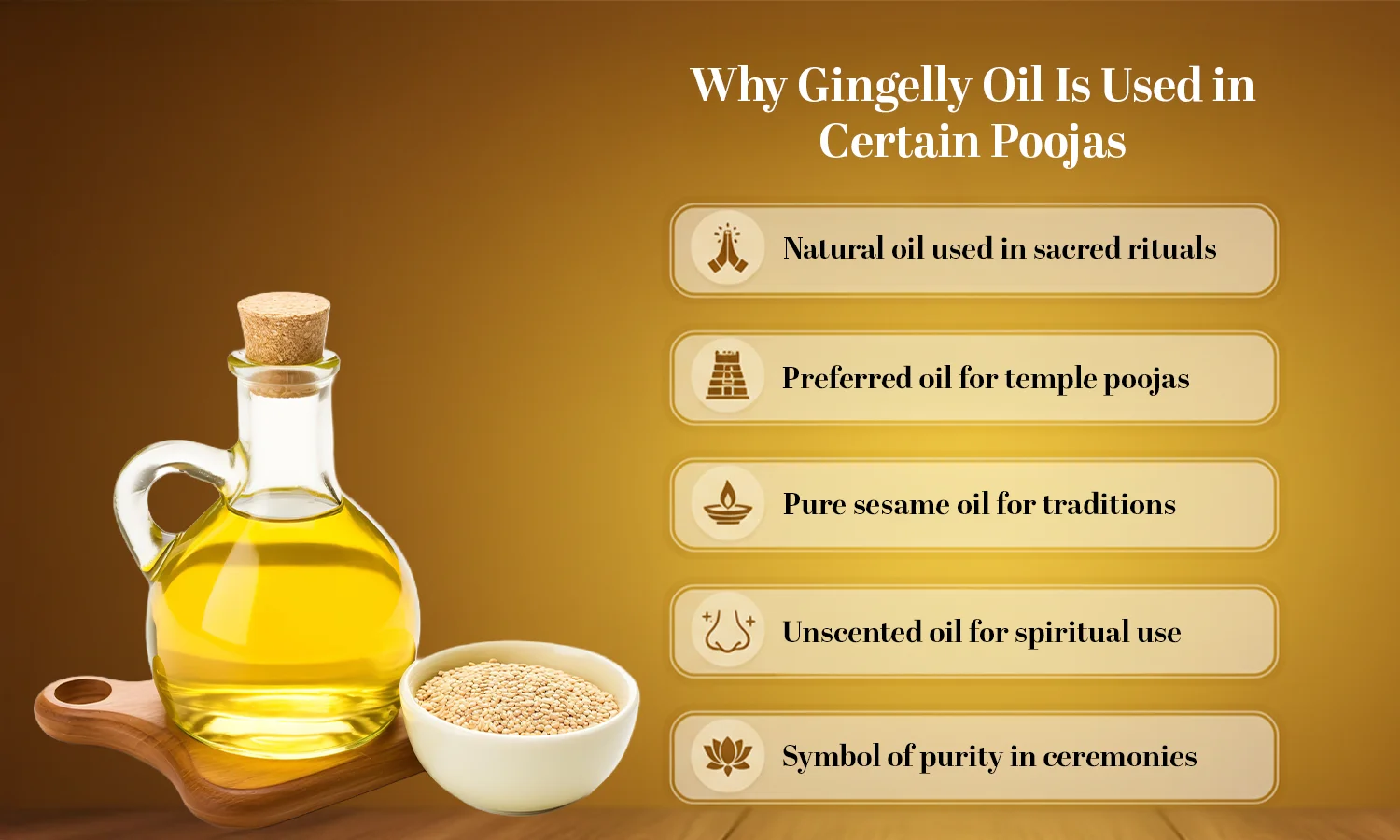
Why Gingelly Oil Is Used in Certain Poojas
Tips to Choose the Purest Gingelly Oil for Pooja
This choice comes from the belief that rituals should involve simple and pure materials, making Pure Gingelly Oil a common preference.
- Look for oil made from pure sesame oil with no added fragrance
- Check labels for clarity on sourcing and extraction
- Avoid oils that look overly light or watery
- Choose products known for consistent gingelly oil uses beyond rituals
Conclusion
Brands like SGR 777 follow these time-tested practices by offering oil prepared with care and consistency, supporting households that value simplicity and tradition in their daily worship.
Key Takeaways
- Gingelly oil for pooja has been traditionally used for lamp lighting and rituals due to its purity and stable burning nature
- Its role in pooja is based on long-standing household practices rather than modern trends
- Using pure, traditionally made gingelly oil supports calm and consistent daily worship
- Not all oils are suitable for rituals; simplicity and natural sourcing matter most
- Choosing authentic gingelly oil helps maintain the meaning and discipline of everyday pooja