Introduction
Gluten-Free Ragi Vermicelli is a healthy, versatile, and nutrient-rich alternative to regular noodles. Made from ragi flour, these noodles are rich in calcium, fiber, and protein, making them ideal for all ages. From traditional ragi semiya dishes to modern stir-fries, ragi vermicelli adds flavor and nutrition effortlessly.
In this guide, we’ll cover its health benefits, key ingredients, step-by-step cooking tips, and storage techniques, making it easy to include this wholesome ingredient in every meal.
1. What is Ragi Vermicelli and Its Health Benefits
Ragi vermicelli, often referred to as ragi shavige or ragi semiya, is a nutrient-dense noodle perfect for health-conscious cooking, proving to be a healthy Gluten-Free Ragi Vermicelli dish. It helps maintain healthy blood sugar levels, supports bone health, and aids digestion due to its high fiber content.
Using rice vermicelli further boosts nutritional value while keeping meals wholesome. These noodles are light, easy to digest, and a healthier alternative to regular vermicelli, making them a great choice for daily meals or festive occasions.
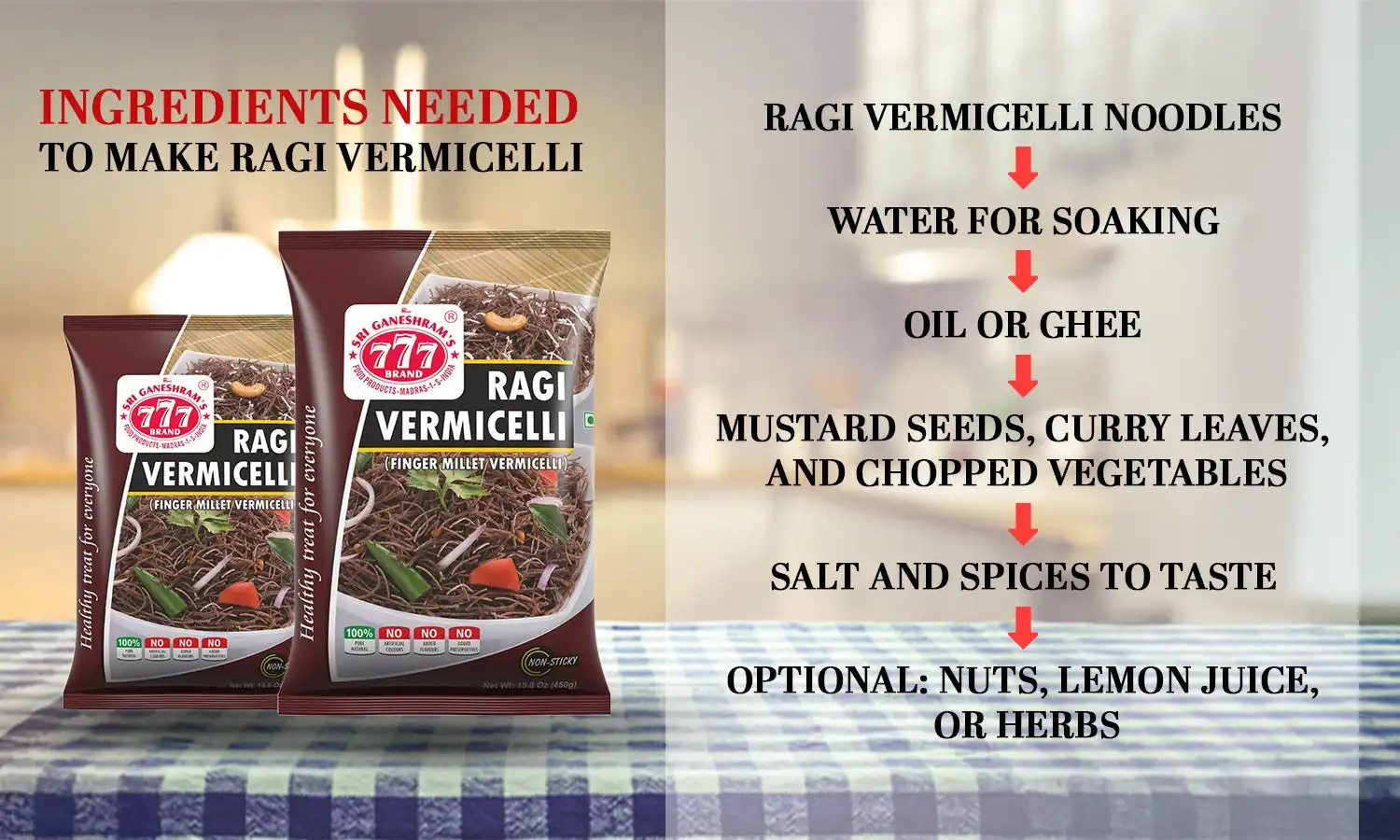
2. Ingredients Needed to Make Ragi Vermicelli
To prepare a simple, nutritious ragi vermicelli dish, gather:
- Ragi vermicelli noodles
- Water for soaking
- Oil or ghee
- Mustard seeds, curry leaves, and chopped vegetables
- Salt and spices to taste
- Optional: nuts, lemon juice, or herbs
These are some of the necessary ingredients included in order to cook a healthy Gluten-Free Ragi Vermicelli dish.
3. How to Make Ragi Vermicelli at Home Easily
1. Soak ragi vermicelli in warm water for 5–10 minutes.
2. Heat oil or ghee in a pan, add mustard seeds and curry leaves.
3. Sauté chopped vegetables for 3–4 minutes.
4. Drain the soaked noodles and add to the pan.
5. Sprinkle salt, spices, and optional nuts or lemon juice.
6. Cook gently for 2–3 minutes until everything is well combined.
And this is how to make a healthy, Gluten-Free Ragi Vermicelli dish.
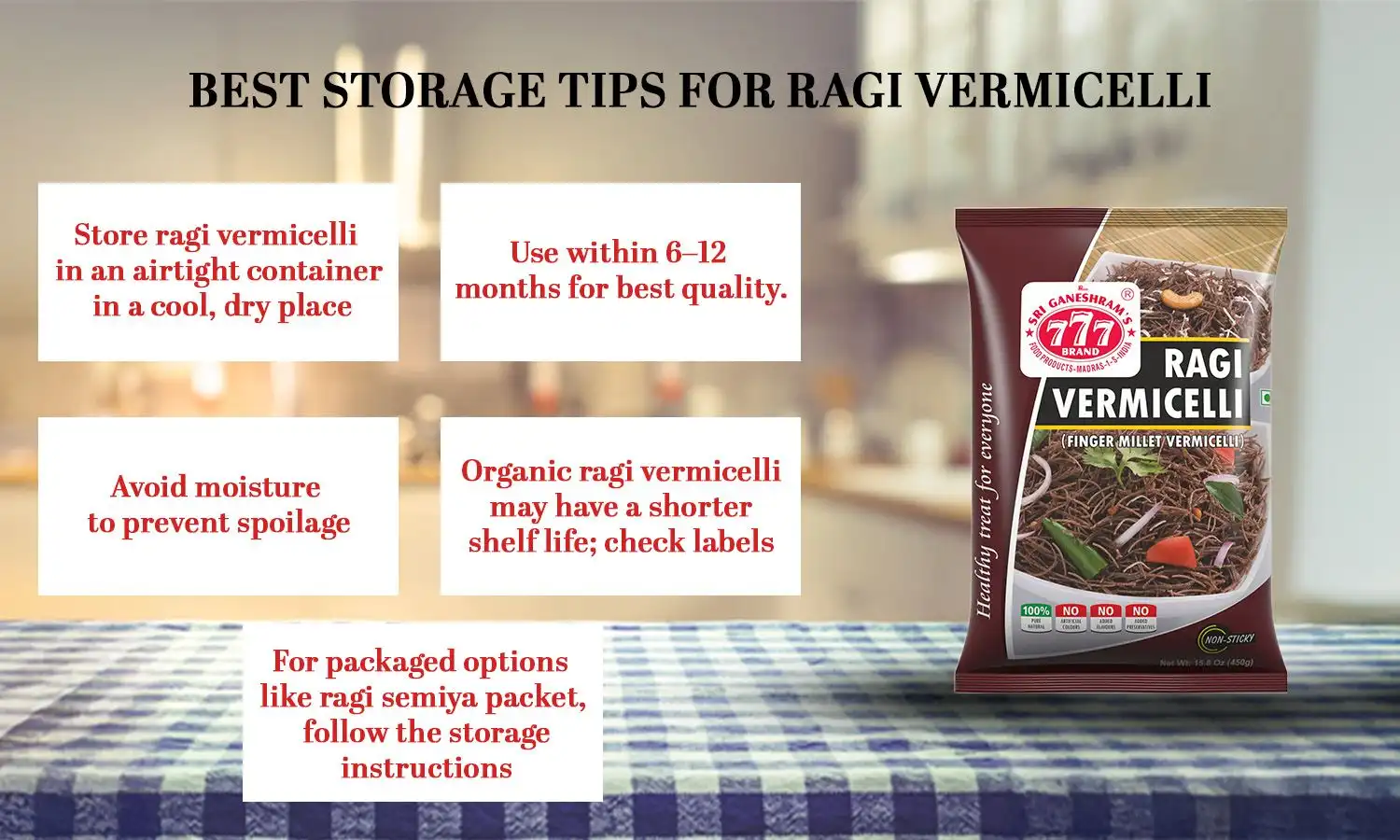
4. Best Storage Tips for Ragi Vermicelli
- Store ragi vermicelli in an airtight container in a cool, dry place.
- Avoid moisture to prevent spoilage.
- Use within 6–12 months for best quality.
- Organic ragi vermicelli may have a shorter shelf life; check labels.
- For packaged options like ragi semiya packet, follow the storage instructions.
Proper storage ensures these noodles remain fresh and retain their nutritional benefits.
Conclusion
Gluten-Free Ragi Vermicelli is a wholesome, versatile ingredient that makes healthy meals easy and delicious. Whether you choose ragi semiya, it offers fiber, protein, and a subtle nutty flavor.
Perfect for breakfast, lunch, or dinner, these noodles can be combined with vegetables, spices, or nuts for quick, satisfying Gluten-Free Ragi Vermicelli meals.
Key Takeaways
- Gluten-Free Ragi Vermicelli is rich in calcium, fiber, and protein.
- Ideal for managing blood sugar and supporting bone health.
- Proper storage of organic ragi vermicelli or ragi semiya packet keeps it fresh.
- Quick, healthy meals can be made using Gluten-Free Ragi Vermicelli ingredients.
FAQs
1. Is ragi vermicelli good?
Yes, it is nutritious, high in calcium and fiber, and a healthier alternative to regular noodles.
2. Is ragi vermicelli high in protein?
It contains moderate protein. Pairing it with vegetables or nuts increases protein content for a complete meal.
3. What are the benefits of ragi semiya?
It helps control blood sugar, supports digestion, and is rich in fiber and minerals for overall health.
4. Is ragi semiya good for diabetes?
Yes, ragi vermicelli and ragi semiya release glucose slowly due to their high fiber content, making them suitable for diabetes management.
5. How many calories are in 100g of vermicelli protein?
100g of ragi vermicelli contains approximately 330–350 calories with 6–8g protein, providing a wholesome and filling meal.