What Nutrients Make Peanut Oil a Healthy Choice?
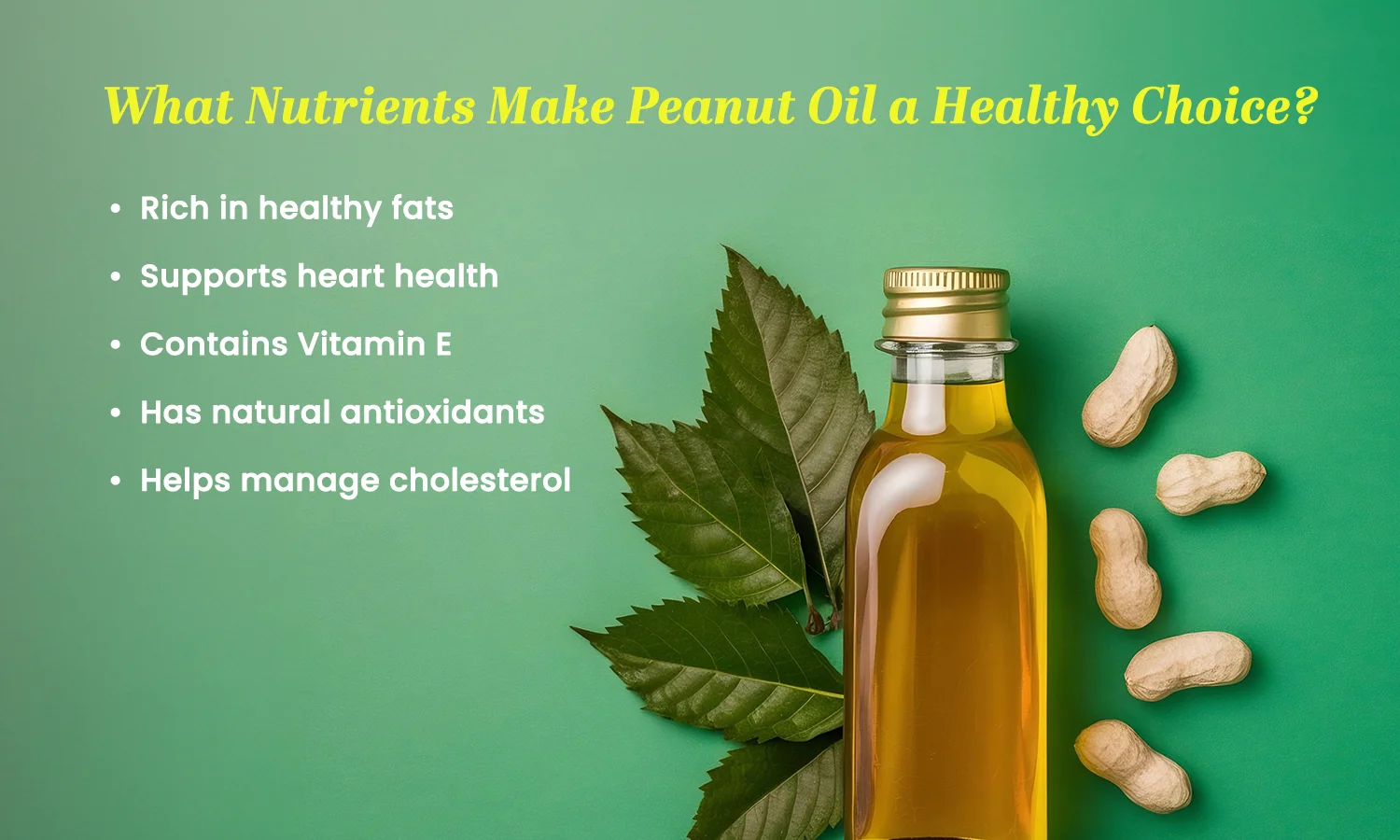
When looking at peanut oil nutrition facts, it mainly includes healthy fats, Vitamin E, and plant compounds that support overall wellness when consumed in moderation.
The reason peanut oil is healthy goes beyond cooking—it’s also about what it contains.
Groundnut oil nutrition mainly consists of healthy fats, including monounsaturated and polyunsaturated fats. These help maintain balanced cholesterol levels and support overall heart function. It is also a good source of Vitamin E, an antioxidant that protects cells and supports immunity. Even small amounts used in daily cooking contribute to this benefit.
In addition, it contains plant compounds like phytosterols, which may help reduce cholesterol absorption. Some natural varieties also retain antioxidants like resveratrol. These nutrients together explain the growing awareness around the health benefits of peanut oil.
Peanut Oil Benefits for Health
The benefits of peanut oil include supporting heart health, providing antioxidants, and offering a stable cooking medium for everyday use.
First, it supports heart health due to its balanced fat composition. Using it instead of heavily saturated fats can help maintain better cholesterol levels. It also works well for daily cooking because of its stability. Unlike some oils, it doesn’t break down easily under heat, making it a reliable option.
Another advantage is its antioxidant content. Vitamin E helps protect the body from oxidative stress and supports overall wellness. While all oils should be used in moderation, the advantages of peanut oil make it a practical choice for regular meals.
What Are the Main Advantages and Uses of Peanut Oil?
One of the biggest advantages of peanut oil is its versatility in cooking.
There are multiple peanut oil uses, from deep frying snacks to everyday cooking, making it a versatile option in Indian kitchens.
In Indian kitchens, groundnut oil for cooking is commonly used for frying, sautéing, and tempering. It performs especially well for deep frying because of its high heat stability. It can also be used in baking as a substitute for butter in certain recipes. chekku-pressed oils are often preferred for traditional dishes because of their natural flavour.
Beyond cooking, it is sometimes used for skin and hair care due to its nourishing properties, though its primary use remains culinary. These multiple peanut oil uses make it a convenient option for everyday cooking.
How Does Peanut Oil Compare with Other Cooking Oils?
When compared with other oils, groundnut oil stands out as a balanced option. Compared to olive oil, it performs better for high-heat cooking. Olive oil is usually preferred for low-heat cooking or dressings, while peanut oil is better suited for frying.
Many people also ask is refined peanut oil healthy. Refined versions are more stable for high-heat cooking, while traditional oils retain more natural flavour and nutrients.
When compared with sunflower oil, both are commonly used, but peanut oil offers a slightly better balance of fats. Mustard oil, on the other hand, has a strong flavour, whereas peanut oil remains neutral and versatile. For those looking for a practical option, best groundnut oil for cooking is often one that balances both performance and nutrition.
Tips for Choosing the Best Peanut Oil
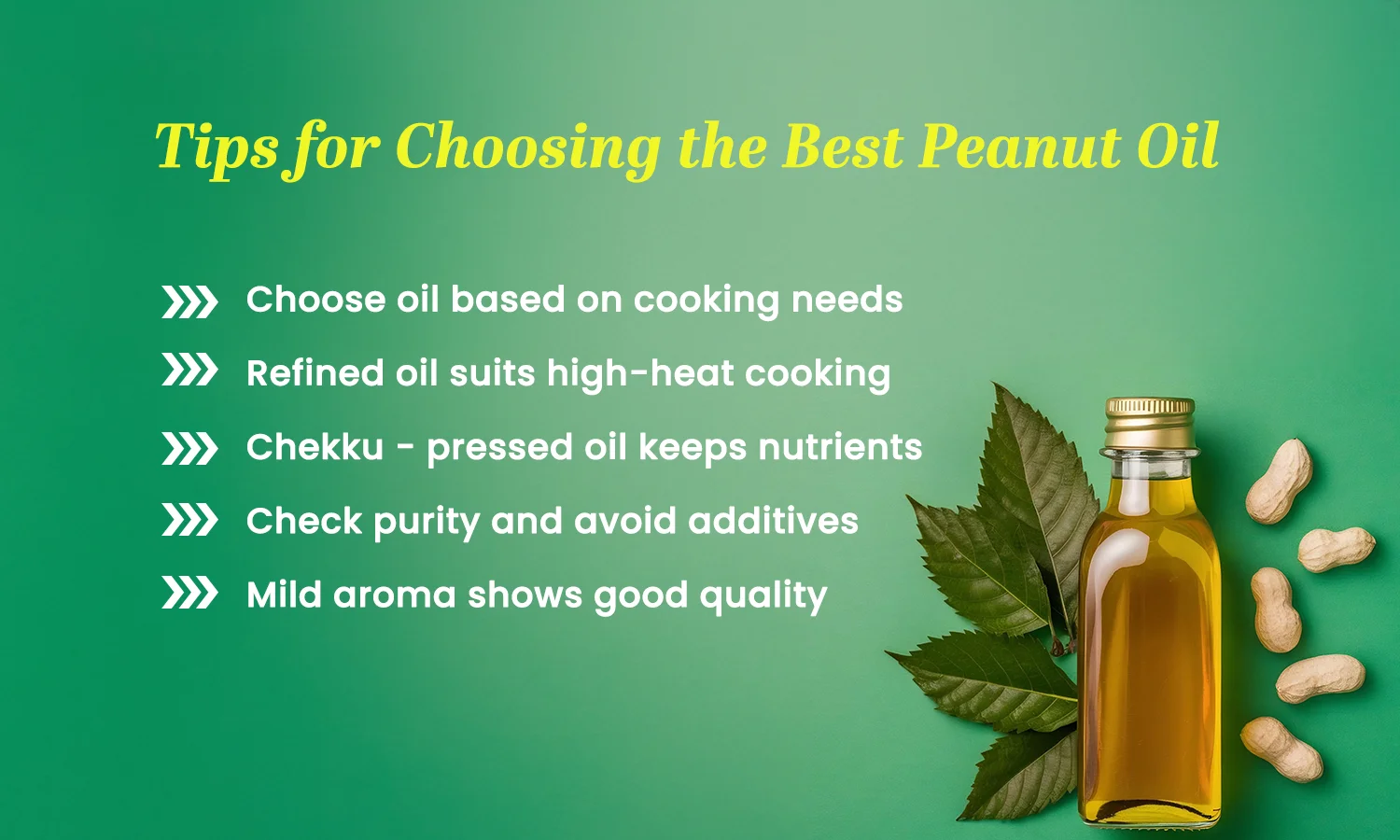
Choosing the right oil depends on your cooking needs.
For high-heat cooking, refined oil is usually the better choice because of its stability. If you prefer a more natural option, chekku groundnut oil or chekku-pressed oil retains more nutrients and flavour. Always check the label and look for oils that clearly mention purity. Avoid products with unnecessary additives.
Simple checks at home can also help. Pure oil will have a mild nutty aroma, while low-quality oil may smell stale or overly processed. Selecting the best groundnut oil for cooking ensures better taste and overall quality in your meals.