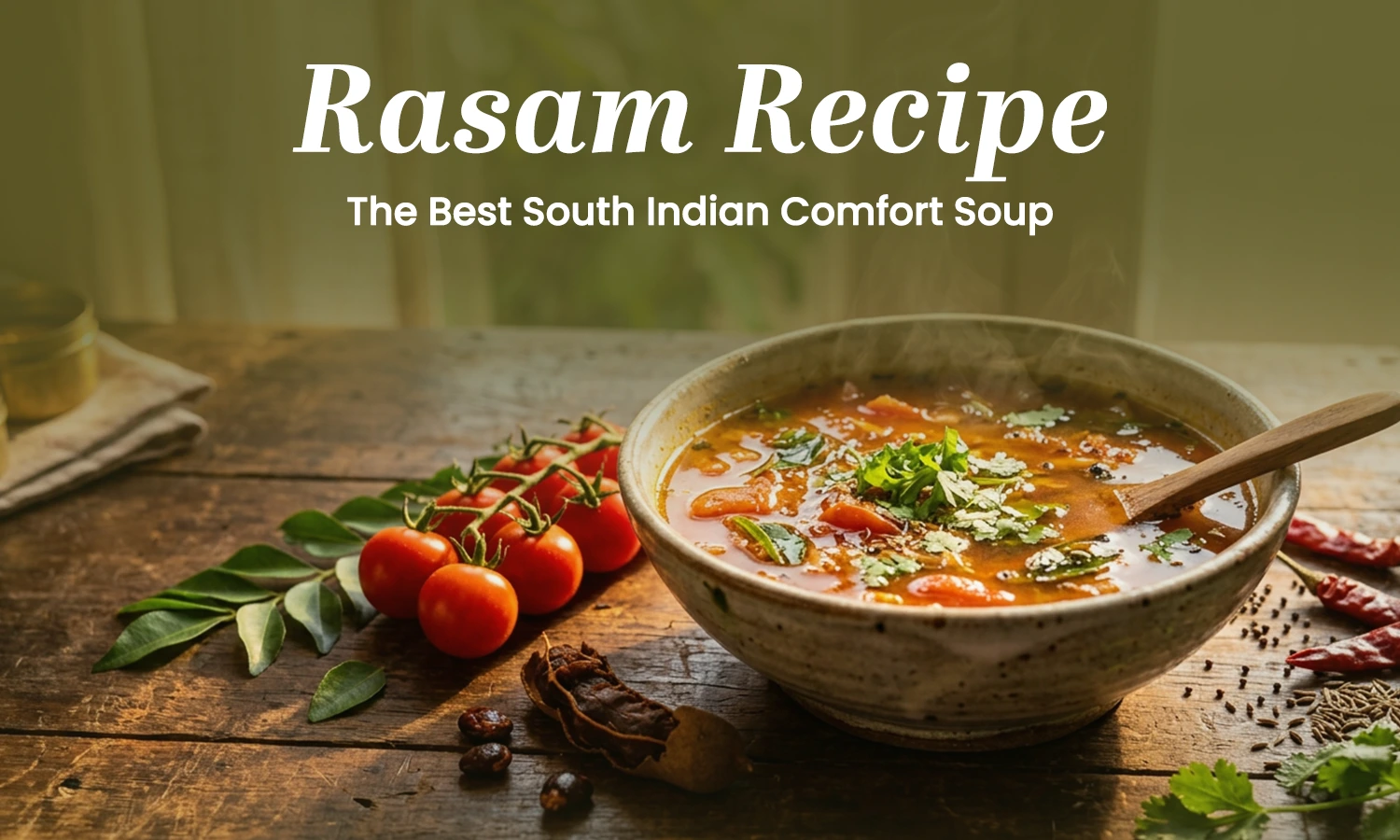
Summary
A reliable everyday recipe families return to again and again. It explains why the balance of sour, spicy, and savoury works, lists simple ingredients, and gives a step by step method finished with fresh tempering. Popular variations like tomato rasam and dal rasam are covered, along with a little history and pairing suggestions for a complete plate.
Introduction :
A good rasam recipe is one of the most loved dishes in any South Indian home. This rasam recipe gives you a tangy, spiced soup that is light, warm, and easy to make. With the right rasam ingredients and a fragrant rasam masala, you can prepare a comforting bowl in under thirty minutes.
Below you will find an easy rasam recipe that works for beginners and a few variations, such as a tomato rasam recipe and dal rasam. This is the kind of South Indian rasam that families return to again and again.
Why This Rasam Recipe Works
This rasam recipe works because it keeps the balance between sour, spicy, and savoury. Tamarind brings the tang, rasam masala brings the spice, and a gentle simmer ties them together. Hard boiling is avoided, which is the most common mistake in any rasam recipe.
A traditional rasam recipe also depends on tempering. The hot ghee, mustard, and curry leaves added at the end lift the aroma. That final step turns a plain broth into a true South Indian rasam.
Rasam Ingredients for This Recipe
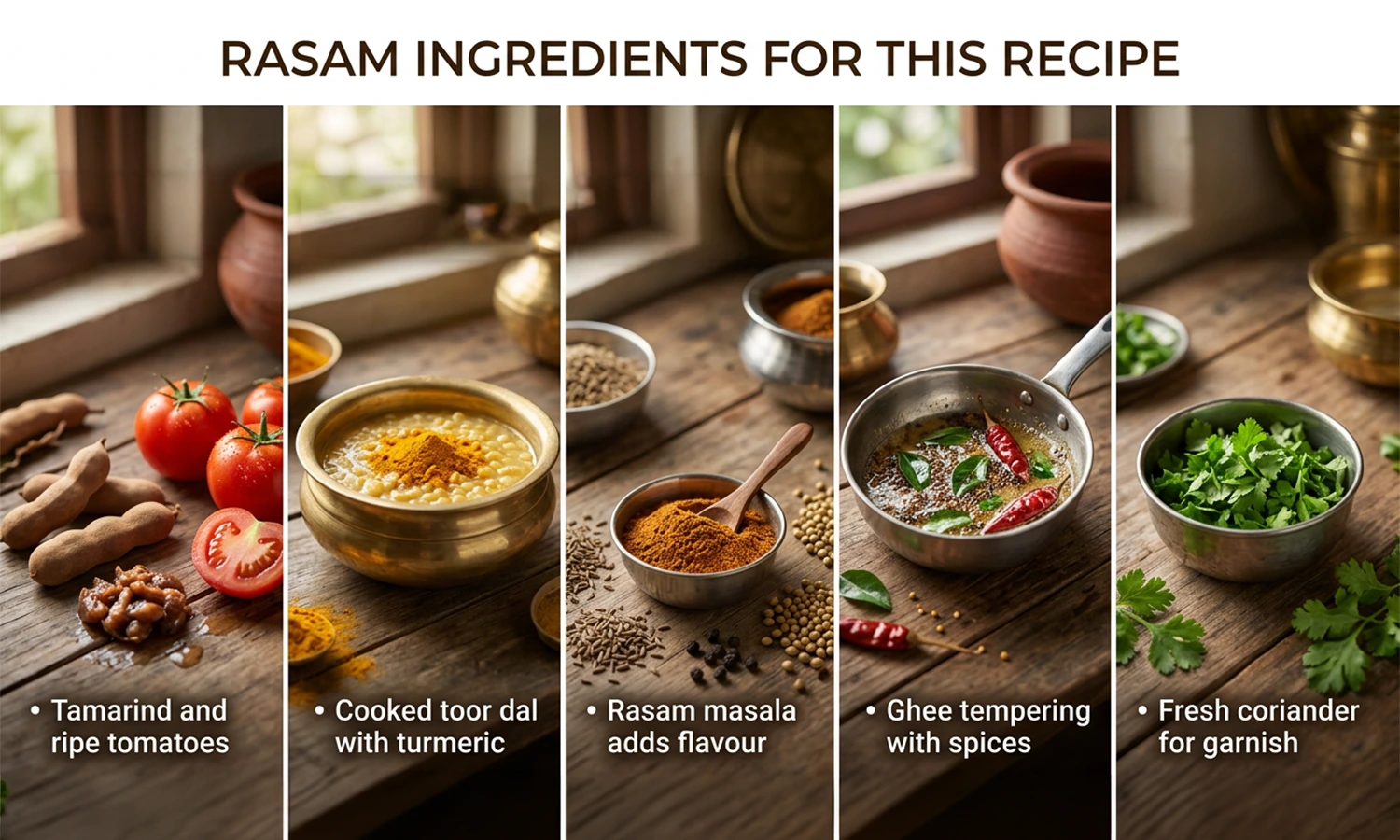
The rasam ingredients are simple and easy to find. You need tamarind, ripe tomatoes, cooked toor dal, turmeric, salt, and rasam masala. For tempering you need ghee, mustard seeds, cumin, dried red chilli, curry leaves, and asafoetida.
If you do not have a ready blend, a quick rasam powder recipe of roasted coriander seeds, cumin, pepper, and red chilli will do the job. Fresh coriander leaves are the finishing touch in this easy rasam recipe.
Step-by-Step Rasam Recipe
Start by extracting tamarind juice from a small ball of tamarind. Add crushed tomatoes, turmeric, salt, and rasam masala to the tamarind water. Let it simmer on low heat until the raw smell fades.
Add cooked and mashed toor dal with a little water to make a softer dal rasam. Keep the flame low so the rasam recipe does not turn bitter. When a light froth forms on top, switch off the heat.
Heat ghee in a small pan, add mustard seeds, cumin, red chilli, and curry leaves. Pour this over the rasam and cover for one minute. Your South Indian rasam is now ready.
Popular Variations of This Rasam Recipe
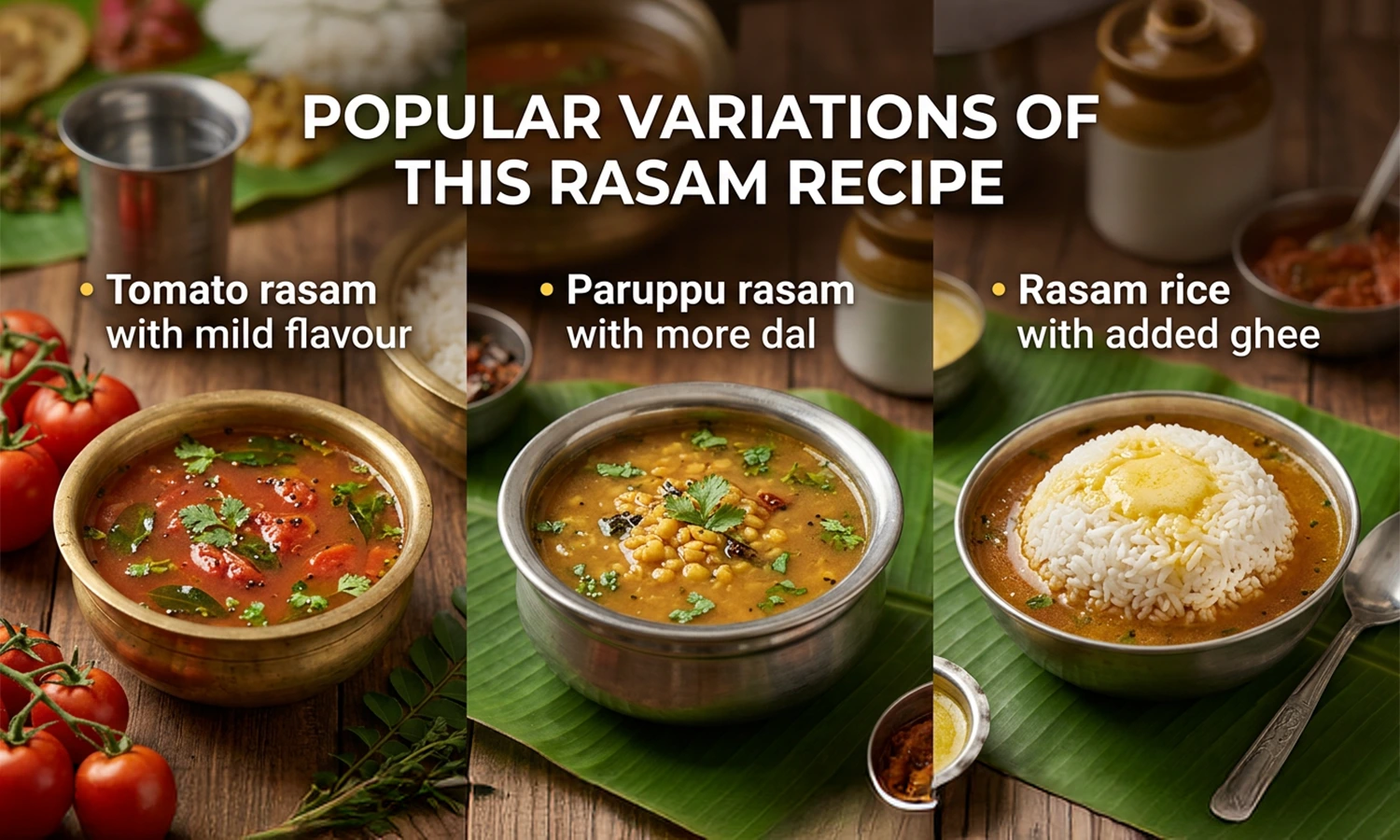
This base rasam recipe can change in many ways. For a tomato rasam recipe, increase the tomatoes and reduce the tamarind for a milder, fruity taste. For a paruppu rasam recipe, add more toor dal so the soup is thicker and softer.
You can also make a rasam rice recipe by pouring this rasam over mashed rice with ghee. Each version starts from the same easy rasam recipe, which makes it simple to learn once and repeat often.
Tips for the Perfect South Indian Rasam
Keep the heat low and never let the rasam boil hard. Use fresh curry leaves and good quality rasam masala for the best aroma. Store your spice blend in an airtight jar so it stays fresh for the next rasam recipe.
Taste before serving. Adjust salt, tang, and spice to your liking. A balanced traditional rasam recipe should be sour, mildly spicy, and very aromatic.
Serving Your Rasam
Serve this rasam recipe hot with steamed rice and ghee, or sip it from a small cup as a warm starter. A crisp papad on the side makes the meal complete.
With this easy rasam recipe in hand, you can make a fresh bowl of South Indian rasam any day of the week. Practice it a few times and it will become second nature.
History of the Rasam Recipe
The rasam recipe has deep roots in South Indian cooking and is several centuries old. Every region and family keeps its own rasam recipe, passed down by memory rather than measurement. Some prefer a thin, peppery style, while others enjoy a thicker dal rasam.
This variety is part of the charm. A traditional rasam recipe from Tamil Nadu may differ from one in Karnataka, yet the core idea stays the same. Tamarind, spice, and a careful simmer define almost every rasam recipe.
Easy Rasam Recipe Variations to Try
Once you master the base, the rasam recipe opens up to many options. Try a tomato rasam recipe for a fruity bowl, or a paruppu rasam recipe with extra dal for softness. A rasam rice recipe turns the same soup into a full meal.
For a homemade touch, pair the rasam recipe with a fresh rasam powder recipe ground at home. Each version builds on the same easy rasam recipe, so you learn the method once and repeat it in new ways. The rasam ingredients barely change between them.
Common Mistakes:
The biggest mistake in any rasam recipe is hard boiling, which turns the soup bitter. Keep the heat low. Skipping the tempering is another error, since much of the aroma in a good rasam recipe comes from that final step.
What to Serve With Your Rasam
A bowl of rasam rarely stands alone. The classic pairing is steamed rice and a spoon of ghee, which soaks up the tangy soup. A crisp papad or appalam on the side adds a satisfying crunch to the meal.
Light vegetable side dishes also work well. A simple potato fry, beans poriyal, or a spoon of curd balances the sharp, spiced soup. These pairings turn a single rasam recipe into a full, comforting South Indian plate.
For a lighter option, you can sip the soup warm from a cup before dinner. Served this way, it opens the appetite and warms the body. However you serve it, a well made bowl always rounds off the meal.
Tips for the Best Results Every Time
A few small habits make a big difference in the final bowl. Always keep the heat low once the cooked dal and tamarind water go into the pot. A gentle simmer keeps the flavour clean and the aroma fresh, while a hard boil can turn the broth flat and dull. Watch for the light froth that rises to the top, and switch off the flame as soon as you see it.
Fresh tempering is the heart of a good bowl. Heat the ghee or oil until it shimmers, then add the mustard seeds and let them pop fully before the curry leaves and dried chillies go in. Pour this hot tempering over the pot at the very end and cover it for a minute so the aroma settles in. Garnish with chopped coriander leaves just before serving. Taste once for salt and tang, adjust if needed, and serve it warm with steamed rice or as a light, soothing drink on its own.
FAQs
How do you make rasam at home?
Simmer tamarind water with tomato, turmeric, salt, and rasam masala, add cooked dal, then finish with a hot ghee tempering.
Can rasam be made ahead?
Yes, but add the tempering fresh for the best aroma.
Why does rasam turn bitter?
Hard boiling is the usual cause, so a gentle simmer keeps it smooth.
What is the difference between rasam and sambar?
Rasam is a thin, tangy soup, while sambar is thicker and made with more dal and vegetables.
How long can I store rasam?
Keep it in the fridge for about a day and reheat it gently without boiling.