Summary
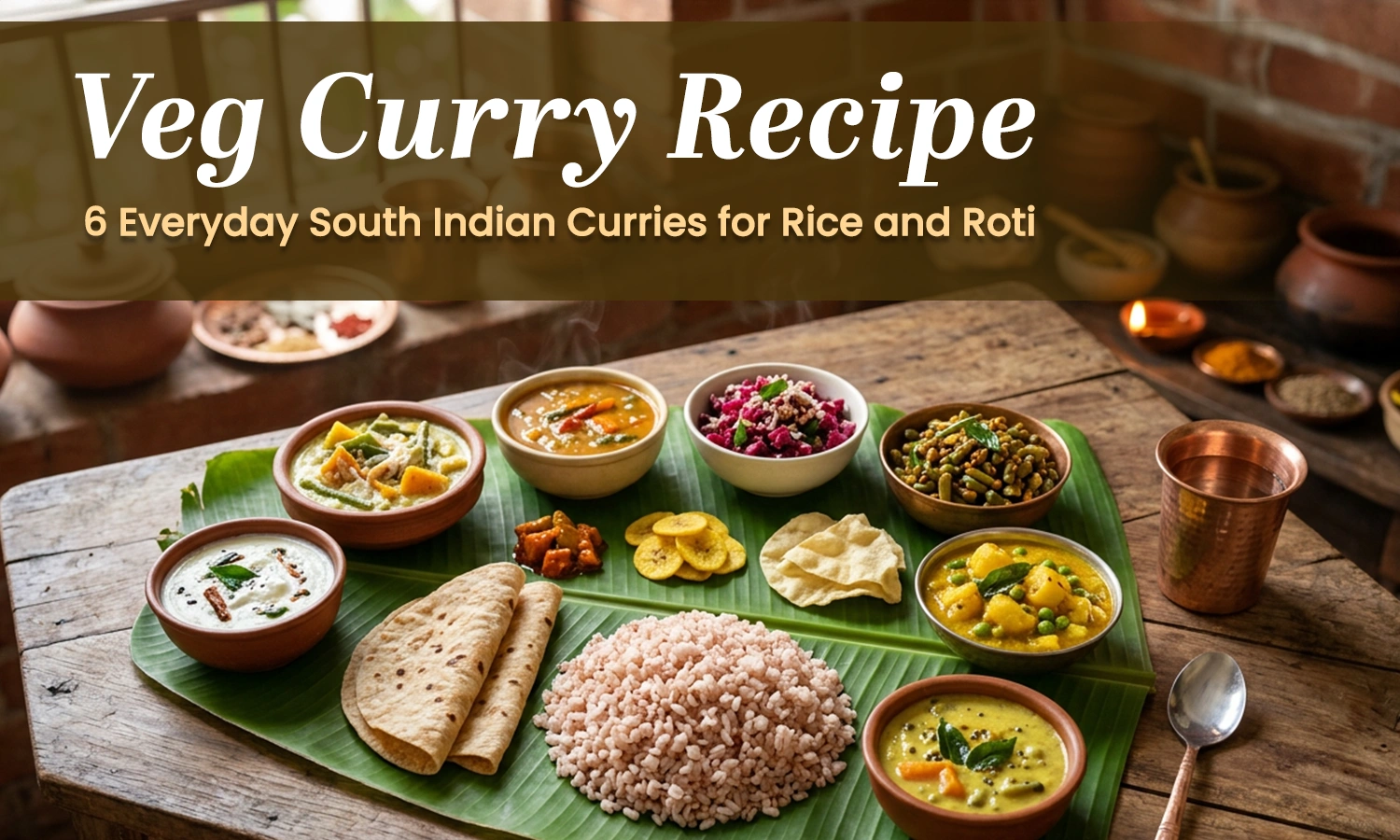
Searching for a dependable veg curry recipe that suits both rice and roti? This guide breaks down six everyday South Indian curries, their base ingredients, and quick preparation tips for a well-rounded vegetarian dinner table.
What Is Veg Curry?
Veg curry is a vegetable-based dish prepared with fresh vegetables, spices, herbs, and a flavourful gravy or dry masala. South Indian veg curries can be made with onion and tomato, coconut, lentils, or sambar-based gravies and are commonly served with rice, roti, chapati, or parotta.
The Everyday Role of Curry in Indian Cooking
A good curry does more work on an Indian dinner plate than almost any other dish. It carries flavour across rice, roti, and even curd rice, turning simple starch into a full meal. Every household has its own version of a dependable veg curry recipe, usually built around onions, tomatoes, and a trusted masala powder, adjusted slightly depending on the vegetables available that day.
Popular Veg Curry Recipes
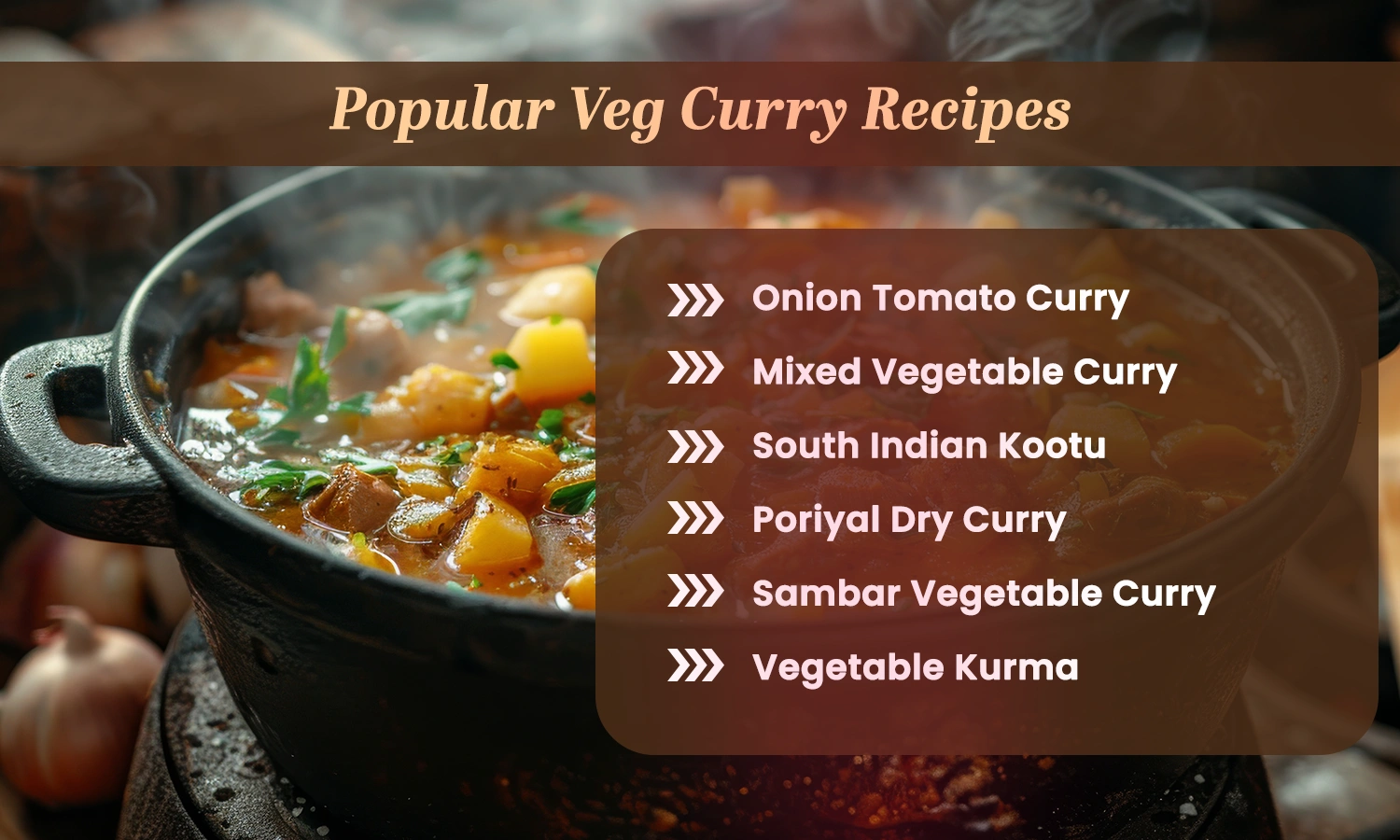
From simple everyday gravies to traditional South Indian favourites, these popular veg curry recipes pair perfectly with rice and roti. Here are six easy curries to try at home.
1. Onion Tomato Vegetable Curry
The most common vegetable curry recipe in Indian homes starts with a base of sautéed onions and tomatoes, seasoned with the 777 turmeric powder, chilli powder, and coriander powder. Mixed vegetables like carrots, beans, and potatoes are added and simmered until soft. This forms the backbone of countless weeknight dinners because it is forgiving of substitutions and quick to prepare.
2. Mixed Vegetable Curry with Coconut
A slightly richer version of the everyday mixed vegetable curry, this style adds a spoon of ground or grated coconut toward the end of cooking, giving the gravy body and a mild sweetness. This version of Indian vegetable curry works especially well alongside chapati or steamed rice.
3. South Indian Style Vegetable Kootu
Kootu, a lightly spiced lentil and vegetable curry, sits between a dal and a curry in texture. It uses moong dal or toor dal cooked with vegetables like pumpkin, snake gourd, or beans, finished with a light tempering. This dish appears frequently on any list of South Indian veg curries because of how well it balances nutrition and comfort.
4. Poriyal Style Dry Curry
Not every curry needs gravy. A poriyal, or dry sautéed vegetable, made with grated coconut, mustard seeds, and curry leaves, is a staple side dish across South Indian meals. This poriyal is usually served alongside sambar rice, rasam rice, or any instant ready meal rather than as a standalone dish.
5. Sambar-Based Vegetable Curry
For those who want a curry with real depth, using a proper sambar powder, such as 777 Foods’ Madras Sambar Powder, as the base rather than plain chilli powder, transforms an ordinary curry recipe into something closer to a restaurant-style dish. Mixed vegetables like drumstick, brinjal, and okra work particularly well in this style, and this version doubles easily as a veg curry for rice.
6. Egg-Free Kurma Style Gravy
A lighter, milder cousin of the standard curry, a kurma-style gravy uses coconut and cashew paste instead of tomato as the base, resulting in a creamy, mellow vegetable gravy suited to idiyappam, chapati, or poori.
Making Dinner Decisions Easier Through the Week
- Turmeric powder - ½ teaspoon
- Chilli powder - 1 teaspoon
- Coriander powder - 1 to 2 teaspoons
- Mustard seeds
- Curry leaves
- Tomato base
- Coconut (if required)
- Cashew paste (based on the individual’s taste)
Choosing Vegetables for Your Curry
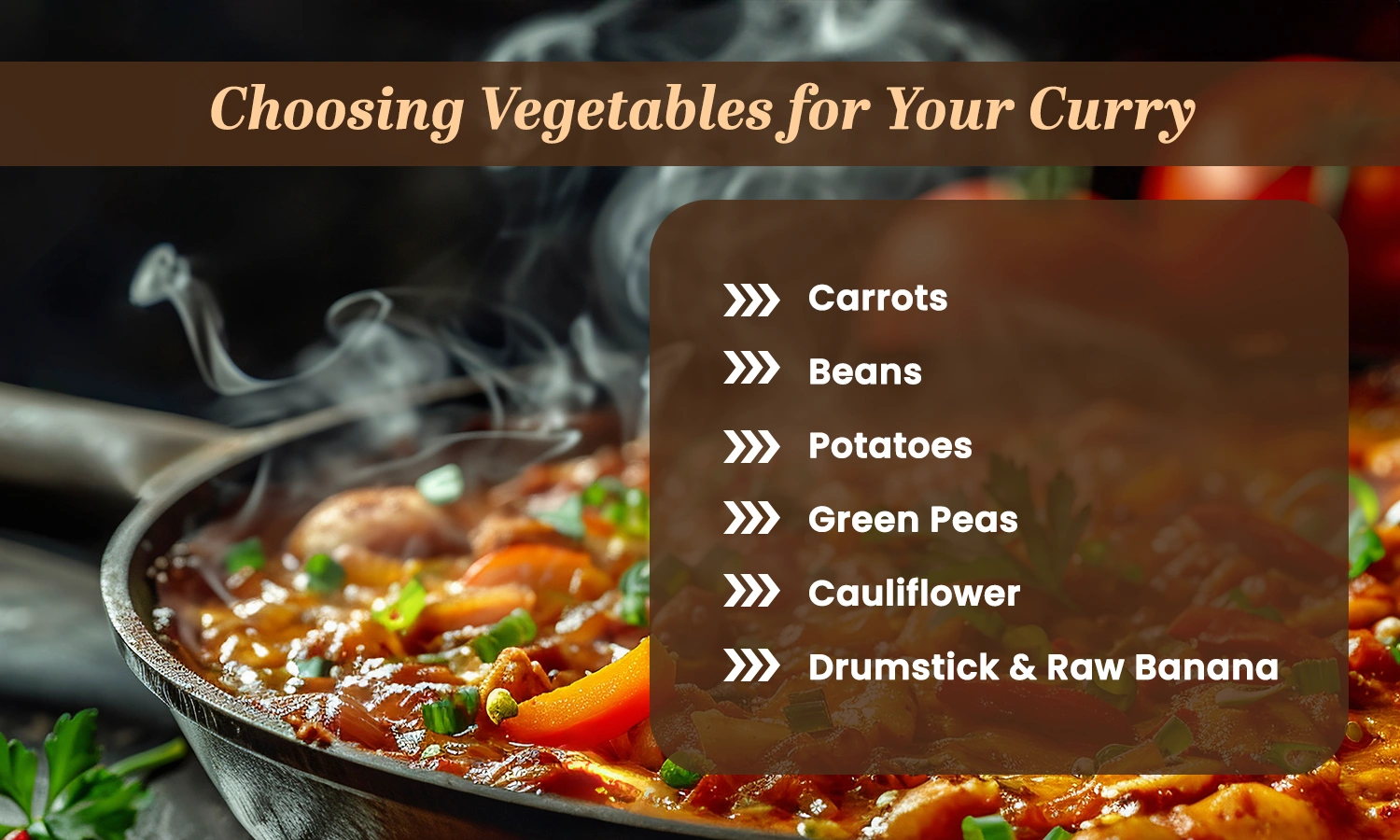
Most vegetable recipes in Indian cooking are flexible by design. Carrots, beans, potatoes, peas, and cauliflower form a common base, while regional additions like drumstick, ash gourd, or raw banana bring variety. Rotating vegetables across the same basic gravy recipe is one of the easiest ways to avoid repetition without needing an entirely new dish every night.
Getting the Basics Right for Any Indian Vegetable Curry Recipe
Regardless of which of these six dishes you choose, a few fundamentals separate an average curry from a memorable one. Tempering oil properly with mustard seeds and curry leaves before adding onions builds the aromatic base that most Indian curries depend on. Cooking onions until they turn a light golden colour, rather than rushing the process, prevents the final gravy from tasting raw. And using a good quality masala powder, rather than an inconsistent mix of loose spices, keeps the flavour steady every time you repeat the recipe.
Pure gingelly oil, like the one from 777 Foods, used either for tempering or as a finishing drizzle, adds an aroma that is difficult to replicate with refined oils and remains a preferred choice in traditional South Indian kitchens for exactly this reason.
Cook a Better Curry Tonight
A dependable masala powder makes every curry easier to get right. Try 777 products the next time you make a vegetable curry, and notice the difference a good base ingredient makes.
Shop the full range at 777 Foods and keep your curry game consistent all week.
Key Takeaways
- A proper tempering of mustard seeds and curry leaves forms the aromatic foundation of most South Indian curries.
- Coconut-based gravies like kurma and kootu tend to be milder and pair well with rice or roti.
- A quality sambar powder can elevate a simple vegetable curry into a more layered, restaurant-style dish.
- Rotating vegetables within the same base gravy recipe keeps weekly meals varied without extra effort.
- Pure oil, like 777 gingelly oil, adds an aroma that refined oils cannot easily replicate.
FAQs
What is the easiest veg curry recipe for a beginner cook?
An onion-tomato vegetable curry is the simplest starting point, requiring only basic spices, mixed vegetables, and a short simmering time.
Which mixed vegetable curry recipe works best for both rice and roti?
A sambar-based vegetable curry or a coconut kurma both pair equally well with rice and roti, making them versatile choices for a full family meal.
How can I make an Indian vegetable curry recipe taste less watery?
Cooking the onion and tomato base a little longer before adding vegetables, and allowing the curry to simmer uncovered toward the end, helps thicken the gravy naturally.
What makes a good veg curry for rice specifically?
A curry with more gravy and a slightly stronger spice base, such as a sambar-style vegetable curry, tends to work best when mixed directly with hot rice.