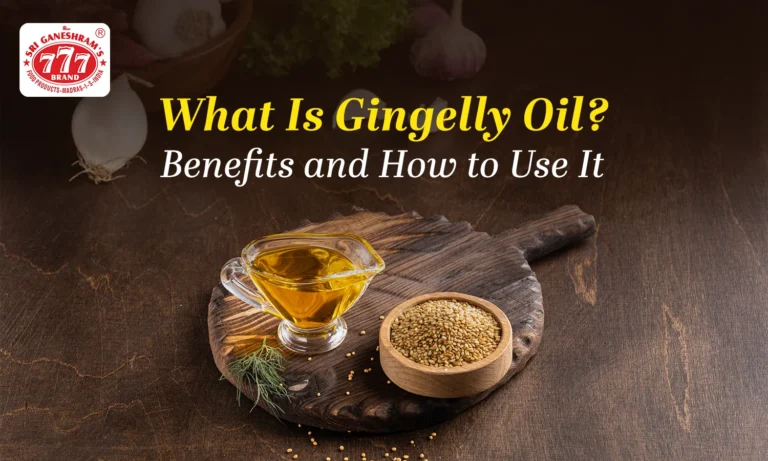
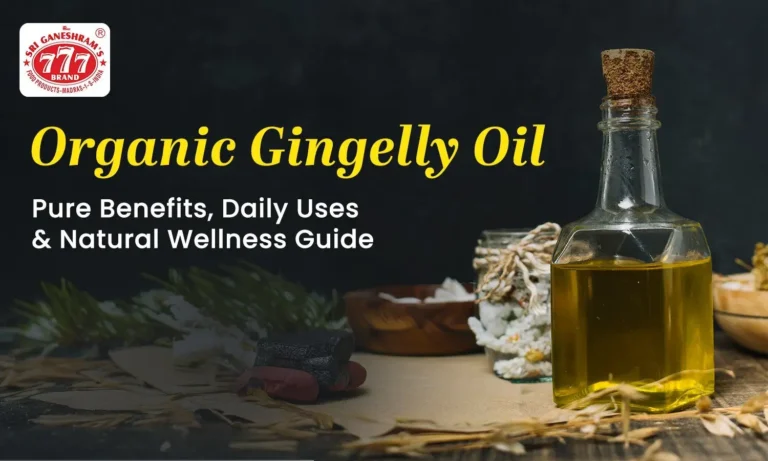
If you have grown up in an Indian home, you have probably seen a bottle of gingelly oil in the kitchen. Some families use it every day, some keep it only for certain dishes, but almost everyone knows its smell. Still, many people ask what gingelly oil is exactly, and why it is treated differently from other oils. This blog will break it down in a simple way, so you know what it is, how it is made, and how to use it well.
Introduction: What Is Gingelly Oil
So, what is gingelly oil? It is oil made from sesame seeds. In many places, people call it sesame oil, and yes, both mean the same thing. The word “gingelly” is just another name for sesame in Indian kitchens. The oil has a nutty aroma and a warm taste that feels very homely, especially in South Indian food.
If you are wondering what gingelly oil is made of, the answer is simple. Clean sesame seeds are pressed to release oil. When the seeds are roasted lightly before pressing, the oil becomes darker and more aromatic. When they are pressed raw, the oil is lighter in colour and taste.

What Makes Gingelly Oil Special
Gingelly oil is not used like a regular frying oil in most homes. It is more of a flavour oil. Even a small spoon can change the smell and taste of a dish. That is why people say gingelly oil brings “that proper home taste.”
Another reason it feels special is the traditional way it is made. Many brands still sell chekku oil, which means wood-pressed oil. This method presses sesame seeds slowly at low heat, so the flavour stays natural. People who like a stronger aroma often choose this style.
Some also look for pure organic gingelly oil, where sesame seeds are grown without chemical farming. It is not a must for everyone, but if you prefer organic food habits, it is a good option.
Key Benefits of Gingelly Oil
The biggest reason people keep gingelly oil at home is that it supports both taste and wellness. Here are a few everyday gingelly oil benefits that people notice with regular use:
- It feels light on the stomach when used in the right amount.
- It supports digestion in traditional diets, especially when used in rasam or pepper-heavy dishes.
- It gives food a rich aroma without needing extra spices.
- It is also used outside cooking in some homes, like for body massage or hair oiling.
These benefits come from steady use in food, not from taking large amounts at once.
How to Use Gingelly Oil in Daily Cooking
Now, let us talk about real gingelly oil uses in Indian kitchens. The best way to use it is in dishes where aroma matters more than volume. A few simple examples:
- Add it to the tadka for sambar, rasam, or kuzhambu.
- Mix it with podi and hot rice for a quick comfort meal.
- Use it while making thokku rice, puliyogare rice, or pickle rice so the masala spreads evenly.
- Drizzle a little at the end of poriyal or kootu to lift the smell.
This is why gingelly oil for cooking is so loved in South Indian styles. You do not need much. A small pour does the job.
If you want one easy rule, use gingelly oil when you want the taste to feel traditional and full, not when you need heavy frying.

Storage Tips for Freshness and How to Choose the Best Gingelly Oil
Gingelly oil keeps well if stored properly. Use these simple habits:
- Keep the bottle tightly closed after every use.
- Store it in a cool, dry cabinet away from direct sunlight.
- Always use a dry spoon so moisture does not enter the bottle.
When buying, go for the best gingelly oil that smells fresh and nutty when opened. If the oil smells sharp, stale, or too flat, it is likely old stock.
Many people also search for what is gingelly oil price, and the reason it’s higher than refined oils is simple: sesame seeds are costly, and the oil yield is naturally lower. But better quality makes it worth the price.
Conclusion
By now, you have a clear idea of what gingelly oil is, how it is made, why it smells so special, and how to use it in daily cooking. It is a simple traditional oil that brings deep flavour to food and supports light everyday wellness when used in the right amount.
By now, you have a clear idea of what gingelly oil is, how it is made, why it smells so special, and how to use it in daily cooking. It is a simple traditional oil that brings deep flavour to food and supports light everyday wellness when used in the right amount.
Key Points :
- What is gingelly oil? It is sesame seed oil with a rich nutty aroma.
- It is the same as sesame oil and is widely used in Indian homes.
- Traditional chekku oil styles keep flavour strong and natural.
- Use gingelly oil in tadka podi rice and thokku rice for the best taste.
- Store it airtight and dry to keep the aroma fresh for longer.
FAQs
Why is gingelly oil so expensive
Gingelly oil comes from sesame seeds, and sesame is a costly crop. The oil yield is lower compared to many other seeds, so more seeds are needed to make one litre. Wood-pressed and organic versions also add to the cost.
Is gingelly oil good for health
Yes, in normal food amounts, gingelly oil supports digestion and gives steady nourishment. It is also used traditionally for body comfort and warming foods. The key is to use small amounts regularly, not heavy quantities.
What is another name for gingelly oil?
Another common name is sesame oil. In other Indian languages, it is also called nalla ennai or til ka tel. All refer to the same oil from sesame seeds.
Which is the healthiest oil for Indian cooking
There is no single perfect oil for everyone. Many homes use a mix based on dishes. Gingelly oil is great for South Indian gravies and rice mixes, while other oils may be used for frying or neutral cooking.
What is the best oil for cholesterol?
Choosing oil alone does not fix cholesterol. Overall, diet and lifestyle matter more. Still, traditional oils like gingelly oil used in moderation can be part of a balanced Indian diet.