Introduction – Why Choosing the Best Quality Asafoetida Matters
Choosing the best quality asafoetida is essential because it directly affects both flavour and health benefits. Pure hing has a strong, sharp, sulfurous aroma and a yellowish-brown or golden-amber appearance. Low-grade varieties, on the other hand, often contain excessive fillers that dilute flavour and reduce potency.
High-quality asafoetida hing transforms beautifully when heated in oil, developing a mellow, savoury depth similar to onion and garlic. Poor-quality versions may remain harsh or turn bitter even after tempering.
Since hing is used in very small quantities, buying the best quality asafoetida ensures you get maximum impact from just a tiny pinch. Picking a good quality hing also means you waste less and enjoy more consistent results.
How to Identify the Best Quality Asafoetida?
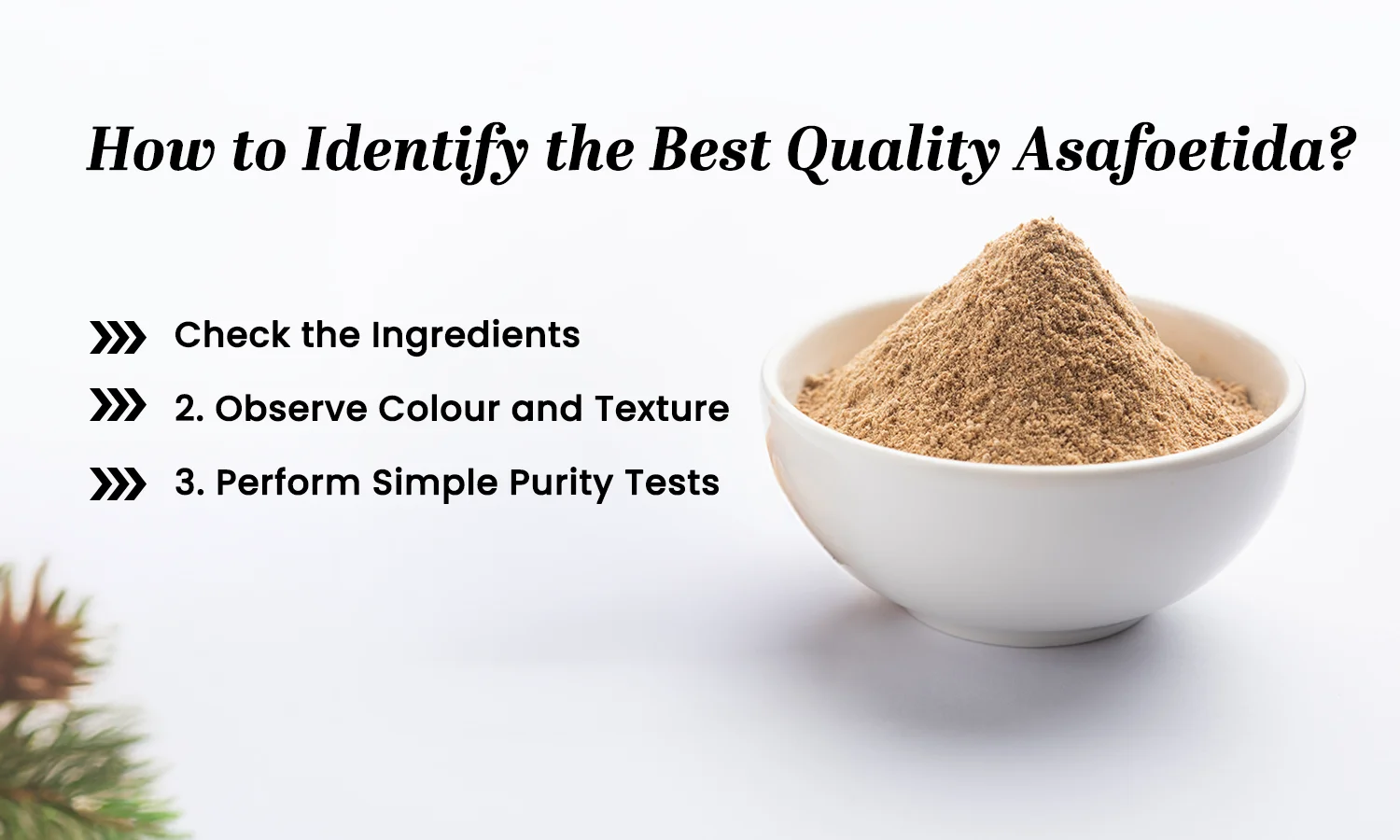
Identifying the best quality asafoetida requires looking beyond branding and focusing on purity. Knowing what sets the best asafoetida powder apart makes shopping far easier.
1. Check the Ingredients
Always read the label. Pure resin should be listed clearly. Many powdered varieties are blended with flour and edible gum. If buying hing powder, make sure the resin content is specified.
2. Observe Colour and Texture
- High-quality resin appears yellowish-brown or amber.
- Avoid chalky white or overly bright products.
- Powder should be fine and free-flowing.
If you are searching for the best hing powder, texture and aroma are reliable indicators.
3. Perform Simple Purity Tests
- Water Test: Pure resin dissolves in warm water, forming a cloudy solution without grit.
- Burn Test: Authentic resin burns with a bright flame, similar to camphor.
When buying Asafoetida online, check detailed ingredient lists and customer reviews to avoid adulterated products. A genuine Pure asafoetida powder will always pass these simple checks.
What Are the Uses of Asafoetida Powder?
The uses of asafoetida are both culinary and traditional.
Culinary Uses
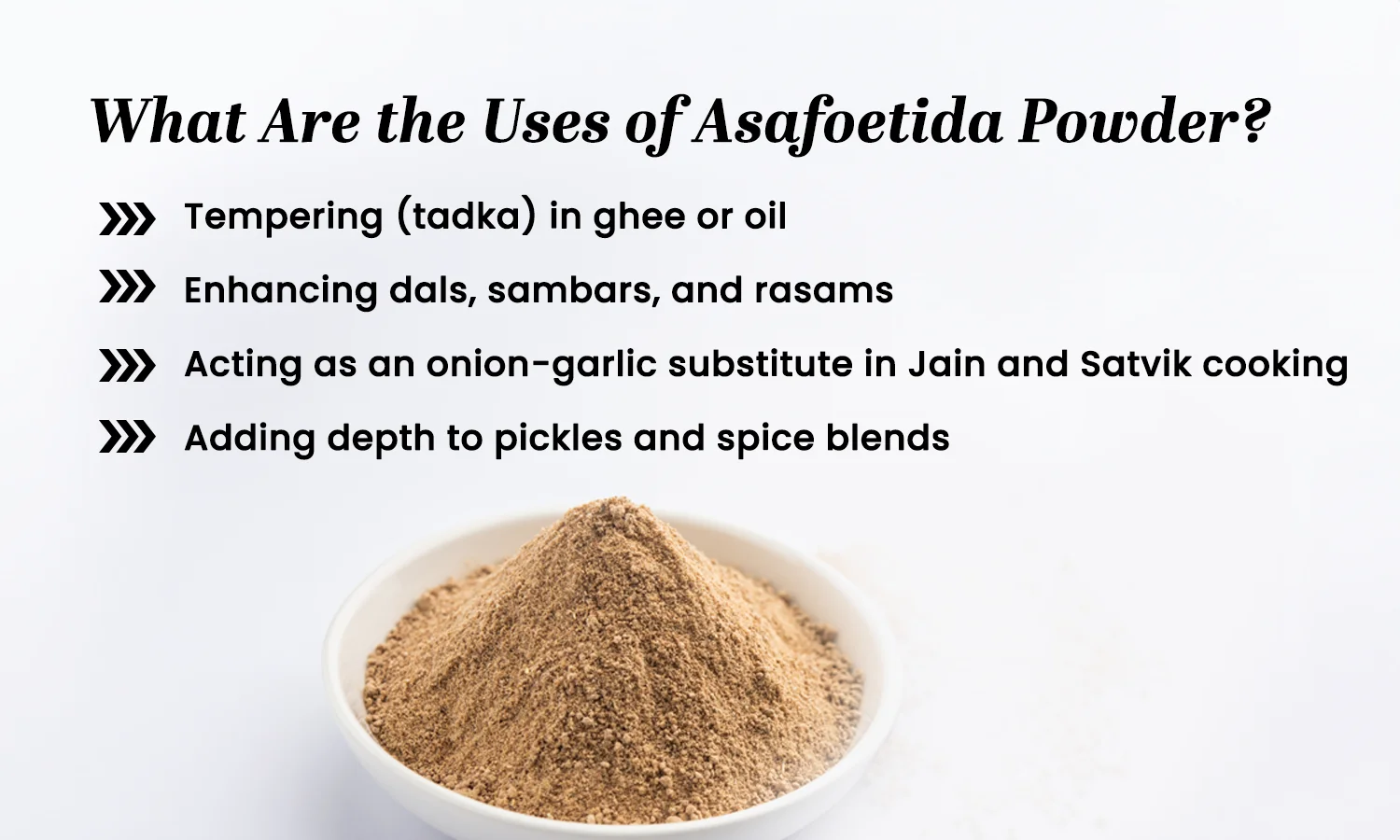
In Indian cooking, asafoetida powder uses include:
- Tempering (tadka) in ghee or oil
- Enhancing dals, sambars, and rasams
- Acting as an onion-garlic substitute in Jain and Satvik cooking
- Adding depth to pickles and spice blends
A small pinch of hing asafoetida powder added at the beginning of cooking unlocks its true aroma.
Digestive and Traditional Uses
Among common asafetida uses, digestive relief stands out. It is widely used to reduce bloating and discomfort when cooking legumes. Traditionally, a pinch mixed with warm water is used for gas relief.
Because it is potent, asafoetida powder used for cooking should always be measured carefully.
What Are the Benefits of Best Quality Asafoetida?
The best quality asafoetida contains higher concentrations of active compounds, making its effects more noticeable.
1. Digestive Support
One of the major asafoetida benefits is its ability to stimulate digestive enzymes. It acts as a natural carminative, helping reduce gas and bloating.
2. Respiratory Relief
Traditional practices use it to ease asthma, cough, and bronchitis due to its expectorant properties.
3. Anti-inflammatory and Antioxidant Effects
Pure resin contains bioactive compounds such as ferulic acid. These contribute to recognised asafetida benefits, including antioxidant support and reduced inflammation.
Using the best quality asafoetida ensures these properties are not diluted by excessive fillers.
What Should You Know Before Buying Asafoetida?
Before purchasing the best quality asafoetida, consider the following:
Types Available
- Pure Resin: Most potent and expensive form.
- Compounded Powder: Mixed with flour or gum for easier use.
- Granules (Dana): Balanced option between resin and powder.
If gluten sensitivity is a concern, check whether the asafoetida powder contains wheat flour. Gluten-free versions typically use rice flour or edible gum.
Price Awareness
Authentic resin is expensive due to limited sourcing regions such as Afghanistan and Tajikistan. Extremely cheap products often indicate heavy adulteration.
Packaging
Choose airtight containers. Poor packaging causes aroma loss and moisture clumping, reducing effectiveness.
Investing in the best hing available ensures better flavour, improved digestion, and consistent cooking results. A reliable Best Quality Hing Powder stays fresh and aromatic when stored this way.
Conclusion
Selecting the best quality asafoetida is about more than just brand preference, purity, aroma, ingredient transparency, and packaging all matter. Whether you choose resin or powder, high-quality hing delivers stronger flavour, better digestive comfort, and reliable results in everyday cooking.
With proper selection and careful usage, this powerful spice continues to be an essential ingredient in Indian kitchens. Choosing a Premium Quality Asafoetida rewards you with richer aroma and dependable everyday cooking.
FAQs
How Many Types of Asafoetida Are There?
There are three main types: pure resin, compounded powder, and granules.
Which Hing Is Strong?
Pure resin is the strongest form. Compounded powder is milder and easier for daily use.
What Is the Price of Real Hing?
Pure resin can cost ₹30,000 or more per kilogram, while compounded powders range between ₹1,500–₹6,000 per kilogram, depending on quality.
How to Check the Purity of Hing?
You can perform water and burn tests at home to check authenticity.
How to Identify Original Asafoetida?
Original asafoetida has a sharp sulfurous aroma, amber colour, and dissolves without leaving chalky residue.