Overview
Diwali snacks like murukku, thattai, ribbon pakoda, mixture, and seedai are made days before the festival and shared with family and neighbours. Planning across seven days spreads the effort, keeps snacks fresh, and leaves the final days free for sweets, cleaning, and celebration with loved ones.
The Week Before Deepavali
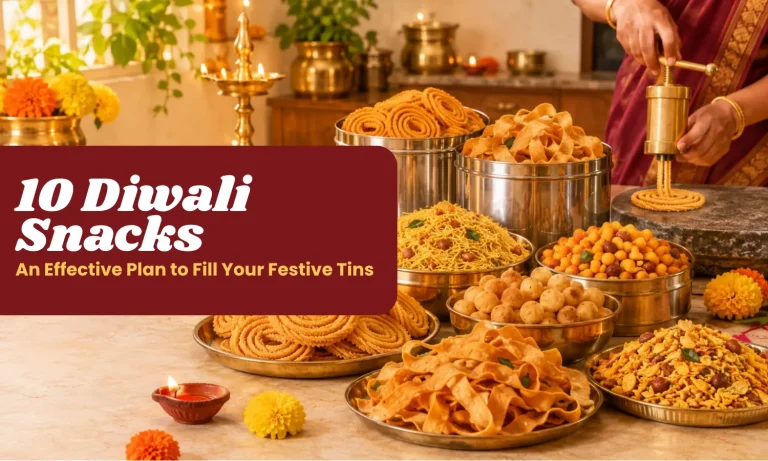
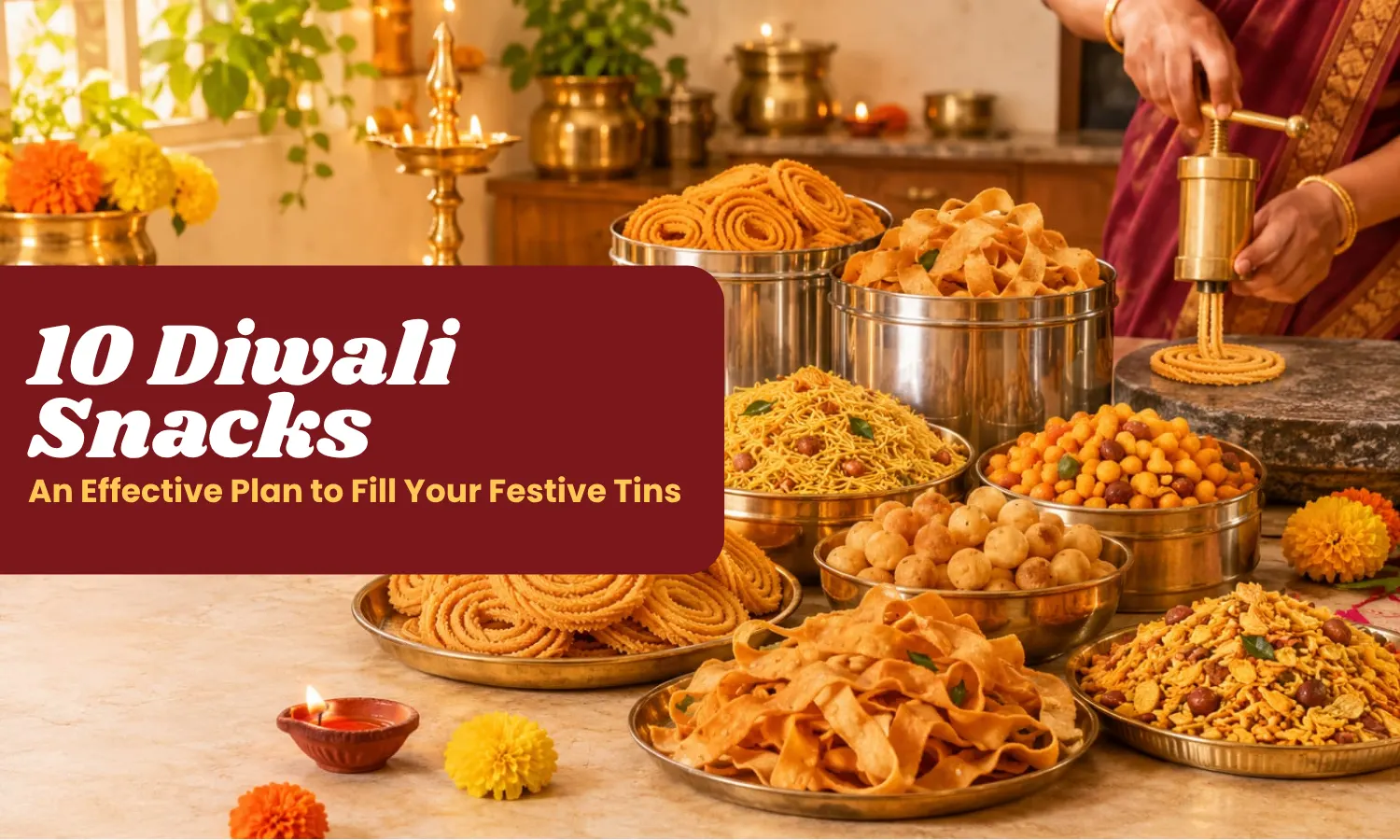
In many Tamil homes, Deepavali begins a week early. The house smells of hot oil and roasted dal. Grandmothers sit with brass murukku presses, aunts roll seedai, and children hover nearby, waiting for the broken pieces.
These Deepavali snacks are called bakshanam in Tamil Nadu. They are made in large batches, stored in steel tins, and handed out to relatives, neighbours, and anyone who visits during the festival. Every family has its own version and every version is defended with pride.
That spirit of sharing remains strong. A survey by the Confederation of All India Traders found that 87 percent of consumers chose Indian-made products during Diwali 2025. Homemade Diwali snacks carry that same love for local, familiar flavours.
A Diwali Snacks List Every Family Should Know
Here is a Diwali snacks list that covers the classics most South Indian families make every year.
- Mullu murukku
- Thenkuzhal
- Ribbon pakoda
- Thattai
- Seedai
- Kara sev
- Mixture
- Omapodi
- Butter murukku
- Kara boondi
Most of these use rice flour, gram flour, and urad dal. That is why they share a crunch that keeps well for two weeks or more. This Diwali snacks list can be adjusted to your family’s favourites.
South Indian Diwali Snacks and Their Stories
South Indian Diwali snacks carry regional pride. Chettinad homes are famous for their intricate kai murukku. Tirunelveli families take great care with their seedai. Andhra kitchens prefer spicy chekkalu, which is similar to thattai.
The most loved of all is Diwali murukku. Each family argues about the right ratio of rice flour to urad dal. Some add butter, some add sesame, and some add cumin. Making Diwali murukku together has long been a way for generations to bond in the kitchen.
Other South Indian Diwali snacks like omapodi bring a gentle ajwain flavour that aids digestion after festive meals. Seedai, small fried rice balls, are known for occasionally bursting in the oil, which is why they are always fried with care.
Your Seven Day Plan for Diwali Snacks Recipes
Spreading the work is the secret to stress-free festive cooking. Here is a simple plan for your diwali snacks recipes.
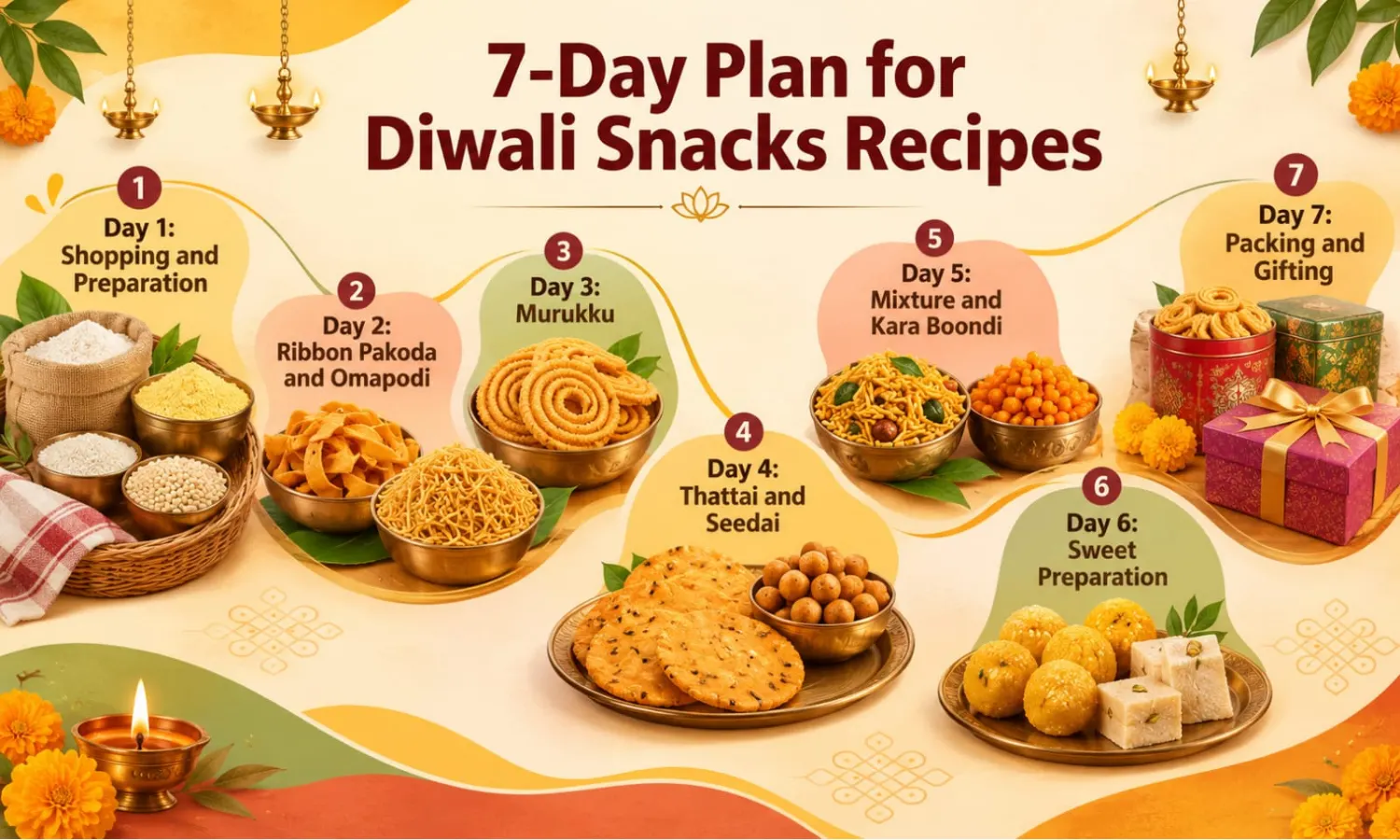
Day 1: Shopping and Prep
Buy fresh rice flour, gram flour, urad dal, sesame seeds, and good oil. Roast and grind urad dal if you prefer making your own flour.
Day 2: Ribbon Pakoda and Omapodi
These use gram flour and similar dough. Make both on the same day to save time and oil. They are among the easiest Deepavali snacks to master.
Day 3: Murukku
Dedicate a full session to murukku. Make thenkuzhal or butter murukku first, since they are easier, then attempt mullu murukku.
Day 4: Thattai and Seedai
Both use rice flour and urad dal. Fry seedai on low heat and cover the kadai partly for safety.
Day 5: Mixture and Kara Boondi
Fry boondi and sev, then combine with roasted peanuts, fried curry leaves, and spices.
Day 6: Sweets
Make your sweets now. The 777 Besan Ladoo Instant Mix and 777 Gulab Jamun Mix save precious hours for a busy family.
Day 7: Packing and Gifting
Pack Diwali sweets and snacks into tins or boxes for relatives. Label each one so you know who gets what.
These Diwali snack recipes stay fresh because they are made close to the festival and stored correctly.
The Oil That Starts the Festival
In Tamil homes, Deepavali morning begins with an oil bath before sunrise, often called Ganga snanam. Warm gingelly oil is massaged into the hair and body before bathing. The same oil is also traditional for frying murukku and thattai. Our 777 Gingelly Oil brings that familiar aroma to both rituals.
Easy Diwali Snacks for First Timers
New to festive cooking? Start with easy Diwali snacks like ribbon pakoda, omapodi, and mixture. They need a press but very little shaping skill. Butter murukku is also forgiving because the dough is soft.
Keep these easy Diwali snacks as your foundation. Once you are confident, move to mullu murukku and seedai next year.
Healthy Diwali Snacks for Balance
Festivals invite indulgence, but balance helps everyone enjoy the season. Healthy Diwali snacks like roasted makhana, baked mathri, masala peanuts, and roasted chana are light additions to the festive plate.
Serving healthy Diwali snacks alongside fried classics lets elders and health-conscious guests join the celebration comfortably. For more festive inspiration, read our full guide to Indian sweets and snacks.
Conclusion
The tins we fill before Deepavali hold the laughter in the kitchen, the arguments over the perfect murukku, and the joy of sharing with neighbours. Making Diwali snacks at home keeps that warmth alive for the next generation. Stock up on 777 Gingelly Oil this week so your festive frying starts with the aroma your family remembers.
Key Takeaways
- Diwali snacks like murukku, thattai, and ribbon pakoda keep for two weeks when stored well.
- Spreading preparation across seven days reduces stress and keeps snacks fresh.
- Fry seedai on low heat with a partly covered kadai for safety.
- Instant mixes for laddu and gulab jamun free up time for savoury snacks.
- Add roasted options to balance the festive spread.
FAQs
Which Diwali snacks are traditional in Tamil Nadu?
Traditional Diwali snacks in Tamil Nadu include murukku, thattai, seedai, ribbon pakoda, omapodi and mixture. These are known as bakshanam and are shared with relatives and neighbours. Most use rice flour and urad dal. They are usually made a few days before the festival.
How long do homemade Diwali snacks stay fresh?
Homemade Diwali snacks like murukku, thattai, and mixture stay fresh for two to three weeks. Store them in airtight steel or glass containers after cooling completely. Keep them away from moisture and heat. Snacks with fresh coconut should be eaten within a day or two.
What are easy Diwali snacks for beginners?
Beginners can start with ribbon pakoda, omapodi, butter murukku, and mixture. These Diwali snacks need a press but little shaping skill. Follow tested ratios and fry on medium heat. Once confident, try mullu murukku and seedai.
How do I pack Diwali snacks for gifting?
Pack Diwali snacks in airtight tins, glass jars, or food-grade boxes. Line boxes with butter paper to absorb excess oil. A box of Diwali sweets and snacks with one or two savoury items and a sweet makes a balanced gift. Label each box with the snack name and date of preparation.