Summary
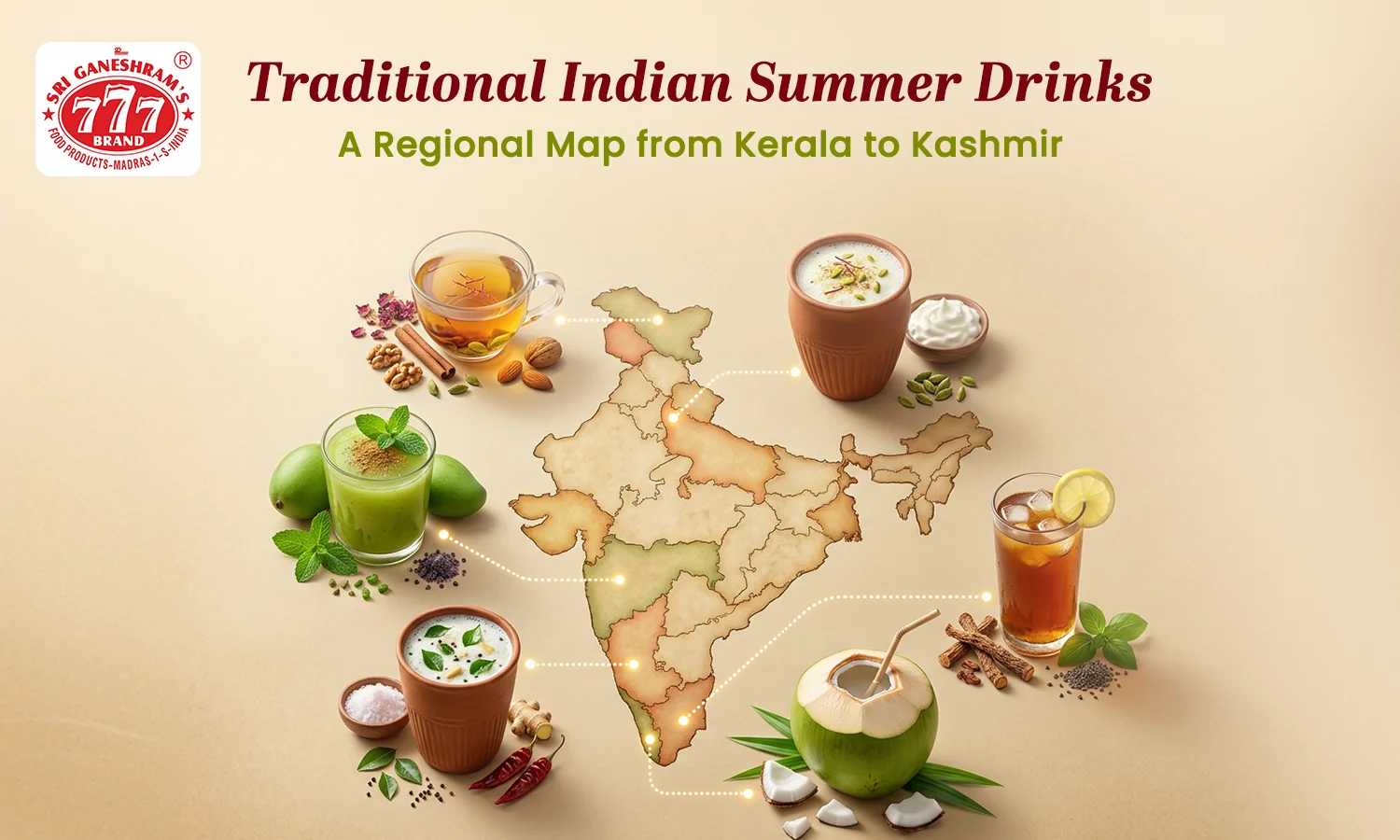
A regional map of India’s traditional summer drinks: South (nannari, rose, paanagam, neer mor), West (kokum, aam panna, chaas), East (bel sharbat, gondhoraj lime, aam pora shorbot), North (rooh afza, thandai, khus, shikanji), Kashmir (cold noon chai), and Central (sattu). Cites a 23% YoY volume rise in traditional syrups and explains the universal concentrate+water+acid+salt formula.
India is probably the only country in the world that has a distinct summer drink for almost every state. Before carbonated soft drinks colonised the supermarket aisle in the late 20th century, every Indian region had already solved the heat with its own sarbath drink, sherbet, or cooler, each rooted in local botany, local climate, and local ritual. This is a regional map of the traditional sarbath juice heritage that is, happily, making a strong comeback in 2026.
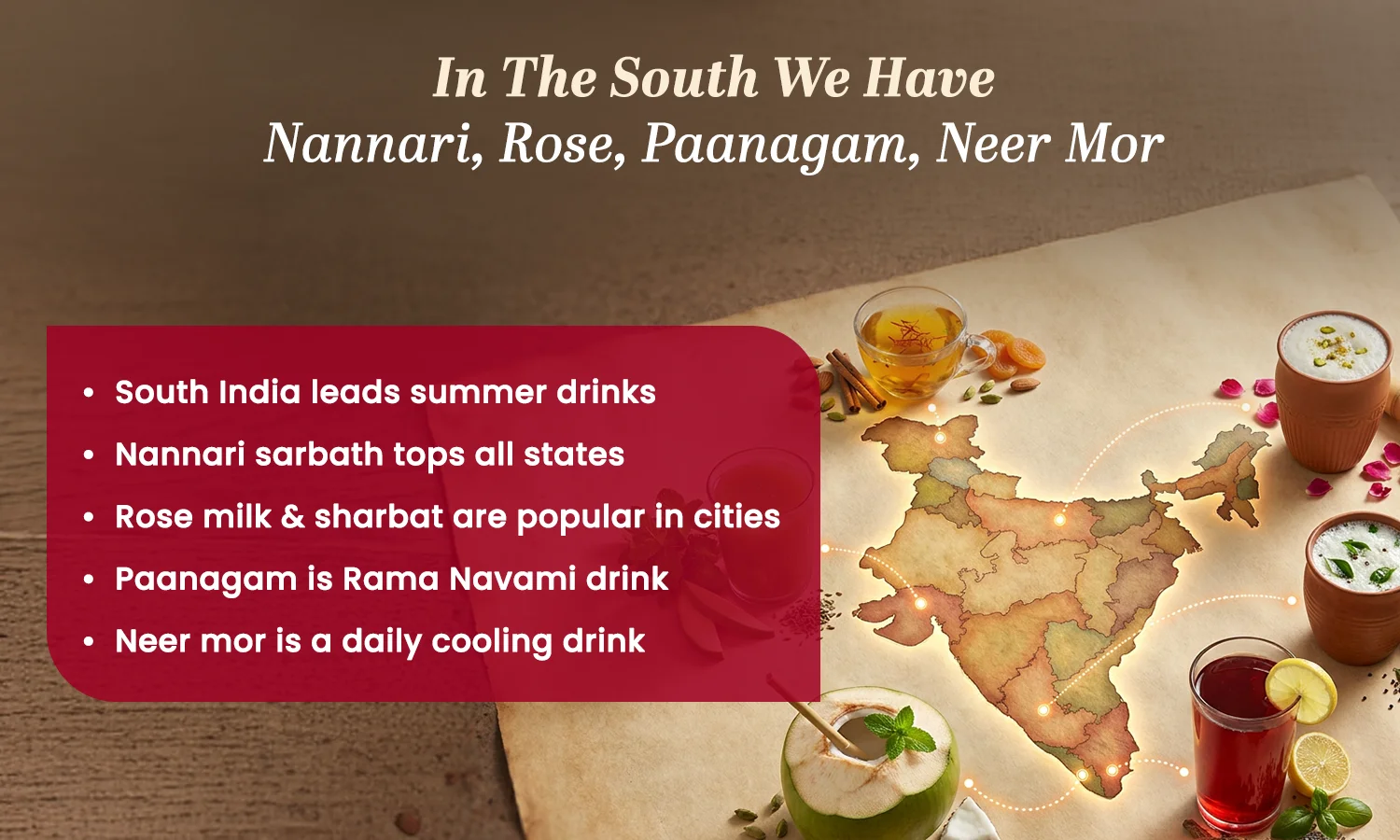
In The South We Have: Nannari, Rose, Paanagam, Neer Mor
South India is the undisputed capital of traditional summer drinks. Nannari sarbath, the Indian Sarsaparilla cooler, leads the category across Tamil Nadu, Kerala, Karnataka, Andhra Pradesh, and Telangana. Rose milk and rose sharbat dominate the urban sarbath stall circuit from Chennai to Bengaluru. Paanagam, a jaggery-ginger-cardamom cooler, is the prasad drink of Rama Navami. And spiced buttermilk is the post-lunch resident of every South Indian household.
In The West, We Have: Kokum, Aam Panna, Chaas
Maharashtra, Gujarat, and Goa belong to the tangy school of summer drinks. Kokum sharbat, brewed from the dried kokum fruit, is the Konkani answer to heatwaves and heartburn. Aam panna, raw-mango-and-cumin cooler, is the undisputed champion of Maharashtrian and Gujarati summer kitchens. Chaas, the lightly spiced buttermilk, gets poured at every thali. Together they form the West’s three-pillared hydration strategy.
In The East We Have: Bel Sharbat, Gondhoraj Lime, Aam Pora Shorbot
Bengal and the eastern belt have their own vocabulary. Bel sharbat, made from the cooling wood apple, is a Calcutta summer classic. Gondhoraj lebu, a fragrant native lime, turns into a perfumed cooler that Kolkata households treat as a religion. Aam pora shorbot is a roasted-raw-mango cooler, a smoky cousin of aam panna. The east pours drinks that taste aromatic in a way no other region replicates.
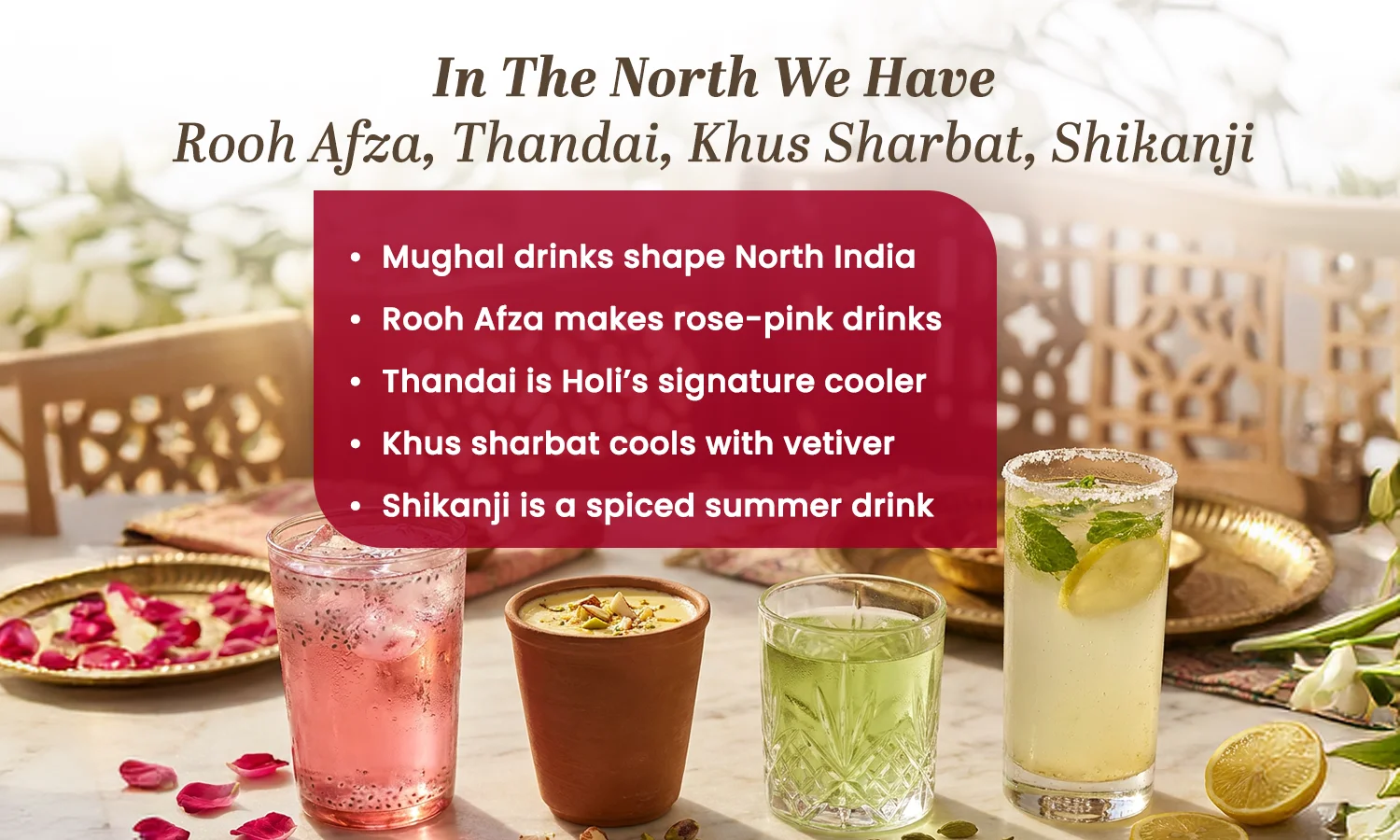
In The North We Have: Rooh Afza, Thandai, Khus Sharbat, Shikanji
The North carries the Mughal beverage inheritance. Rooh Afza, the iconic rose-and-herb syrup from Delhi, turns milk and water into a rose-pink ritual. Thandai, a cardamom-fennel-almond cooler, is the official drink of Holi. Khus sharbat, made from vetiver roots, is a deeply cooling green-coloured classic. Shikanji, the Punjabi lemonade with cumin and rock salt, is summer’s work-horse. When you list types of sharbat in India, the North alone contributes five world-class candidates.
Kashmir: Noon Chai Reversed, Sheer Chai Cooled
Kashmir’s summer drink culture is subtle; the famous pink noon chai is served cold in July, while yakhni-based buttermilk preparations surface in warmer months. It is less a sarbath tradition and more a savoury cooler tradition, a reminder of how regionally different Indian summer really is.
Central India: Sattu Sharbat, Belpatra Cooler
Bihar, Jharkhand, and eastern UP drink sattu sharbat, roasted gram flour, water, lime, and salt as a summer field drink. Sattu is the unglamorous hero of rural Indian hydration: protein-dense, electrolyte-rich, and built for 45-degree afternoons.
Why Traditional Indian Summer Drinks Are Winning in 2026
The 2026 Nielsen FMCG Pulse reported a 23% YoY volume rise in traditional Indian beverage syrups and a compound decline in sugary carbonated soft drinks. The reasons are layered: label literacy, wellness narrative, quick-commerce democratising availability, and a Gen Z shift toward cultural authenticity. The best sharbat conversation has moved from fringe to mainstream, and brands with authentic product heritage are the biggest winners.
How to Make Sharbat the Traditional Way
The core principle across almost every regional sarbath drink: concentrate + water + acid + salt. A concentrated syrup (nannari, rose, kokum, bel, khus) is diluted with chilled water, balanced with lime or tamarind, and corrected with rock salt. The ratio is personal. If you want a shortcut, how to make sharbat genuinely starts with owning a good concentrate, and SGR 777 Foods nannari and rose range covers the two most universally-loved versions of the tradition.
FAQs
What Are the Most Popular Types of Sharbat in India?
Nannari sarbath, rose sharbat, khus sharbat, bel sharbat, aam panna, kokum, and thandai are the seven most widely consumed. Nannari and Rose remain the two pan-Indian leaders.
Which Sharbat Is Best for Heat Stroke?
Nannari sarbath is the traditional prescription, followed by aam panna and sattu sharbat; all three are electrolyte-supportive and cooling.
Can I Mix Two Sharbats Together?
Yes. Nannari-rose, rose-kokum, and bel-lime are all popular hybrids on modern bar menus.