Introduction :
Garlic pickle is the rare Indian condiment where Ayurveda and modern nutrition science agree almost word-for-word. Ancient Sushruta texts classify raw and fermented garlic as rasayana, a rejuvenating category. A 2023 peer-reviewed meta-analysis published in the Journal of Nutrition concluded that aged garlic extract measurably reduces LDL cholesterol and improves endothelial function. The two systems arrived at the same conclusion 2,500 years apart.
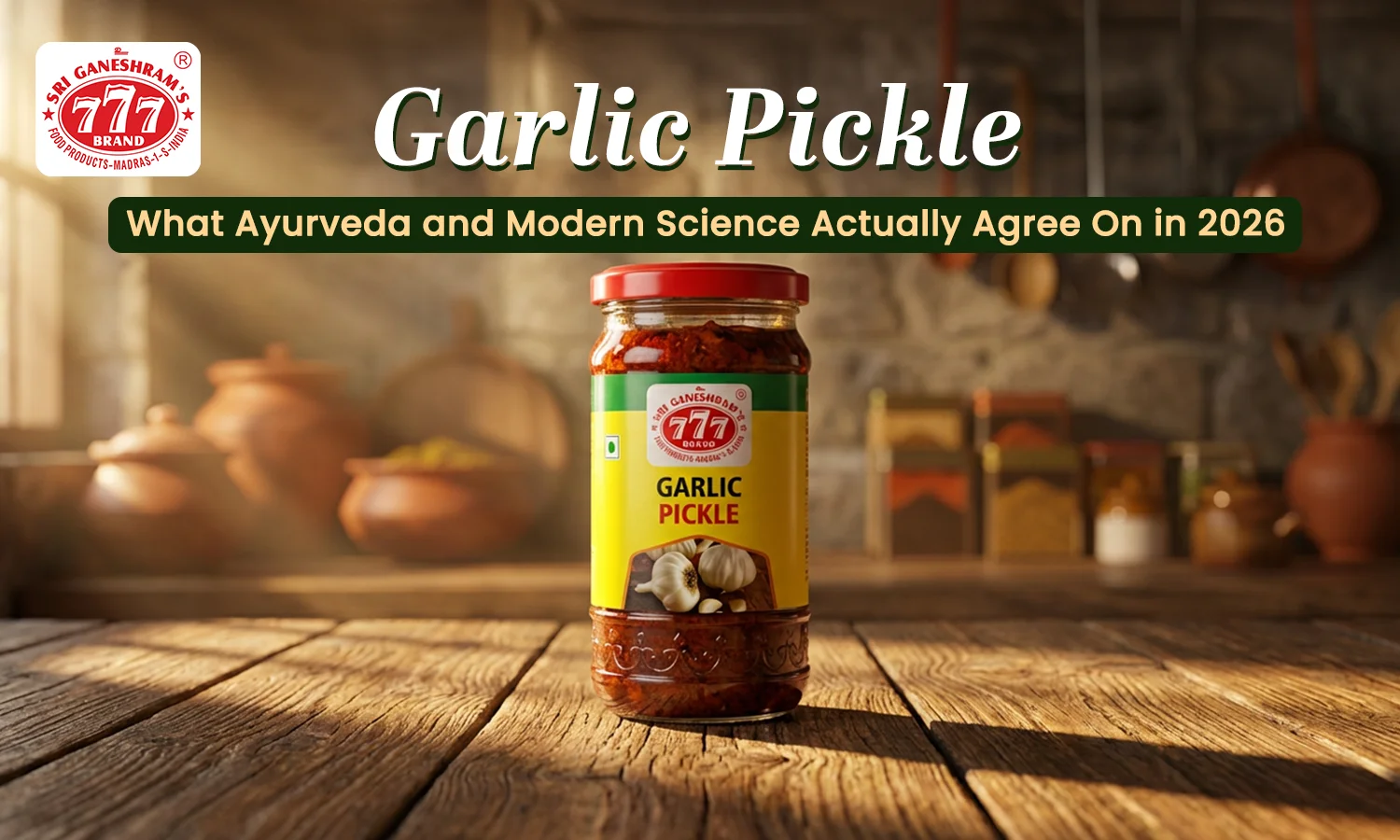
This is why a well-made garlic pickle has stopped being a supporting player on Indian plates and started appearing as a centrepiece. In South Indian homes, a teaspoon of SGR 777 Garlic Pickle 300g with curd rice is now prescribed as often as turmeric milk.
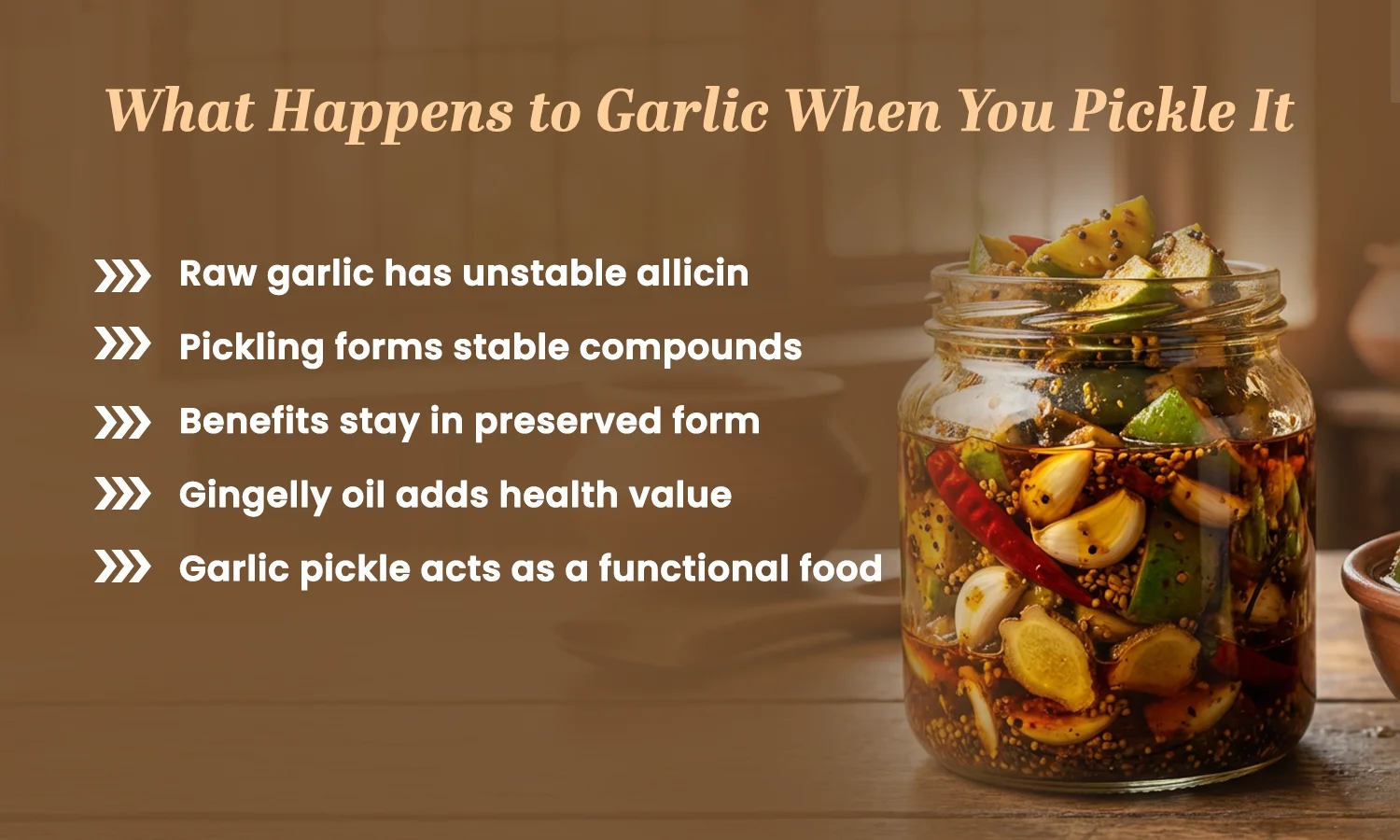
What Happens to Garlic When You Pickle It
Raw garlic contains allicin, a sulphur compound responsible for its sharpness. Allicin itself is unstable and degrades within hours of crushing. In a pickled jar, though, allicin converts into more stable organosulphur compounds like S-allyl cysteine. These are the compounds modern studies actually measure. In other words, pickling does not destroy garlic’s benefits; it converts them into more shelf-stable versions.
The oil base matters too. Gingelly oil contains sesamin and sesamolin, both shown to support cardiovascular and anti-inflammatory pathways. Combined with pickled garlic’s organosulphur compounds, a traditional South Indian garlic pickle becomes genuinely functional food, not just flavour.
Ayurvedic View: Garlic as a Seasonal Therapy
In classical Ayurveda, garlic is warming, pungent, and ideal for the late-monsoon and winter months when kapha tends to accumulate. Garlic pickle, specifically, is recommended because the oil and salt neutralise garlic’s sharpness enough for daily consumption without digestive discomfort.
The traditional dosage was modest, a small spoonful with one meal per day. That guideline still holds. A pickle consumed daily in moderation delivers the benefit profile; over-consumption simply adds sodium without improving outcome.
Modern Research on Pickled Garlic
The following was the research that was conducted recently, and is worth knowing:
- A 2024 Indian Council of Medical Research review noted that traditional fermented garlic preparations retain 60–75% of their original allicin-derivative activity over 12 months of storage.
- The American Journal of Clinical Nutrition has linked regular garlic consumption (approximately 3–5g/day equivalent) with modest reductions in systolic blood pressure.
- Food Chemistry (2023) reported that gingelly-oil-based garlic pickles showed higher antioxidant retention than mustard-oil versions at equivalent storage periods.
None of this is a replacement for medical advice. A pickle is a condiment, not a treatment. But the evidence for regular, modest consumption as part of a balanced diet is now strong enough that most nutritionists no longer dismiss it as folk wisdom.
What Separates a Good Garlic Pickle from an Average One
The best garlic pickle passes four practical tests:
1. Whole peeled pods, not minced, not paste. The bite is half the pleasure.
2. Even with oil submersion, every pod should be visible through the oil layer.
3. Balanced heat enough chilli to cut garlic’s pungency, not enough to dominate.
4. Clean aftertaste, a good garlic pickle does not leave a metallic or rancid note.
SGR 777’s garlic pickle meets all four. It is hand-peeled, oil-set in gingelly, and batch-rested for 10 days before dispatch. The garlic pickle price sits at ₹110 for 300g. For reference, the garlic pickle 1kg price for bulk B2B buyers is approximately 20% lower per 100g, making it efficient for caterers and cloud kitchens.
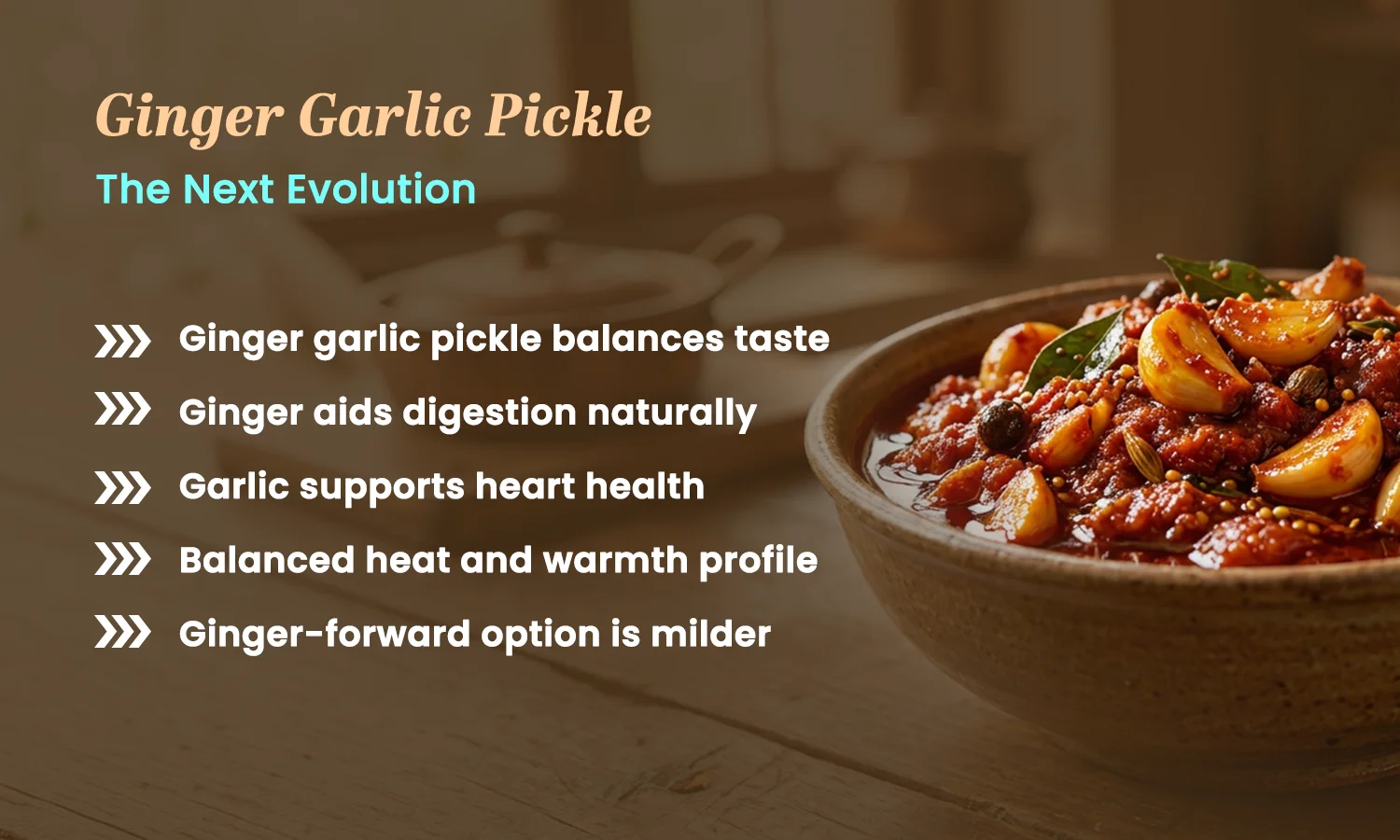
Ginger Garlic Pickle: The Next Evolution
A common upgrade in South Indian kitchens is the ginger garlic pickle, where ginger’s digestive support complements garlic’s cardiovascular profile. The combination also balances heat and warmth on the palate. For readers who find pure garlic pickle too dominant, a ginger-forward option like the Ginger Pickle 300g is an easier entry point.
Buying Garlic Pickle Online Without Being Disappointed
Buying Garlic Pickles from resellers that sell damaged products can be disappointing. So when you order garlic pickle online in 2026, you can note these three signals that separate genuine brands from relabellers:
- The ingredients list starts with garlic and gingelly oil, not with water, vinegar, or refined sunflower oil.
- Packing date is printed (not only "best before").
- The jar has a visible oil layer upon delivery. A dry-looking pickle has either been stored poorly or formulated with insufficient oil.
Explore the complete SGR 777 pickle range, traditional and authentic, made in Chennai since 1954.
FAQs
How Much Garlic Pickle Can I Safely Eat per Day?
One teaspoon (~5g) with a meal is the traditional dose. Regular, modest consumption is better than occasional heavy use. Anyone with prescribed blood-thinning medication should consult their doctor, since garlic can mildly enhance anticoagulant effects.
Does Pickling Destroy the Health Benefits of Garlic?
No. Pickling converts unstable allicin into more stable organosulphur compounds, most of which retain the core benefits linked to raw garlic. Oil-based pickling preserves these better than water or vinegar bases.
Which Is Better for Garlic Pickles, Mustard Oil, or Gingelly Oil?
Both work. Mustard oil is traditional in North Indian garlic pickles; gingelly is traditional in South Indian. Gingelly oil has a longer shelf life at Indian room temperatures and carries a milder aroma that suits daily use.
Are Garlic Pickles Available in 1KG Bulk Packs?
Yes. SGR 777 offers bulk and institutional packs for caterers, hotels, and cloud kitchens at lower per-100g rates. Contact the brand’s trade desk for a price list.