Enjoy FREE SHIPPING on orders ₹300 and above! Track your orders easily by clicking here: My Account > Orders > Track Now Get 25% Off On Your 1st Order: Shop Now Enjoy FREE SHIPPING on orders ₹300 and above! Track your orders easily by clicking here: My Account > Orders > Track Now Get 25% Off On Your 1st Order: Shop Now
Best Sellers You’ll Love
sgr777foodssgr777foodssgr777foods
+91 44 48506487
sgr777foodssgr777foodssgr777foods
Cart: 0 - 0.00

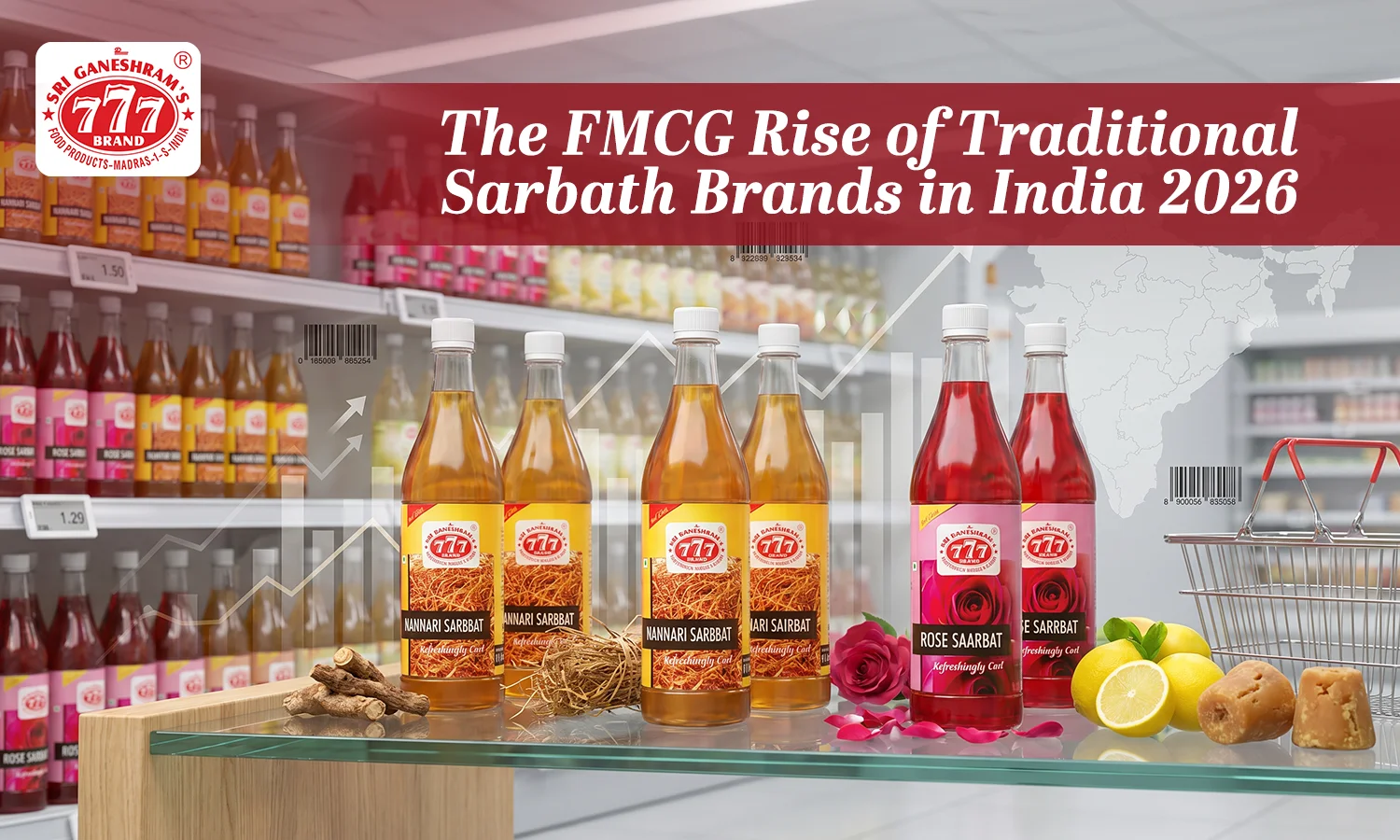
The FMCG Rise of Traditional Sharbat Brands in India 2026

Sarbath drink

The FMCG Rise of Traditional Sharbat Brands in India 2026

Introduction :

Something quiet and important is happening on the Indian beverage shelf. The category that ruled summer for three generations before it was pushed aside by carbonated soft drinks in the 1990s, the traditional Indian sarbath drink, is back, and it is growing faster than almost any other segment in Indian FMCG.
In 2026, the question for brand managers, retailers, investors, and consumers is no longer whether traditional sarbath is making a comeback. It is how big the comeback will get, and who is leading it.

The Numbers That Tell the Story

According to the IMARC Indian Beverage Report 2026, the traditional Indian drink segment, covering nannari, rose, kokum, aam panna, khus, bel, and adjacent syrups, crossed an estimated retail value of ₹18,400 crore with a CAGR of 14.2% over the preceding three years.
Over the same period, sugary carbonated soft drinks recorded a compound volume decline, with Nielsen’s Q1 2026 FMCG Pulse pegging the drop at 17% YoY. Traditional beverage syrups, in the same report, posted a 23% YoY volume rise.
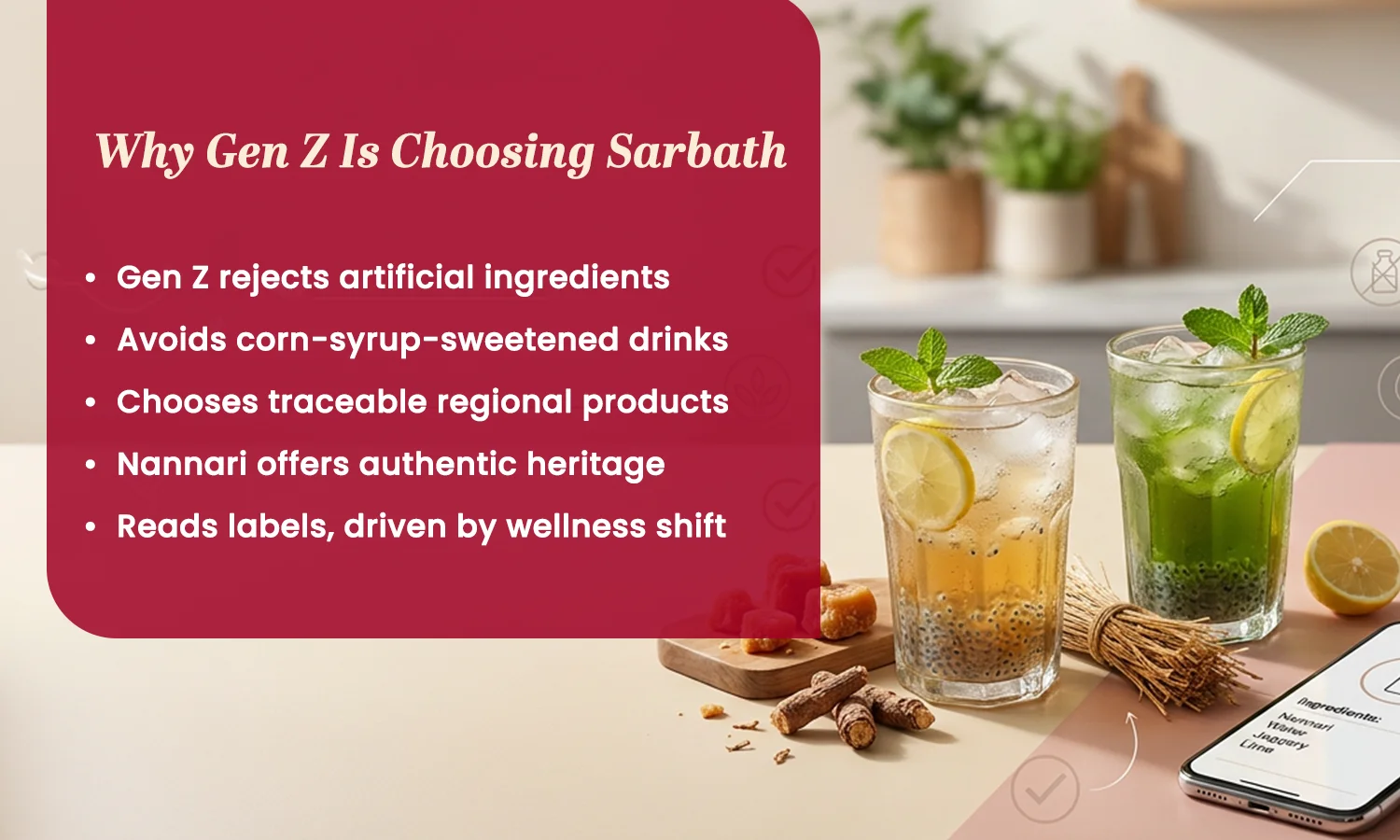
Why Gen Z Is Choosing Sarbath

Why Gen Z Is Choosing Sarbath

The headline driver is generational. Indian Gen Z, roughly the 15 to 28 age band, is actively rejecting artificial ingredients, corn-syrup sweeteners, and the flat brand narratives of legacy colas. They are choosing products with traceable ingredients, regional authenticity, and an actual story. A bottle of nannari drink, brewed from a real South Indian root with two thousand years of Ayurvedic use, ticks every one of those boxes. A cola does not.
Add the wellness pivot label, literacy is at an all-time high, and the Instagram-era consumer now reads ingredient lists the way previous generations read MRPs, and the shift becomes structural rather than cyclical.

Quick-Commerce Is the Accelerant

The single biggest distribution change for traditional sarbath brands between 2023 and 2026 has been quick-commerce. Swiggy Instamart, Zepto, and Blinkit now deliver a bottle of nannari sharbat online in 10 minutes across more than 30 Indian cities.

Two summers ago, a college student in Pune who wanted traditional nannari syrup had to order from a specialist e-commerce seller with a 3-day ETA. Today, the same student taps an app, and the bottle arrives before the heat does. This is the sort of availability shift that does not show up on earnings calls but rewrites consumption habits.

Pricing Has Normalised

The nannari sarbath price in organised retail now sits in the ₹160–₹320 band for a 750 ml bottle, and the rose syrup price occupies the same corridor. Competitive pricing, combined with family-pack sizes and the fact that a single bottle delivers 30–40 servings, makes the per-glass cost of a traditional sarbath lower than a single can of cola. The value equation has finally tilted.

B2B and HoReCa Adoption

The professional kitchen is validating what the retail shelf is already saying. Marriage caterers, wedding contractors, cloud kitchens, hotel F&B teams, and cafés are actively listing nannari and rose sarbath on 2026 menus.
The ticket size matters; a single Indian wedding can buy 30–50 bulk bottles of sarbath syrup, and the market is made of thousands of such weddings every summer week. This is one of the fastest-growing B2B use cases in Indian food service today.

Who Is Leading the Category

Category leadership in traditional sarbath rests on three factors: authentic product (real root, real petal, real brewing), distribution density (kirana, large-format retail, e-commerce, Q-commerce, B2B), and brand trust. SGR 777 Foods has been quietly strengthening its lead on all three, building a Nannari Juice and Rose Syrup portfolio that performs at household scale and at HoReCa scale.

Where most competing brands specialise in pickles, masalas, or ready-to-eat alone, SGR 777’s cross-category credibility, pickles, masalas, appalams, ready-to-eat, and sarbaths gives it retail shelf velocity that is difficult to replicate.

The 2026–2030 Outlook

If the present CAGR holds, traditional Indian sarbath will cross ₹30,000 crore in retail value by the end of the decade. The brands that will compound fastest are those that marry product authenticity with modern distribution. The sarbath category’s next chapter will not be written by new brands alone; it will be written by the heritage brands that learned to ship in ten minutes.

FAQs

Is Traditional Sarbath Really Healthier Than Cola?
Yes, when made from authentic ingredients. Traditional sharbath delivers hydration, Ayurvedic cooling properties, and no caffeine or phosphoric acid. Sugar content needs moderation, just like any sweetened drink.
Where Can I Buy Traditional Sarbath Online?
SGR 777’s range is available on Amazon, Flipkart, BigBasket, Swiggy Instamart, Zepto, Blinkit, and directly at SGR777foods.
Is This a Fad or a Long-Term Shift?
Long-term growth is driven by label literacy, wellness narrative, Q-commerce distribution, and generational taste shift, which are all structural rather than seasonal.

Recent Comments

No comments to show.

Recent Post

Cart

Create your account

Select the fields to be shown. Others will be hidden. Drag and drop to rearrange the order.
  • Image
  • SKU
  • Rating
  • Price
  • Stock
  • Availability
  • Add to cart
  • Description
  • Content
  • Weight
  • Dimensions
  • Additional information
Click outside to hide the comparison bar
Compare