Summary
Introduction:
What Are Vegetarian Meals?
Why Planning Vegetarian Meals as a System Works Better
Types of Vegetarian Meals
Vegetarian Breakfast Meals
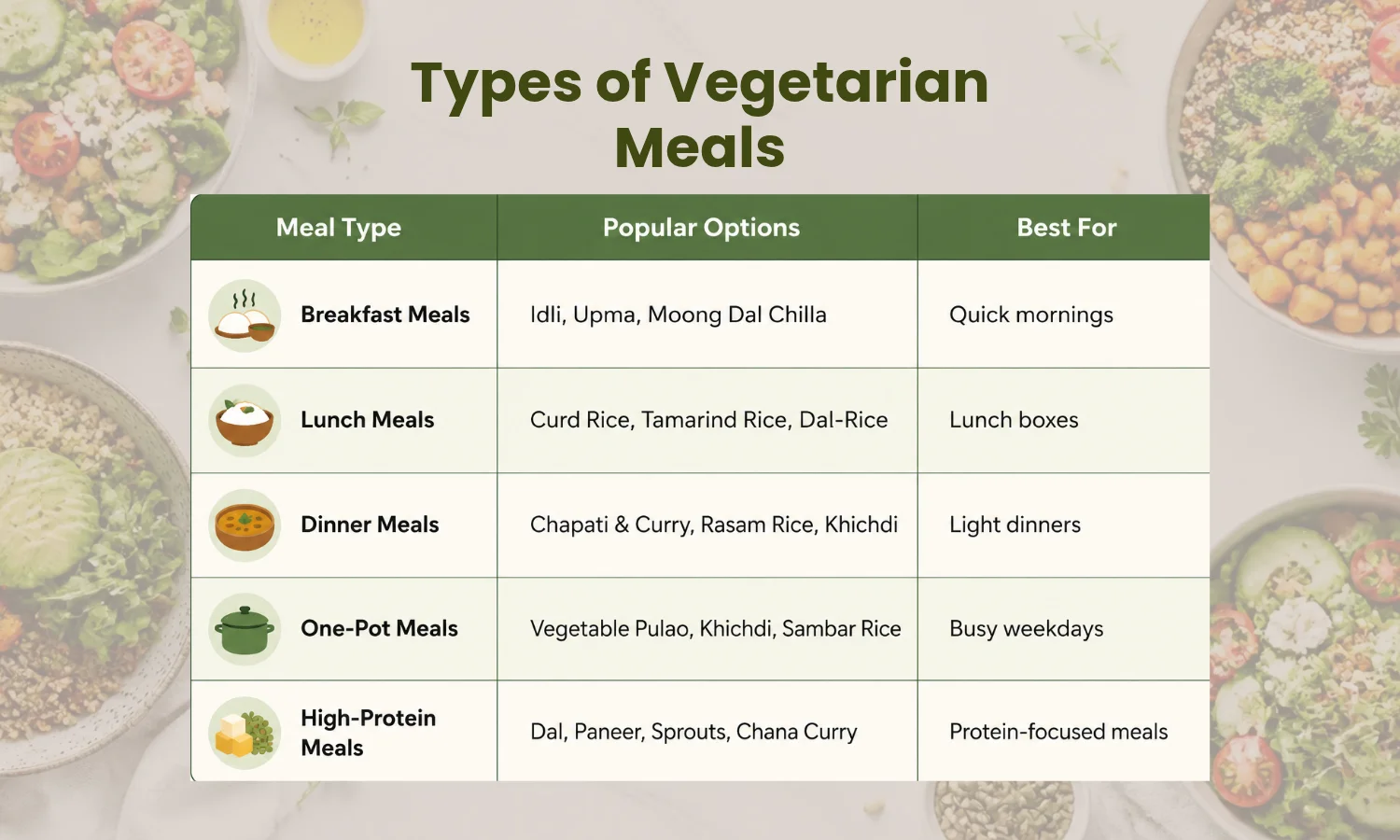
A workable breakfast structure might rotate between three or four dependable options: idli or dosa on two days, upma or poha on two others, and a protein-forward choice like moong dal chilla once a week. This keeps mornings varied without requiring new grocery planning, since most of these dishes draw from the same base pantry of rice, lentils, and semolina.
Vegetarian Lunch Meals
Vegetarian Dinner Meals
By keeping 777 Foods’ Ragi Vermicelli on hand, you can make delicious and nutritious vermicelli pulao and turn any simple meal into a complete, home-style meal without extra planning.
One-Pot Vegetarian Meals
One-pot meals in vegetarian cooking have a particular advantage for busy weeknights: fewer dishes to wash and a shorter list of steps to follow. Vegetable pulao, khichdi, and a simple sambar rice all qualify as one-pot options that deliver a complete meal, covering carbohydrates, protein, and vegetables in a single pan. Here, knowing how to make a mango pickle will be helpful since it can serve as a side dish to your pulao, sambar rice, or khichdi.
High-Protein Vegetarian Meals
How to Cook Vegetarian Meals Without Daily Decision Fatigue
Understanding how to cook vegetarian meals consistently comes down to preparation rather than talent in the kitchen. Keeping a stocked pantry of rice, dal, a few 777 masala powders, and basic vegetables means that on any given day, a reasonable meal is always within reach, even without advance planning for that specific day.
Tips to cook reasonable meals without advance planning
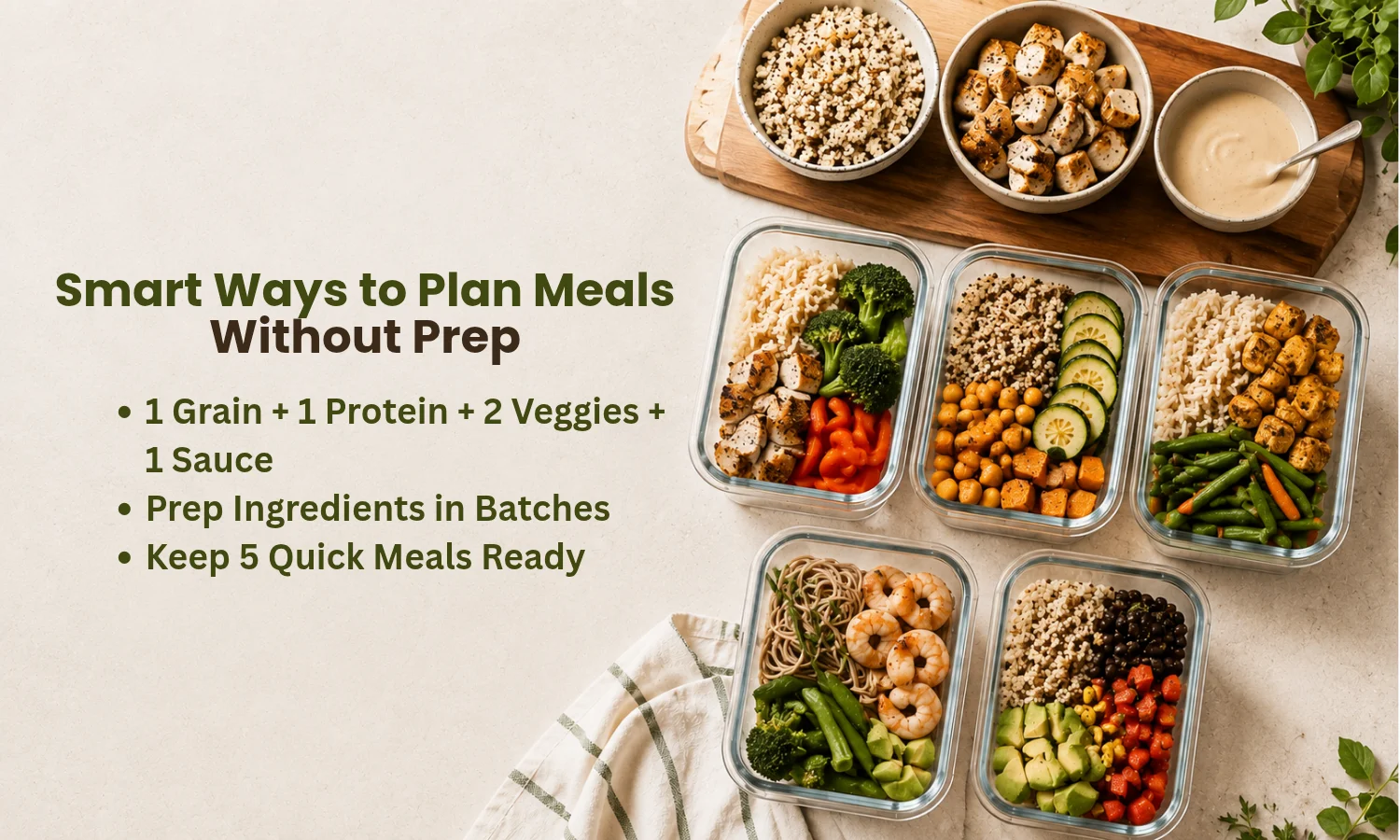
- Master a 4-part formula: Build meals using 1 Grain + 1 Protein + 2 Veggies + 1 Sauce instead of following rigid recipes.
- Prep component ingredients: Batch-cook grains, roast a tray of veggies, and mix 2 sauces once a week for fast assembly.
- Rely on a "Default 5" list: Keep a written list of 5 fast, 15-minute fallback meals for high-stress days.
A Sample Weekly Structure
Key Takeaways
- Treating vegetarian meals as a repeatable weekly system reduces daily decision fatigue significantly.
- Lunch box dishes should prioritise flavour retention over several hours rather than immediate freshness.
- One-pot meals like khichdi and pulao simplify both cooking and cleanup on busy weeknights.
- Including one protein-forward dish, such as dal or paneer, in each day's meals is usually enough to meet daily needs.
- A stocked pantry matters more than daily meal planning for consistent, low-effort home cooking.