
Summary
Want a mix veg recipe that tastes like the one from your favourite restaurant? This guide breaks down the masala base, vegetable selection, and cooking order that give this dish its signature texture and depth.
Introduction:
Mix veg recipe guides often make restaurant-quality cooking seem like a multi-step challenge, but bringing this dish together at home is far simpler than it seems. The secret lies not in complicated techniques, but in how you layer basic spices and manage the texture of each vegetable. With a few simple steps, you can recreate all the depth and comfort of your favourite diner-style curry using fresh, everyday ingredients already sitting in your kitchen.
What Is Mix Veg?
Mix veg is a popular Indian curry made by cooking a variety of vegetables in a flavourful onion and tomato gravy. It is commonly served with chapati, naan, paratha, or rice and can be prepared as a rich restaurant-style dish or a lighter everyday meal.
Why Mix Veg Remains a Restaurant Favourite
Few dishes appear on Indian restaurant menus as consistently as mix veg. Part of its appeal lies in how well it uses whatever vegetables are available, turning simple ingredients into a rich, satisfying gravy. At home, though, a mix vegetable recipe often falls short of the restaurant version, usually because of a rushed masala base or an uneven mix of vegetable textures.
The Masala Base Behind a Good Mixed Vegetable Curry
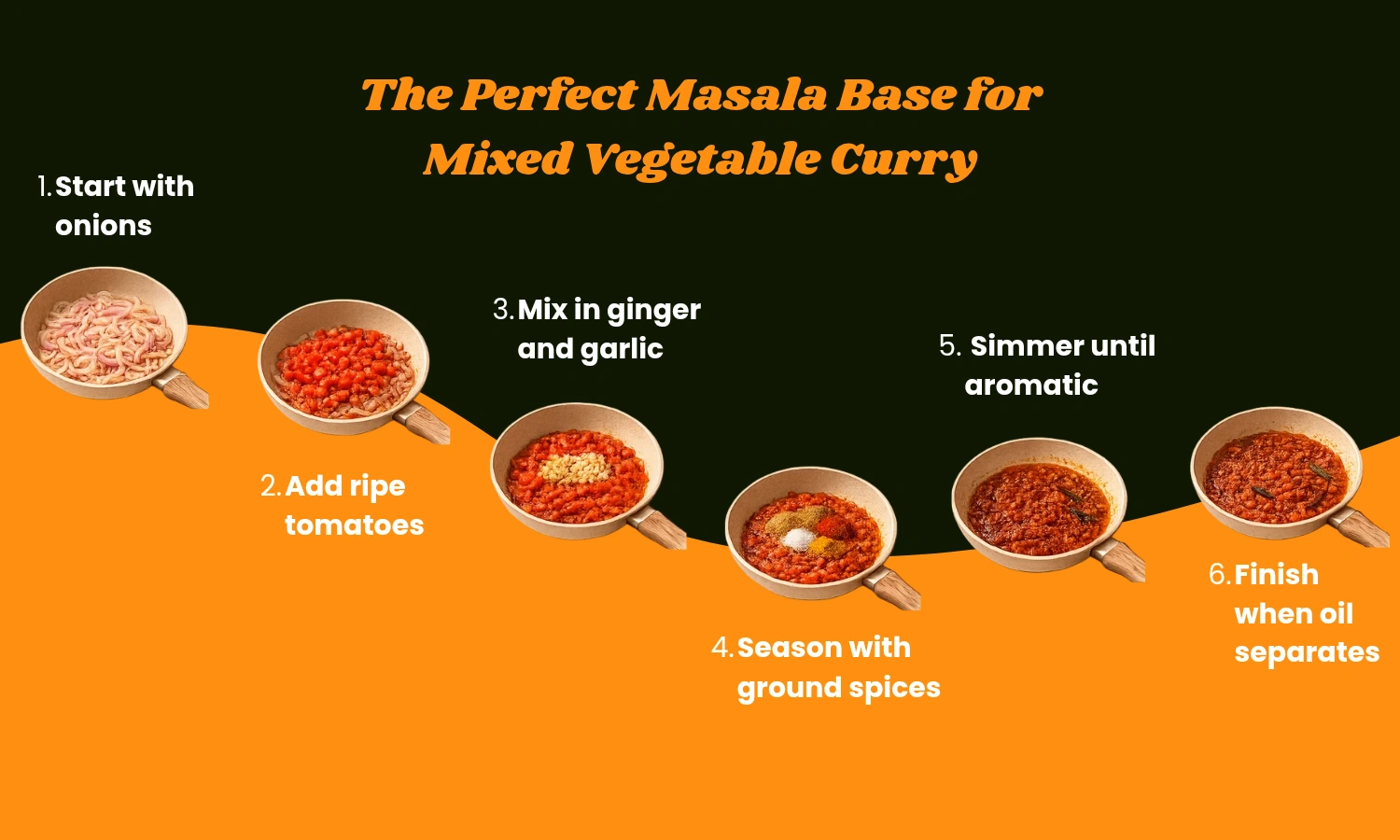
The foundation of any solid mixed vegetable curry recipe is a well-cooked onion and tomato masala, simmered with ginger, garlic, and a mix of ground spices like 777 Foods’ turmeric powder, coriander powder, and red chilli powder. Restaurants typically cook this base longer than most home cooks do, allowing the raw smell of the tomatoes to disappear completely and the oil to separate slightly at the edges. This single step accounts for much of the difference in taste between a home-cooked and restaurant-style dish.
Choosing the Right Vegetables for Texture
A common mistake in home versions of mixed veg recipes is treating all vegetables the same way. Harder vegetables like carrots, beans, and potatoes need more cooking time, while softer ones like peas, cauliflower, and capsicum cook much faster. Adding vegetables in stages, starting with the firmer ones, ensures every piece finishes cooking at roughly the same time rather than some turning mushy while others remain undercooked.
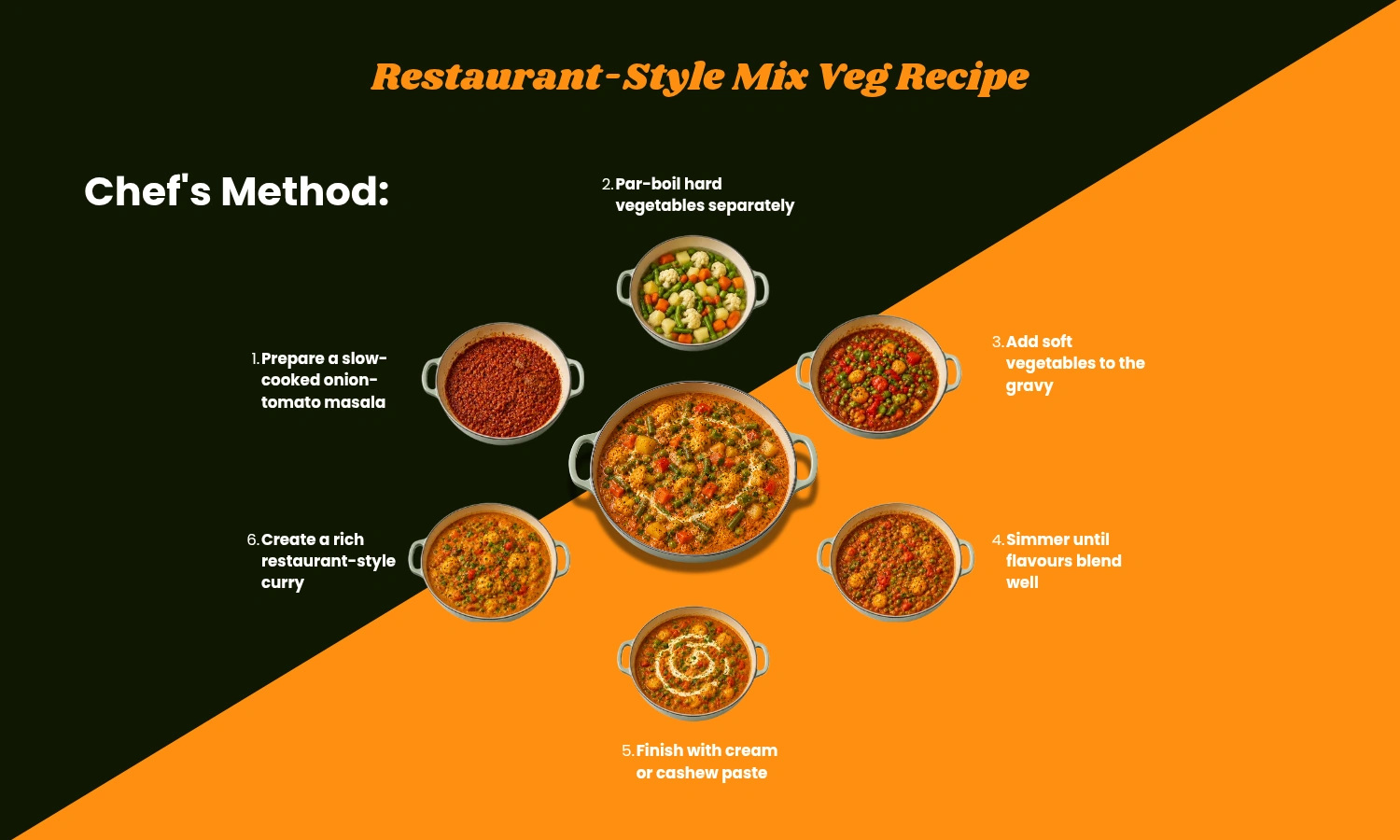
How to Make a Restaurant-Style Mix Veg Recipe?
Ingredients Needed:
- Onion-tomato masala base
- Selected vegetables - both hard and soft
- Fresh cream or cashew paste - 2 to 3 tablespoons
- Turmeric powder - ½ teaspoon
- Chilli powder - ¼ teaspoon (may vary depending on taste preference)
- Coriander powder - Required amounts
Mix Veg Recipe:
To get closer to a mix veg recipe restaurant style, follow these steps.
- Start by par-boiling the harder vegetables separately so that they hold their shape once added to the gravy.
- Prepare the onion-tomato masala base first, cooking it low and slow until it thickens and darkens slightly.
- Add the par-boiled vegetables directly into this base along with the softer vegetables.
- Simmer everything together for another eight to ten minutes so that the flavours combine properly.
- A small amount of cream or cashew paste toward the end lifts the gravy into a richer, more restaurant-like texture, though this step is entirely optional for a lighter, everyday version of the dish.
Easy Mix Veg Gravy for Everyday Meals
Not every meal calls for a rich, restaurant-style gravy. For a simpler, everyday mix veg gravy recipe, skip the cream and cashew paste entirely and let the tomato base carry the dish instead. This version pairs just as well with rice or roti and is considerably lighter for a weeknight dinner. You can finish the meal with a side of lime pickle or garlic pickle from the 777 Foods range for that extra layer of flavour.
Where Mix Veg Fits on an Indian Vegetarian Table
Mix veg is versatile enough to sit alongside roti, paratha, steamed rice, or even jeera rice, making it a common choice for both family lunches and casual dinners. Because it uses a flexible list of vegetables, this mixed veg recipe rarely needs an exact shopping list, drawing instead on whatever is already in the refrigerator that week.
Tips to Make the Perfect Mix Veg Dish
- Avoid rushing the onion-tomato base. It is the single biggest reason a home version of this vegetable recipe falls short of expectations.
- Do not add all the vegetables at once because every vegetable has its own cooking time.
- Pay attention to the final simmering stage, where the vegetables absorb the masala fully. If you don’t, it will leave the dish tasting like separate components rather than one cohesive gravy.
- Add a pinch of honey or sugar to the dish to balance all the flavours.
Recreate the Restaurant Taste Tonight
The secret to a good mix veg recipe often comes down to the oil used for the base masala. Try cooking your next batch with 777 Foods’ pure Gingelly Oil for a richer aroma. Explore the entire collection of products at 777 Foods.
Key Takeaways
- A slow-cooked onion-tomato base is the most important factor separating a home version from a restaurant-style mix veg.
- Adding vegetables in stages, based on their cooking time, keeps the texture even throughout the dish.
- Cream or cashew paste adds richness for a restaurant-style finish but can be skipped for a lighter, everyday version.
- Mix veg pairs equally well with rice, roti, or paratha, making it a flexible addition to any weekly menu.
- Simmering the vegetables fully in the masala base is what brings the whole dish together.
FAQs
How do I make a mix veg recipe taste like it does at a restaurant?
Cooking the onion-tomato masala base longer, par-boiling harder vegetables separately, and adding a small amount of cream or cashew paste toward the end all help recreate that richer, restaurant-style texture at home.
What vegetables work best in a mixed vegetable curry recipe?
Carrots, beans, potatoes, peas, cauliflower, and capsicum are the most common choices, with harder vegetables added earlier in the cooking process to ensure even texture.
Can I make a mix veg gravy recipe without cream?
Yes, a lighter version relies purely on a well-cooked tomato base for richness, making it suitable for everyday meals without the extra calories from cream.
Why does my mixed veg curry taste watery instead of rich?
This usually happens when the tomato masala base is undercooked or when too much water is added at once. Allowing the base to thicken before adding the vegetables solves this in most cases.