Overview
What Is Red Chilli Paste, and How Is It Different From Powder?
How to Make Red Chilli Paste Easily at Home?
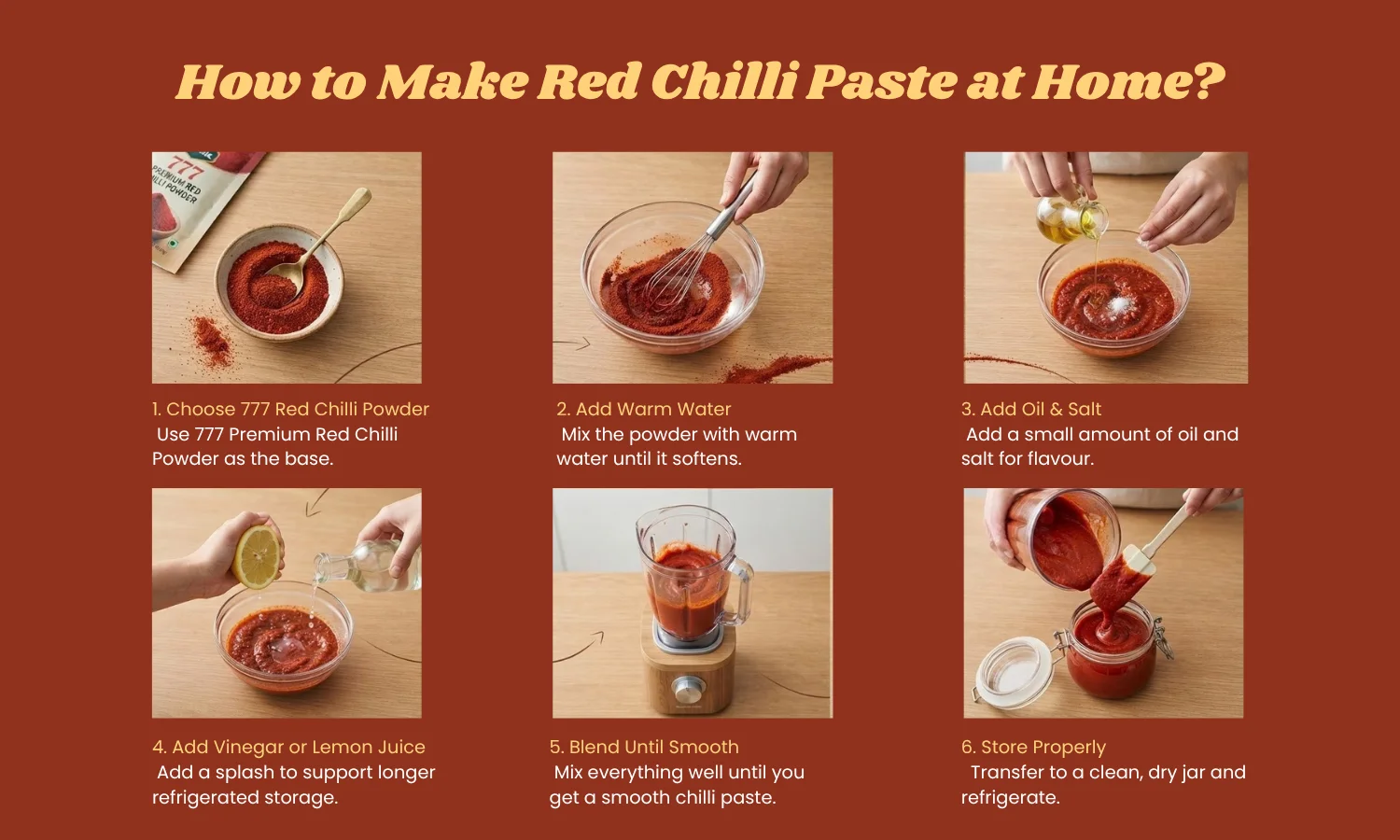
- Start the process by selecting the right chilli, typically a mix of Kashmiri for colour, and Byadgi or Guntur for heat, depending on how spicy the final paste should be. Try using the 777 Premium Red Chilli Powder to make your red chilli paste at home.
- Soak the dried pods in warm water for around twenty to thirty minutes to soften them, which makes grinding significantly easier and produces a smoother final texture.
- Drain the soaked chillies and mix them with a small amount of oil, salt, and a splash of vinegar or lemon juice, which helps preserve the paste for longer once refrigerated.
- Mix the items until smooth, and then transfer it to a clean, dry jar rather than leaving it in the blender, since prolonged contact with certain metal blades can occasionally affect colour over time.
Red Chilli Paste Recipe for Everyday Cooking
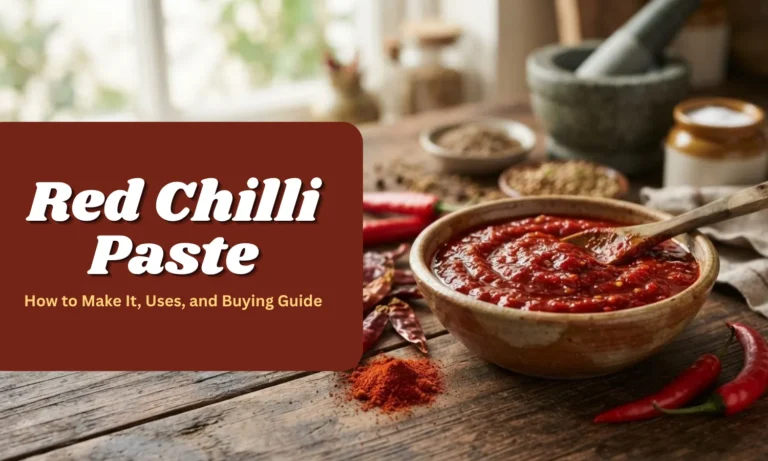
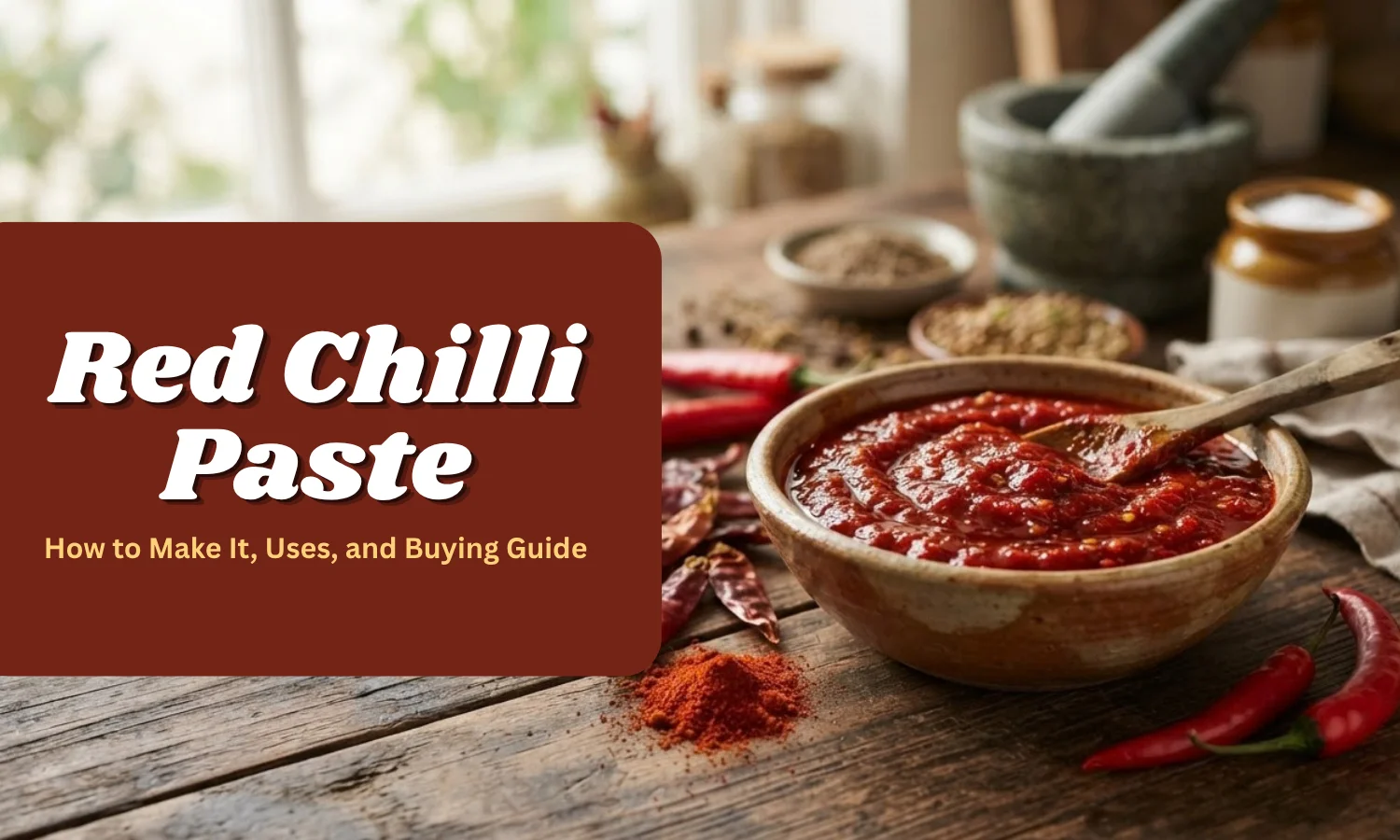
A simple red chilli paste recipe for daily use involves soaking around ten to twelve dried red chillies, mixing them with a teaspoon of oil, a pinch of salt, and just enough water to form a thick, spreadable consistency. This basic version works well as a starting point for curries, marinades, or a quick chutney base, and it can be adjusted by adding garlic, ginger, or vinegar depending on the intended dish.
Kashmiri Red Chilli Paste for Colour-Forward Dishes
Kashmiri red chilli paste is a milder version made specifically from Kashmiri chillies, valued for the deep red colour it lends to marinades, tandoori preparations, and certain curries without adding excessive heat. This version is particularly popular in restaurant-style cooking, where visual presentation matters as much as flavour, since a small amount of Kashmiri chilli paste can transform the colour of a dish without making it too spicy for a broader range of diners.
Buying Red Chilli Paste: Price and Convenience
How to Store Homemade Red Chilli Paste Safely
Make Red Chilli Paste With 777 Premium Red Chilli Powder
Conclusion
Key Takeaways
- Red chilli paste offers a quicker alternative to grinding whole chillies each time, working as a base for marinades, curries, and dips.
- Making red chilli paste at home involves soaking dried chillies, then grinding them with oil, salt, and a splash of acid like vinegar or lemon juice for preservation.
- Kashmiri red chilli paste is the milder, colour-forward version favoured for tandoori marinades and presentation-focused dishes.
- Chilli garlic paste differs from plain chilli paste by adding garlic and often ginger for a more rounded flavour used in Indo-Chinese-style cooking.
- Store red chilli paste in an airtight jar with a thin layer of oil on top, refrigerated, for the best shelf life of around two to three weeks.