Overview
Turning fresh red chilli into shelf-stable powder involves harvesting, cleaning, drying, sorting, and grinding, each step affecting the final colour, aroma, and heat of the product. Understanding this process helps home cooks appreciate why proper sourcing and drying methods matter far more than most people realise when choosing a chilli powder brand
How Fresh Red Chilli Becomes Chilli Powder?
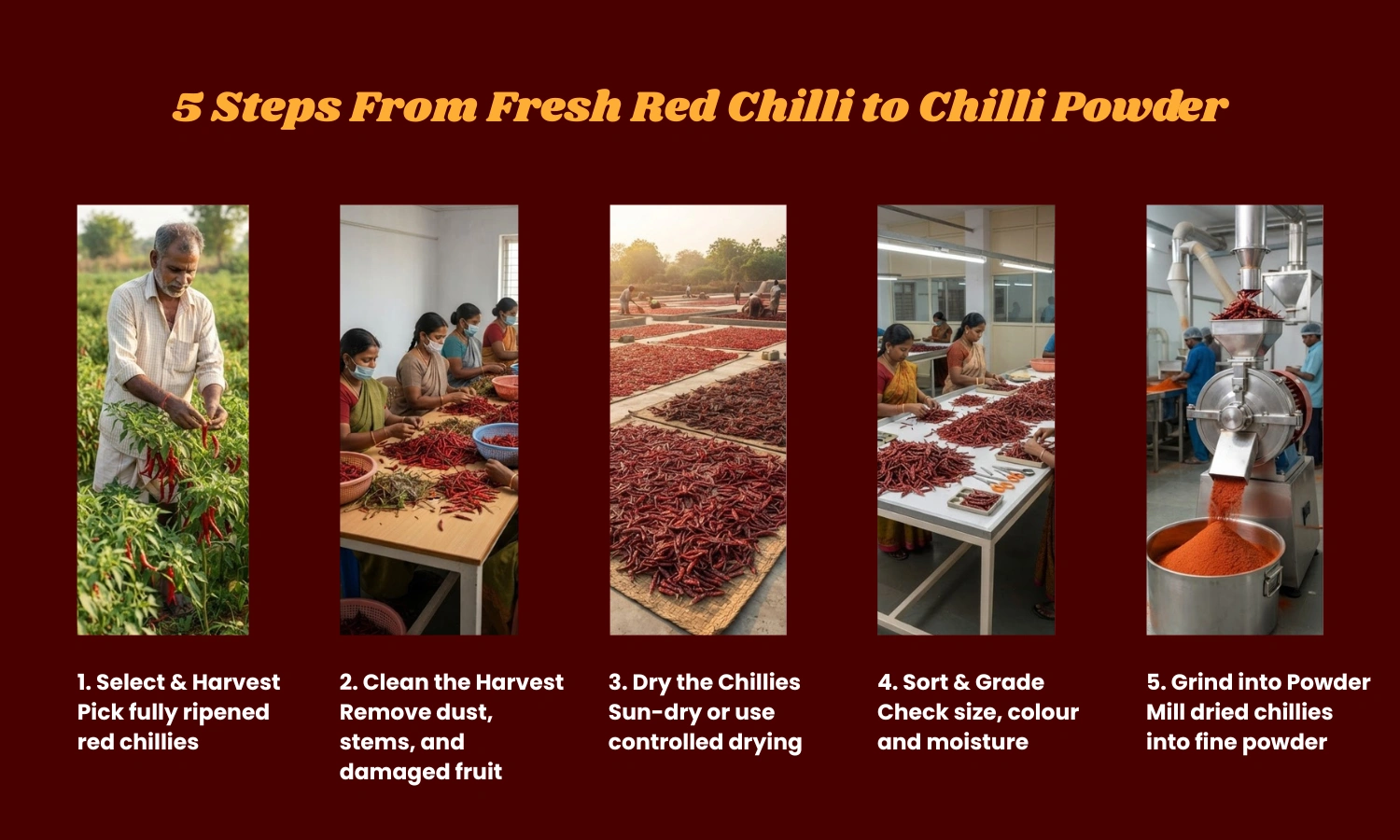
The journey from fresh red chilli to chilli powder involves several carefully managed steps. The chillies are first selected and harvested at the right stage, then cleaned, dried, sorted, and graded before being ground into powder. Each step plays an important role in maintaining the chilli’s colour, aroma, flavour, and heat.
Step 1: Selecting and Harvesting
The process begins with choosing fully ripened chillies at the right stage of colour development. Farmers avoid harvesting red chilli fruit too early, since underripe chillies produce weaker colour and inconsistent heat once dried. Handpicking remains common practice for premium batches, since it allows selection of only the best fruit from each plant.
Step 2: Cleaning the Harvest
Once picked, fresh red chillies go through a cleaning stage to remove dust, stems, and any damaged fruit. This step is essential before drying, since debris left in the batch can affect both flavour and shelf life later on. Quality-focused processors sort manually at this stage rather than relying solely on machines.
Step 3: Sun Drying or Controlled Drying
Drying is the most transformative step in the entire process. Traditional sun drying spreads red chilli fresh from the farm across open yards for several days, allowing natural moisture to evaporate gradually while preserving the fruit’s essential oils. Some modern facilities use controlled drying chambers to speed up the process while still protecting colour and aroma.
This stage converts red fresh chilli into a stable, low-moisture product that can be stored and processed without spoiling, forming the foundation for both whole dried chilli and powdered products.
Step 4: Sorting and Grading
After drying, batches are sorted by size, colour, and moisture content. This grading step determines which chillies move forward into premium powder production versus lower-grade blends. Consistent grading is part of why some chilli powders deliver more even colour and heat than others on the market.
Step 5: Grinding Into Powder
The final step involves grinding dried chillies into fine powder using calibrated milling equipment. Controlling grind size and temperature during this stage protects the natural pigments and capsaicin content, ensuring the finished chilli powder retains both its colour and its heat once packaged.
Using Fresh Red Chilli Before It Reaches Powder Form
Not all fresh red chilli ends up as powder. Many households use it directly in cooking while it is still fresh, particularly for chutneys, pickles, and sauces that benefit from its brighter, sharper flavour compared to the dried version.
A popular fresh red chilli chutney recipe combines fresh chillies with garlic, tamarind, and a light tempering of mustard seeds and curry leaves, creating a tangy, spicy accompaniment for idli, dosa, and rice dishes. For those looking for a fresh red chilli chutney recipe in Indian style, regional variations often add roasted gram or grated coconut to balance the heat.
Pickling With Fresh Red Chilli
Fresh red chilli for pickle preparations remains a household favourite across South India. A basic fresh red chilli pickle recipe typically involves the following steps:
- Slitting the chillies
- Mixing them with mustard oil, fenugreek, turmeric, and salt
- Allowing the mixture to mature over several days for deeper flavour
During this process, monitoring the salt content in pickles is essential, as it acts as both a primary preservative and a balancing agent against the chilli’s heat.
Andhra-style preparations, often searched for as fresh red chilli chutney Andhra style, tend to use more oil and a stronger tempering of mustard and urad dal, giving the final dish a distinctly bold character compared to milder regional versions.
Sauces and Pastes From Fresh Red Chilli
Beyond chutneys and pickles, fresh red chilli can also be used to prepare sauces and pastes. A simple fresh red chilli sauce combines fresh chillies with garlic, vinegar, and salt, then cooks them briefly before blending into a smooth sauce. It pairs well with snacks, fried foods, and street food-style dishes while adding a bright, spicy flavour.
Fresh red chilli paste can also be prepared by grinding the chillies with a small amount of oil and salt. It can be refrigerated and used in curries, marinades, stir-fries, and other dishes whenever you need a quick chilli base.
Choosing Fresh Chilli Varieties
Different varieties suit different preparations. Fresh Kashmiri red chilli works well when colour matters more than intense heat, making it suitable for milder chutneys and garnishing, while spicier local varieties suit pickles and sauces where heat is the priority.
What to Know Before You Buy?
When looking to buy fresh red chilli online or from local markets, checking firmness, colour consistency, and absence of blemishes helps ensure better quality. Fresh red chilli price can vary by season and region, generally rising during off-season months when local supply is limited, so Fresh red chilli prices can vary with season, region, supply, and demand for regular use.
Fresh Red Chilli: Nutrition and Health Considerations
Fresh red chilli benefits include providing vitamin C and containing capsaicin, the natural compound responsible for its characteristic heat. Capsaicin has also been studied for its potential role in metabolism and other health-related effects.
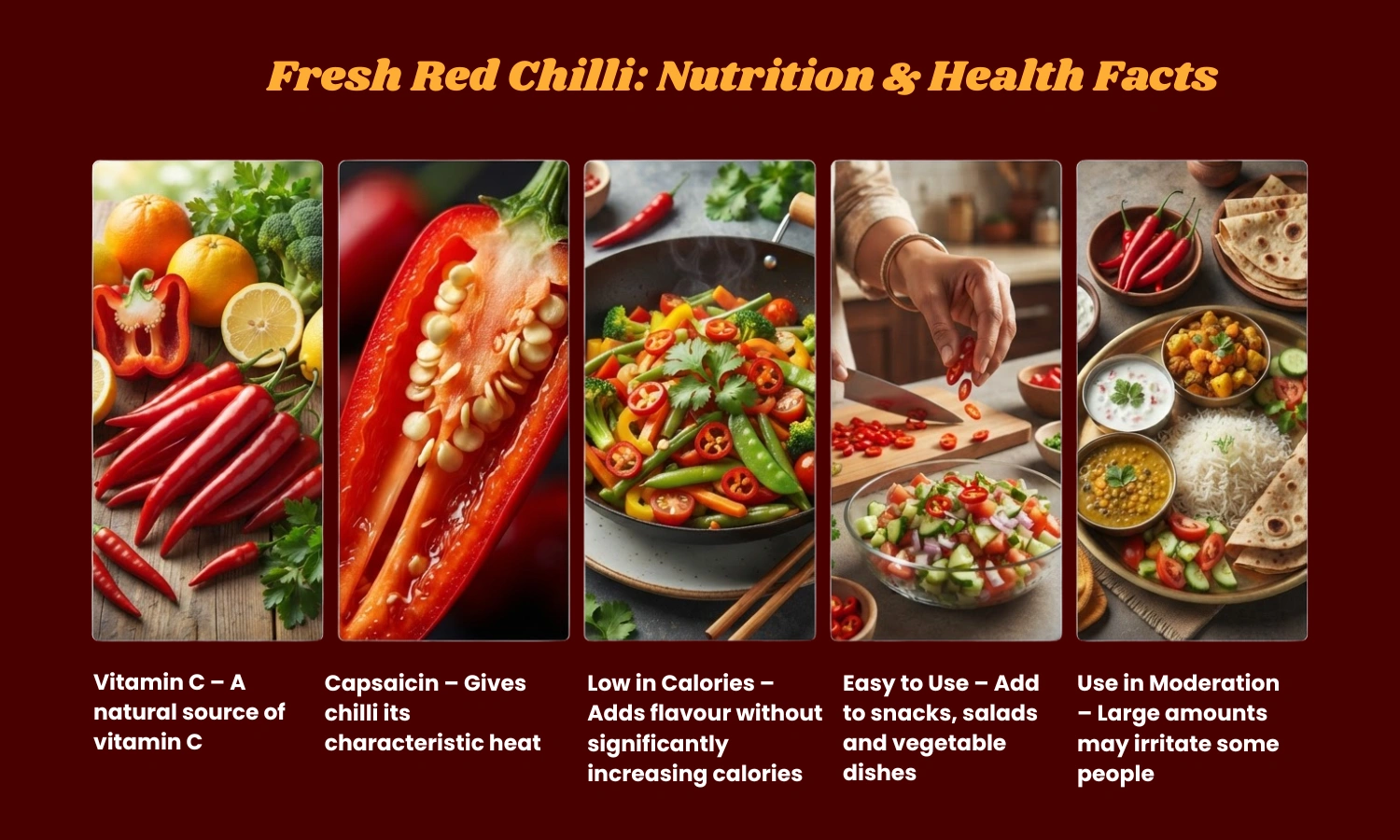
Fresh chillies can add plenty of flavour and heat without significantly increasing the calorie content of a dish. They can also be used to add flavour to healthy snacks for evening, such as homemade snacks, salads, or vegetable-based dishes. However, chilli can be irritating for some people, especially when consumed in large amounts, so it is best enjoyed in moderation as part of a balanced diet.
Bring Fresh Quality Into Every Dish
Whether you are making a quick chutney or stocking up for pickling season, quality starts with how the chilli is grown, dried, and processed. 777 Foods offers carefully sourced chilli products built for everyday Indian kitchens. Try using the 777 Premium Red Chilli Powder in your kitchen for enhanced flavour in your daily meals.
Explore the entire range of products from 777 Foods and cook with confidence!
Key Takeaways
- Fresh red chilli becomes powder through harvesting, cleaning, drying, sorting, and grinding.
- Sun drying preserves natural oils and aroma better than rushed industrial methods.
- Fresh chilli is widely used in chutneys, pickles, sauces and pastes before ever reaching powder form.
- Andhra-style preparations typically use stronger tempering and more oil than milder regional versions.
- Checking colour, firmness, and freshness helps ensure quality when buying fresh red chilli.
FAQs
How is fresh red chilli turned into chilli powder?
It goes through harvesting at peak ripeness, cleaning to remove debris, drying to reduce moisture, sorting by quality, and finally grinding into fine powder using calibrated milling equipment to preserve colour and heat.
Can fresh red chilli be used without drying it first?
Yes, fresh red chilli is commonly used directly in chutneys, pickles, pastes, and sauces, offering a brighter and sharper flavour compared to the dried and powdered version used in everyday cooking.
What is the best way to store fresh red chilli at home?
Keeping fresh chillies in a cool, dry place or refrigerating them in a breathable container helps extend freshness for a few days, while pickling or making paste allows for longer-term storage.
Are there health benefits to using fresh red chilli?
Fresh red chilli offers vitamin C and capsaicin, which contributes to its heat and has been associated with modest metabolism support, though it should be used in moderation alongside a varied diet.