Overview
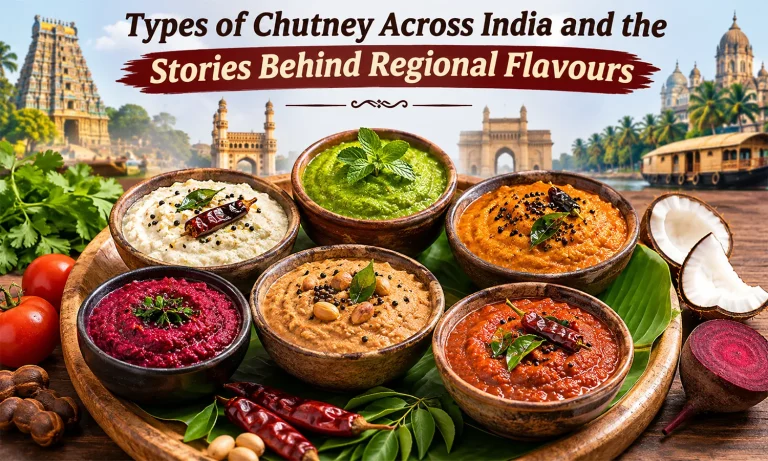
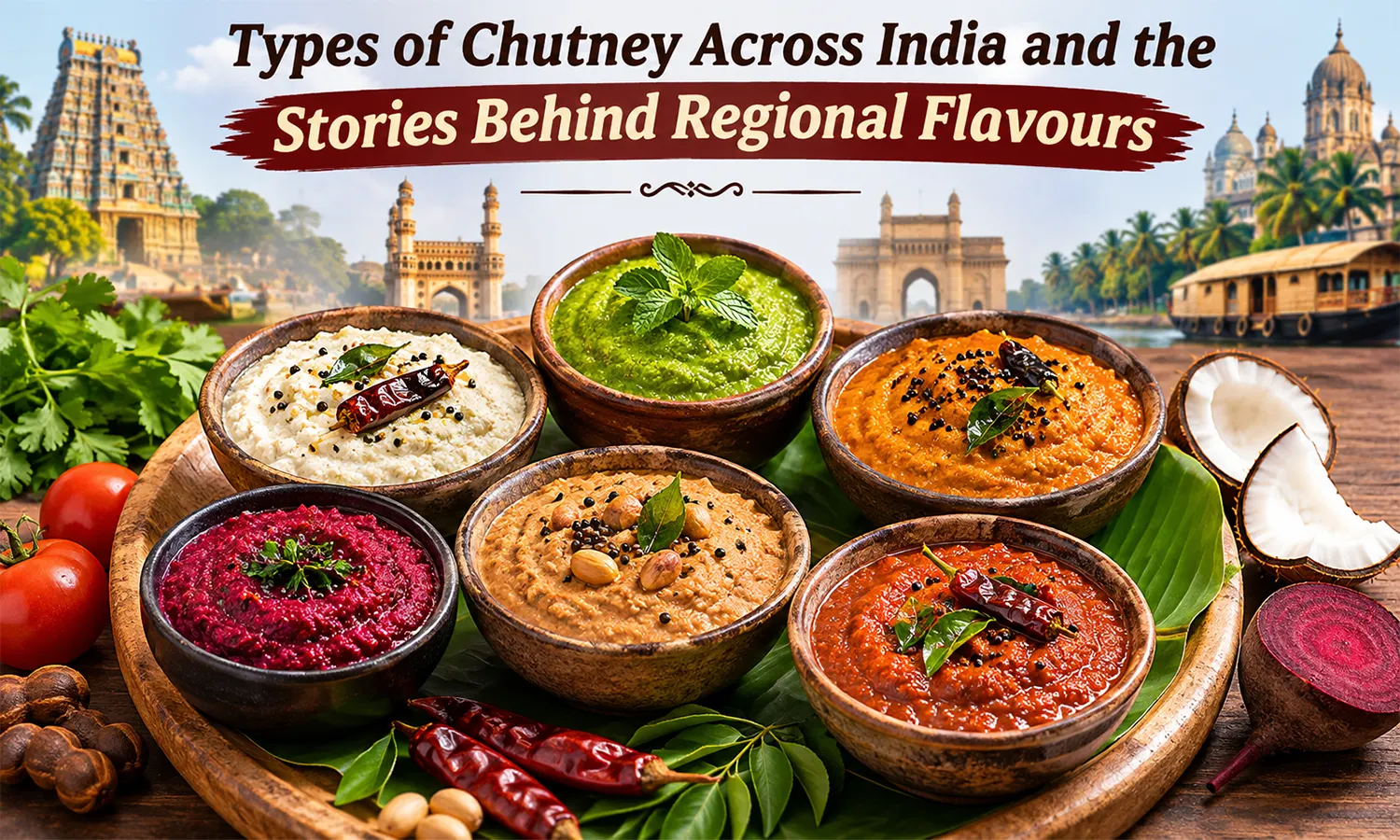
The types of chutney in India change from one region to the next, shaped by local produce, climate and the main meal on the plate. This blog covers South Indian coconut and thokku styles, North Indian green chutneys, sweet chutneys from Bengal and Gujarat, and the right pairing for every dish.
Introduction:
Ask ten Indian families about the types of chutney they grew up with and you will hear ten different answers. A Chennai kitchen grinds coconut every morning. A Delhi home blends mint and chilli for evening snacks. A Bengali wedding lunch ends with sweet tomato chutney. Each recipe came from what grew nearby and what the main dish needed beside it.
What Is Chutney in Indian Cooking?
The word comes from the Hindi “chaatna”, meaning to lick. A chutney is a ground or cooked side made from vegetables, fruits, herbs or lentils. Most chutney ingredients fall into four groups.
- A base such as coconut, tomato, onion or fresh herbs
- A sour note from tamarind, lemon or raw mango
- Heat from green chillies, dry red chillies or ginger
- A tempering of mustard seeds, urad dal and curry leaves
Fresh chutneys are eaten the same day. Cooked ones are simmered in oil until the water is gone, so they last for weeks. This one difference shapes most types of chutney you will find across the country.
What Is Thokku and How It Differs from Chutney
So what is thokku? It is a Tamil relish where the base is ground and slow cooked in gingelly oil with chilli, tamarind and salt until thick and dark. It is spicier and lasts longer than fresh chutney, yet it is softer and less sour than pickle.
South Indian Chutney Styles from Coconut to Curry Leaf
A plate of idli in Tamil Nadu rarely comes with a single side. Many homes serve two or three, which shows how central south indian chutney is to breakfast.
Coconut Chutney and Its Regional Versions
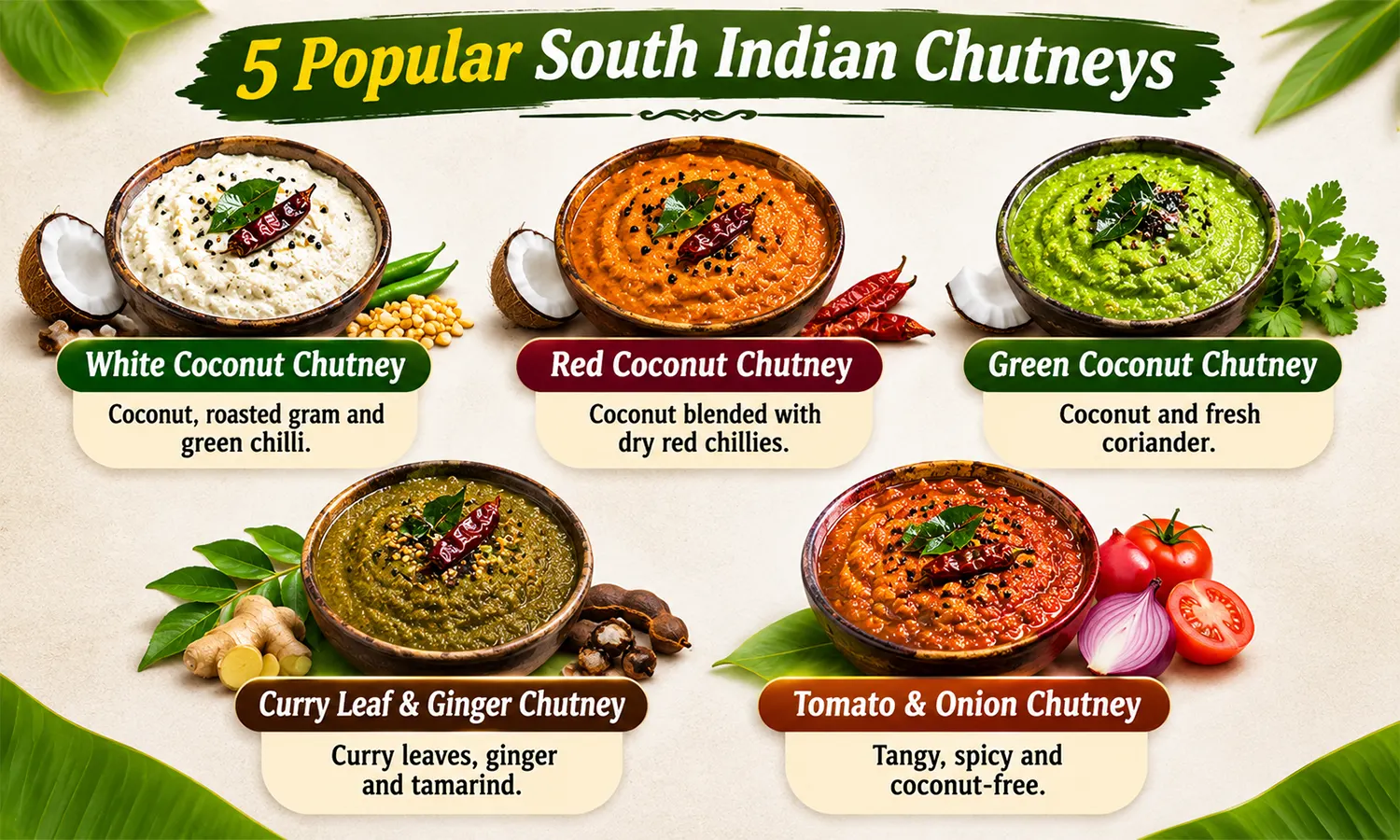
There are several types of coconut chutney, and each state has a favourite.
- White chutney with roasted gram and green chilli in Tamil Nadu
- Red chutney with dry red chillies in Karnataka hotels
- Green chutney with coriander, served with dosa in Kerala
Our step by step coconut chutney recipe explains the grinding ratio and tempering.
Curry Leaf and Ginger Chutneys from Everyday Kitchens
Curry leaves usually get pushed to the side of the plate. A curry leaf chutney puts them at the centre, ground with urad dal, tamarind and chilli. The 777 Curry Leaf Chutney gives you the same earthy taste straight from the jar.
Andhra’s allam pachadi is a ginger chutney made with tamarind and jaggery and served with pesarattu.
Chutney Without Coconut for Longer Shelf Life
Many families depend on chutney without coconut during hot months, since coconut spoils quickly once ground. In Chettinad and Andhra homes, a red tomato chutney cooked with garlic and chilli is a staple, and you can try it with our easy tomato chutney recipe. A spicy shallot and tamarind onion chutney is just as common.
Supply plays a part here. India produced about 206 lakh tonnes of tomatoes and 308 lakh tonnes of onions in 2024-25, as per Ministry of Agriculture estimates.
North, East and West Indian Chutney Traditions
Move north and the types of chutney turn greener, fresher and often sweeter.
Green Chutneys of North India
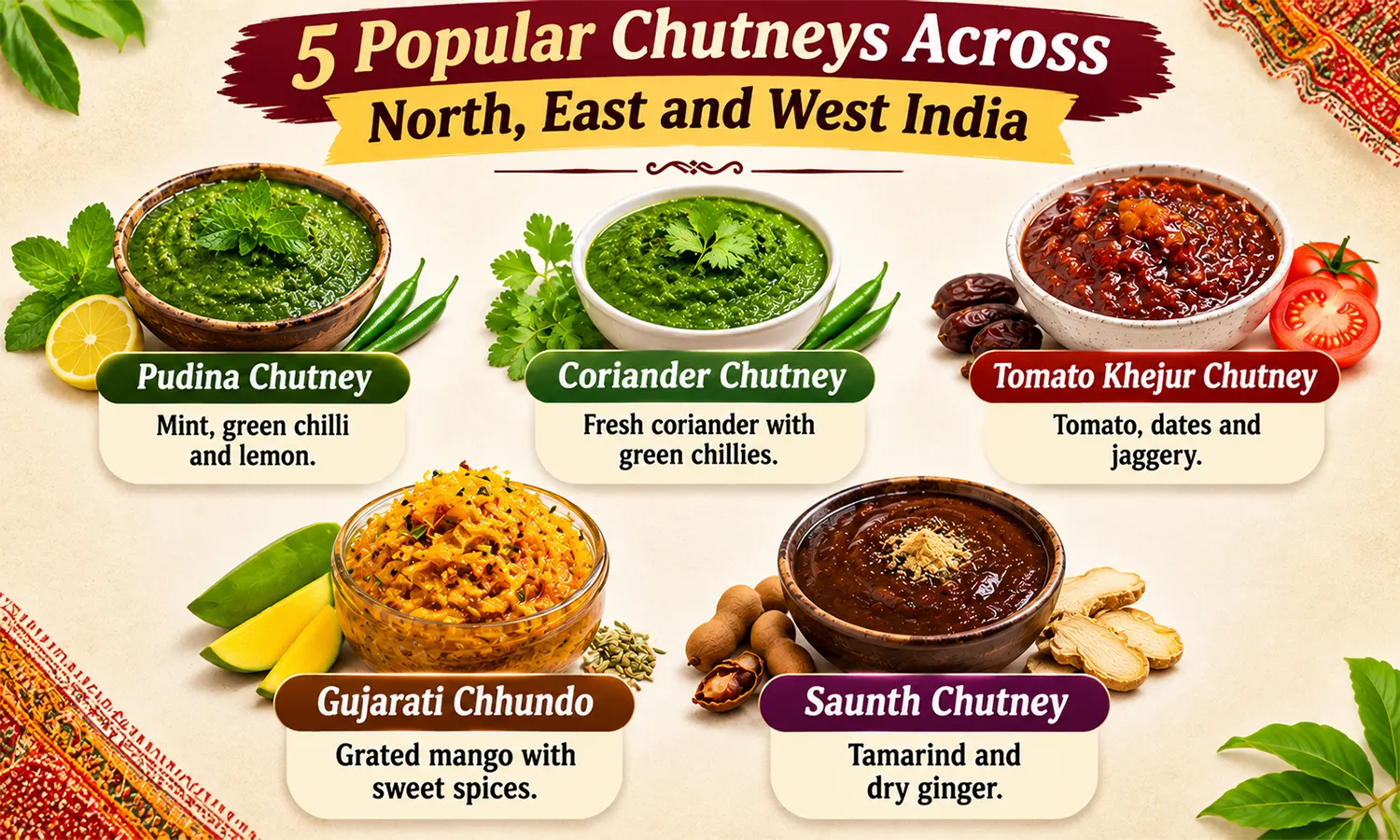
A bright pudina chutney with mint, green chilli and lemon goes with samosa and tandoori dishes across Punjab and Delhi. Mumbai street vendors spread coriander chutney inside every vada pav and sandwich. For that herby flavour without the blender, 777 Coriander Leaf Chutney is cooked in sesame oil and keeps longer than a fresh batch.
Sweet and Tangy Chutneys from Bengal and Gujarat
Bengal serves tomato khejur chutney with dates and jaggery at the end of a meal. Gujarat has chhundo, a sun-cooked grated mango chutney. Uttar Pradesh pours saunth, made from tamarind and dry ginger, over chaat. These types of Indian chutneys show how flavours shift from spicy to sweet across regions.
Different Types of Chutney Compared by Region
The table below puts the different types of chutney side by side.
| Chutney | Region | Main Ingredients | Best With |
|---|---|---|---|
|
Coconut chutney
|
Tamil Nadu, Kerala
|
Coconut, roasted gram, chilli
|
Idli, dosa
|
|
Tomato chutney
|
Andhra, Tamil Nadu
|
Tomato, garlic, red chilli
|
Dosa, chapati
|
|
Pudina chutney
|
Punjab, Delhi
|
Mint, green chilli, lemon
|
Samosa, kebabs
|
|
Allam pachadi
|
Andhra Pradesh
|
Ginger, tamarind, jaggery
|
Pesarattu
|
|
Tomato khejur chutney
|
West Bengal
|
Tomato, dates, jaggery
|
End of meal
|
Thokku Varieties That Pair Best with Rice
Popular thokku varieties include tomato, onion, ginger, curry leaf, coriander, mango and mint. Mixed with hot rice and a spoon of ghee, a good thokku for rice coats every grain with spice and oil.
Mint thokku, also known as pudina thokku in some preparations, can add a fresh herbal flavour to rice and other dishes. Try 777 Pudhina Leaf Chutney for a convenient mint-based accompaniment. Check its product information for ingredients and storage instructions.
Matching Chutney to the Meal on Your Plate
- Idli and dosa go well with coconut, tomato or onion chutney
- The classic chutney for pongal is coconut chutney with a thin sambar
- Curd rice tastes best with mango, curry leaf or mint thokku
- Chaat needs green chutney with sweet tamarind chutney
Knowing the main types of chutney helps you plan two sides for one breakfast without repeating flavours.
What to Check Before Buying a Ready-to-Eat Chutney?
IMARC Group values the India pickles market at USD 664.7 million in 2026 and expects it to reach USD 988.8 million by 2034.
When you pick a ready-to-eat chutney, check these points.
- Traditional oils such as gingelly or groundnut oil
- A short ingredient list led by the main vegetable or herb
Stores now stock many chutney varieties, so compare flavours on our pickles and chutneys page before you buy.
Bring Regional Flavours Home with 777 Foods
777 Foods makes traditional thokku and chutney with time-tested South Indian recipes, so your idli, dosa and rice get a homely side in seconds. Explore the Thokku and chutney range today and keep a jar of real regional flavour on your kitchen shelf.
Key Takeaways
- The types of chutney in India depend on local produce, climate and the main dish.
- Thokku is slow-cooked in oil and lasts longer than fresh chutney.
- South India leans on coconut, tomato and curry leaf, while the North prefers mint and coriander.
- Bengal, Gujarat and Uttar Pradesh keep sweet chutney traditions alive.
- Packaged thokku made with traditional oils saves time without losing home-style taste.
FAQs
How many types of chutney are there in India?
India has hundreds of family recipes. Most fall under coconut, tomato, onion, herb, fruit and lentil-based chutneys.
What is the difference between chutney and thokku?
Chutney is usually ground fresh and eaten the same day. Thokku is slow-cooked in oil until thick, so it lasts for weeks.
Which chutney goes best with idli and dosa?
Coconut chutney is the most common choice. Tomato and onion chutneys work well when you want a spicier side.
Can thokku be eaten with rice?
Yes. Mix a spoonful with hot rice and ghee for a quick meal.
How long does homemade chutney last?
Fresh coconut or herb chutney lasts two to three days in the fridge. Cooked thokku can last a few weeks in a clean, dry jar.