
Introduction :
The first time you open a jar of hing, the smell can be surprising. It is sharp, strong, and impossible to ignore. But the real story of Asafoetida taste begins only after it touches hot oil.
In Indian cooking, this humble ingredient has been trusted for generations. Though small in quantity, it plays a powerful role in shaping the flavour of many traditional dishes.
What Does Asafoetida Taste Like?
To understand Asafoetida taste, you need to experience both its raw and cooked forms.
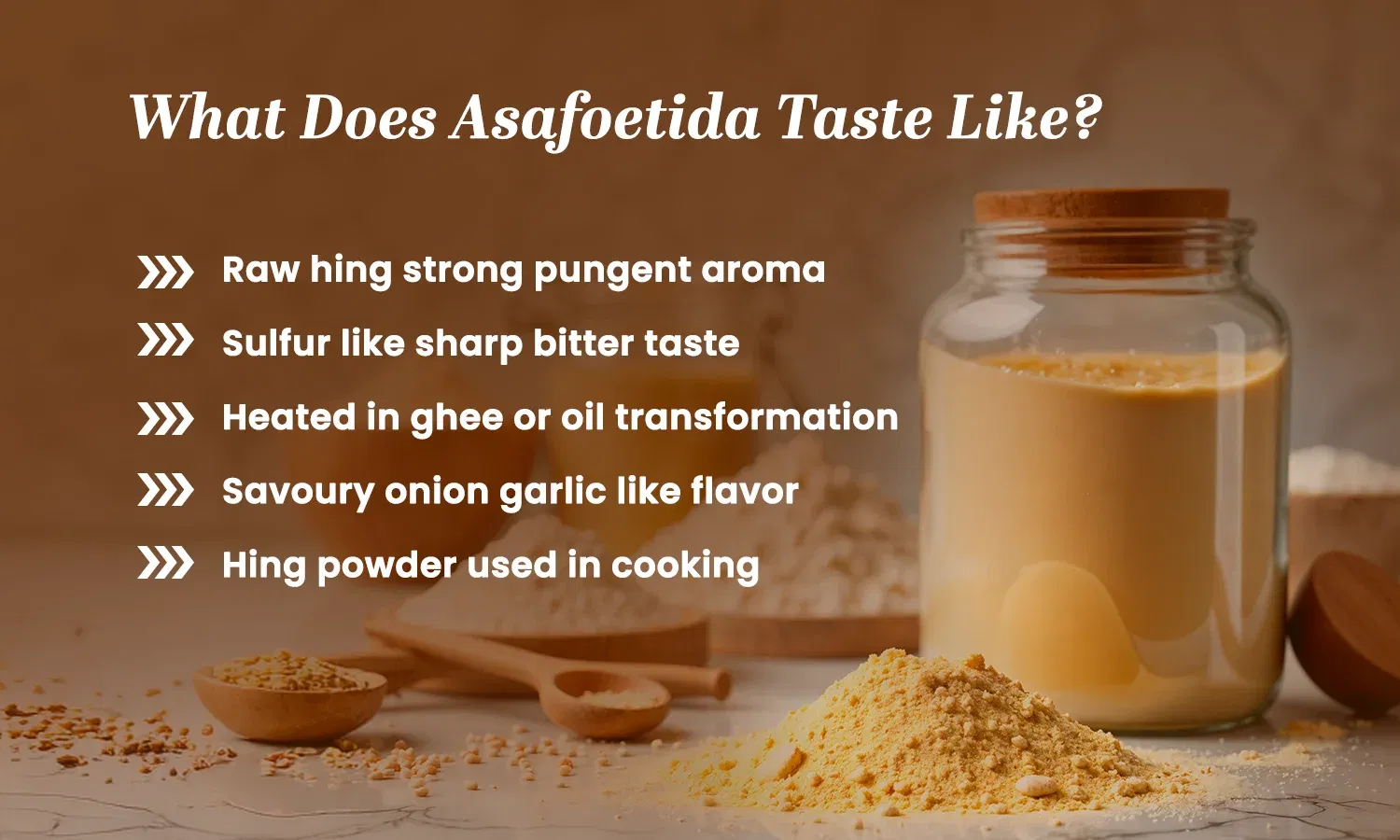
In its raw state, hing is extremely pungent. Many describe it as sulfur-like, almost unpleasant. Some wonder if it is asafoetida bitter or spicy. Raw, it leans toward bitter and sharp rather than spicy.
However, once heated in ghee or oil, the transformation is remarkable. The bitterness disappears, and it develops a deep, savoury flavour similar to sautéed onions or garlic. This distinctive asafoetida spice flavor is what makes it valuable in everyday cooking.
Most households use asafoetida hing powder, as it is easy to measure and blends smoothly into dishes.
How Does Asafoetida Enhance the Flavor of Food?
The beauty of Asafoetida taste lies in how it supports other ingredients rather than dominating them.
When added during tempering, it releases a warm base note that ties spices together. Cumin, mustard seeds, and turmeric become more rounded when hing is added at the right moment.
You may not directly identify asafoetida in food, but you will notice its absence if it is missing. That subtle depth comes from proper asafoetida usage.
Because of this, its asafoetida uses extend beyond flavour. It is also known to help balance heavy lentil and bean dishes.
Why Does Asafoetida Have Such a Strong Aroma?
The strong asafoetida aroma comes from natural sulfur compounds found in the dried resin.
Before processing, the resin from the plant is intense in smell. In powdered form, the asafoetida ingredients usually include the pure resin blended with flour to make it easier to handle.
This is why proper hing usage always involves cooking it in hot fat first. Heat breaks down the harsh compounds and releases a pleasant fragrance instead.
Whether in solid form or as asafoetida powder, storage matters. It should always be kept airtight so the aroma does not spread to other spices.
How Much Asafoetida Should You Use?
With Asafoetida taste, less is always more.
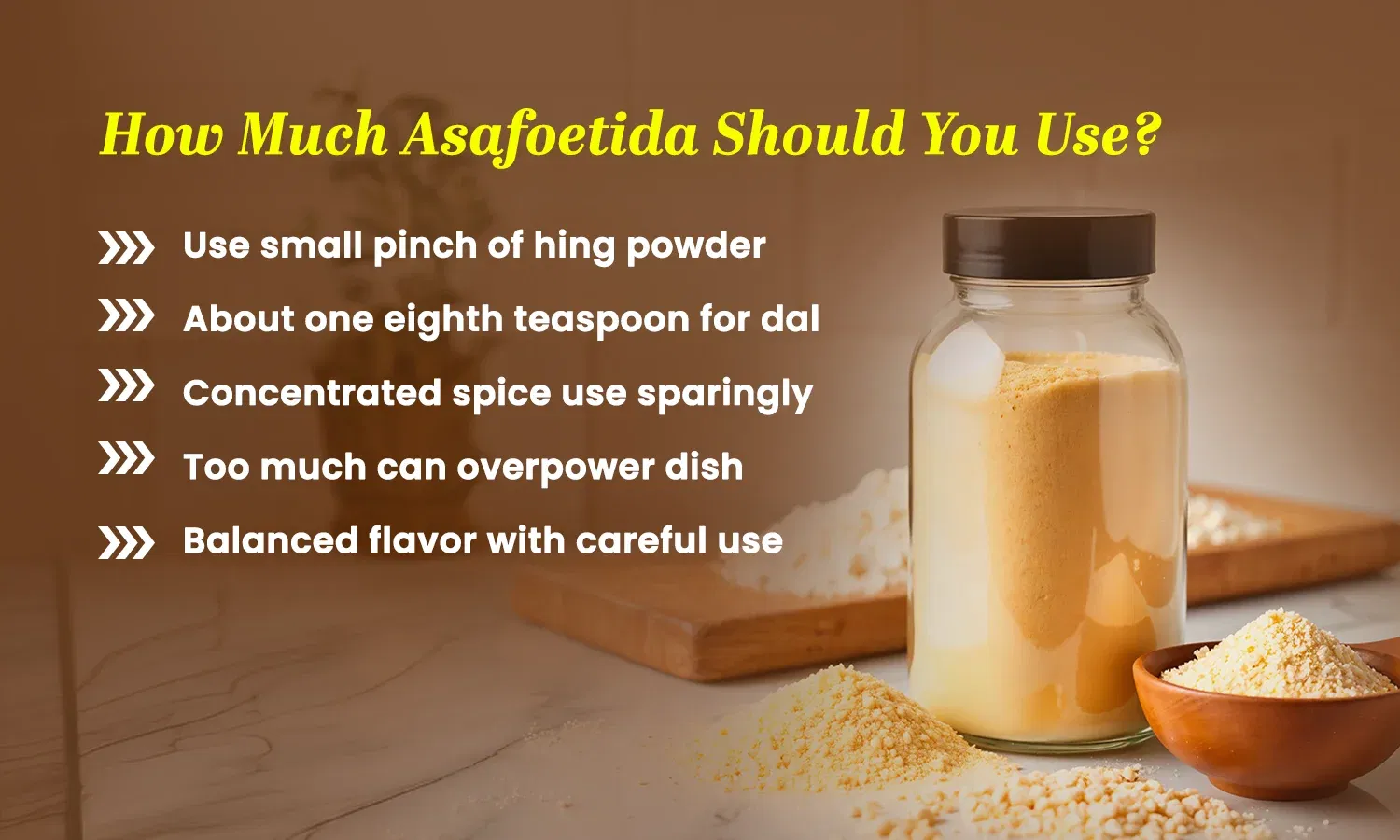
For a pot of dal serving four people, about 1/8 teaspoon of Hingpowder is sufficient. Adding more can overpower the dish.
When using asafoetida hing powder, remember that it is concentrated. A small pinch is enough to bring depth without bitterness.
This careful asafetida use ensures that the flavour remains balanced.
Why Is Asafoetida Used in Indian Kitchens?
In Indian households, Asafoetida taste is closely connected to tradition.
First, asafoetida is hing, and it serves as a substitute for onion and garlic in many communities. This makes it important in vegetarian and sattvic cooking.
Second, it is widely believed that asafoetida is good for health, especially for digestion. Many families add it to lentils not just for flavour, but for comfort after meals.
Because of its dual role in flavour and wellness, the presence of this asafoetida indian spice in kitchens continues even today.
Conclusion
At first encounter, Asafoetida taste may seem overwhelming. But when handled correctly, it becomes warm, savoury, and essential.
From its sharp aroma to its mellow cooked flavour, this spice proves that a small pinch can transform an entire dish. Understanding its flavour, aroma, and proper usage allows you to use it confidently in your own cooking.
Key Takeaways
- Asafoetida taste is bitter when raw but savoury when cooked.
- Always heat it in oil to release the proper flavour.
- Use only a small pinch to avoid overpowering dishes.
- Commonly added to dals, curries, and vegetable dishes.
- Valued for both flavour depth and digestive support.
FAQs
Does hing have any taste?
Yes. Asafoetida taste is sharp and bitter in raw form. Once cooked, it becomes mellow and similar to onion or garlic.
Is hing a blood thinner?
Hing contains natural compounds that may influence blood flow. People on blood-thinning medication should consult a doctor before regular use.
How to identify pure hing?
Pure hing often comes in solid resin form with a strong aroma. Most household versions are blended powder for easier cooking.
How long does asafoetida last?
When stored in an airtight container, asafoetida can retain its flavour for 12–18 months.
How many types of asafoetida are there?
It is generally available as pure resin lumps and compounded powder, which is more common for daily use.