What Is Pure Groundnut Oil?
If you’ve ever cracked open a fresh bottle of oil and been hit by the unmistakable scent of roasted peanuts, you’ve found the “pure” stuff. But what is groundnut oil in its most authentic form? It is the fat squeezed out of peanut seeds using nothing but mechanical pressure. No harsh chemicals. No high-heat industrial processing.
When we talk about pure groundnut oil, we are usually talking about chekku-Pressed or Chekku groundnut oil. These traditional methods keep the temperature low (below 45°C). That’s the big secret. Keeping it cool preserves the Vitamin E and the heart-healthy fats that usually vanish in a factory.
The strong smell of groundnut oil is often the first sign that you are using a natural and unprocessed product.
Why Pure Groundnut Oil Is a Healthy Choice
Is pure groundnut oil good for health? Honestly, it is one of the easiest upgrades you can make for your family. It is naturally 100% cholesterol-free. It’s also packed with Monounsaturated Fatty Acids (MUFA)—the same “good fats” people pay a premium for in olive oil.
The groundnut oil benefits carry a natural hit of resveratrol (the same antioxidant in red wine) and enough Vitamin E to keep your skin from looking dull. Plus, with a high smoke point of about 232°C, it won’t break down into nasty toxins when you’re deep-frying snacks for the kids.
This is mainly because of its high groundnut oil smoke point, which keeps the oil stable during cooking.
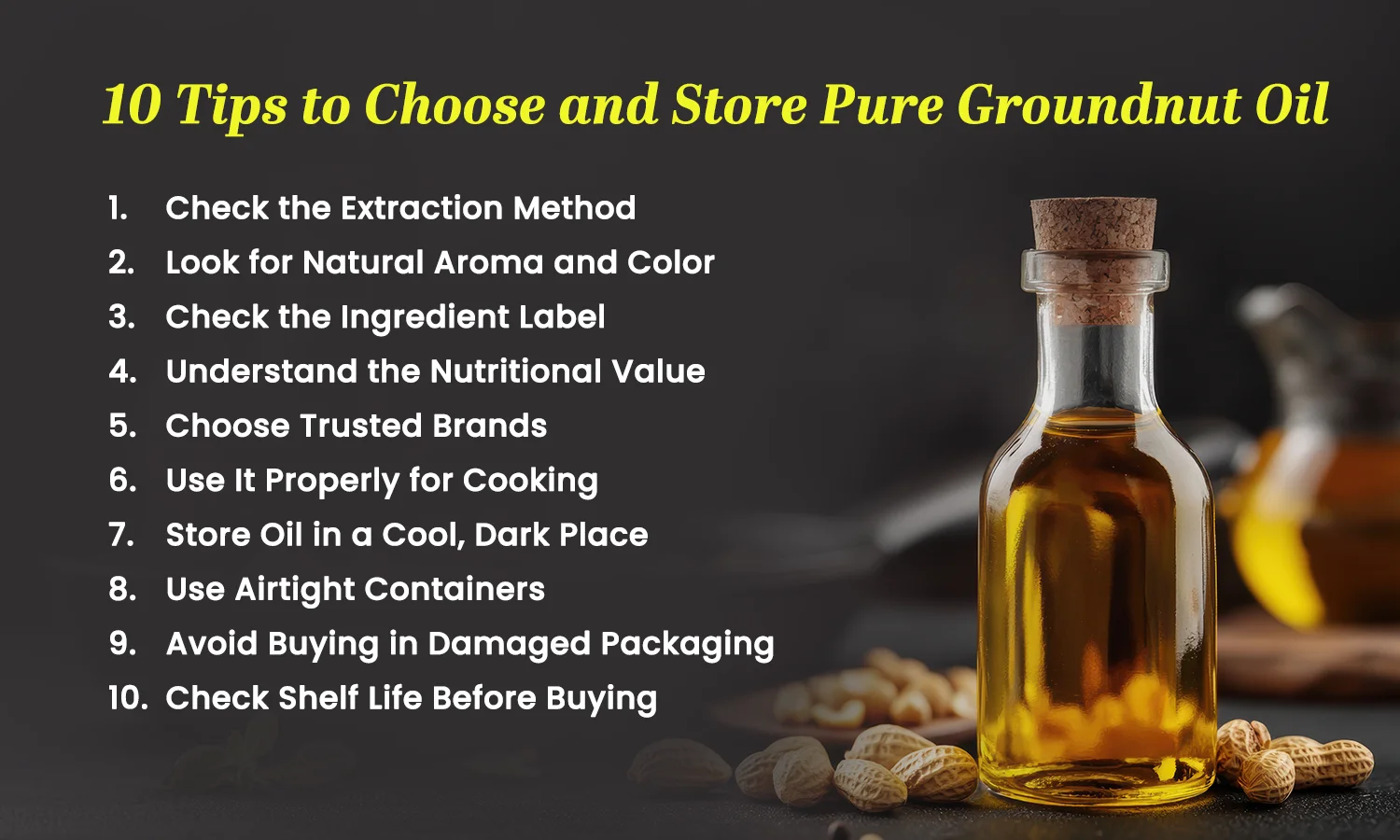
10 Tips to Choose and Store Pure Groundnut Oil
1. Check the Extraction Method
Don’t just look at the pure groundnut oil price. Look for the words “chekku-Pressed,” “Wood-Pressed,” or “Kachi Ghani.” If the label says “Solvent Extracted,” put it back. That version uses chemicals like hexane to get every last drop out of the seeds.
Such oils are often sold as refined groundnut oil, which may lack natural nutrients.
2. Look for Natural Aroma and Color
Pure oil isn’t shy. It should smell like peanuts. Period. If it is odorless and pale, it’s been bleached and refined. Look for a deep amber-gold color. The natural color of groundnut oil is a good indicator of how minimally it has been processed.
3. Check the Ingredient Label
The list should have exactly one item: 100% Pure Groundnut Oil. If you see “anti-foaming agents” or “preservatives” like TBHQ or BHA, it isn’t as pure as the bottle claims. A truly original groundnut oil will always have a clean and simple ingredient list.
4. Understand the Nutritional Value
5. Choose Trusted Brands
Stick with names that have a legacy. In India, brands like SGR 777 have been doing this for over 70 years. They focus on small-batch purity rather than mass-market refining. These brands often focus on delivering premium groundnut oil with better taste and quality.
6. Use It Properly for Cooking
7. Store Oil in a Cool, Dark Place
Light and heat are the enemies of oil. They cause “oxidation,” which makes the oil go rancid. Keep your bottle in a dark cupboard, tucked away from the heat of the stove. Proper storage helps maintain the purity of groundnut oil for a longer time.