Summary
A clear introduction to the thin, tangy soup that comforts any plate. It lists the everyday rasam ingredients, explains the gentle simmer that keeps the dish from turning bitter, and walks through tempering. You also get a tomato variation, serving ideas with rice, common mistakes to avoid, and a note on rasam’s gentle benefits.
Introduction :
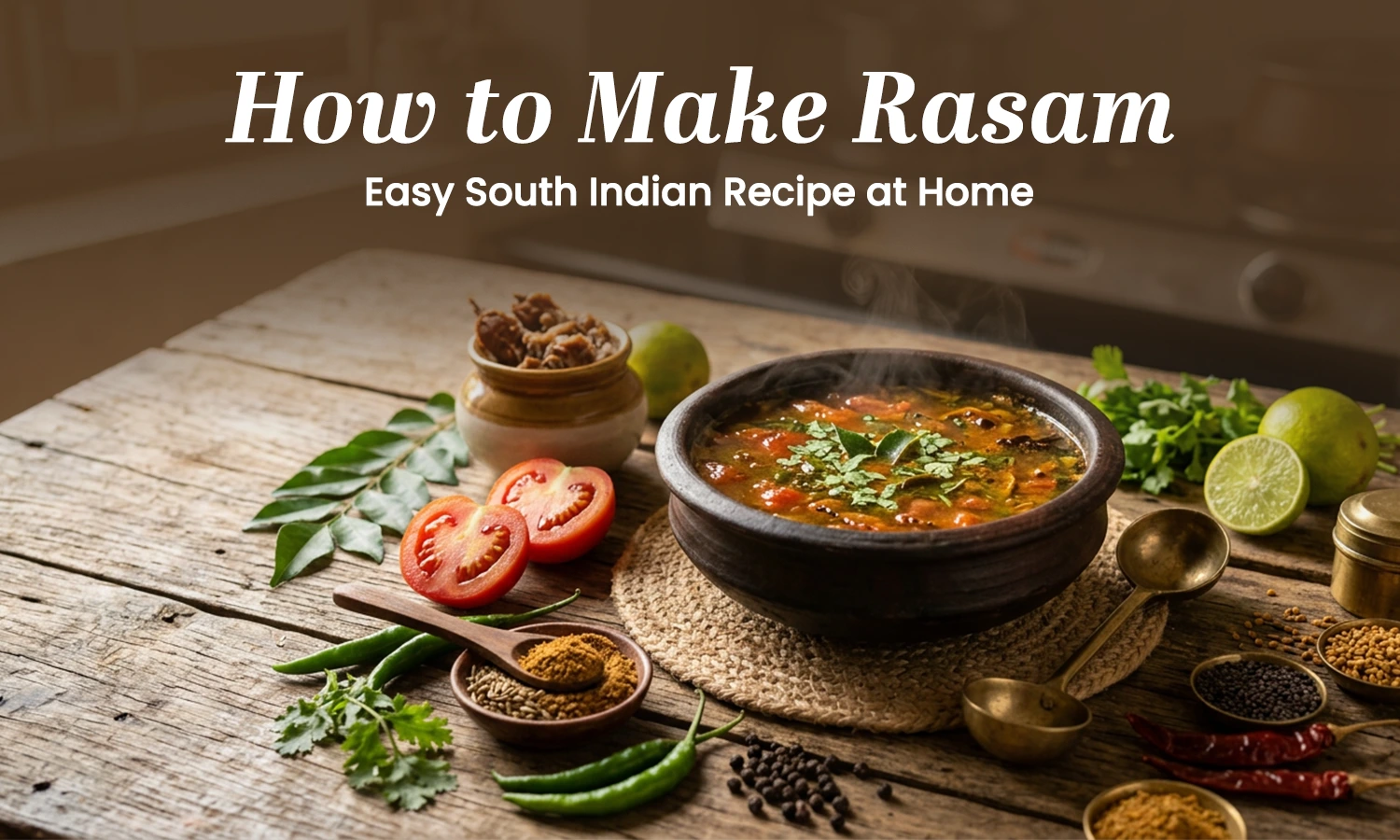
Learning how to make rasam at home is easier than most people think. Rasam is a thin, tangy South Indian soup that brings warmth and comfort to any plate. In this guide on how to make rasam, you will find the exact rasam ingredients, the correct rasam masala, and a clear method that works every time.
Once you know how to make rasam, you have a quick and healthy dish for busy weekdays. You can sip it on its own or pour it over hot rice. This simple rasam recipe uses common pantry items, so you can prepare it without any special shopping.
What Is Rasam and Why Learn How to Make It
Rasam is a watery South Indian dish made from tamarind, tomato, and spices. People love it because it is light, warm, and easy to digest. When you learn how to make rasam, you also learn a dish that is gentle on the stomach and rich in flavour.
Many homes serve rasam and rice together as a daily meal. Others drink a small cup before dinner to open their appetite. This is why understanding how to make rasam at home is such a useful skill for any cook.
Rasam Ingredients You Will Need
Gathering the right rasam ingredients is the first step. For a basic rasam recipe, you need tamarind, two ripe tomatoes, cooked toor dal water, and salt. You also need rasam masala, which is the spice blend that gives the dish its taste.
For the tempering, you need ghee or oil, mustard seeds, cumin, dried red chilli, curry leaves, and a pinch of asafoetida. Fresh coriander leaves finish the dish. If you keep homemade rasam powder ready, your rasam masala work is already done.
Good rasam ingredients make a big difference. Use soft, sour tamarind and ripe tomatoes for the best balance of tang and sweetness.
How to Prepare Rasam Step by Step
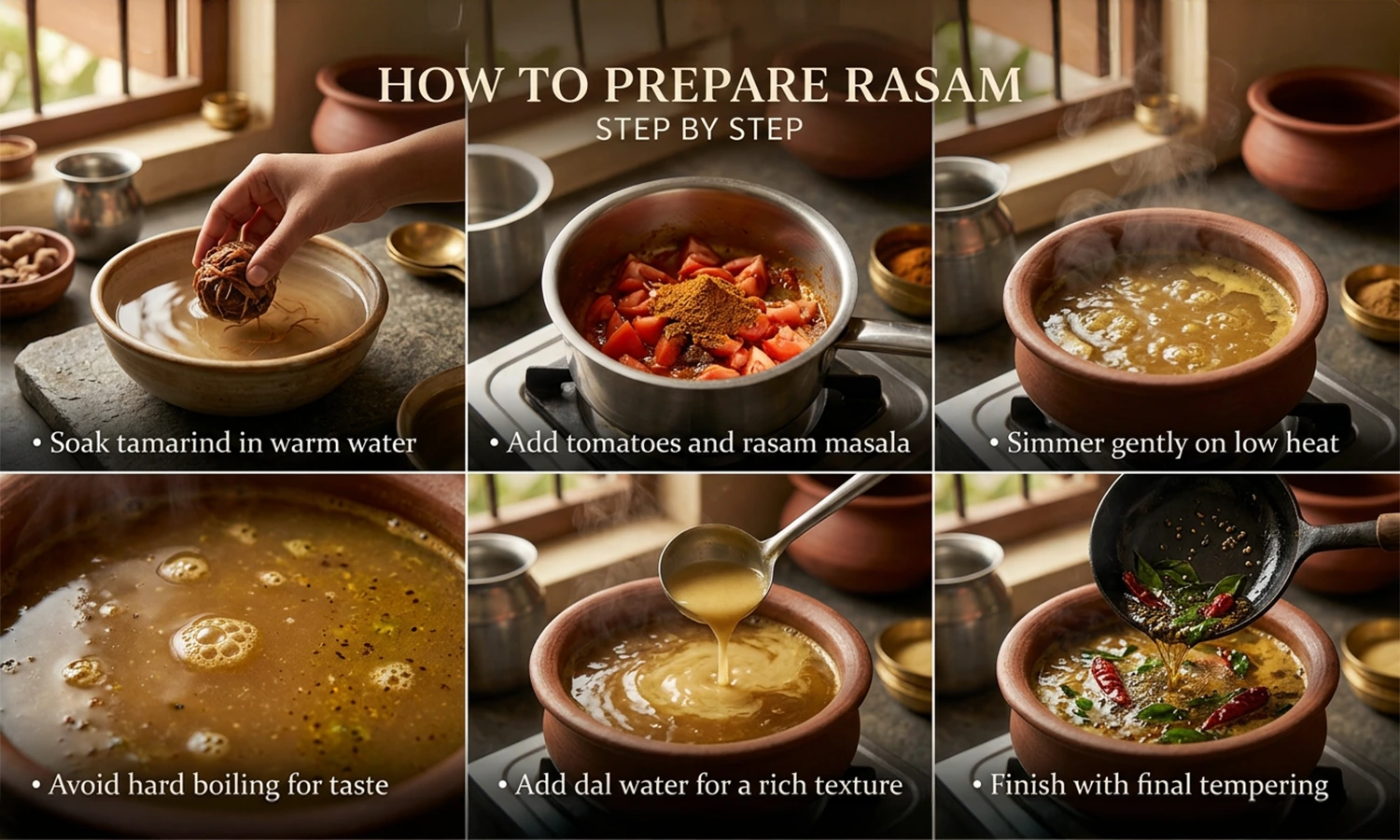
Here is how to prepare rasam in simple steps. First, soak a small lemon-sized ball of tamarind in warm water and squeeze out the juice. Crush the tomatoes lightly and add them to the tamarind water along with salt, turmeric, and your rasam masala.
Let this mixture simmer on low heat. Do not let it reach a rolling boil, because hard boiling makes the rasam bitter. This gentle simmer is the secret in any good rasam recipe.
When the raw smell goes away and a light froth rises, add the dal water to make the rasam softer and fuller. Switch off the heat. The last part of how to make rasam is the tempering.
How to Make Tomato Rasam as a Variation
If you want to learn how to make tomato rasam, simply use more tomatoes and less tamarind. The extra tomato gives a fruity, mild tang that children enjoy. The rest of the method stays the same as the main rasam recipe.
For the tempering, heat ghee, add mustard seeds, cumin, red chilli, and curry leaves. Pour this over the rasam and cover the pot for a minute so the aroma settles in. Finish with coriander leaves.
Tips to Make Rasam at Home Taste Better
A few small habits improve every batch. Always simmer and never boil hard. Use fresh curry leaves, since they carry most of the aroma. Keep homemade rasam powder in an airtight jar so your rasam masala stays fragrant.
Taste and adjust at the end. If it is too sour, add a little water and salt. If it is flat, add a pinch more rasam masala. These small checks are what make learning how to make rasam at home so rewarding.
How to Serve Rasam and Rice
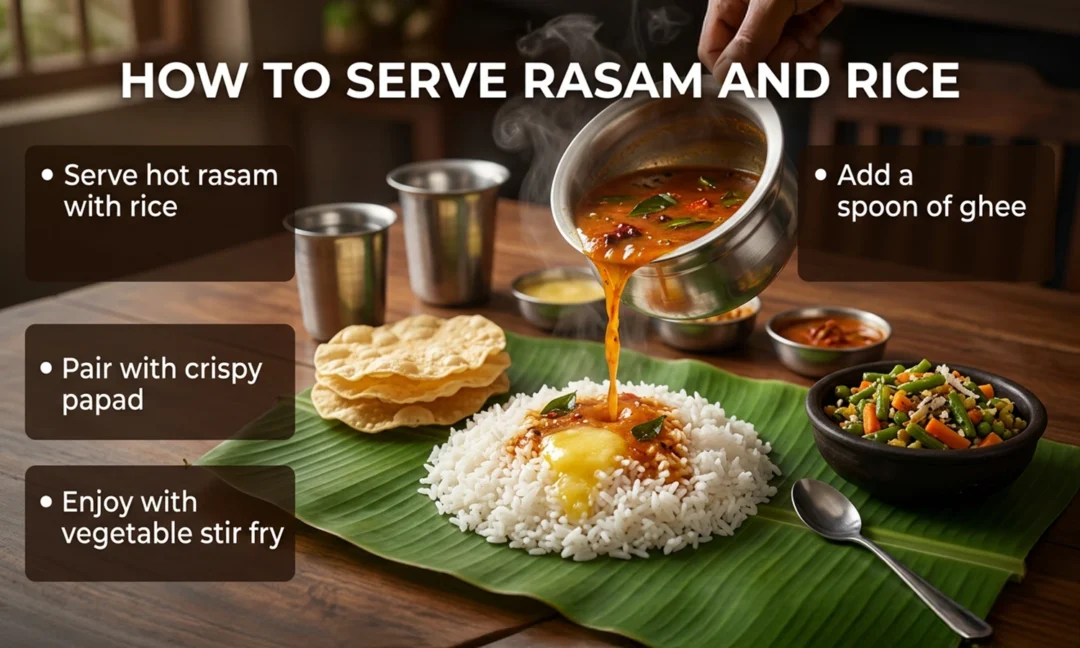
The classic way to enjoy this dish with rasam and rice. Mash hot rice with a spoon of ghee, then pour warm rasam over it. A side of papad or a simple vegetable stir fry completes the plate.
Now that you know how to cook rasam, you can repeat it any day with confidence. With practice, your rasam recipe will taste just like the one from a traditional South Indian kitchen.
Common Mistakes to Avoid When You Make Rasam
The most common mistake when learning to cook rasam is boiling it too hard. A rolling boil makes the rasam bitter and dull. Always keep the heat low and switch off as soon as a light froth rises. This single habit improves how to make rasam more than any other tip.
Another mistake is using stale spices. Old rasam masala loses its aroma, so the rasam tastes flat. Adding too much tamarind is also common, which makes the dish sharp. Balance the tamarind, salt, and rasam masala carefully each time you make rasam.
Health Benefits of Rasam
Beyond its taste, rasam offers gentle benefits. The pepper, cumin, and garlic used in many recipes are warming spices that some people find help with digestion. This is why a warm bowl is often served when someone feels heavy after a large meal.
Tamarind and tomato add a fresh tang and some vitamin C. Because rasam is light and mostly liquid, it is easy to eat. Learning how to make rasam at home means you can enjoy these qualities any day with simple rasam ingredients.
Quick Tips to Remember When Making Rasam
Keep a few simple points in mind and how to make rasam will feel effortless. Always simmer gently, taste before serving, and adjust the salt and tang at the end. Fresh curry leaves and a good rasam masala carry most of the aroma, so never skip them.
Prepare your rasam ingredients before you start cooking. Squeeze the tamarind, crush the tomatoes, and keep the tempering items ready. This small habit makes how to make rasam a smooth, five-minute task on most days.
If you cook often, keep homemade rasam powder in a jar. With the spice blend ready, how to make rasam at home turns into a quick routine you can manage even on a busy evening. A warm bowl of rasam and rice is then never far away.
FAQs
What is rasam made of?
Rasam is made of tamarind, tomato, toor dal water, salt, turmeric, and rasam masala, finished with a ghee tempering of mustard seeds, cumin, and curry leaves.
Can I make rasam without dal?
Yes. Use only tamarind and tomato for a lighter soup, or add dal for a fuller bowl.
Why should rasam not be boiled hard?
Hard boiling makes rasam bitter, so keep the heat low and switch it off as soon as a light froth rises.
How long does rasam stay fresh?
It keeps for about a day in the fridge and should be reheated gently without boiling.
Is rasam good for health?
Rasam is light and easy to digest, and its warming spices like pepper and cumin are often enjoyed for comfort.