Overview
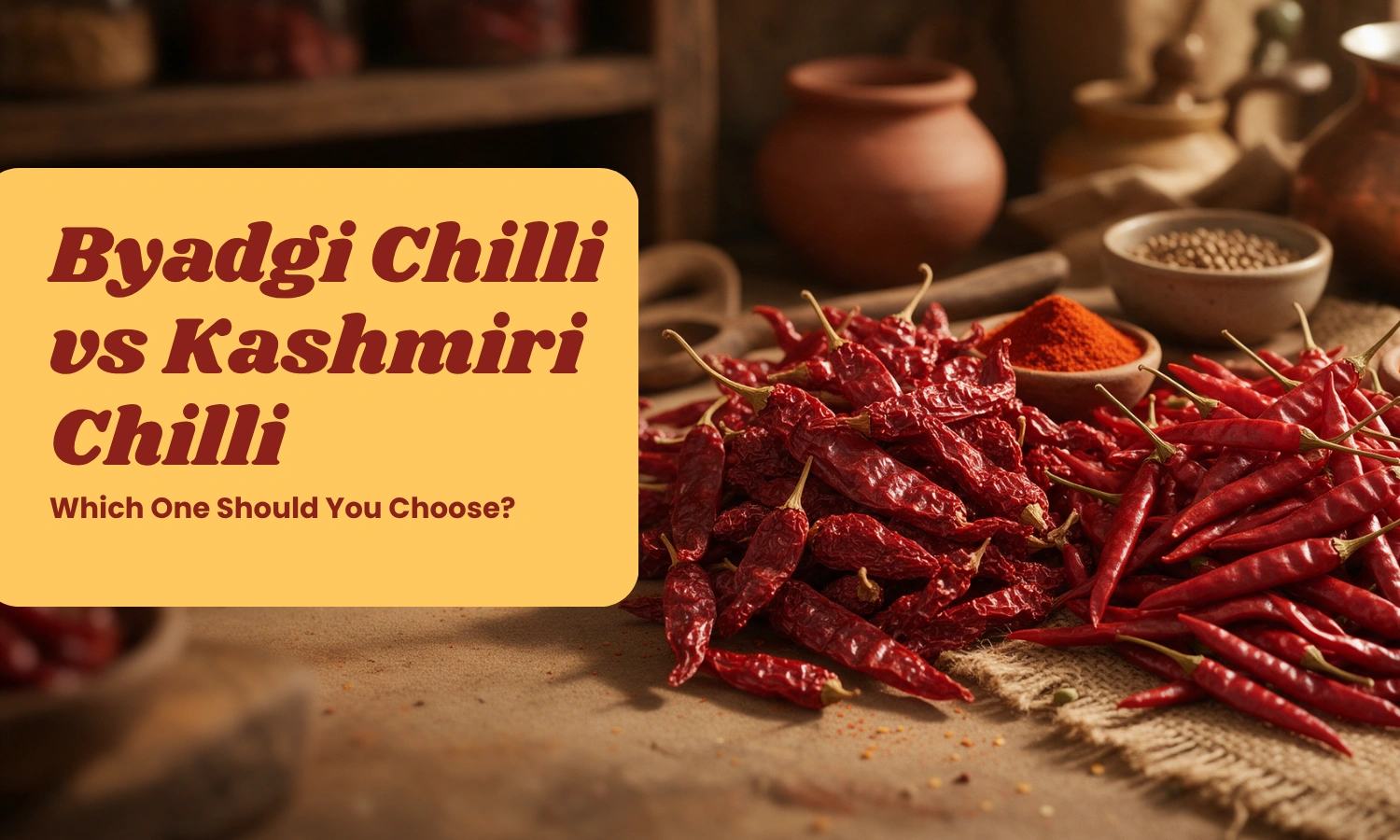
Byadgi chilli vs Kashmiri chilli is a common comparison for cooks choosing a chilli powder for colour and mild heat. Byadgi chilli, grown in Karnataka, delivers a wrinkled skin and deep red colour with medium pungency. Kashmiri chilli offers a similar colour with milder heat, making the choice depend on how much spice a dish actually needs.
What Is Byadgi Chilli? - Origin and Other Names
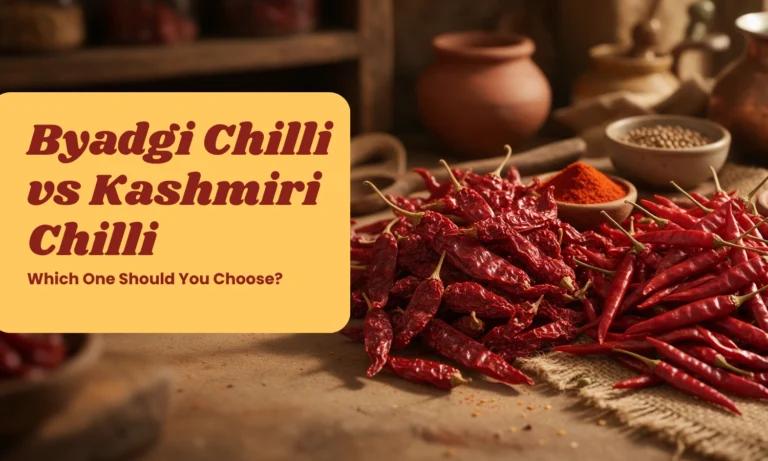
“What is byadgi chilli?” is one of the first questions home cooks ask once they notice it listed as an alternative to Kashmiri chilli on a spice packet. Byadgi chilli, also spelled byadagi chilli, takes its name from the town of Byadagi in Karnataka, a region long associated with chilli trade and processing in South India. The pods are known for their wrinkled skin, moderate length, and a colour that leans towards a deep, almost brick red once dried.
Locally, this variety is also referred to as bedgi mirchi, and powder made from it is sold as bedgi mirchi powder in several South Indian markets. Valued among high-quality pure spices, Byadgi mirchi is prized less for raw heat and more for the colour it releases into oil and gravies, which is why it appears frequently in sambar, rasam, and various Karnataka-style curries where a rich red tone matters as much as taste.
What Is Kashmiri Chilli? - Origin and Other Names
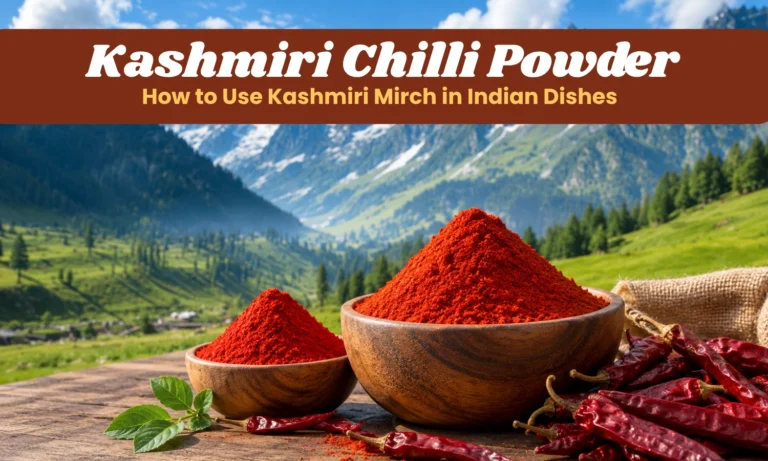
Kashmiri chilli, also known as “Kashmiri Lal Mirch,” comes from the northern state of Jammu and Kashmir, though a meaningful share of the variety sold commercially today is also cultivated in parts of Karnataka under similar growing conditions. It is known for a long, smooth pod and a colour output that many chefs consider the benchmark for vivid red gravies, tandoori marinades, and butter-based curries.
Compared to most other Indian chillies, Kashmiri chilli sits on the milder end of the heat scale, which is exactly why it became popular for recipes where a large quantity of chilli powder is needed for colour without turning the dish overly spicy.
Byadgi Chilli vs Kashmiri Chilli: Colour and Heat Compared
The difference between Byadgi chilli and Kashmiri chilli becomes clearest when colour and heat are examined side by side. Both varieties are valued for a strong red pigment, but they are not identical in intensity or in how they behave once cooked.
| Attribute | Byadgi Chilli | Kashmiri Chilli |
|---|---|---|
|
Skin Texture
|
Wrinkled, slightly thick
|
Smooth, thinner
|
|
Colour Output
|
Deep red, slightly darker
|
Bright red, vivid
|
|
Heat Level |
Medium
|
Mild
|
|
Common Regional Use
|
North Indian and colour-forward gravies
|
North Indian and colour-forward gravies
|
|
Typical Form Sold
|
Whole pod, Byadgi chilli powder
|
Whole pod, Kashmiri chilli powder
|
When comparing Byadgi chilli powder vs Kashmiri chilli, the Byadgi version carries a slightly sharper aftertaste, while Kashmiri chilli powder feels smoother even in larger quantities.
Is Byadgi Chilli Spicy? Is Guntur Chilli Spicier?
“Is Byadgi chilli spicy?” is a fair question for anyone used to milder cooking. On its own, Byadgi chilli carries a moderate heat that most palates accustomed to regular, traditional Indian foods would find manageable, though it is noticeably warmer than Kashmiri chilli in the same quantity.
For context, it helps to place a third variety alongside this comparison. “Is Guntur chilli spicy?” almost always gets answered with a firm yes, since Guntur chilli from Andhra Pradesh sits well above both Byadgi and Kashmiri chilli on the heat scale.
Looking at guntur chilli vs byadgi chilli vs kashmiri chilli together, the order from mildest to hottest generally runs Kashmiri, then Byadgi, then Guntur, which makes it easier for a shopper to decide based on how much heat a household actually wants in daily cooking.
Kashmiri Chilli vs Byadgi Chilli: Which Suits Your Recipe?
Choosing between Kashmiri chilli vs Byadgi chilli, or the reverse comparison of Byadgi vs Kashmiri chilli, usually comes down to the dish being prepared rather than a fixed rule. For paneer tikka marinades, or any recipe where a rich red colour is the main goal, Kashmiri chilli remains the safer choice because it will not push the heat level too high even when used generously.
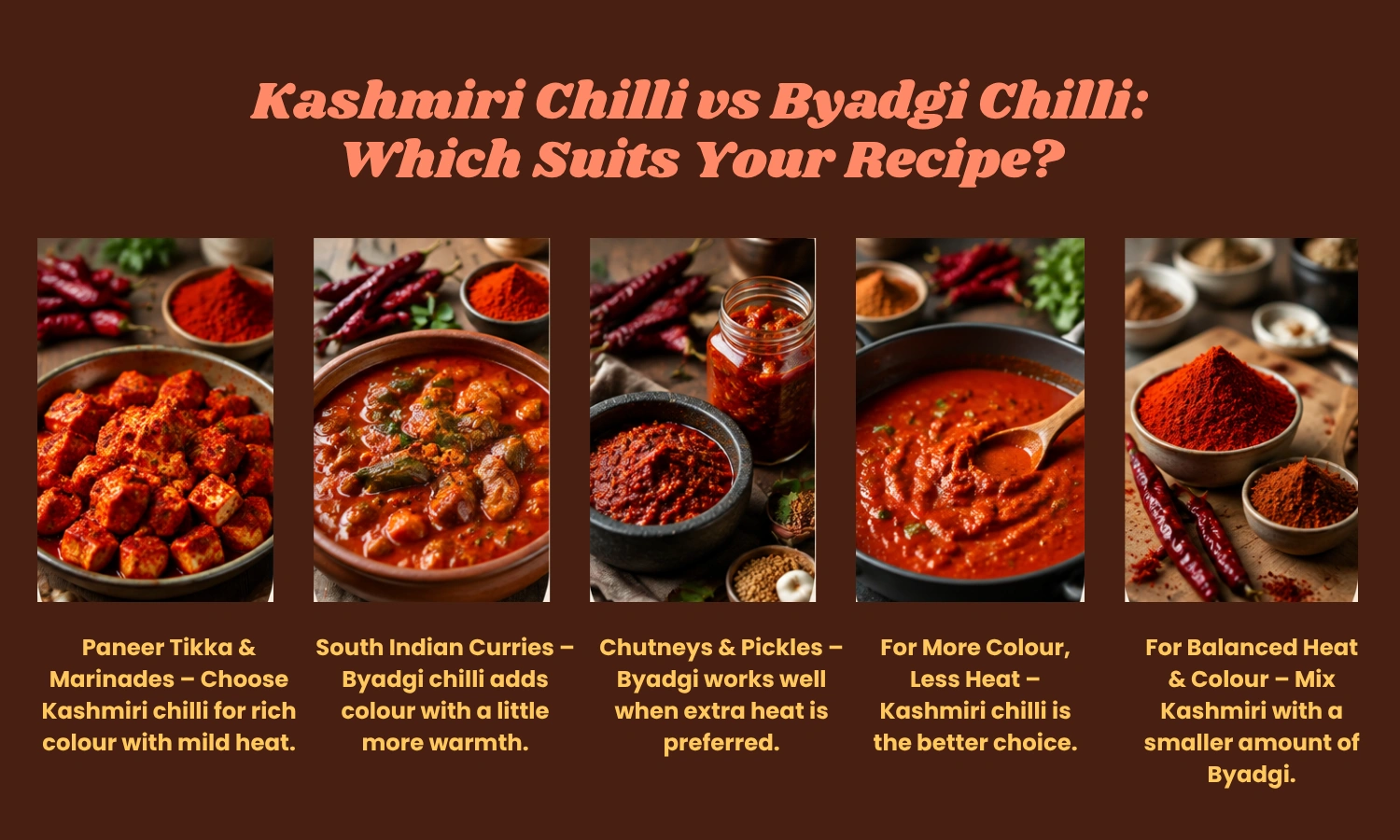
For South Indian vegetable curries, chutneys, and pickles, where a bit more warmth is expected alongside the colour, byadgi chilli or a mix leaning towards it tends to perform better. Some cooks resolve the Kashmiri vs Byadgi chilli debate entirely by mixing the two in a single recipe, using Kashmiri chilli for the base colour and adding a smaller portion of Byadgi for the extra depth of heat.
Byadgi Chilli and Kashmiri Chilli Difference in Everyday Cooking
The practical Byadgi chilli and Kashmiri chilli difference shows up most clearly when a home cook accidentally swaps one for the other without adjusting the quantity. Using Byadgi chilli powder in a recipe designed for Kashmiri chilli can leave a dish noticeably spicier than intended, while the reverse substitution often results in a gravy that looks pale or lacks the expected depth of colour.
For food businesses, understanding this difference between Byadgi and Kashmiri chilli matters even more, since recipe consistency depends on the correct variety and ratio every time a dish is prepared. Chilli powder from an established Tamil Nadu manufacturer, such as 777 Foods’ Premium Red Chilli Powder, is quality-tested so that much of this guesswork is removed and your dishes stay appetizing and full of rich, authentic flavour.
Pick the Right Chilli Powder According to Your Dishes
The choice between Byadgi chilli vs Kashmiri chilli is less about one variety being better and more about matching colour and heat to the dish being cooked. Kashmiri chilli remains the go-to for vivid, mild curries, while Byadgi chilli suits recipes that call for a touch more warmth alongside strong colour. Once the difference between Byadgi and Kashmiri chilli is clear, choosing the right pack becomes a far simpler decision at the grocery shelf or while ordering online.
Browse the current range on the official 777 Foods store to find the variety that matches your recipe before your next cooking session.
Key Takeaways
- Byadgi chilli, also called byadagi chilli or bedgi mirchi, offers a deep red colour with medium heat and is widely used in South Indian cooking.
- Kashmiri chilli offers a similar bright red colour with milder heat, making it the safer choice for colour-forward dishes that should not turn too spicy.
- “Is Byadgi chilli spicy?” gets a moderate yes, while “Is Guntur chilli spicy?” gets a firm yes, placing Guntur well above both in heat.
- The difference between Byadgi chilli and Kashmiri chilli mainly affects heat level, so recipes should not swap one for the other without adjusting quantity.
- Many kitchens resolve the Byadgi vs Kashmiri chilli question by mixing both, using Kashmiri for colour and Byadgi for added depth of heat.
FAQs
Can Byadgi chilli and Kashmiri chilli be used interchangeably in recipes?
They can be swapped in a pinch, but the Byadgi chilli and Kashmiri chilli difference in heat means the final dish will taste noticeably different. It is usually better to reduce the quantity slightly when substituting Byadgi for Kashmiri chilli to avoid an overly spicy result.
Which is better for pickles? Byadgi chilli or Kashmiri chilli?
For most pickles, Byadgi chilli is preferred because its slightly stronger heat holds up well against the salt, oil, and tang used in Indian pickle recipes. Kashmiri chilli can be used for a milder pickle, but the flavour often needs additional spices to compensate.
Is Byadgi chilli powder the same as Bedgi mirchi powder?
Yes, Bedgi mirchi powder is simply a regional or transliterated name for Byadgi chilli powder, referring to the same variety grown in the Byadagi region of Karnataka. The naming difference comes down to language and local usage rather than the product itself.