Overview
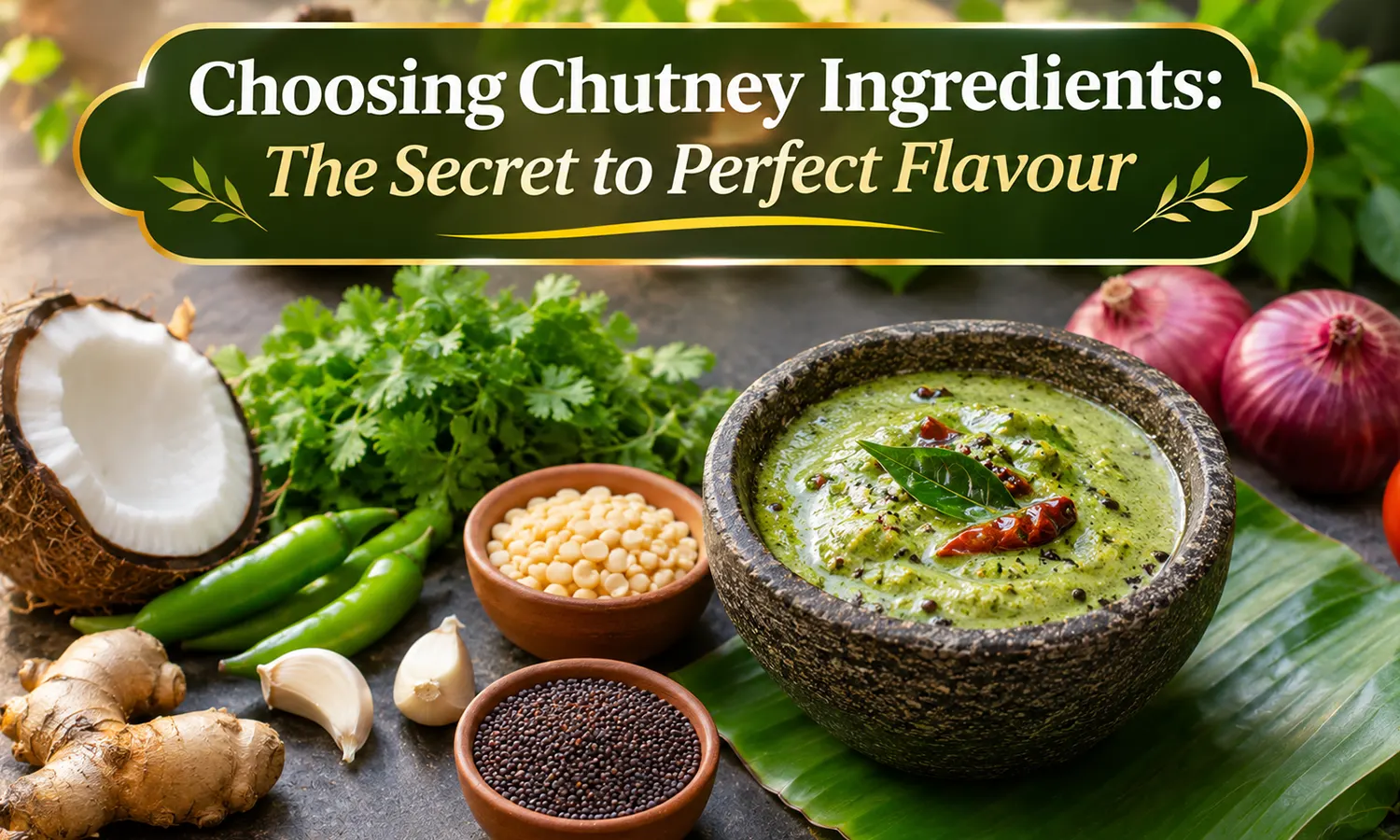
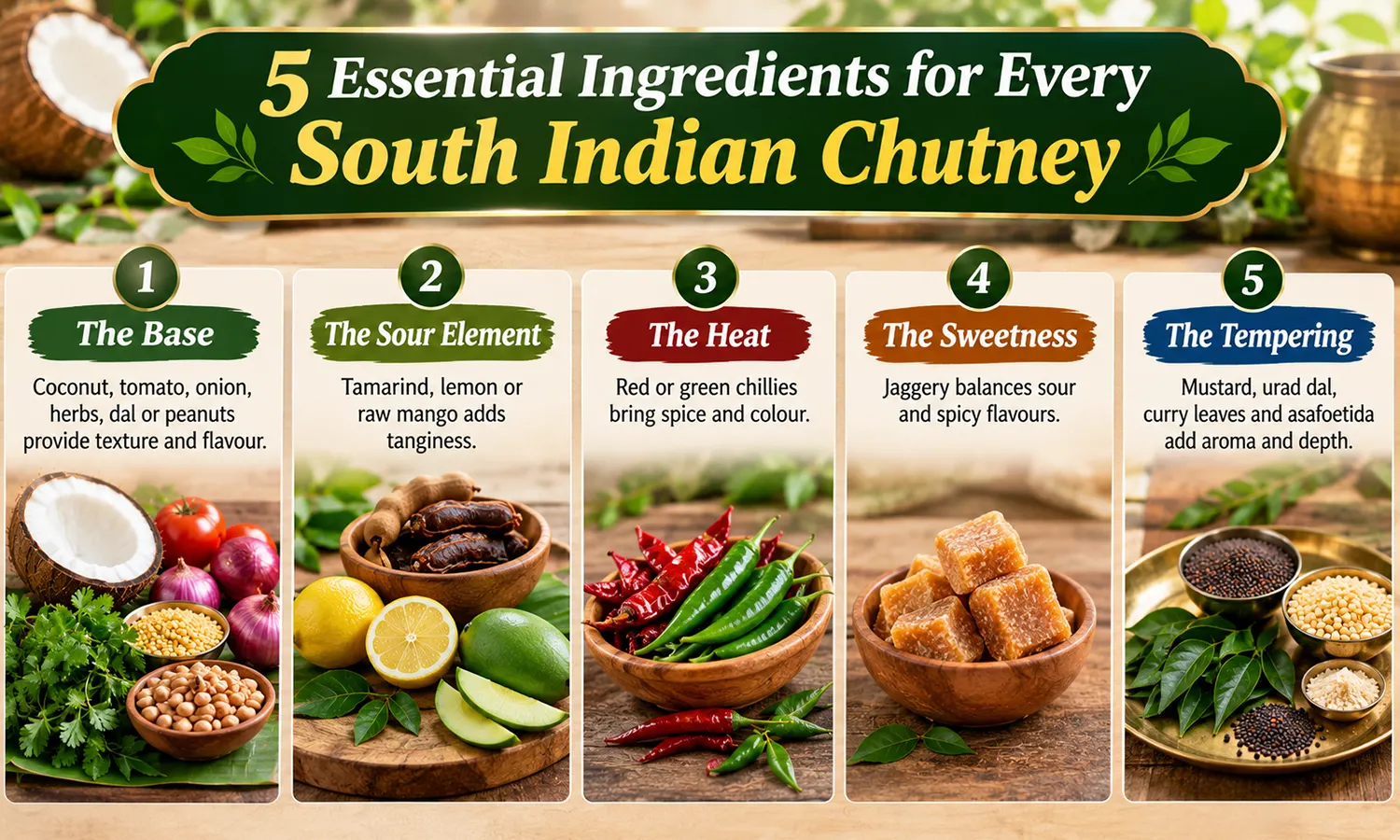
The right chutney ingredients decide if a chutney tastes flat or full of life. Every good chutney balances a base, a sour note, heat, a touch of sweetness and a tempering. Below you will learn how to pick each one, what quality to look for and which ingredients work best for popular South Indian chutneys.
Introduction:
Two people can follow the same recipe and end up with very different chutneys. The difference usually comes down to the chutney ingredients they choose. Fresh coconut against dry coconut, shallots against big onions, gingelly oil against refined oil, each choice changes the final taste.
The Five Building Blocks of Every Chutney
The Base
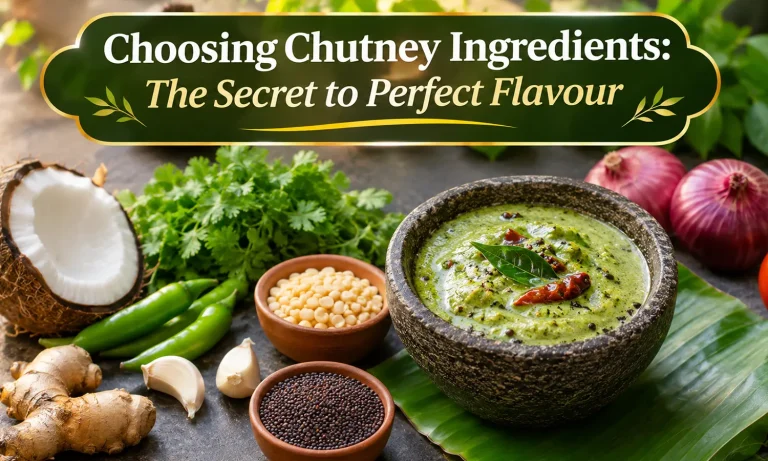
The base gives the chutney its body and main flavour. It can be coconut, tomato, onion, herbs like mint and coriander, roasted dal or peanuts. Of all the chutney ingredients, the base is the one to choose first, based on the meal. Coconut works for idli, while tomato and onion suit dosa and rice.
The Sour Element
Tamarind is the traditional sour ingredient in South Indian chutneys. Lemon juice works for fresh herb chutneys, and raw mango adds a seasonal tang. A good tamarind paste saves time. 777 Tamarind Paste gives a steady sour taste without soaking and straining.
The Heat
Dry red chillies give colour and a deep, roasted heat. Green chillies give a fresh, sharp heat. Heat is the easiest of all chutney ingredients to adjust, so add chillies slowly and taste as you go. For cooked chutneys, a spoon of 777 Premium Red Chilli Powder adds even colour and spice.
The Sweetness
A small piece of jaggery balances strong sour and spicy flavours. It is common in ginger chutney and Karnataka style tomato chutney.
The Tempering
Mustard seeds, urad dal, curry leaves and asafoetida in hot oil finish most South Indian chutneys. A pinch of 777 Asafoetida adds depth to the tempering, and you can learn how to pick the best quality asafoetida on our blog.
How to Pick Quality Chutney Ingredients
Fresh produce and good spices make the biggest difference to your chutney ingredients. India grows a huge range of spices. As per Spices Board estimates, the country produced about 129.9 lakh tonnes of spices in 2024-25, including nearly 26.9 lakh tonnes of chilli.
India also exported spices worth USD 4.45 billion in 2024-25, as per government data, and grows over 60 of the 109 spices listed by the ISO. With so much choice, it pays to check quality before you buy.
- Pick coconuts that feel heavy and slosh with water when shaken.
- Choose firm, deep red tomatoes for cooked chutneys.
- Buy herbs with bright leaves and no yellow or black spots.
- Check spices for strong aroma, clean colour and a sealed pack.
- Use cold pressed gingelly or groundnut oil for the most authentic taste.
Chutney Ingredients List for Popular South Indian Chutneys
This chutney ingredients list covers the most common chutneys made at home.
| Chutney | Base | Sour | Heat | Tempering |
|---|---|---|---|---|
|
Coconut |
Grated coconut, roasted gram |
Tamarind (optional) |
Green chilli |
Mustard, urad dal, curry leaves |
|
Tomato |
Ripe tomatoes, onion |
Tamarind |
Dry red chilli |
Mustard, curry leaves |
|
Onion |
Shallots |
Tamarind |
Dry red chilli |
Mustard, urad dal |
|
Mint |
Mint, coriander |
Lemon |
Green chilli |
Optional |
|
Coriander |
Coriander, urad dal |
Tamarind |
Dry red chilli |
Mustard, curry leaves |
|
Ginger |
Fresh ginger, dal |
Tamarind |
Dry red chilli |
Mustard, asafoetida |
|
Curry leaf |
Curry leaves, urad dal |
Tamarind |
Dry red chilli |
Mustard |
Coconut and Tomato Chutneys
The best coconut chutney ingredients are fresh grated coconut, roasted gram and green chilli, with a small piece of ginger for aroma. Dry coconut gives a flat taste, so always use fresh coconut where possible.
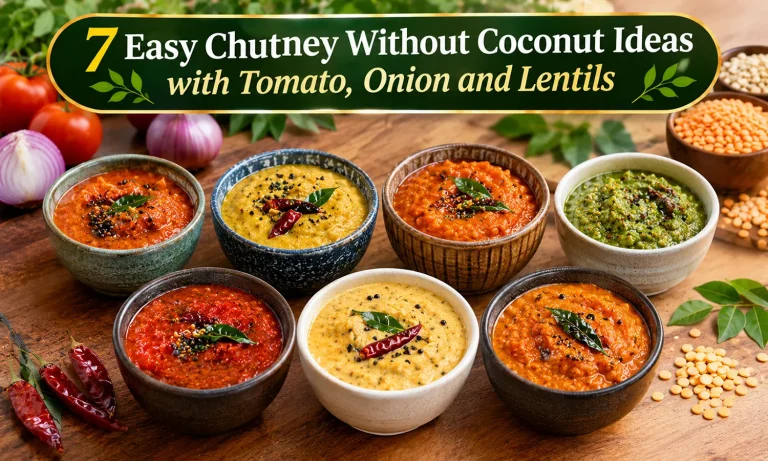
For cooked chutneys, ripe tomatoes and dry red chillies matter most. The right tomato chutney ingredients also include a little garlic and tamarind to balance the natural sweetness of tomatoes.
Onion and Ginger Chutneys
The key onion chutney ingredients are shallots, red chillies and tamarind cooked in gingelly oil. Shallots give a sweeter, deeper taste than big onions.
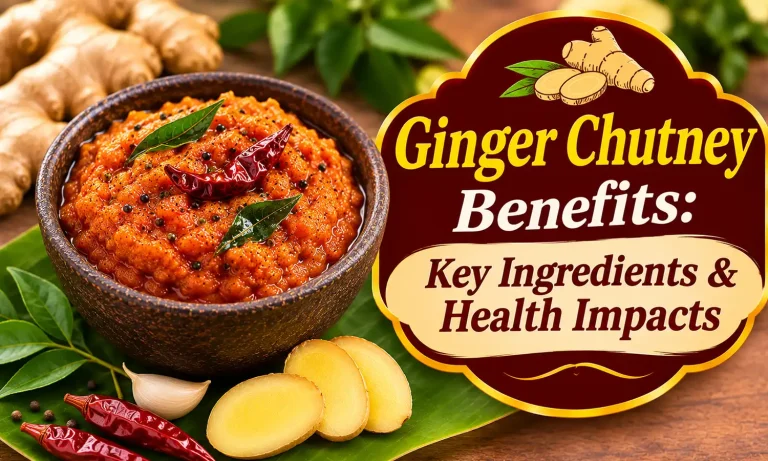
Good ginger chutney ingredients start with young, juicy ginger that has thin skin. Older ginger is fibrous and makes the chutney stringy, so pick roots that snap cleanly.
Mint and Coriander Chutneys
The fresh pudina chutney ingredients are mint leaves, a few coriander sprigs, green chilli, ginger and lemon juice. Use only the leaves, since the stems turn the chutney bitter.
Many people also look for mint chutney ingredients for North Indian style chutney, which often adds curd and roasted cumin for chaat and kebabs.
Simple coriander chutney ingredients include fresh coriander with tender stems, roasted urad dal, red chillies and tamarind. Tender stems add flavour and body.
Curry Leaf Chutney
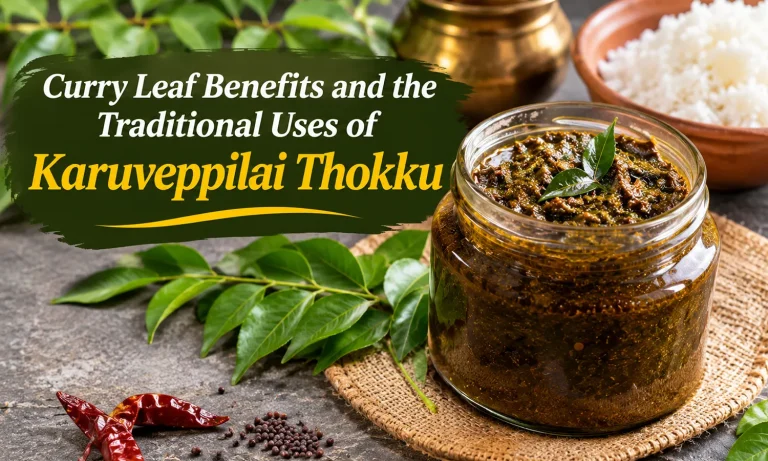
The main curry leaf chutney ingredients are fresh curry leaves, urad dal, red chillies and tamarind, roasted in gingelly oil. For a ready version, try 777 Curry Leaf Chutney.
Common Mistakes When Choosing Chutney Ingredients
- Using old, dull spices that have lost their aroma.
- Adding too much water while grinding, which dilutes flavour.
- Skipping the tempering, which leaves the chutney tasting raw.
- Using refined oil in place of gingelly oil for South Indian chutneys.
Getting the chutney ingredients right fixes most of these problems before you even start cooking.
Build a Better Chutney Pantry with 777 Foods
777 Foods offers the trusted staples every chutney needs, from tamarind paste and red chilli powder to asafoetida and gingelly oil.
Stock your kitchen with 777 Foods’ products and browse our pure spices range to make every chutney taste just right.
Key Takeaways
- The right chutney ingredients balance base, sourness, heat, sweetness and tempering.
- Fresh coconut, ripe tomatoes and bright herbs give the best flavour.
- Tamarind and gingelly oil are the backbone of South Indian chutneys.
- Each chutney type needs a slightly different set of ingredients.
- Good quality spices and asafoetida make a clear difference in taste.
FAQs
What are the basic ingredients of chutney?
Most chutneys need a base, a sour ingredient, chillies, salt and a tempering of mustard seeds and curry leaves.
Can I use lemon instead of tamarind in chutney?
Yes, especially in fresh herb chutneys. Tamarind suits cooked chutneys better.
Which oil is best for chutney?
Gingelly oil is the traditional choice for South Indian chutneys. Groundnut oil also works well.
Why does my chutney taste bland?
It may need more salt, sourness or a proper tempering.
Should chutney ingredients be roasted before grinding?
Dal, dry chillies and garlic taste better when roasted. Fresh herbs should only be wilted or used raw.