Introduction
When choosing a healthy cooking oil, nutrition plays a key role in long-term health. Many households prefer groundnut oil because of its balance of taste, stability, and nutritional value. Understanding Groundnut Oil Nutrition helps you make better decisions about what you cook with every day.
Groundnut oil, also known as peanut oil, is widely used in Indian kitchens due to its versatility and high smoke point. Beyond cooking performance, it offers several health benefits that support overall wellness when used in moderation.
Groundnut Oil Nutrition Facts
To understand why this oil is popular, it’s important to look at Groundnut Oil Nutrition in detail. Groundnut oil is almost entirely made up of fats, but these are primarily healthy fats that support heart function and energy levels.
Per 100 grams, the nutritional value of groundnut oil includes around 884 calories and 100 grams of fat, with zero cholesterol, carbohydrates, or protein. It is also a rich source of Vitamin E, which plays a key role in protecting cells from oxidative damage.
The fat composition is what makes this oil stand out. It contains a high percentage of monounsaturated fats, followed by polyunsaturated fats and a smaller portion of saturated fats. This balanced groundnut oil percentage of fats contributes to its health benefits.
Another important factor is the oil content in groundnut, which is naturally high. This makes it an efficient and nutrient-dense cooking oil suitable for everyday use.
Health Benefits of Groundnut Oil
The groundnut oil benefits go beyond just cooking. Its nutrient profile supports multiple aspects of health when used as part of a balanced diet.
One of the key benefits of groundnut oil is its role in heart health. The presence of monounsaturated fats helps reduce bad cholesterol levels while maintaining good cholesterol. This makes it a better alternative to saturated fats like butter.
Groundnut oil is also rich in antioxidants, especially Vitamin E, which helps protect the body from free radical damage. These properties contribute to better immunity and overall wellness.
Another advantage is its potential role in blood sugar control. The fat composition helps improve insulin sensitivity, making it a suitable option for people managing blood sugar levels.
These combined peanut oil health benefits make it a reliable addition to a healthy diet.
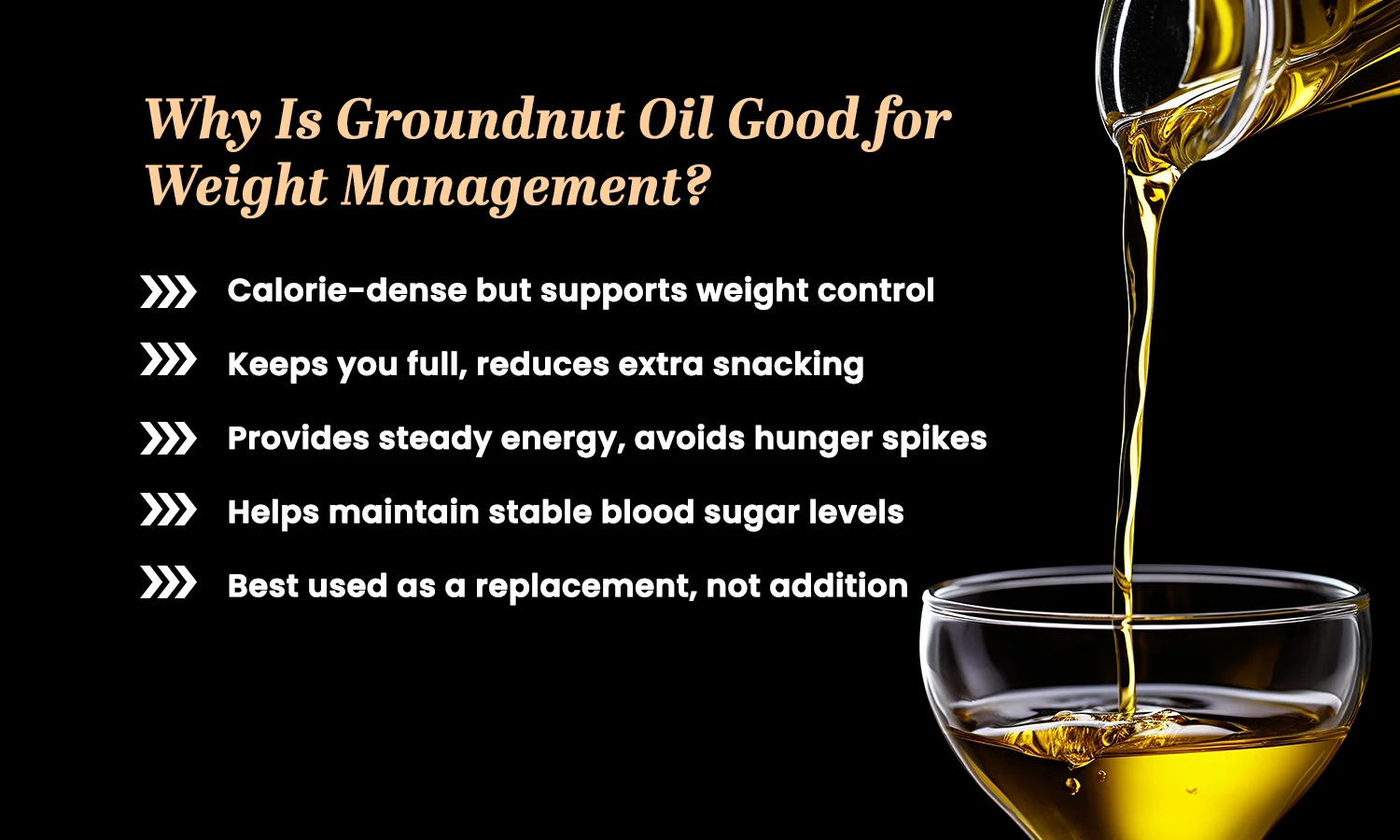
Why Is Groundnut Oil Good for Weight Management?
Despite being calorie-dense, groundnut oil can support weight management when used correctly. The fats in the oil promote satiety, helping you feel full for longer and reducing unnecessary snacking.
Unlike refined oils that may lead to quick hunger spikes, groundnut oil provides steady energy. This helps maintain stable blood sugar levels and supports better metabolism.
Using groundnut oil as a replacement for unhealthy fats rather than an addition is key. When used in moderation, it fits well into a balanced diet focused on long-term weight control.
This is one reason why many consider it a practical, healthy cooking oil for daily meals.
Which Groundnut Oil Is Best for Everyday Cooking?
Choosing the right type of oil matters just as much as understanding its nutrition. If you’re wondering which groundnut oil is best, chekku-pressed options are often preferred.
These oils are extracted without high heat or chemicals, helping retain natural nutrients and antioxidants. They also preserve the authentic aroma and flavour of groundnuts.
Refined oil, on the other hand, offers a more neutral taste and is suitable for high-heat cooking like deep frying. However, it may lose some of its natural nutrients during processing.
When selecting the best groundnut oil in India, it’s important to look for purity, minimal processing, and proper certifications to ensure quality.
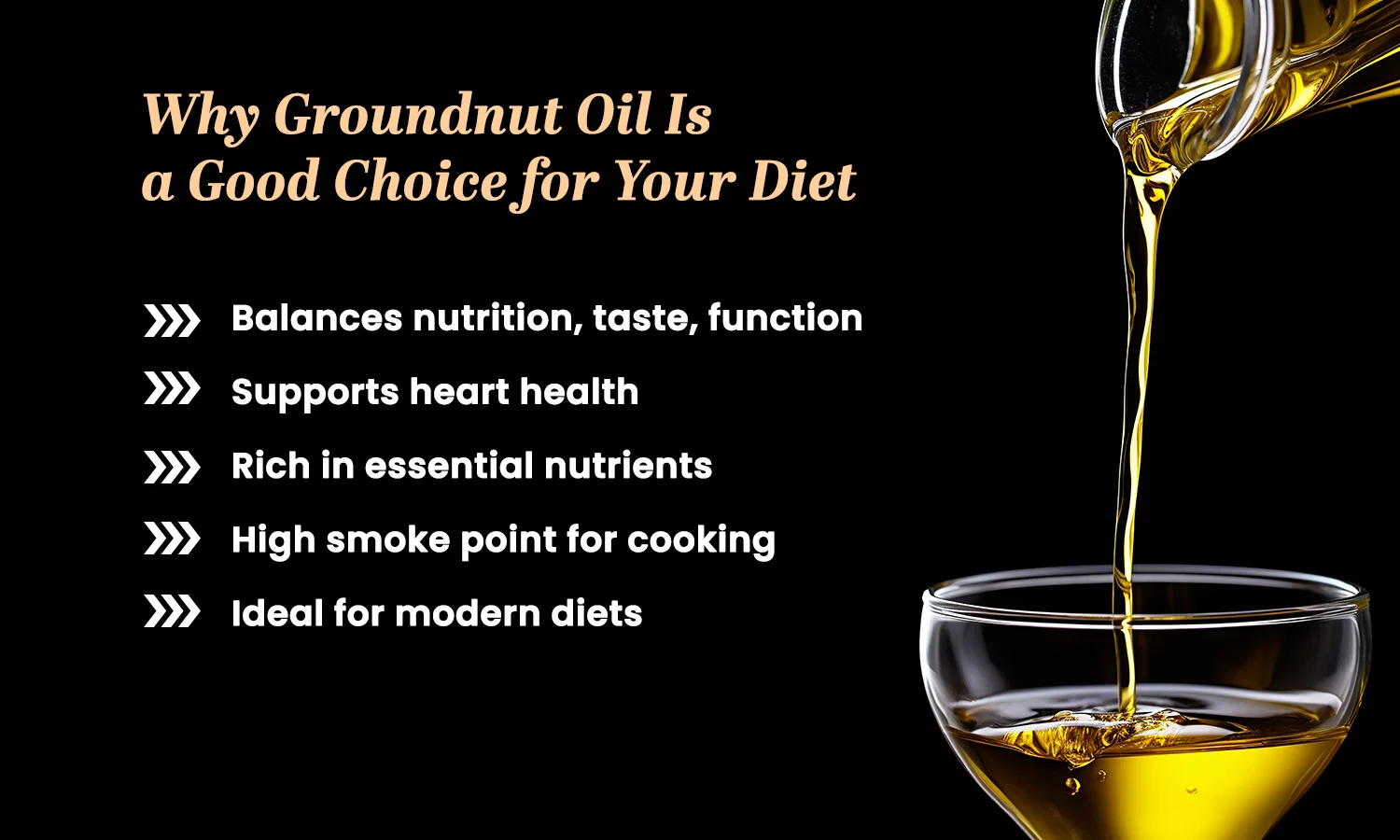
Why Groundnut Oil Is a Good Choice for Your Diet
Groundnut oil stands out because it balances nutrition, taste, and functionality. It supports heart health, provides essential nutrients, and performs well in various cooking methods.
Its high smoke point makes it suitable for frying, sautéing, and everyday cooking without breaking down easily. At the same time, its nutritional profile supports overall health when used in moderation.
For those looking for a versatile groundnut cooking oil, it offers both health benefits and convenience. This makes it a reliable choice for modern diets that focus on both taste and nutrition.
Conclusion
Understanding Groundnut Oil Nutrition helps you see why this oil remains a staple in many kitchens. It is rich in healthy fats, contains essential antioxidants, and supports heart health when used wisely.
If you’ve been wondering is peanut oil good for health, the answer is simple—it can be, when chosen carefully and used wisely.
FAQs
Is peanut oil a healthy fat?
Yes, peanut oil contains mostly unsaturated fats, which are considered healthy for the heart when consumed in moderation.
Can peanut oil reduce inflammation?
It contains antioxidants like Vitamin E, which help reduce oxidative stress, but it should be balanced with omega-3 foods for the best results.
What are the positives of peanut oil?
It supports heart health, provides antioxidants, and works well for high-heat cooking due to its stability.
Is peanut oil good for diabetics?
In moderate amounts, it may help improve insulin sensitivity and support better blood sugar control.
Who should use groundnut oil?
Anyone looking for a versatile and healthy cooking oil can use groundnut oil, especially those focusing on heart health and balanced nutrition.