Nutritional Value of Natural Groundnut Oil
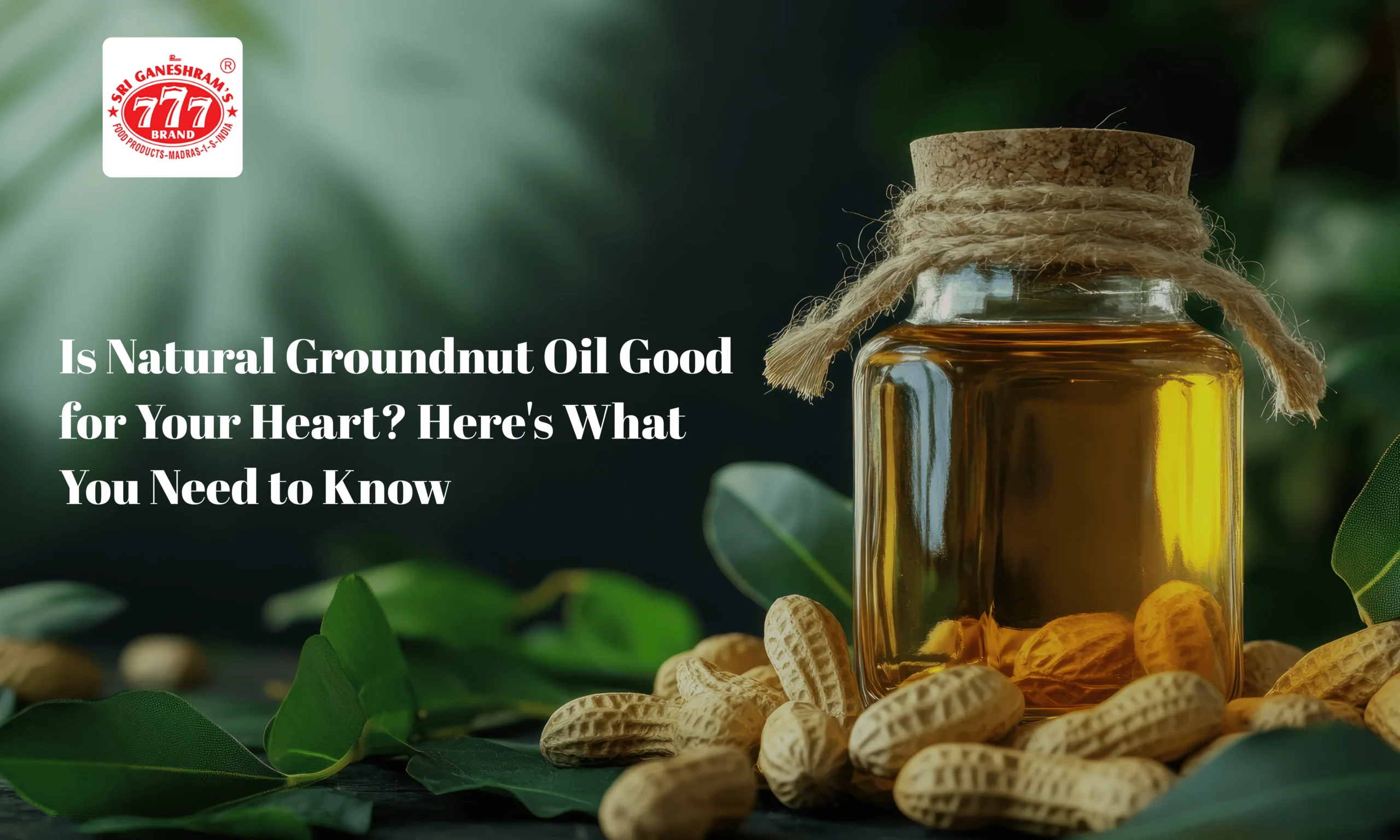
The strength of natural groundnut oil lies in its nutritional profile. It is rich in healthy fats that support overall wellness when used in moderation.
Transitioning to a natural oil for cooking is a simple yet impactful step toward a cleaner diet. Because it is extracted with minimal processing, pure groundnut oil retains the bioactive compounds that are often stripped away in refined alternatives. This makes it a preferred healthy oil for cooking, providing a stable medium for various culinary techniques while ensuring your family isn’t consuming unnecessary chemical additives or trans fats.
In the context of regional cuisines, it stands out as a uniquely healthy oil for Indian cooking due to its high smoke point and distinct, nutty aroma. It handles the high heat required for tempering spices and deep-frying without breaking down into harmful compounds. Consequently, nutritionists often recommend it as the best oil for heart patients who want to enjoy traditional flavors without compromising their cardiovascular goals.
It contains a high amount of monounsaturated fats, which are known to support heart function. Along with that, it also provides polyunsaturated fats and essential nutrients like Vitamin E.
Another important factor is that it is cholesterol-free, making it suitable for those looking to maintain a balanced diet. Compared to heavily processed oils, the nutritional value of groundnut oil remains better preserved in its natural form.
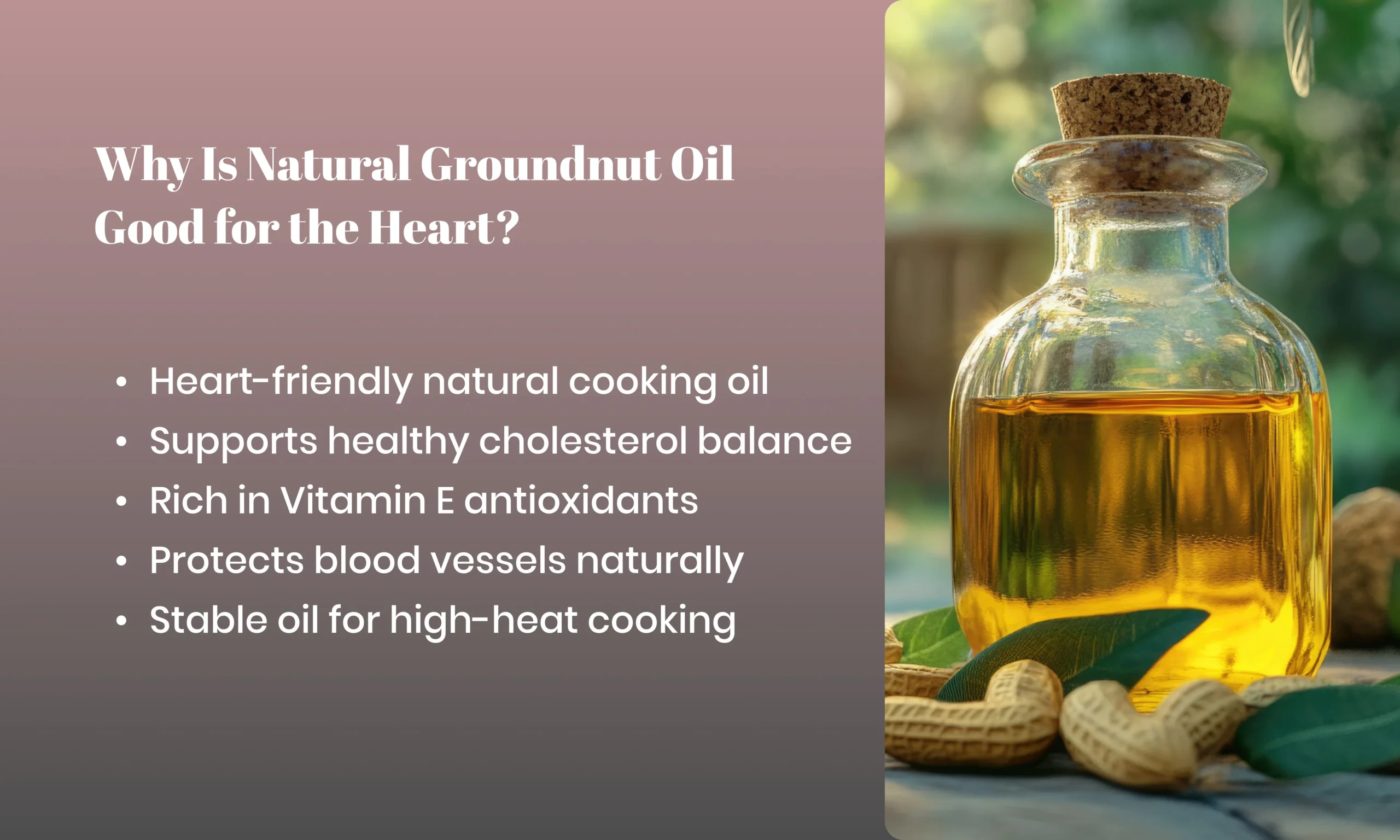
Why Is Natural Groundnut Oil Good for the Heart?
The biggest reason people choose natural groundnut oil is its heart-friendly properties.
First, it helps maintain a healthy cholesterol balance. The good fats present in the oil can help reduce bad cholesterol levels while supporting good cholesterol.
Second, it contains antioxidants like Vitamin E, which protect blood vessels from damage. These compounds play a role in reducing oxidative stress, a key factor in heart health.
Another advantage is its cooking stability. Unlike many oils that break down at high temperatures, peanut cooking oil remains stable, making it safer for regular use. This is why many consider it among the best groundnut oil for cooking.
How to Incorporate Natural Groundnut Oil into Diet
Using natural groundnut oil in your daily meals is simple and practical.
It works well for frying, sautéing, and tempering, making it suitable for Indian cooking styles. Whether you are preparing snacks or regular meals, it performs consistently.
Many people prefer peanut oil for frying because it maintains flavour without becoming too heavy. It can also be used in baking or even as a light dressing for added taste.
The key is moderation. Even though it is healthy, it is still calorie-dense, so balanced usage is important.
Groundnut Oil vs. Other Oils: Which Is Better for Your Health?
1. Heart Health
Compared to many refined oils, natural groundnut oil offers a better balance of healthy fats that support cardiovascular health.
2. Nutritional Value
Unlike processed oils, it retains nutrients, making it a stronger option than many alternatives marketed as refined or light oils.
3. Flavor and Aroma
It has a mild, nutty taste that enhances dishes without overpowering them. This makes it more versatile than strongly flavoured oils.
4. Processing Method
The difference lies in how the oil is made. Natural oils like chekku groundnut oil are minimally processed, while refined oils lose nutrients during chemical treatment.
5. Suitability for Cooking
Thanks to its high smoke point, it is suitable for deep frying, sautéing, and everyday cooking, making it one of the best peanut oil options available.
How to Choose the Best Groundnut Oil for Cooking
Start by checking the label. Look for oils that are chekku-pressed rather than refined. These retain more nutrients and flavour.
Next, observe the colour and aroma. A good quality oil usually has a golden shade and a natural nutty smell.
Packaging also matters. A good groundnut oil bottle should be properly sealed and stored away from light to maintain freshness.
If you are comparing options, factors like peanut oil cost or gulab oil price may vary depending on processing and quality. Always prioritise purity over price.
Why Consider Natural Groundnut Oil from SGR 777 Foods?
When choosing a trusted option, quality and consistency matter. SGR 777 Foods is known for maintaining traditional methods while ensuring modern standards of purity.
Their oils are minimally processed, helping retain natural nutrients and flavour. This makes them suitable for daily cooking, whether you are frying, sautéing, or preparing traditional dishes.
For those looking for reliable quality, their natural groundnut oil options offer a balance of authenticity and convenience.