Overview
Homemade snacks give you full control over oil, salt, and freshness while keeping family recipes alive. The easiest approach is to cook one long-lasting batch on the weekend and one quick fresh snack on weekdays. Murukku, chakli, sundal, poha, and bajji are reliable starting points for any home cook.
The Quiet Comfort of Homemade Snacks
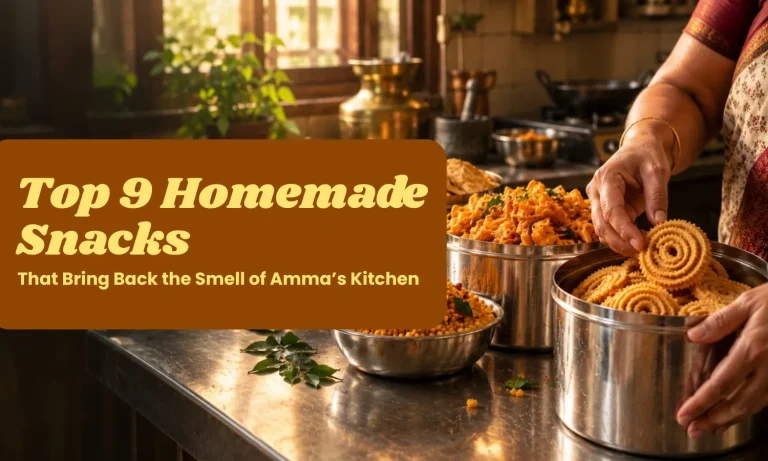
There was a time when every Indian kitchen had a row of steel dabbas on the top shelf. One held murukku, another held mixture, and a third hid the sweets meant for guests. Children knew exactly which tin to raid after school.
Those tins were filled with homemade snacks, made on a Sunday afternoon while the radio played and someone pressed dough through a brass mould. Nobody read a label because there was no label. You knew the oil, the flour, and the hands that made it.
That trust is why families are returning to cooking at home. A 2025 healthy snacking report found that 55 percent of Indians prefer preservative-free food options. Making snacks in your own kitchen is the most direct way to meet that need.
Why Homemade Snacks Are Worth the Effort
Here are the major reasons why homemade snacks are worth the effort:
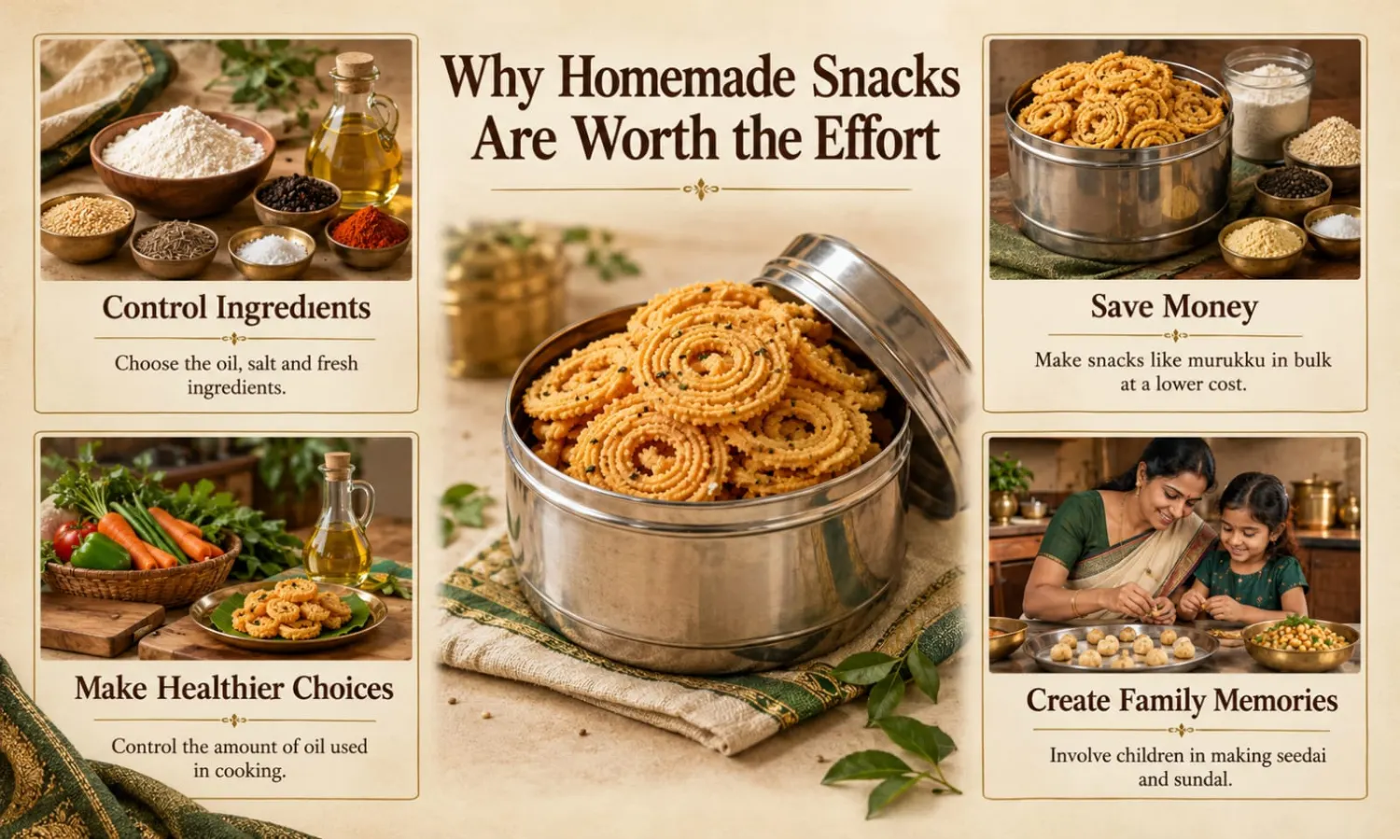
- Cooking at home lets you choose the oil, the amount of salt, and the freshness of every ingredient. The ICMR and NIN dietary guidelines released in 2024 recommend keeping total fat under 30 percent of daily energy. With homemade snacks, you decide how much oil goes into the pan.
- There is also a cost advantage. A kilogram of murukku made at home usually costs far less than the same quantity from a sweet shop. The savings grow during festivals when families need snacks in bulk.
- Most of all, healthy homemade snacks carry something money cannot buy. Children remember the evenings they helped shape seedai or stir the sundal far longer than any packet they opened.
Planning a Weekly Batch of Homemade Snacks
The secret to keeping the tins full is planning. Split your snacks into two groups.
The Weekend Batch
Pick one dry snack that stores well and make it on Saturday or Sunday. Good choices include murukku, ribbon pakoda, thattai, mixture, and homemade chakli. A single batch can last two to three weeks.
For homemade murukku, the rice flour and urad dal flour ratio matters most. A common home ratio is four parts rice flour to one part roasted urad dal flour. Add sesame seeds, a pinch of asafoetida, and butter for a melt-in-the-mouth bite.
Homemade chakli follows a similar method with a spiral shape. Many families in Maharashtra and Karnataka add a little roasted chana dal flour for extra crunch. Fry on medium heat so the centre cooks fully without browning the outside too fast.
The Weekday Fresh Snack
For weekdays, choose quick snacks to make at home that are ready in under twenty minutes. Bajji, poha, sundal, paniyaram, and vegetable cutlet are easy wins. These quick snacks to make at home are best eaten warm and do not need storage.
9 Easy Snacks to Make at Home
Here are nine easy snacks to make at home that cover both groups.
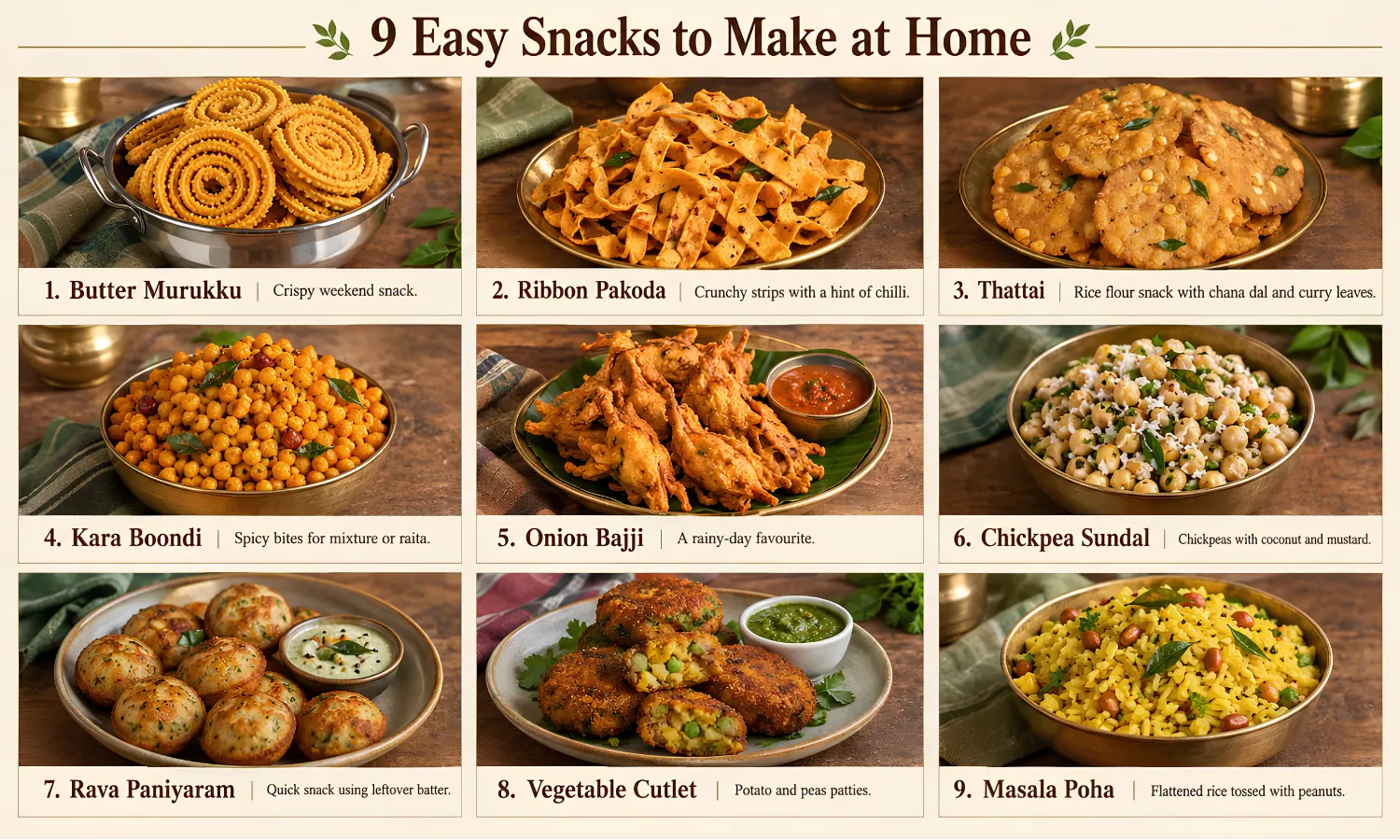
- Butter murukku for the weekend tin
- Ribbon pakoda with a hint of chilli
- Thattai with chana dal and curry leaves
- Kara boondi for mixture or raita
- Onion bajji on rainy evenings
- Chickpea sundal with coconut and mustard
- Rava paniyaram from leftover batter
- Vegetable cutlet with mashed potato and peas
- Masala poha with peanuts
Each of these homemade snacks recipes uses ingredients most Indian pantries already stock. Rice flour, gram flour, urad dal, curry leaves, and good oil are the backbone of all nine. Rotate these easy snacks to make at home through the month so nobody gets bored.
Homemade Indian Snacks for Travelling
Long train journeys used to mean a tiffin carrier full of food from home. That habit still makes sense. Snacks from home stay fresh, avoid uncertain station food, and remind you of home when you are far away.
The best homemade Indian snacks for travelling are dry, light, and slow to spoil. Murukku, thattai, khakhra, roasted peanuts, puffed rice chivda, and dry fruit laddus all travel well. Pack them in small zip pouches so each portion stays crisp.
Avoid anything with fresh coconut, curd, or cut vegetables on journeys longer than six hours. Those items spoil quickly in warm weather. These homemade Indian snacks for travelling also suit hostel students who want a taste of home for the first few weeks.
Ingredients That Make Homemade Snacks Taste Right
Even the best recipe fails with poor ingredients. Old flour turns bitter, stale spices taste flat, and reused oil leaves a heavy aftertaste.
Fresh oil is the first thing to get right. Our 777 Groundnut Oil has the mild nutty flavour that South Indian homes have trusted for generations. For the side dish, a spoon of 777 Coriander Leaf Chutney turns plain bajji or cutlet into a complete plate without extra grinding.
Store flours in airtight jars and buy spices in smaller packs so they stay aromatic. Well-kept ingredients help even simple homemade snacks recipes turn out right every time. These small habits make healthy homemade snacks taste as good as they did in your grandmother’s kitchen.
If you want to look beyond snacks, our guide to Indian sweets and snacks covers festive sweets and regional favourites too.
Conclusion
The steel dabbas on the top shelf held the effort and affection of the person who filled them. Bringing back homemade snacks is a small act that reconnects a family with that feeling. Start with one batch of homemade murukku this weekend and see how quickly the tin empties. Stock up on 777 Groundnut Oil today so your first batch of murukku fries up light and golden.
Key Takeaways
- Homemade snacks let you control oil, salt, and freshness for the whole family.
- Make one long-lasting snack on weekends and one fresh snack on weekdays.
- Murukku, chakli, and thattai stay fresh for up to three weeks in airtight tins.
- Choose dry, light snacks for travel and avoid fresh coconut or curd.
- Fresh oil and well-stored flour make the biggest difference to taste.
FAQs
What are the easiest homemade snacks for beginners?
The easiest homemade snacks for beginners are sundal, poha, bajji, and masala peanuts. These need very few ingredients and little technique. Once you are confident, move on to ribbon pakoda and murukku.
How long do homemade snacks stay fresh?
Dry-fried homemade snacks like murukku, chakli, and thattai stay fresh for two to three weeks in airtight containers. Snacks with coconut or vegetables should be eaten the same day. Always cool fried snacks fully before storing them.
Are homemade snacks healthier than packaged ones?
Homemade snacks are usually healthier because you control the oil, salt, and ingredients. You can avoid preservatives and use fresh oil every time. Portion size still matters, even for snacks made at home. Balancing fried items with steamed or roasted options keeps the diet healthy.
Which homemade snacks are best for kids’ lunch boxes?
Good homemade snacks for lunch boxes include mini idlis, vegetable cutlets, poha, sundal, and dry fruit laddus. They hold their texture for a few hours and are easy for small hands. Avoid very spicy or oily items for school.