
Have you ever wondered how asafoetida is made before it reaches your kitchen? This strong-smelling ingredient does not begin as powder. It starts as a sticky sap taken from the root of a desert plant. Understanding how asafoetida is made helps you appreciate why just a pinch is enough in cooking.
Let’s look at the full journey of this traditional asafoetida spice, from plant resin to hing powder.
What Is Asafoetida and Where Does It Come From?
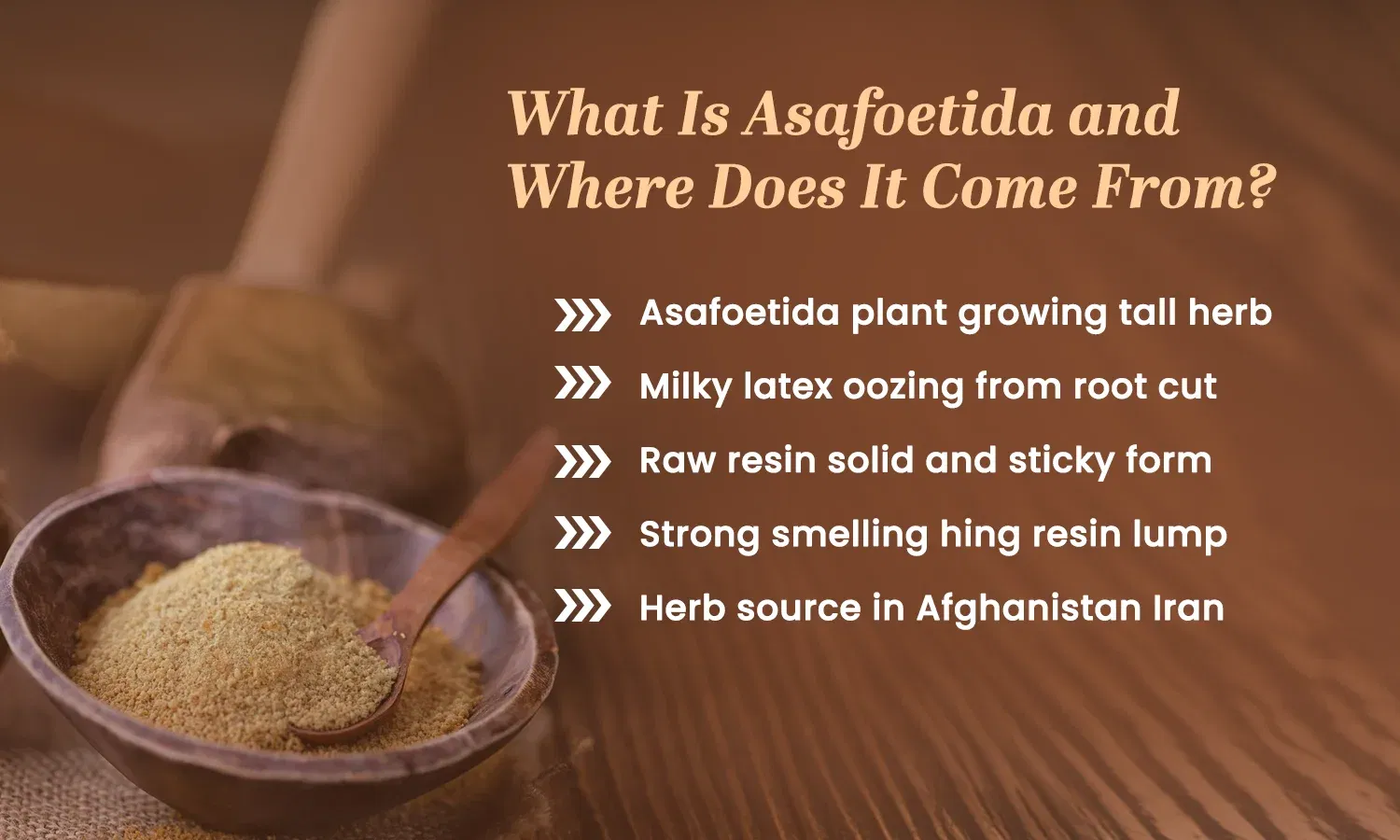
To understand how asafoetida is made, we must first know its source. Asafoetida is a dried gum resin collected from the asafoetida plant, a tall herb that grows mainly in Afghanistan and Iran.
Many people say asafoetida is hing, which is correct. Hing is simply the Indian name. The resin is asafoetida made from the milky latex that oozes out when the plant root is cut.
This raw resin has a sharp asafoetida taste and a very strong smell. In this early form, it is solid and sticky, not powder.
How Is Asafoetida Made from Plant Resin?
The plant must grow for about 4–5 years before harvesting. Farmers cut the stem close to the root in early spring. A milky sap slowly comes out. This sap thickens and dries over a few days.
The hardened resin forms small lumps called tears. This step explains how asafoetida is made naturally through tapping and drying. The collection process continues for several weeks until the plant stops producing sap.
At this stage, the resin already contains compounds responsible for the strong aroma and many traditional asafoetida uses in cooking.
How Is Asafoetida Processed into Hing Powder?
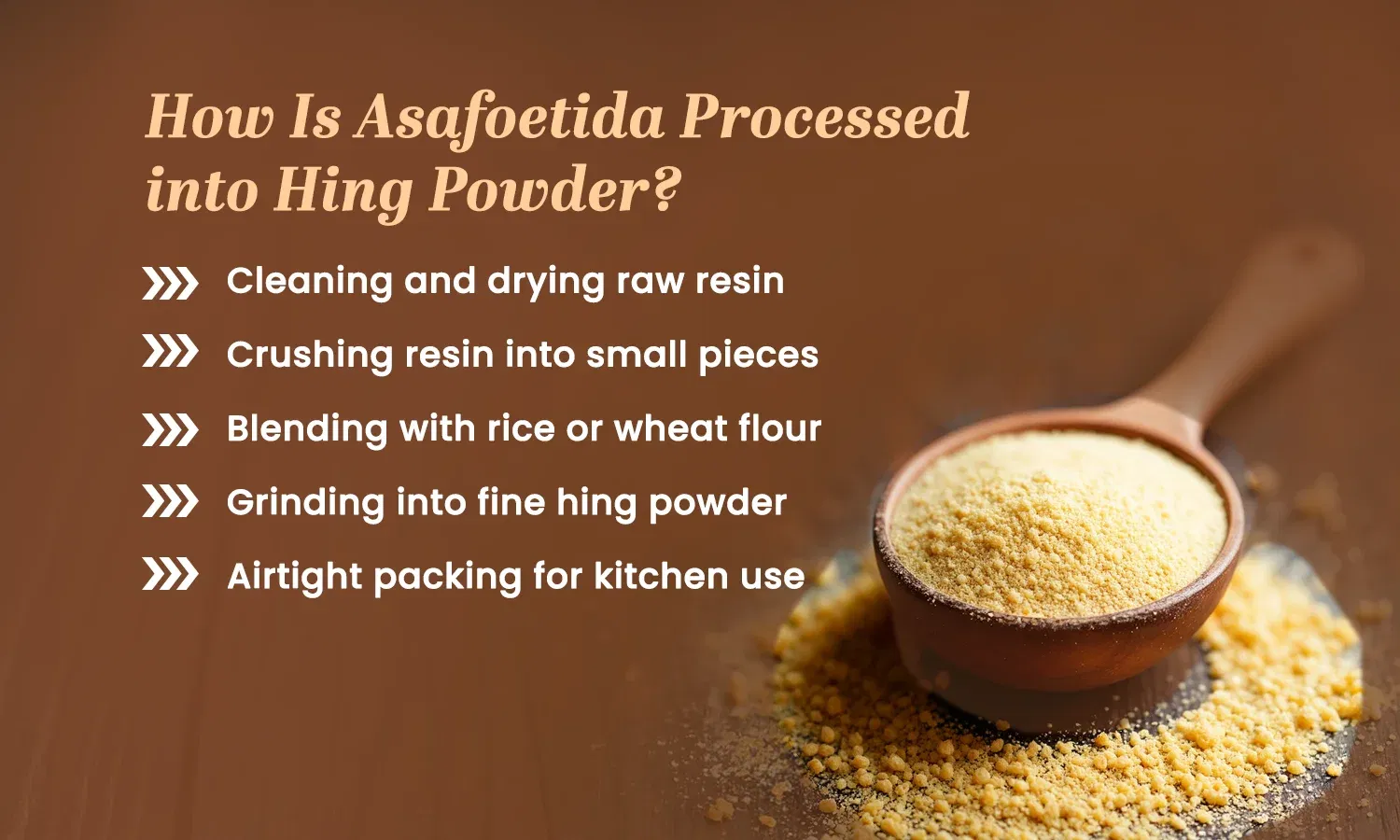
After harvesting, the next stage in how asafoetida is made involves processing.
The raw resin is cleaned and dried properly. It is then crushed into smaller pieces. Pure resin is too strong to use directly, so manufacturers create asafoetida powder by blending the resin with edible starch such as rice flour or wheat flour.
This blended form becomes powder asafoetida, which is easier to measure. Most commercial hing contains only a portion of pure resin. The rest helps control intensity and texture.
The final mixture is ground finely and packed airtight. This is how hing asafoetida becomes suitable for everyday kitchens. This is also why asafoetida powder used for tempering must be stored carefully to preserve aroma.
Why Does Asafoetida Have Such a Strong Taste?
When learning how asafoetida is made, it is important to understand its flavour.
The resin contains natural sulfur compounds. These compounds create a sharp smell in raw form. However, when heated in oil, the flavour changes completely.
The bitterness reduces, and the aroma becomes savoury. This is one of the key benefits of asafoetida in cooking — it enhances flavour without overpowering dishes.
Because of these properties, there are also well-known asafoetida benefits related to digestion. Traditional kitchens value both flavour and health support.
Why Does Asafoetida Have Such a Strong Taste?
When learning how asafoetida is made, it is important to understand its flavour.
The resin contains natural sulfur compounds. These compounds create a sharp smell in raw form. However, when heated in oil, the flavour changes completely.
The bitterness reduces, and the aroma becomes savoury. This is one of the key benefits of asafoetida in cooking — it enhances flavour without overpowering dishes.
Because of these properties, there are also well-known asafoetida benefits related to digestion. Traditional kitchens value both flavour and health support.
Conclusion
Asafoetida begins as sap from the root of the asafoetida plant, dries into resin, and is then processed into powder for cooking.
From harvesting to blending, every step explains why this spice is so strong and effective. Knowing how asafoetida is made helps you choose quality products and use them correctly in your meals.
Key Takeaways
- How is asafoetida made? It starts as sap from the asafoetida plant.
- The resin dries into tears or lumps before processing.
- It is blended with flour to form asafoetida powder.
- Heating removes bitterness and improves flavour.
- Traditional uses of asafoetida include flavour enhancement and digestive support.
FAQs
What Is the Difference Between Asafoetida and Hing?
There is no difference. Asafoetida is the English name, while hing is the Indian name for the same resin spice.
Who Should Not Eat Asafoetida?
Pregnant women, breastfeeding mothers, and people on blood-thinning medication should consult a doctor before using large amounts.
Is Asafoetida Called Ajinomoto?
No. Ajinomoto is monosodium glutamate (MSG). Asafoetida is a natural plant resin and is completely different.
Why Is Asafoetida Called Devil’s Dung?
It earned this nickname because of its strong raw smell. Once cooked, the flavour becomes mild and pleasant.
Why Is Maida Added to Asafoetida?
Maida is added to dilute the strong resin and make it easier to grind and measure in cooking.