If you have ever wondered why some Indian dishes feel complete even with simple ingredients, the secret is often Indian cooking asafoetida. Known as hing, this spice has a strong smell when raw but turns into a savoury, mouth-watering flavor once cooked. A tiny pinch of this Indian spice hing can completely change the taste of dals, curries, and vegetables.
Today, Indian asafoetida is valued not just for flavor but also for its digestive support and its ability to balance other spices in food.
What Exactly Is Asafoetida (Hing)?
Many people ask what asafoetida actually is. It is a dried gum resin taken from the roots of the Ferula plant. This resin is meticulously processed into a convenient powder form, making it much easier to use in modern kitchens.
While some markets offer lower-grade blends, sourcing a pure asafoetida powder ensures you get the most authentic aroma. In its form as a raw hing powder, it smells sharp and sulfur-like, but the moment it hits hot oil, it develops a mild onion-garlic flavor that makes it irreplaceable in traditional meals.
Why Is Asafoetida Used in Indian Cooking?
The main reason for using Indian cooking asafoetida is flavor balance. It enhances other spices and gives a distinct savory depth to vegetarian dishes.
In traditional households, understanding the uses of hing in cooking goes beyond taste; it is regularly added to lentils and heavy brassica vegetables because it helps reduce gas and bloating. It also works as an excellent substitute for onion and garlic in certain communities. These practical uses of asafoetida in cooking make it a daily kitchen ingredient.
How to Cook With Asafoetida
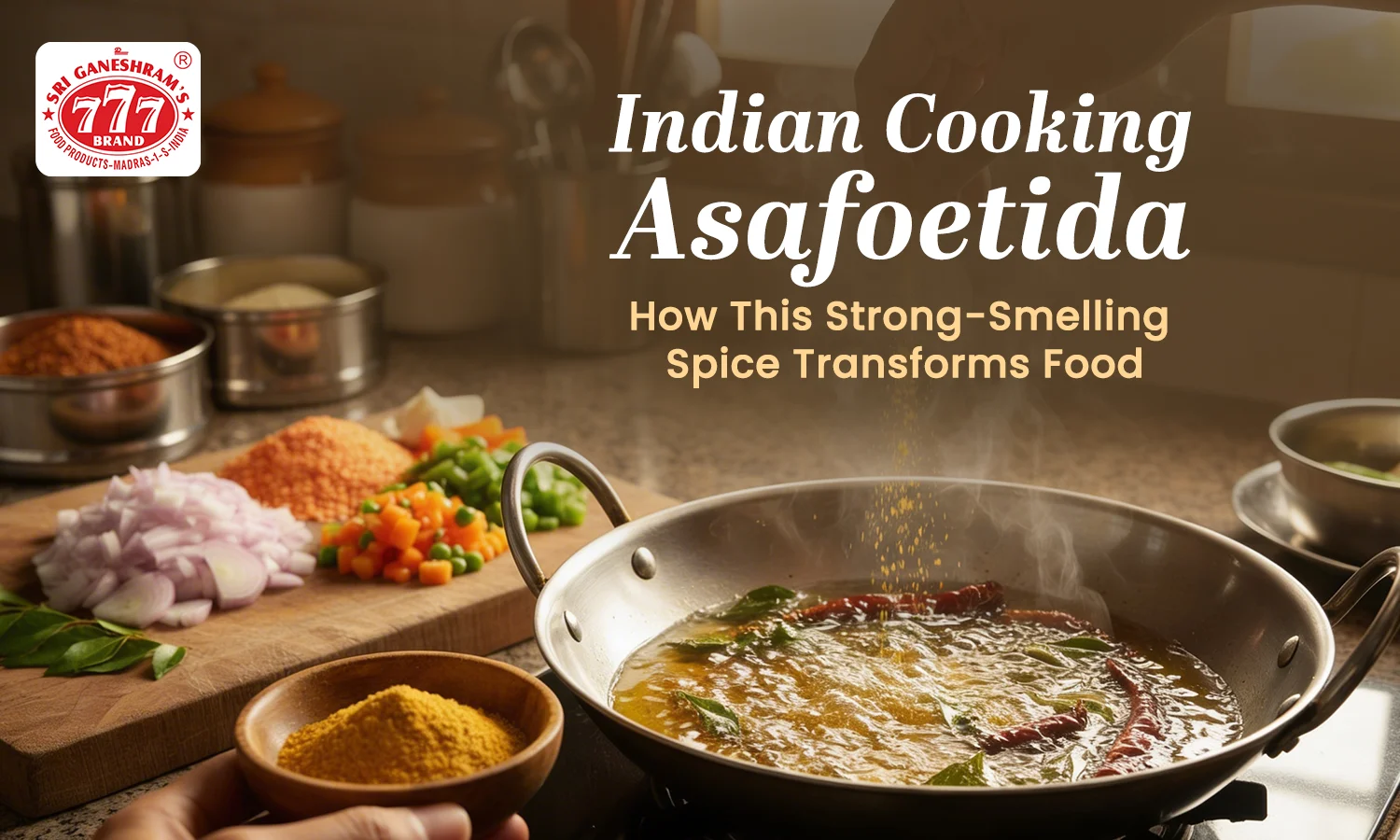
The best method for using this spice is tempering, locally known as tadka.
Simple method:
- Heat oil or ghee in a pan.
- Add mustard or cumin seeds.
- Lower the flame.
- Add a small pinch of hing powder.
- Let it sizzle for 5–10 seconds.
- Mix the hot tempering directly into your dish.
This step is incredibly important because the spice must always be bloomed in fat; you should never add it completely raw to a finished plate.
If you are wondering how much to use, start with just an eighth of a teaspoon for a dish serving four people.
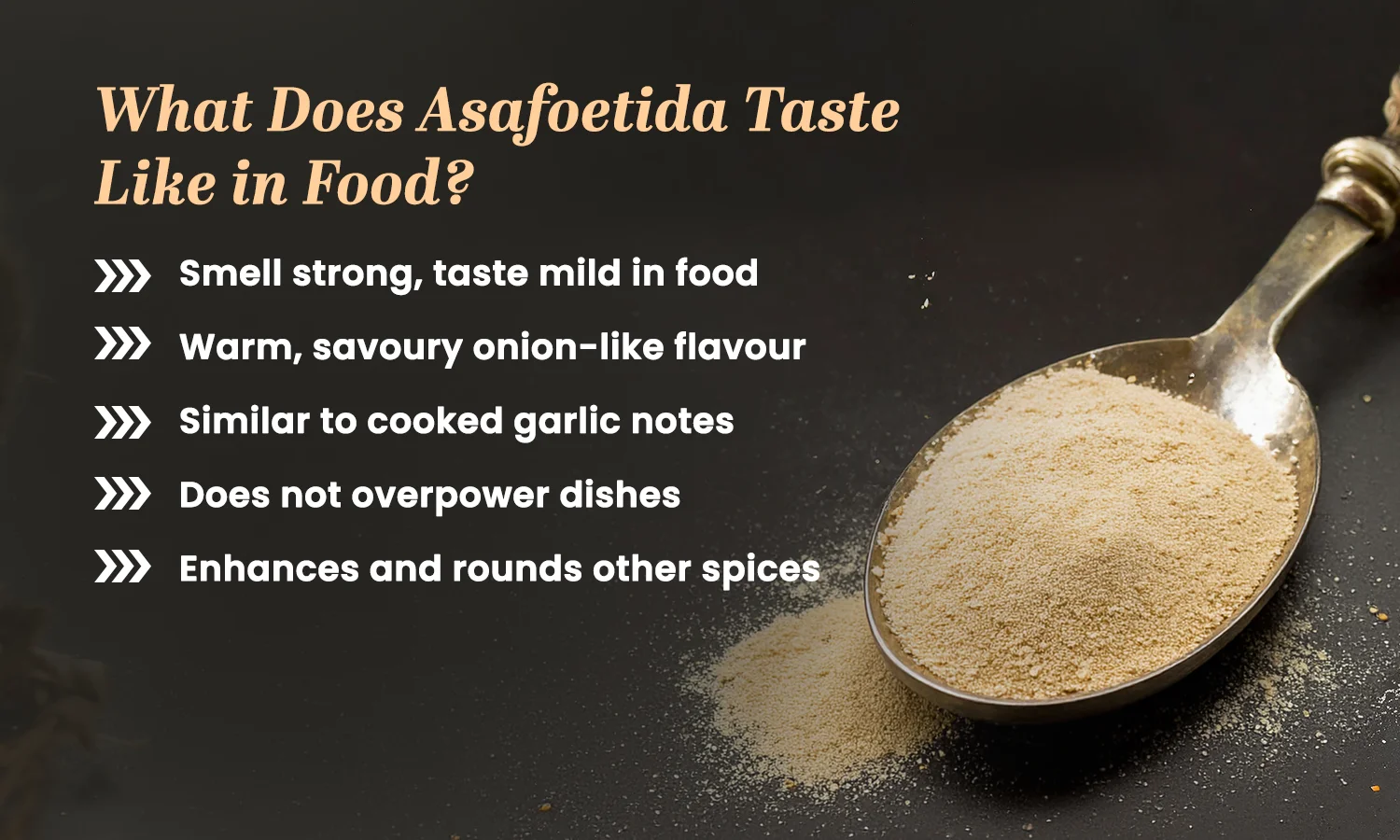
What Does Asafoetida Taste Like in Food?
Many first-time users worry about the smell. But in food, Indian cooking asafoetida tastes very different. It adds a warm, savoury flavour similar to cooked onions or garlic.
The asafoetida taste does not overpower dishes. Instead, it quietly enhances other spices and gives a rounded flavour that makes food feel complete.
Easy Ways to Use Asafoetida in Everyday Cooking
Here are some simple asafoetida uses in cooking you can try:
- Add a pinch to dal tempering
- Use in potato or vegetable stir-fries
- Mix into buttermilk after heavy meals
- Add to batter for pakoras
These recipes using asafoetida are common in Indian homes because they are easy and practical. You will also find many recipes with asafoetida in South Indian dishes like rasam and sambar.
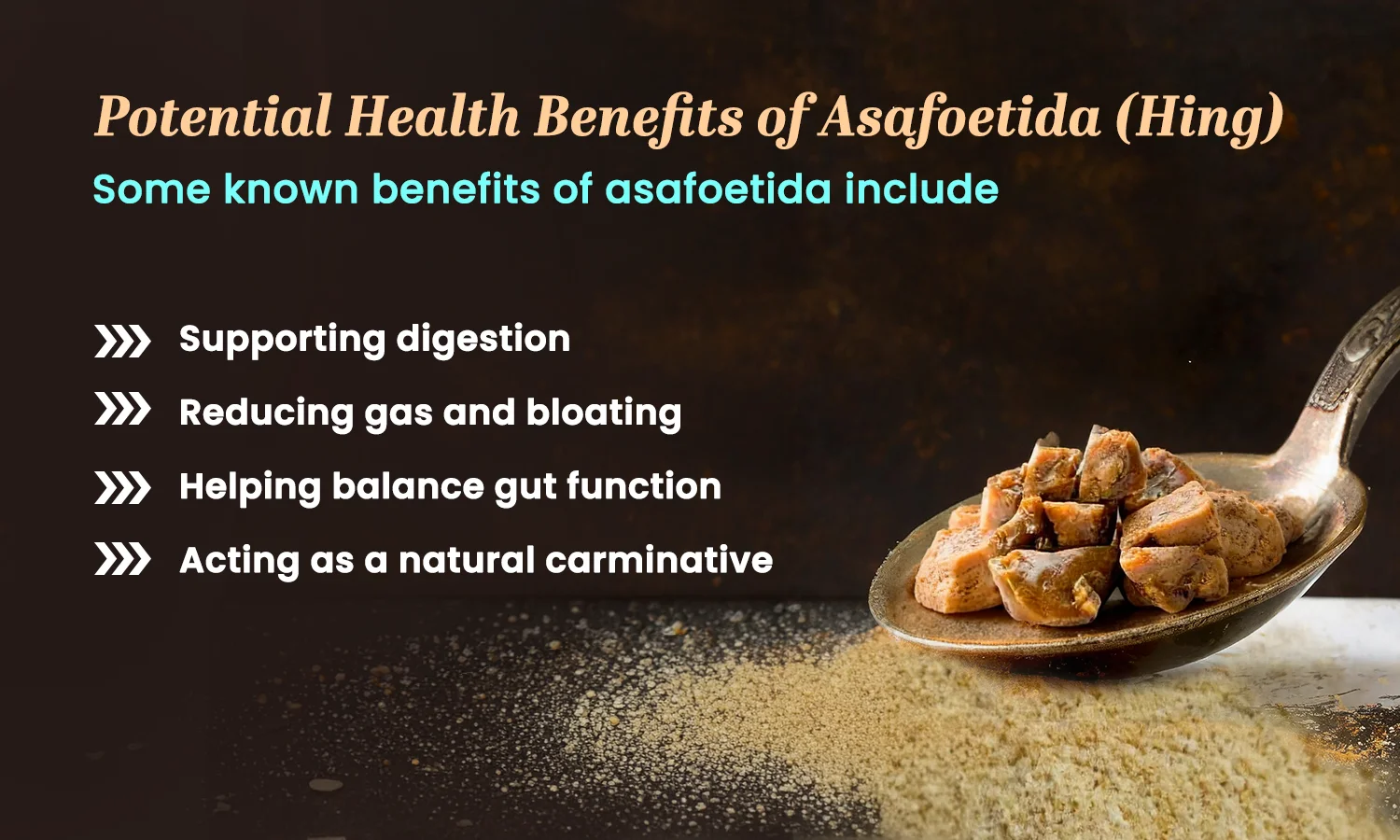
Potential Health Benefits of Asafoetida (Hing)
Apart from flavour, asafoetida benefits are widely discussed in traditional cooking.
Some known benefits of asafoetida include:
- Supporting digestion
- Reducing gas and bloating
- Helping balance gut function
- Acting as a natural carminative
Because of these asafoetida uses, it is often added to lentil dishes that are heavy to digest.
A Few Tips for Cooking With Asafoetida
- Use only a pinch — more can make food bitter.
- Always cook it in oil or ghee first.
- Store in an airtight jar to control aroma.
- Choose fresh hing powder uses in cooking for the best results.
These small tips help you get the best from indian cooking asafoetida without overpowering your dish.
Key Takeaways
- Indian cooking asafoetida adds depth and balance to dishes.
- Always cook hing in hot oil or ghee.
- A small pinch is enough for most recipes.
- Common in dals, curries, and vegetable dishes.
- Supports digestion and reduces heaviness after meals.
Conclusion
Indian cooking asafoetida shows how a tiny ingredient can completely change food. From improving flavour to supporting digestion, it plays an important role in daily Indian meals. Once you learn how to use it correctly, hing becomes a simple but powerful addition to your kitchen.
FAQs
Is Asafoetida the Same as Hing?
Yes, hing is the common Indian name for asafoetida. In indian cooking asafoetida, both terms refer to the same spice used for flavour and digestion.
Can You Eat It Raw?
No. Asafoetida should not be eaten raw because the smell and taste are too strong. It must be cooked properly for a safe and pleasant flavour.
What Does It Replace in Cooking?
In many recipes, indian cooking asafoetida replaces onion and garlic while still giving a savoury base flavour.
Where Can I Buy It?
You can find asafoetida in supermarkets, spice stores, and online grocery platforms in powder or resin form.
What Is Its Shelf Life?
When stored in an airtight container, asafoetida usually stays fresh for about 12–18 months.