
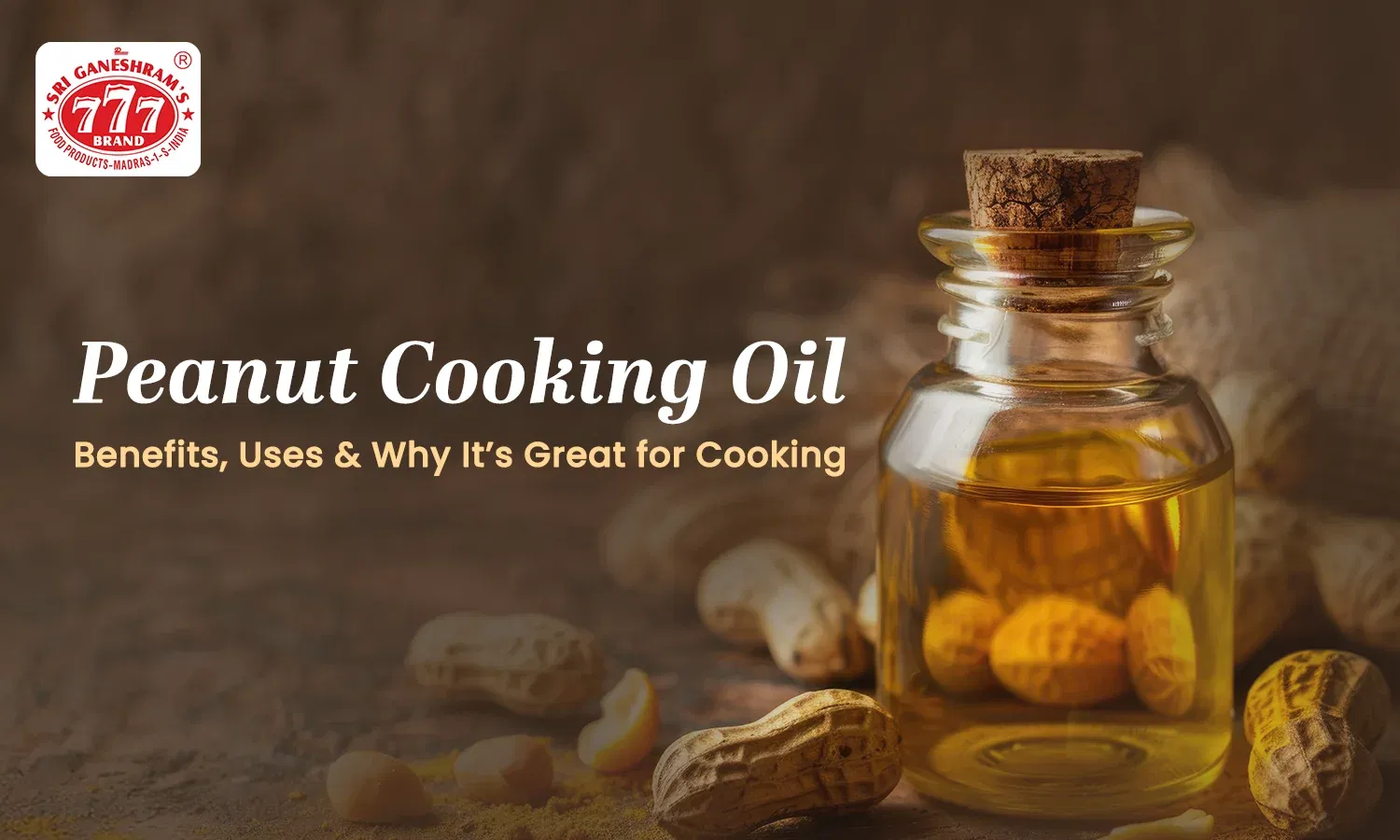
What Is Peanut Cooking Oil?
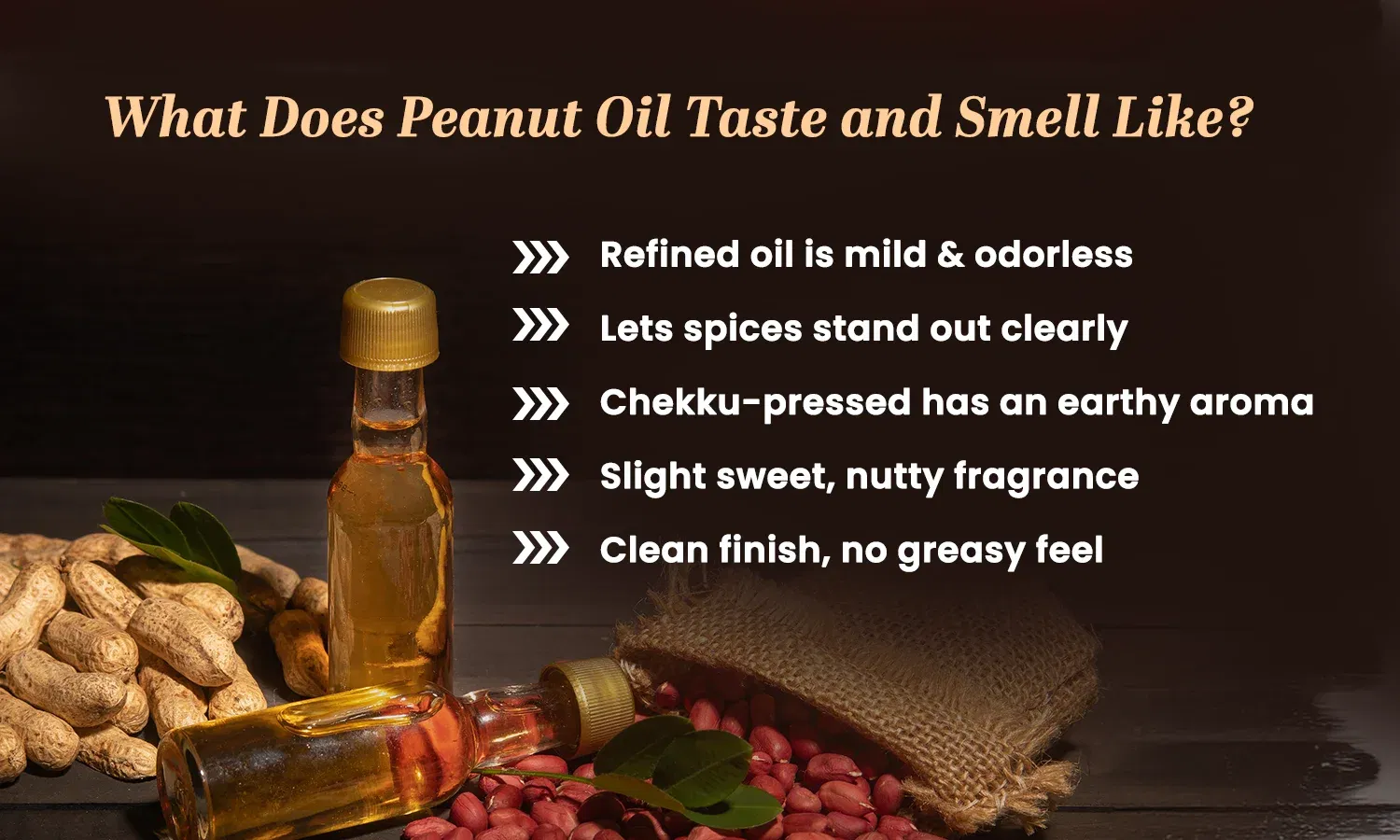
What Does Peanut Oil Taste and Smell Like?
Cooking With Peanut Oil
Why it’s the Smart Frying Choice:
- No Flavor Transfer: This is a weird but brilliant trait. Refined peanut oil doesn't "carry" smells. You can fry fish and then a batch of vada in the same oil. The vada won't taste like the sea.
- The Crunch Factor: High heat creates an instant steam barrier. The food doesn't get oil-logged. You get a lighter, crispier bite.
- The Perfect Tadka: For dals, the nutty undertones of unrefined oil elevate mustard seeds and curry leaves in a way that plain sunflower oil just can't touch.
Nutritional Value of Peanut Oil (Per Teaspoon)
- Peanut oil calories: Roughly 40 kcal.
- Total Fat: 4.5g (all >fat, zero carbs).
- Monounsaturated Fat (MUFA): ~2.3g. This is the "liquid gold" your heart loves.
- Vitamin E: You get a solid hit of antioxidants in every drop.
Health Benefits of Peanut Oil
The peanut cooking oil benefits aren’t just about calories. It’s loaded with phytosterols. These actually block bad LDL cholesterol from getting absorbed in your gut.
Is peanut oil good for health in other ways? Absolutely. It’s a massive source of Vitamin E, which protects your cells from oxidative stress. Some researchers even point to the resveratrol in the oil as a win for insulin sensitivity and brain health. It’s heart-healthy, plain and simple.
Potential Health Risks
It’s not for everyone. First, peanut oil uses are a big no for anyone with a peanut allergy—especially if the oil is chekku-pressed. Those versions still have the proteins that trigger reactions.
Also, watch the “Omega Balance.” It’s high in Omega-6 but has almost zero Omega-3. Since modern diets are already full of Omega-6, you’ve got to balance things out with walnuts or flaxseeds to keep inflammation down.