Overview
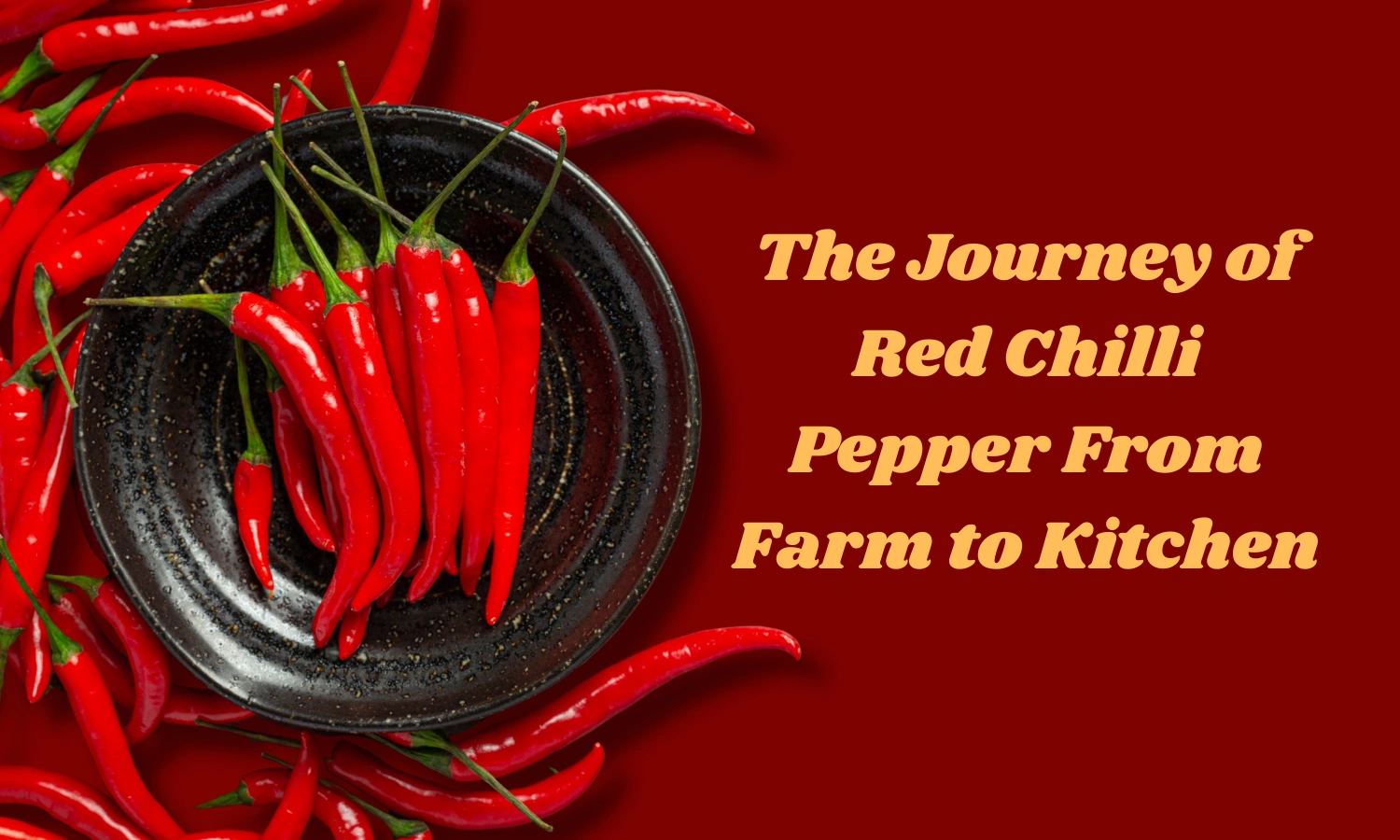
The red chilli pepper you use at home passes through several stages before reaching your kitchen shelf, including cultivation, harvesting, sun-drying, sorting, and grinding. Understanding this journey helps explain why quality varies so much between brands and why sourcing from established growing regions matters for flavour, colour, and heat consistency.
Where the Journey of Red Chilli Pepper Begins
Every batch of chili pepper starts on farmland, typically in states like Andhra Pradesh, Karnataka, and Tamil Nadu, where climate and soil conditions favour capsicum cultivation. Farmers plant seedlings at the start of the season and nurture them through several months of growth before the fruit reaches full colour and firmness.
The plants require consistent watering during early growth but need drier conditions as the fruit matures and turns red. This balance is part of what makes chilli pepper farming a skill passed down through generations rather than a simple mechanical process.
Harvesting Hot Pepper the Right Way
Timing matters enormously in this stage. Harvesting a hot pepper too early results in weaker colour and underdeveloped heat, while harvesting too late can cause the fruit to soften and spoil faster during drying. Experienced farmers handpick chillies at peak ripeness, which is one reason quality red chilli pepper often costs more than mass-harvested alternatives.
From Sun-Ripened Fresh Fruit to Shelf-Stable Dried Spice
Once harvested, the fresh fruit needs to be dried before it can be processed further. Traditional sun drying remains common across South India, where chillies are spread across open yards for several days. This method helps retain the natural oils responsible for aroma, unlike faster industrial drying that can dull flavour.
During this stage, the fruit transforms from a spicy pepper with high moisture content into a shelf-stable ingredient ready for grinding or storage as whole dried chilli.
The Critical Steps of Sorting, Grading, and Processing
The steps of sorting, grading, and processing red chilli are explained here:
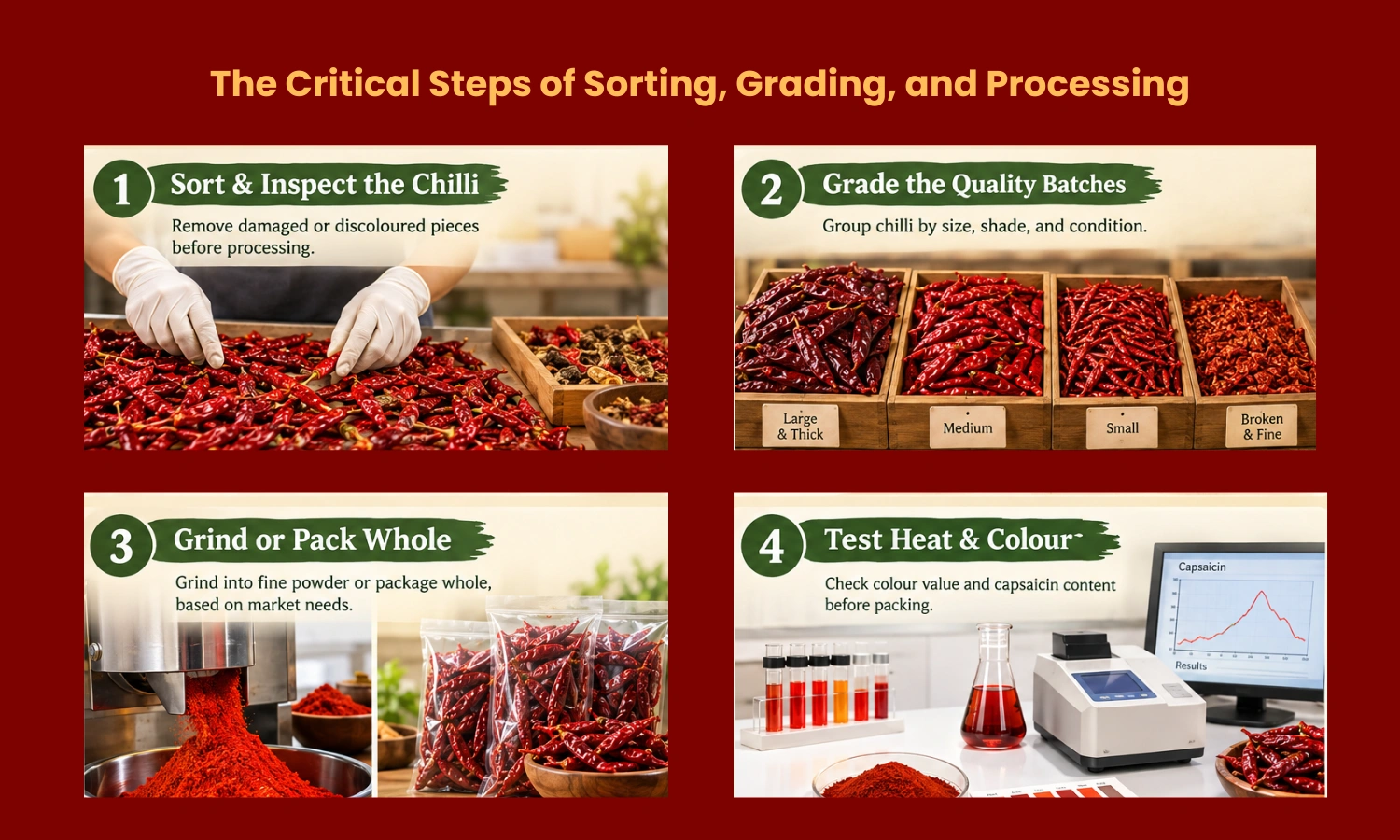
1. Sorting and Inspecting Raw Material:
Separate damaged or discoloured pieces from premium stock so that mixing lower-grade fruit with prime pepper chilli does not cause inconsistent colour and heat once ground.
2. Grading Quality Batches:
Categorise the sorted harvest by size, shade, and condition to ensure uniform standards before moving to commercial processing equipment.
3. Grinding or Packaging Whole Units:
Process the graded batches by either grinding them into fine culinary powder or packaging them whole based on target market requirements.
4. Quality Testing for Heat and Colour:
Analyze final samples for colour value and capsaicin content to guarantee every consumer packet of red chilli pepper maintains reliable standards batch after batch.
Versatility of Red Chilli Pepper in Indian Cooking
Once it reaches the kitchen, the Indian pepper becomes central to countless dishes, from tempering in South Indian sambar to marinades for tandoori preparations. Its versatility across fresh, dried, and powdered forms is part of why it remains a kitchen staple across nearly every Indian household.
What Is the Difference Between Chilli and Black Pepper?
Many people ask about the difference between chilli and pepper, since the terms are often used interchangeably in everyday conversation. Botanically, chilli belongs to the Capsicum genus, while black pepper comes from an entirely different plant, Piper nigrum. The overlap in naming comes from early European traders who mistook chilli for a variant of pepper due to its sharp taste.
Some cooks also search for the red hot chilli pepper experience they want in a dish, referring loosely to any variety with strong heat rather than a specific type, which adds to general naming confusion in casual conversation.
Red Chilli Pepper vs. Cayenne Pepper
A common point of confusion is the difference between cayenne pepper and red chilli. Cayenne pepper is a specific thin, elongated chilli variety, typically ground into a fine, uniformly hot powder used in international cuisines. Indian red chilli, by contrast, includes multiple regional varieties with differing heat and colour profiles.
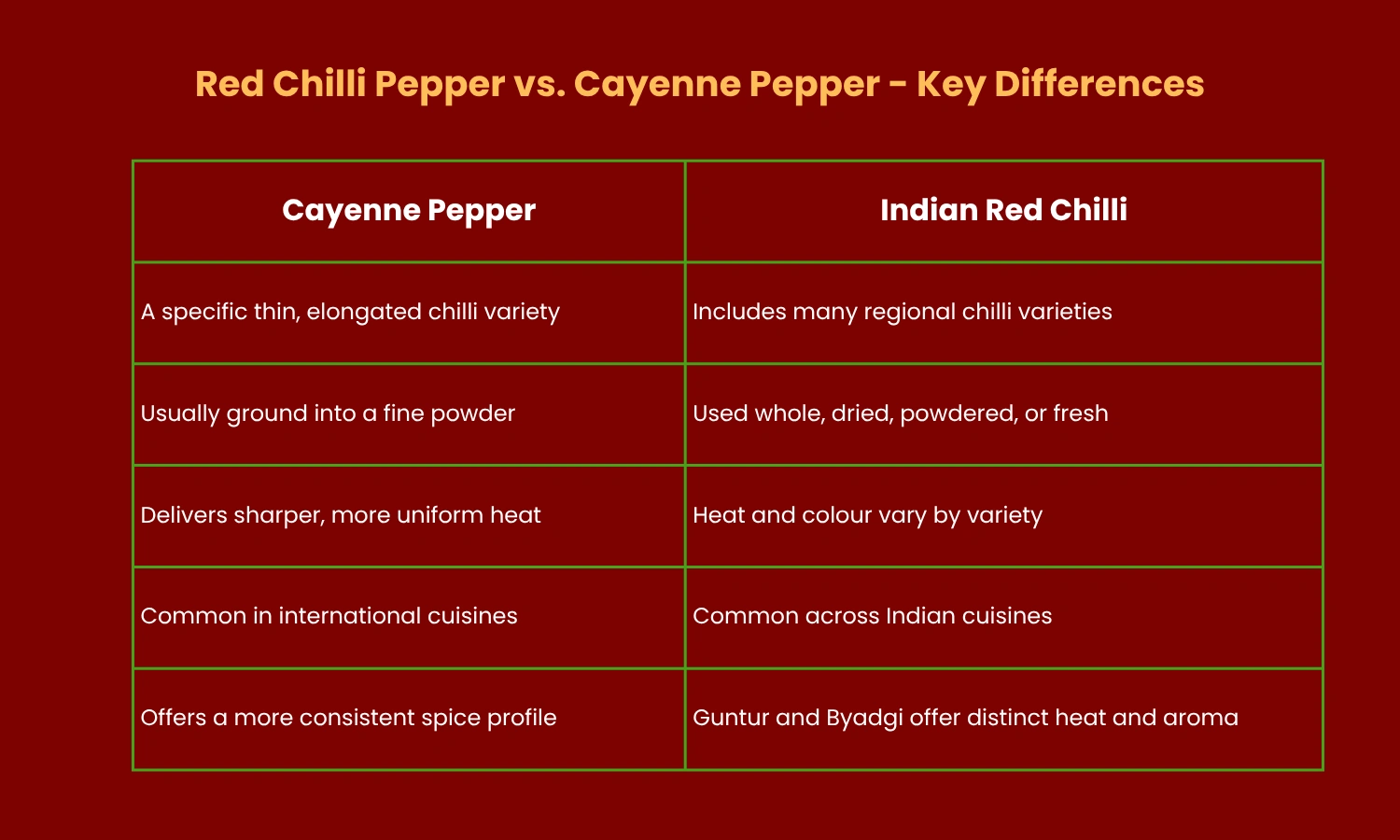
When exploring the difference between cayenne pepper vs. red chilli more closely, the key distinction lies in flavour complexity. Cayenne is a specific chilli type commonly sold as a ground spice, while “Indian red chilli” can refer to many varieties, including Guntur and Byadgi, each with different colour, aroma, and heat characteristics. Whether the same heat level applies to cayenne pepper and red chilli depends entirely on the specific variety being compared, since heat levels vary widely even within Indian chilli types.
What Are the Benefits and Uses of Red Chilli Pepper?
- Beyond flavour, many households value red chilli pepper benefits, including its role as a source of vitamin C and antioxidants when consumed as part of a balanced diet.
- It also adds depth to dishes without requiring excessive oil or salt, making it a practical everyday spice.
- For those exploring red chilli pepper recipes, the ingredient works well in chutneys, pickles, marinades, and dry powder blends.
- A single type of chilli pepper can serve multiple culinary purposes depending on whether it is used fresh, dried whole, or ground fine.
Taste the Difference Quality Sourcing Makes
The journey from farm to kitchen determines the final quality of every spoonful of chilli powder you use. 777 Foods works with trusted growing regions across South India to bring consistently sourced, carefully processed red chilli to your kitchen.
Explore 777’s Premium Red Chilli Powder and the entire chilli range, and experience the difference proper sourcing makes.
Key Takeaways
- Red chilli pepper passes through cultivation, harvesting, drying, sorting, and grinding before reaching consumers.
- Sun drying helps preserve natural aroma better than faster industrial drying methods.
- Chilli and black pepper are botanically unrelated despite naming overlap.
- Indian red chilli varieties differ from cayenne pepper in flavour complexity and heat profile.
- Sourcing from established growing regions ensures more consistent colour, heat, and quality.
FAQs
How is red chilli pepper processed before it reaches consumers?
It typically goes through harvesting at peak ripeness, sun drying to reduce moisture, sorting to remove damaged fruit, and finally grinding or packaging as whole dried chilli, depending on the intended product.
Is red chilli pepper the same as cayenne pepper?
Not exactly. Cayenne pepper is a specific thin variety commonly used in Western cooking, while Indian red chilli includes several regional varieties with different heat levels and flavour profiles suited to Indian dishes.
What is the difference between chilli and pepper?
Chilli belongs to the Capsicum genus, while black pepper comes from the Piper nigrum plant. They are unrelated botanically, though the naming overlap traces back to early European trade history.
Does red chilli pepper offer any health benefits?
Yes, in moderate amounts it can contribute vitamin C and antioxidants to the diet, along with adding flavour depth that can reduce reliance on excess oil or salt in cooking.