Overview
Using spicy chilli well is less about adding more heat and more about matching the right variety and quantity to each dish. Curries, pickles, and masalas each call for different chilli forms and intensities; paying close attention to your chilli powder ingredients and understanding these differences helps home cooks build flavour without overwhelming a dish’s balance.
Understanding Heat from Spicy Chilli Before You Cook
Before adding spicy chilli to any dish, it helps to understand what makes certain varieties hotter than others. Heat comes from capsaicin, a compound concentrated mainly in the seeds and inner membrane of the chilli rather than the flesh itself. This is why removing seeds before cooking is a common technique for reducing heat without losing overall chilli flavour.
Many home cooks wonder why chilli is spicy in the first place. Capsaicin triggers heat receptors in the mouth, creating a burning sensation even though no actual physical heat is present, which is why the intensity varies so much depending on how much capsaicin a variety contains.
Which Chillies Rank as the Hottest? A Spicy Breakdown
Chilli heat varies dramatically depending on where the crop is grown and how it is cultivated, ranging from subtle warmth to eye-watering intensity.
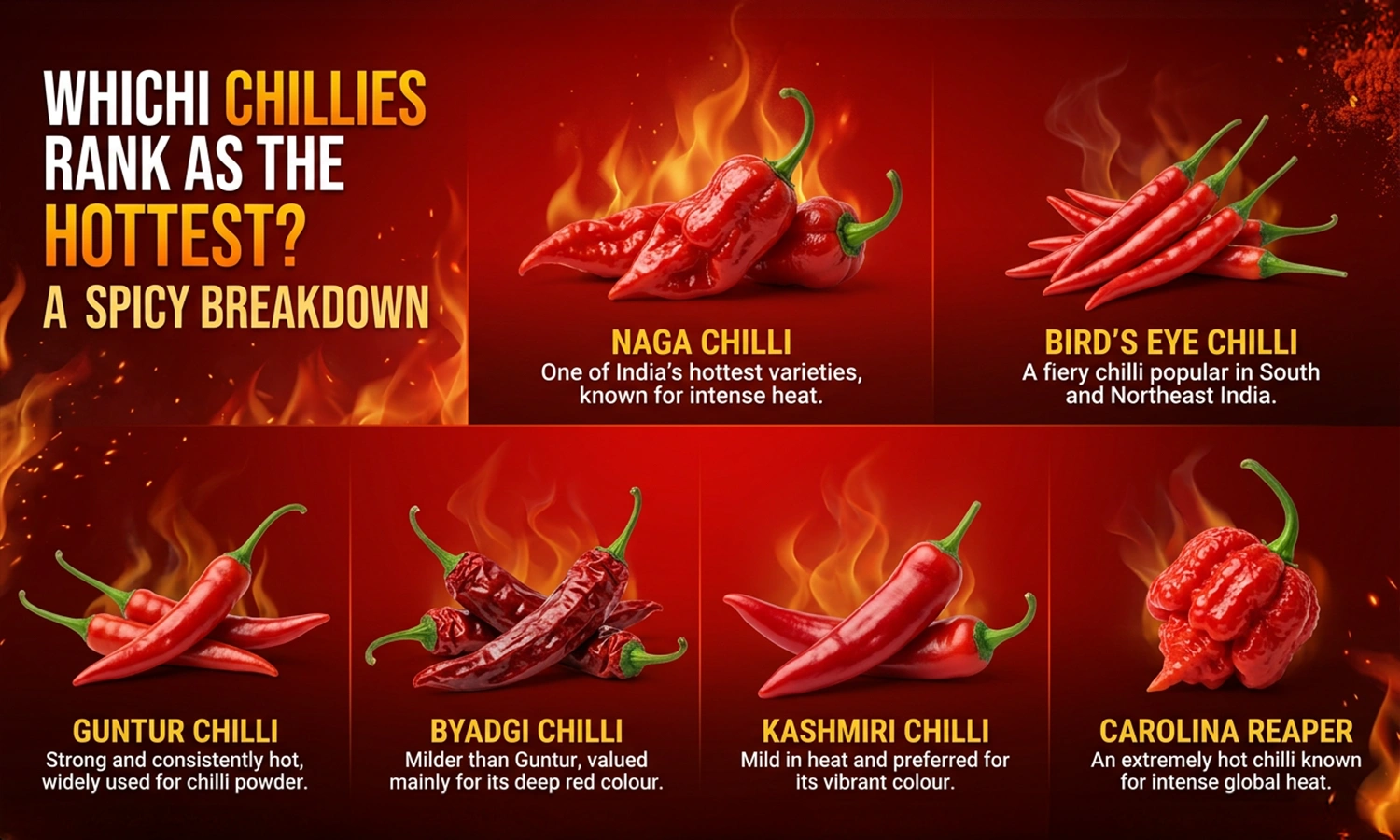
- For those curious about the hottest chilli in India, Naga chilli, or Bhut Jolokia, from the northeastern states, ranks among the most intense, alongside Bird’s Eye chilli used in parts of the south and northeast.
- On a global scale, chillies bred specifically for extreme heat, such as the Carolina Reaper, are considered the world’s spiciest chilli, far exceeding most Indian varieties in raw intensity.
- When comparing regional varieties, people often ask if Guntur chilli is spicy, and the answer is generally yes, since Guntur chilli from Andhra Pradesh is known for strong, consistent heat and is widely used in powder production precisely for this reason.
- Similarly, questions like “Is Byadgi chilli spicy?” come up often, though Byadgi is actually milder than Guntur and is chosen more for its deep red colour than for intense heat.
- For Kashmiri varieties, the common question, “Is Kashmiri chilli powder spicy?” usually surprises people, since Kashmiri chilli is one of the mildest options available, prized almost entirely for its colour rather than its heat level.
Quick Guide: Popular Indian Chilli Varieties at a Glance
Because capsaicin boosts metabolism, spicy chillies are frequently included in recipes alongside weight loss foods to enhance flavour without adding extra calories.
| Chilli Variety | Heat Level | Primary Feature | Best Used For |
|---|---|---|---|
|
Kashmiri
|
Very Mild
|
Vibrant deep red colour
|
Rich colour in curries and marinades
|
|
Byadgi
|
Mild to Medium
|
Wrinkled skin and rich aroma
|
Sambar, spice blends, and chutneys
|
|
Guntur
|
High
|
Pungent, sharp heat
|
Spicy curries, stir-fries, and chilli powder
|
|
Bird’s Eye
|
Very High
|
Small size, intense heat
|
Pickles, fresh chutneys, and soups
|
|
Bhut Jolokia (Naga)
|
Extreme
|
Ghost pepper intensity
|
Specialty hot sauces and fiery pickles
|
Mastering the Heat: Using Spicy Chilli in Curries for Optimal Flavour
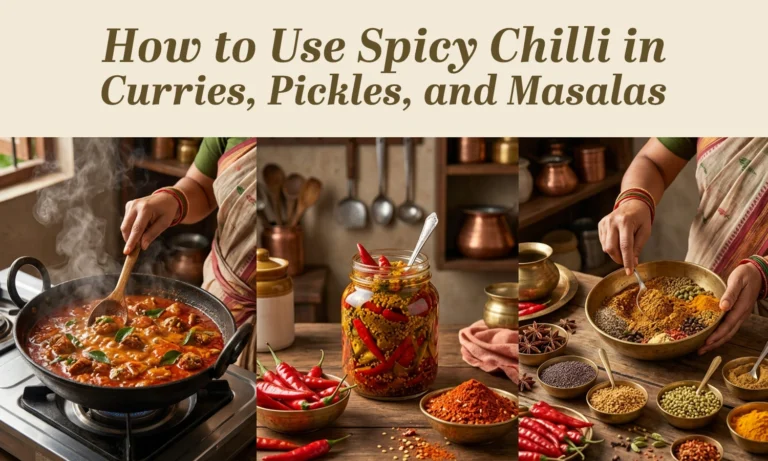
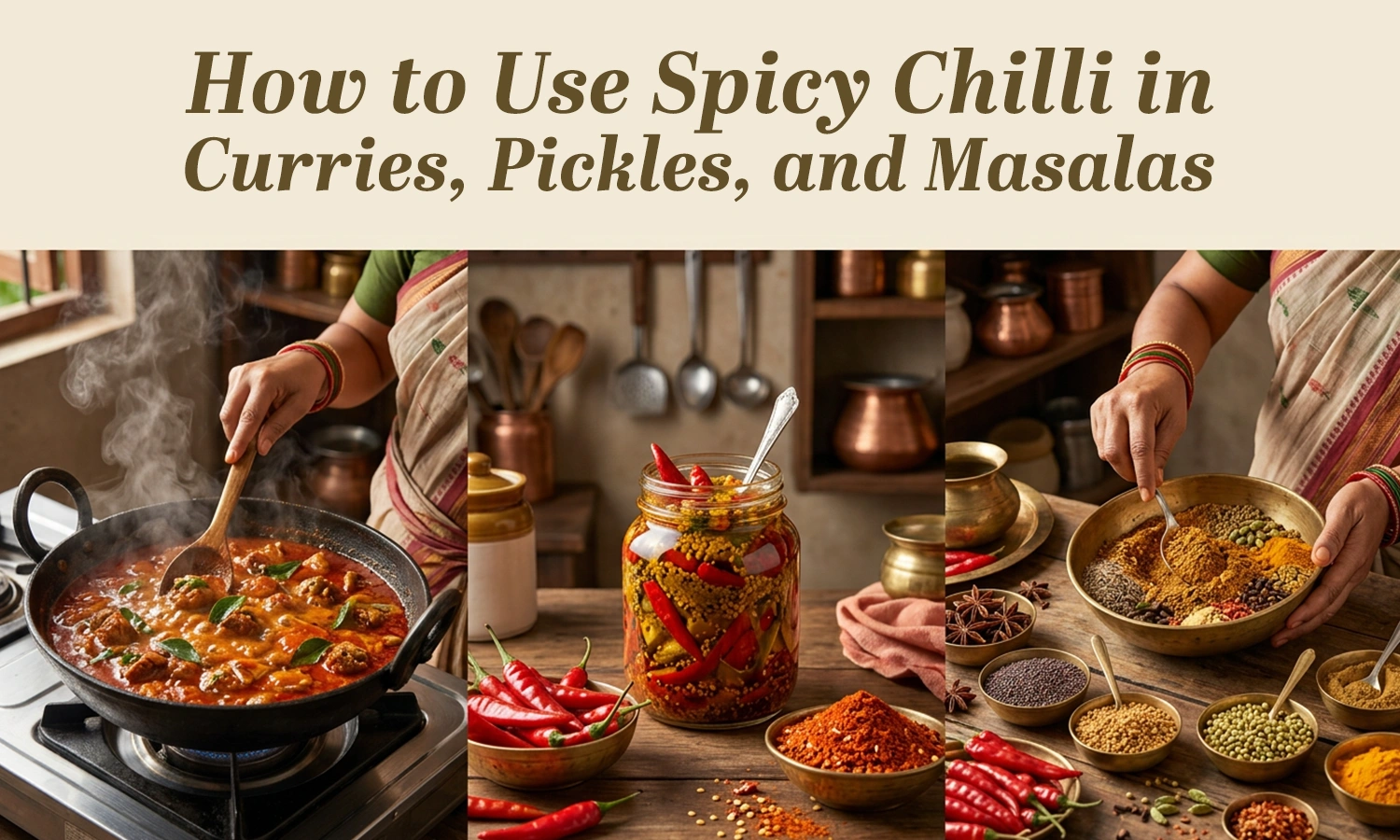
In curries, hot chilli works best when added early during the tempering stage, allowing its flavour to infuse into the base oil before other ingredients go in. This technique distributes heat evenly throughout the dish rather than leaving concentrated hot spots. For milder curries, using spicy red chilli powder with lower heat, like Kashmiri, alongside a small amount of a hotter variety for background warmth, gives better control over final spice levels.
Bold and Preserved: How to Use Spicy Chilli in Pickles?
Pickling calls for a different approach, since chilli here is often the star ingredient rather than a background flavour. Whole dried or fresh chillies work well in pickles, combined with mustard oil, fenugreek, and salt to create long-lasting preserved condiments. Most spicy chilli varieties used for pickling, as in 777 Foods’ mixed pickle, tend to be firmer-skinned types that hold their texture well during the curing process.
Balancing Heat and Spice: Using Spicy Chilli in Masalas and Spice Blends
Masala blends typically rely on ground chilli powder rather than whole chillies, since a fine, even grind ensures the heat distributes uniformly across the blend. Many people ask, “Which red chilli is spicy enough?”
For a particular masala, it depends on the dish, with stronger blends like garam masala often using hotter varieties, while milder rubs favour Kashmiri or Byadgi for colour without excessive heat.
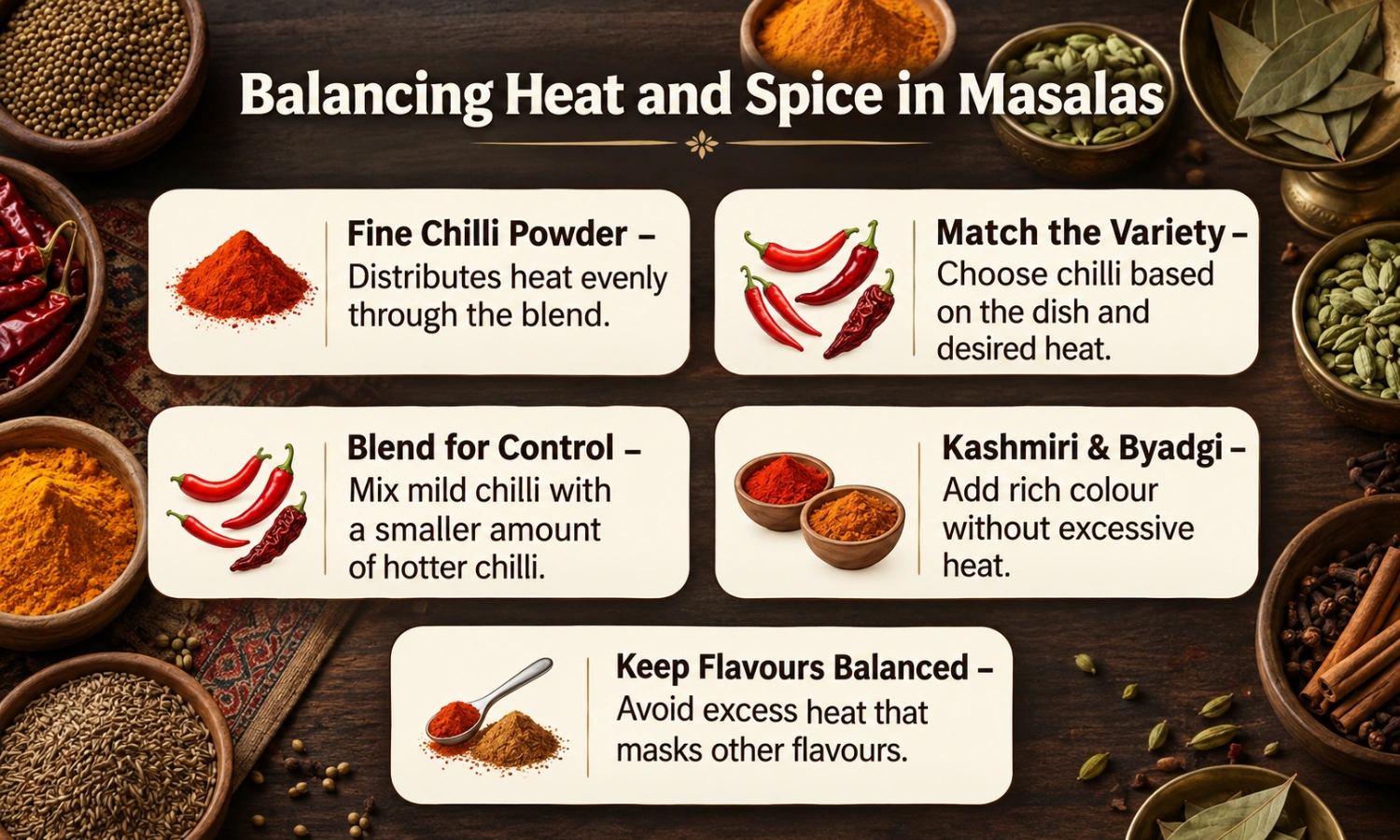
The goal when cooking with spicy chilli should never be heat alone. Overusing intensely hot varieties can mask the other flavours in a dish, from tanginess in a pickle to the aromatic depth of a slow-cooked curry. Skilled cooks often blend a milder, colour-rich chilli with a smaller amount of a hotter variety to achieve both visual appeal and controlled spice.
Which Chilli Is Spicier for Your Needs?
The answer depends on the chilli variety, its form, and the amount used. High-heat varieties such as Naga and Bird’s Eye deliver much stronger heat than milder varieties such as Kashmiri. Choosing the right chilli allows you to control the spice level without overpowering the other flavours in a dish.
Cook With Confidence and Control
Getting the right level of heat starts with choosing the right chilli powder for your recipe. 777 Foods Premium Red Chilli Powder can be used in everyday curries, gravies, masalas, marinades, and other Indian dishes where chilli adds colour and flavour.
Choose the right amount for your recipe and enjoy balanced chilli flavour in everyday cooking.
Key Takeaways
- Capsaicin, concentrated mainly in seeds and membranes, determines a chilli's true heat level.
- Guntur and Naga chillies rank among the spiciest Indian varieties, while Kashmiri and Byadgi are milder.
- Adding chilli early in tempering distributes heat more evenly through curries.
- Pickling favours firmer-skinned varieties that hold texture during curing.
- Balancing hot and mild chilli varieties gives better control over both colour and spice in cooking.
FAQs
What makes spicy chilli hot?
The heat comes from capsaicin, a compound concentrated mostly in the seeds and inner membrane of the chilli. Different varieties contain varying levels of capsaicin, which explains why some chillies taste far hotter than others despite looking similar.
Which Indian chilli is considered the spiciest?
Naga chilli, also known as Bhut Jolokia, from the northeastern states, is widely considered one of the hottest Indian varieties, with Bird’s Eye chilli following closely in overall heat intensity.
Is Guntur chilli hotter than Kashmiri chilli?
Yes, Guntur chilli is significantly hotter than Kashmiri chilli. Kashmiri chilli is chosen mainly for its deep red colour and mild heat, while Guntur chilli is valued specifically for its strong, consistent spice level.
How can I reduce the heat of spicy chilli in a dish?
Removing the seeds and inner membrane before cooking significantly reduces heat, since these parts contain the highest concentration of capsaicin. Balancing hot varieties with milder ones also helps control overall spice level in a dish.