Overview
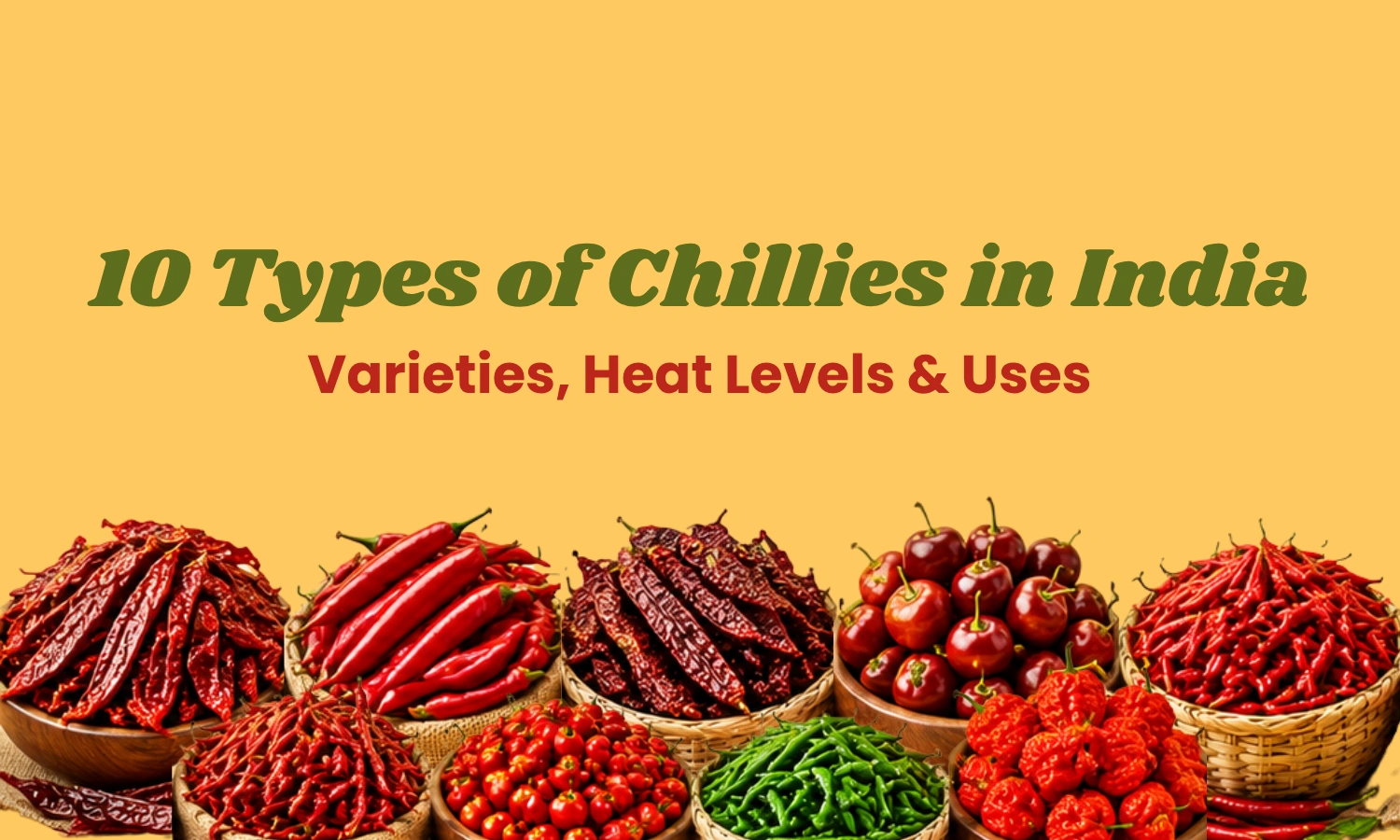
India grows one of the widest ranges of chillies in the world, with types of chillies varying by region, heat level, and culinary purpose. From the deep red, mild Kashmiri chilli to the blistering Naga chilli of the northeast, each variety brings a distinct colour, aroma, and intensity suited to specific dishes across Indian kitchens.
Why India Has So Many Chilli Varieties?
India’s climate diversity, from coastal humidity to dry plateau heat, allows farmers to cultivate a remarkable spread of types of chilli across states. Historically, chilli reached India through Portuguese trade routes, and many people ask who brought chillies to India when tracing this history. Portuguese traders introduced the plant near Goa in the late 1400s, after which local farmers adapted it into region-specific varieties over centuries, using them for everything from daily curries to regional preserves like spicy green pepper pickle.
Today, understanding types of chillies in India matters not just for flavour but for practical cooking decisions, since heat level, colour retention, and moisture content vary widely between varieties.
10 Popular Types of Chillies in India
India is home to many chilli varieties, each with its own heat, colour, flavour, and culinary use. Here are 10 popular types of chillies to know.
1. Kashmiri Chilli
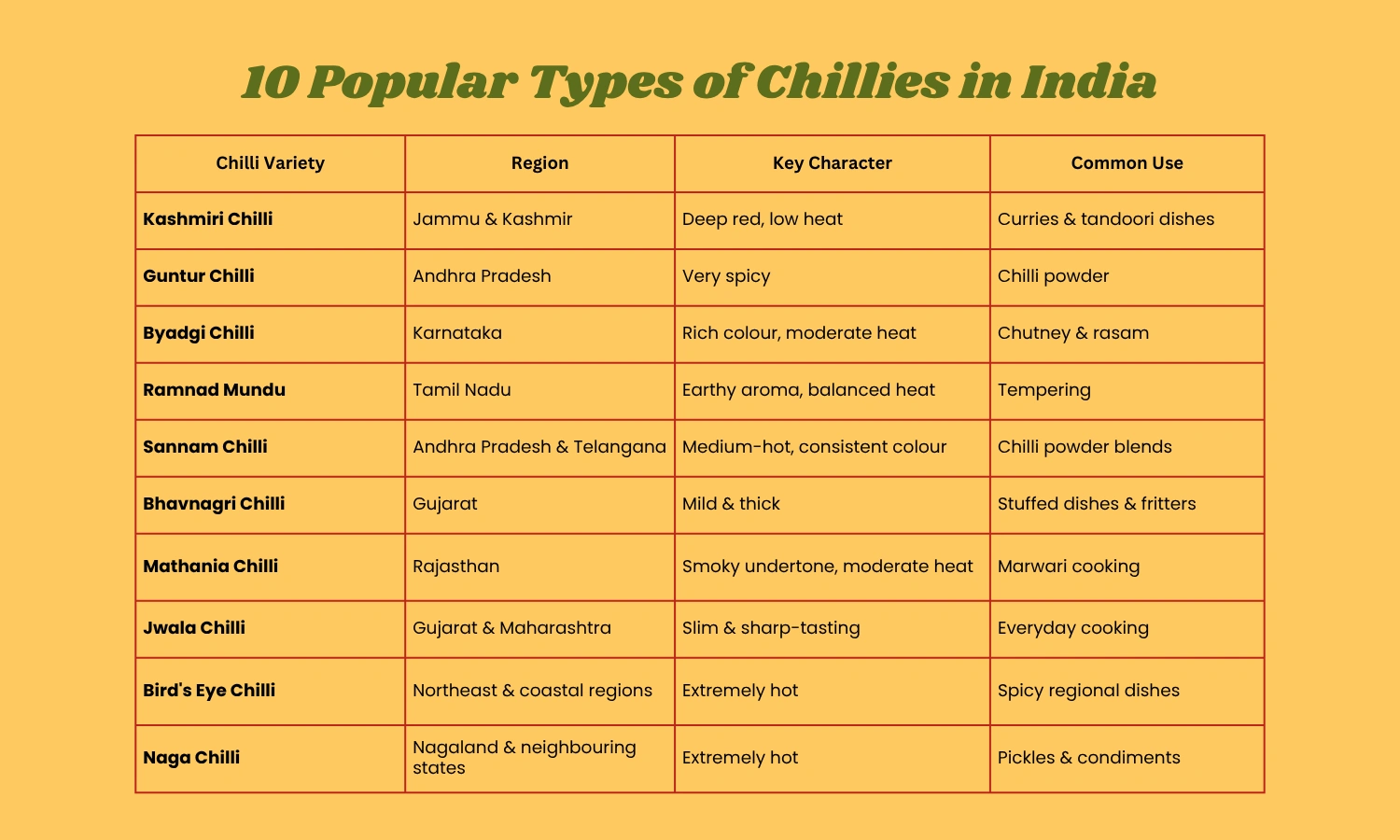
Grown primarily in Jammu and Kashmir, this chilli variety name is known more for its deep red colour than its heat. Cooks use it to enrich the appearance of curries and tandoori dishes without overwhelming the palate. It remains one of the most requested red chilli types for restaurant-style gravies.
2. Guntur Chilli
Andhra Pradesh’s Guntur belt produces one of the spiciest and most traded chilli varieties in India. Its high capsaicin content makes it popular for chilli powder production, and it is frequently cited as the best chilli variety in India for those who prefer intense heat.
3. Byadgi Chilli
Native to Karnataka, Byadgi chilli sits between Kashmiri and Guntur in heat, offering rich colour with moderate spice. It is a favourite among the different types of chillies used specifically for chutneys and rasam preparations across South India.
4. Ramnad Mundu
This round, wrinkled chilli from Tamil Nadu is prized for its earthy aroma and balanced heat. It represents one of the distinct chilli types found in Tamil Nadu kitchens and is often used whole in tempering.
5. Sannam Chilli
Grown widely across Andhra Pradesh and Telangana, Sannam is a long, thin, medium-hot chilli often used in commercial chilli powder blends because of its consistent heat and colour profile among dry chilli varieties in India.
6. Bhavnagri Chilli
A milder, thicker variety from Gujarat, Bhavnagri is used fresh in stuffed preparations and fritters rather than dried. It stands apart from other types of red chilli because it is enjoyed more for texture than heat.
7. Mathania Chilli
This Rajasthani variety carries a smoky undertone and moderate heat, commonly used in traditional Marwari cooking. It is a lesser-known but respected name among the types of mirchi in India.
8. Jwala Chilli
Widely grown across Gujarat and Maharashtra, Jwala is a slim, sharp-tasting chilli used fresh in everyday cooking. It represents one of the more common entries in any list covering chilli varieties in Maharashtra.
9. Bird's Eye Chilli
Small but extremely potent, this variety is popular in the northeastern states and coastal regions for its concentrated capsaicin content. It often comes up when people ask how many types of chilli exist with extreme heat levels in India.
10. Naga Chilli
Grown in Nagaland and neighbouring states, Naga chilli, also called Bhut Jolokia, is among the hottest chillies in the world. It represents the extreme end of red chilli varieties in India and is used sparingly in pickles and specialty condiments.
Chilli or Pepper: Clearing the Confusion
Many home cooks ask about the difference between chilli and pepper, since both are used to describe heat in food. Chilli refers specifically to Capsicum fruits, while pepper traditionally refers to Piper nigrum, or black pepper, a completely different plant. The confusion dates back to early European traders who applied the pepper name loosely to the newly discovered fiery fruit.
Choosing the Right Variety for Your Kitchen
Selecting from Indian chilli varieties depends on what result you want. For colour without excessive heat, Kashmiri or Byadgi work well. For intense spice in powders and pickles, Guntur or Sannam is preferred. Those experimenting with hybrid chilli varieties in India developed for higher yield should still check flavour consistency, since hybrid seeds sometimes trade aroma for volume.
When buying chilli seed varieties for home cultivation, look for region-appropriate seeds that match your local soil and climate, since a variety that thrives in Andhra Pradesh may not perform the same way in cooler northern states.
Bring Every Variety Into Your Kitchen
Choosing the right chilli variety changes the entire character of a dish. 777 Foods sources and processes chilli from established growing belts across South India, offering blends that balance colour, aroma, and heat for everyday cooking.
Also, explore 777 Foods’ green chilli sauce and red chilli powder range, and find the variety that fits your kitchen best.
Key Takeaways
- India cultivates a wide range of chilli varieties, each shaped by regional climate and culinary tradition.
- Kashmiri and Byadgi chillies are chosen mainly for colour, while Guntur and Naga chillies are chosen for heat.
- Chilli and black pepper are unrelated plants despite the shared naming history.
- Variety choice should match your cooking purpose, whether that is powder, pickle, tempering, or fresh use.
- Sourcing quality dried chilli from trusted growing regions ensures consistent colour, aroma, and heat in every batch.
FAQs
What are the most common types of chillies used in Indian cooking?
Kashmiri, Guntur, Byadgi, Sannam, and Jwala are among the most widely used varieties across Indian households and commercial kitchens. Each offers a different balance of colour, heat, and aroma, which is why many kitchens keep more than one variety on hand for different dishes.
Which chilli variety is best for making chilli powder?
Guntur and Sannam chillies are commonly preferred for powder production because of their strong colour retention and consistent heat levels. Many commercial blends also combine Kashmiri chilli with hotter varieties to balance colour and spice in the final product.
Are Kashmiri chillies actually spicy?
Kashmiri chillies are milder than most other Indian varieties and are prized mainly for their vivid red colour rather than intense heat, making them ideal for dishes where appearance matters as much as flavour.
How many types of chilli grow in India?
India cultivates dozens of regional chilli varieties, though roughly ten to fifteen are widely recognised and commercially significant across different states, each suited to specific culinary uses from fresh cooking to drying and powdering.