

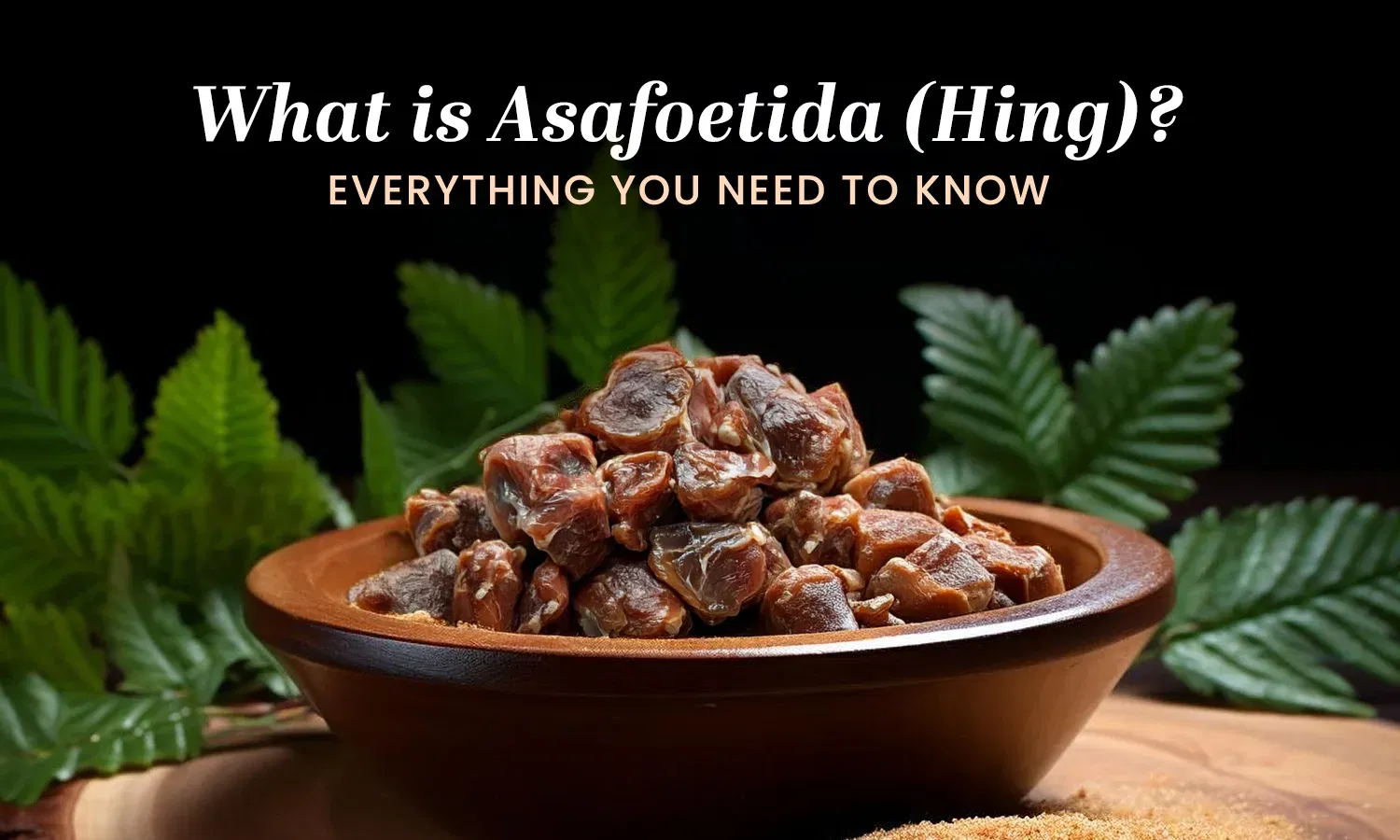
What is Asafoetida spice?
What is Asafoetida? Asafoetida, commonly known as asafoetida hing, is a pungent, gum-like resin extracted from the roots of the Ferula plant. It is widely used in Indian cooking as a flavouring agent and digestive aid. In its raw form, the resin has an extremely strong sulphur-like smell, often described as unpleasant. However, when heated in oil or ghee, it transforms into a mellow, savoury flavour similar to cooked onion and garlic.
Commercially, what is asafoetida powder sold in markets is usually a compounded form where the resin is mixed with edible starch such as rice flour or wheat flour, making it easier to measure and use in everyday cooking.
Why is asafoetida important in Indian cooking?
Asafoetida uses in Indian cuisine go far beyond flavour. It plays a crucial role in enhancing taste while supporting digestion. Indian meals often include lentils, beans, and root vegetables that are heavy and gas-forming. Adding a pinch of hing helps reduce bloating and indigestion.
For communities that avoid onion and garlic, such as Jains and certain Brahmin households, asafoetida replaces them without compromising flavour. It is also deeply rooted in Ayurveda, where it is used to balance digestion and stimulate the digestive fire.
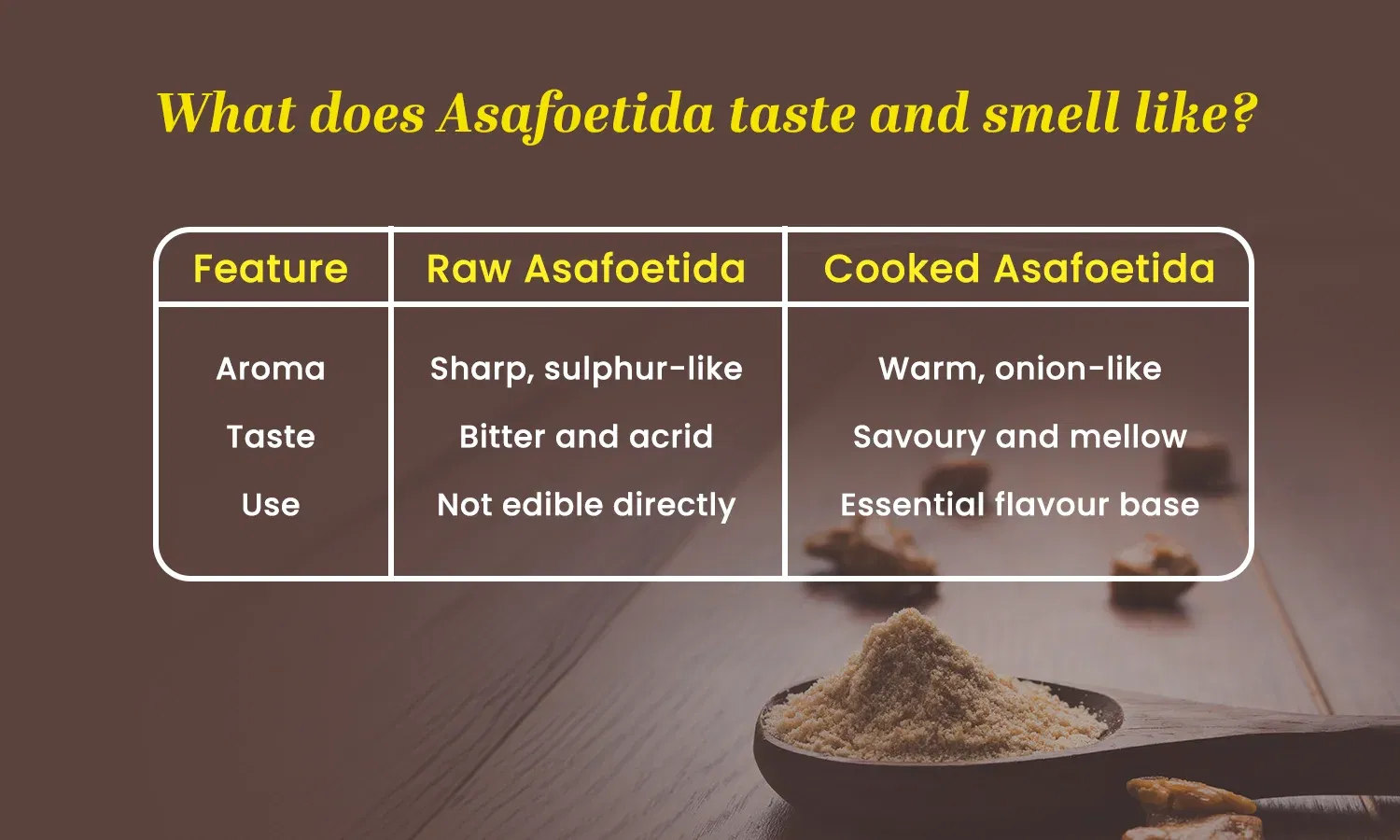
What does Asafoetida taste and smell like?
Asafoetida has one of the most dramatic flavour transformations in cooking.
Raw Asafoetida smell
In raw form, the smell is extremely pungent and sulphurous, often compared to rotten eggs, boiled cabbage, or garlic gone bad. This intense aroma comes from its high concentration of sulphur compounds.
Cooked Asafoetida flavour
When cooked in hot oil or ghee, the harsh smell disappears within seconds. The flavour becomes savoury, umami-rich, and slightly garlicky, blending seamlessly into the dish rather than standing out.
| Feature | Raw Asafoetida | Cooked Asafoetida |
|---|---|---|
|
Aroma |
Sharp, sulphur-like
|
Warm, onion-like |
|
Taste |
Bitter and acrid
|
Savoury and mellow |
|
Use |
Not edible directly |
Essential flavour base |
How to use Asafoetida in cooking
Knowing what is the use of asafoetida is important because it must never be used raw. It should always be cooked.
How much should you use?
Only a tiny quantity is needed. For most dishes, 1/8 to 1/4 teaspoon of compounded powder is sufficient. Pure resin requires even less, roughly the size of a grain of rice.
How to cook with Asafoetida (the traditional way)
The traditional method is tempering, also called tadka.
- Heat oil or ghee until hot but not smoking.
- Add a small pinch of powder asafoetida.
- Let it sizzle for 5–10 seconds until fragrant.
- Immediately add other ingredients to prevent burning.
In soups or rasam-style dishes, asafoetida can also be dissolved in warm water and added during simmering for a milder aroma.
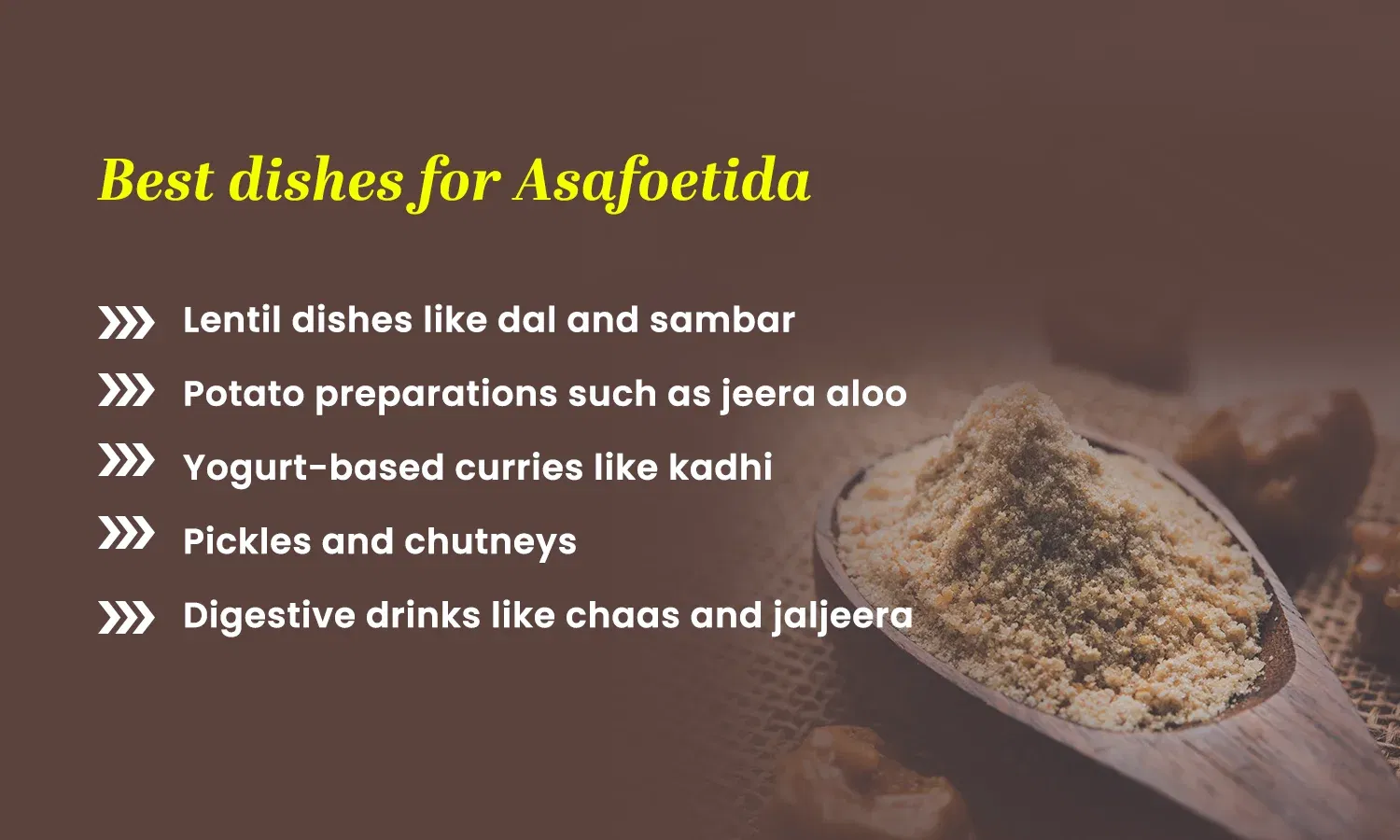
Best dishes for Asafoetida
Uses of asafoetida are most common in vegetarian dishes, where it adds depth and improves digestibility.
- Lentil dishes like dal and sambar
- Potato preparations such as jeera aloo
- Yogurt-based curries like kadhi
- Pickles and chutneys
- Digestive drinks like chaas and jaljeera
It also works well in global dishes such as lentil soups, bean stews, and vegetable stir-fries.
What can you use instead of Asafoetida?
If you run out of hing, substitutes depend on dietary preferences.
- Onion powder + garlic powder (best flavour match if allowed)
- Fenugreek powder for Jain or allium-free cooking
- Celery seeds for savoury depth
- Cumin and coriander blend as a mild alternative
None offers the exact digestive benefits of hing, but they can approximate its flavour.
Conclusion
Understanding what Asafoetida is helps you appreciate why this powerful spice is used so sparingly yet effectively. From its strong raw aroma to its mellow cooked flavour, asafoetida plays a vital role in Indian kitchens. Whether used for taste, digestion, or as an onion-garlic substitute, hing remains an irreplaceable ingredient when used correctly and in moderation.
FAQs
Is asafoetida the same as hing?
Yes, asafoetida is the English name, and hing is its Indian name.Yes, asafoetida is the English name, and hing is its Indian name.
Why does asafoetida smell so bad?
The raw resin contains sulphur compounds that create its strong odour.
Is asafoetida gluten-free?
Pure resin is gluten-free, but many powdered versions contain wheat flour.
How much asafoetida should I use in cooking?
Usually, 1/8 to 1/4 teaspoon is enough for an entire dish.
What can I use instead of asafoetida?
Onion-garlic powder blends or fenugreek powder are the closest substitutes