What is Groundnut oil, and how is it made?
Mechanical Expeller Pressing
Solvent Extraction
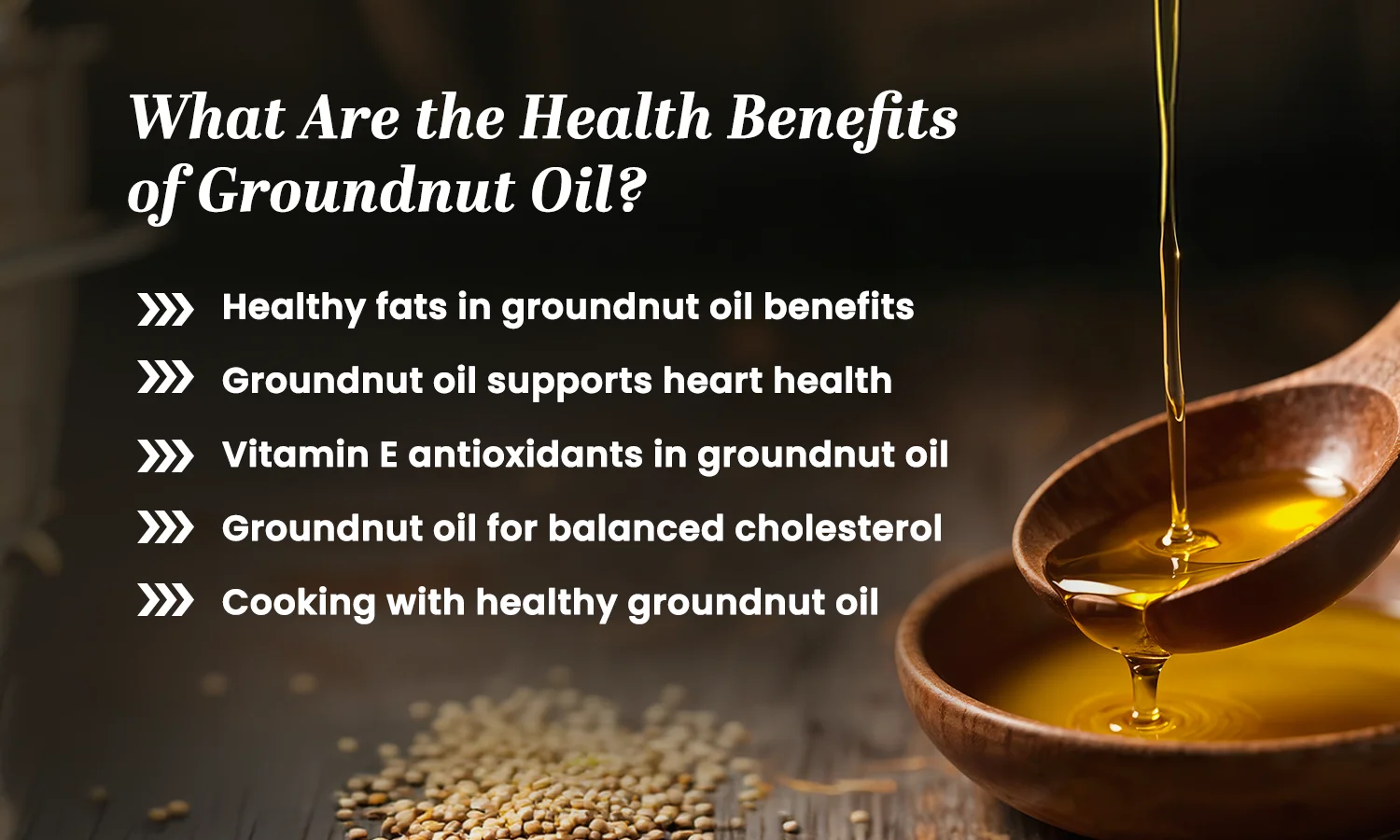
What Are the Health Benefits of Groundnut Oil?
What Are the Common Uses of Groundnut Oil?
Deep Frying
Stir-Frying and Tempering
Baking and Dressings
Pickling and Preservation
Traditional food preservation is another area where peanut oil uses are highly valued. Because of its stability and resistance to rancidity, it’s usually used in the preparation of pickles and chutneys. These groundnut oil for cooking benefits ensure that the pickles remain fresh for longer periods, and at the same time, maintain a rich texture.
When you choose an oil for preservation, opt for organic peanut oil to make sure that no synthetic chemicals interfere with the natural fermentation process. Despite the ground nut oil price being slightly higher for organic varieties, the quality it brings to long-term food storage is often considered worth the investment.
Choosing the Right Variant for Culinary Excellence
Understanding the different types of groundnut oil, such as refined, or blended, is vital for matching the oil to your specific kitchen needs. For instance, some oil types are prized more for their high groundnut oil nutritional value, retaining essential vitamins and antioxidants that are often lost in heavy processing. However, if you are getting into high-heat preparation, refined versions are frequently cited as the best oil for frying due to their incredibly high smoke point. When you zero in on the right grade, you can maximize both the flavor and the health profile of every dish you prepare.
Why Is Groundnut Oil Popular for Cooking?
Many cooks like groundnut oil because it is reliable in the kitchen. For households, groundnut oil is best for recipes that need high heat.
High Smoke Point
Flavor Flexibility
Practical Kitchen Benefits
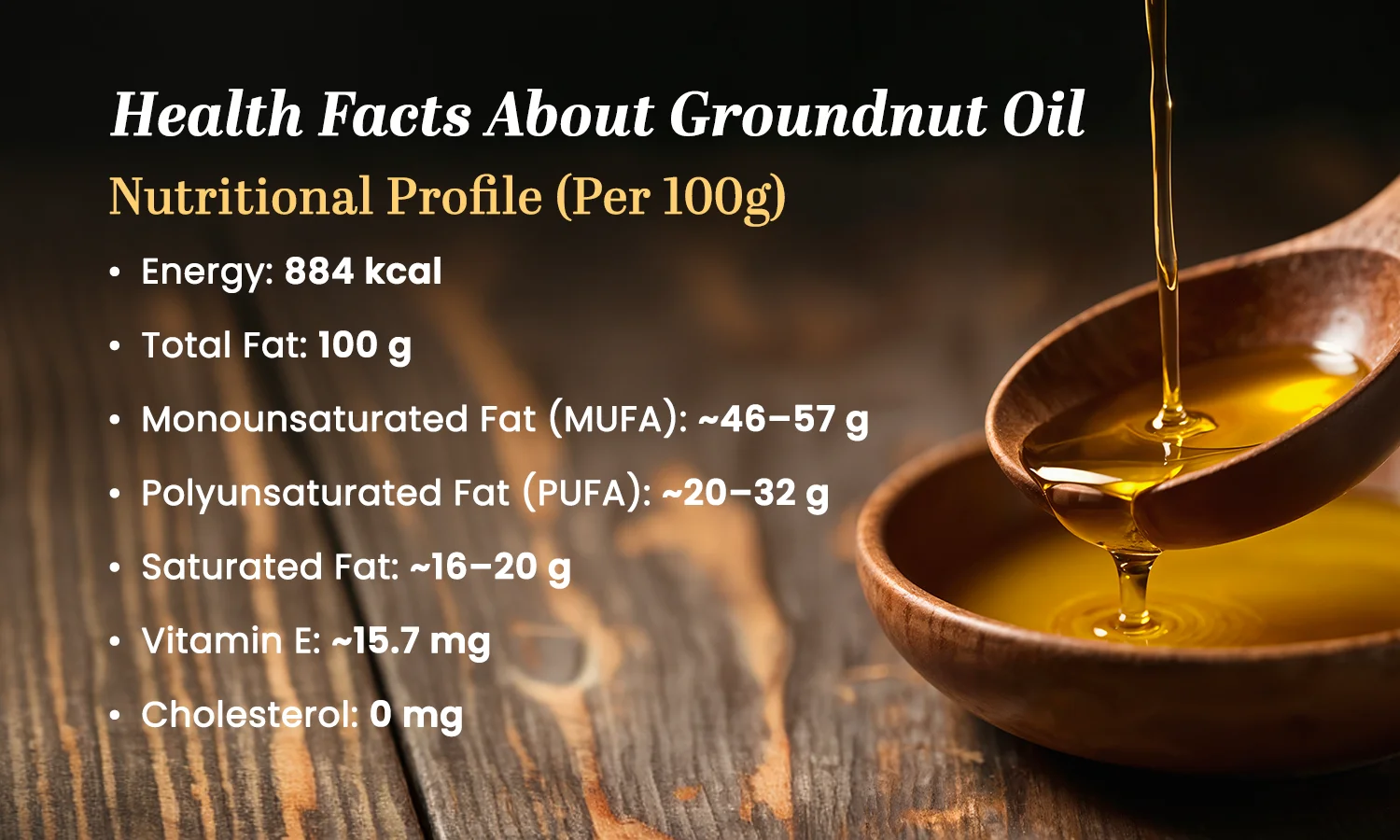
Health Facts About Groundnut Oil
Nutritional Profile (Per 100g)
- Energy: 884 kcal
- Total Fat: 100 g
- Monounsaturated Fat (MUFA): ~46–57 g
- Polyunsaturated Fat (PUFA): ~20–32 g
- Saturated Fat: ~16–20 g
- Vitamin E: ~15.7 mg
- Cholesterol: 0 mg
Key Health Facts
- The oil contains a high proportion of unsaturated fats that support heart health.
- Vitamin E helps protect cells from oxidative damage.
- Compounds like phytosterols and resveratrol may support cardiovascular function.
- Some research suggests the oil’s fatty acids may help regulate blood sugar levels.
Important Considerations
- It contains Omega-6 fatty acids, which should be balanced with Omega-3 sources in the diet.
- Repeated heating can cause oxidation and the formation of harmful compounds.
- Unrefined oils may trigger allergic reactions in individuals with peanut allergies.