The most-asked question on Indian pickle shelves is not about heat or price. It is about variety. Should a household keep a mixed pickle jar that covers everything, or multiple single-ingredient jars, mango, lime, chilli, garlic, amla, that each do one thing well?
Both strategies are valid. Each solves a different problem. Understanding the difference saves money, fridge space, and plate fatigue.
What a Mixed Pickle Actually Is
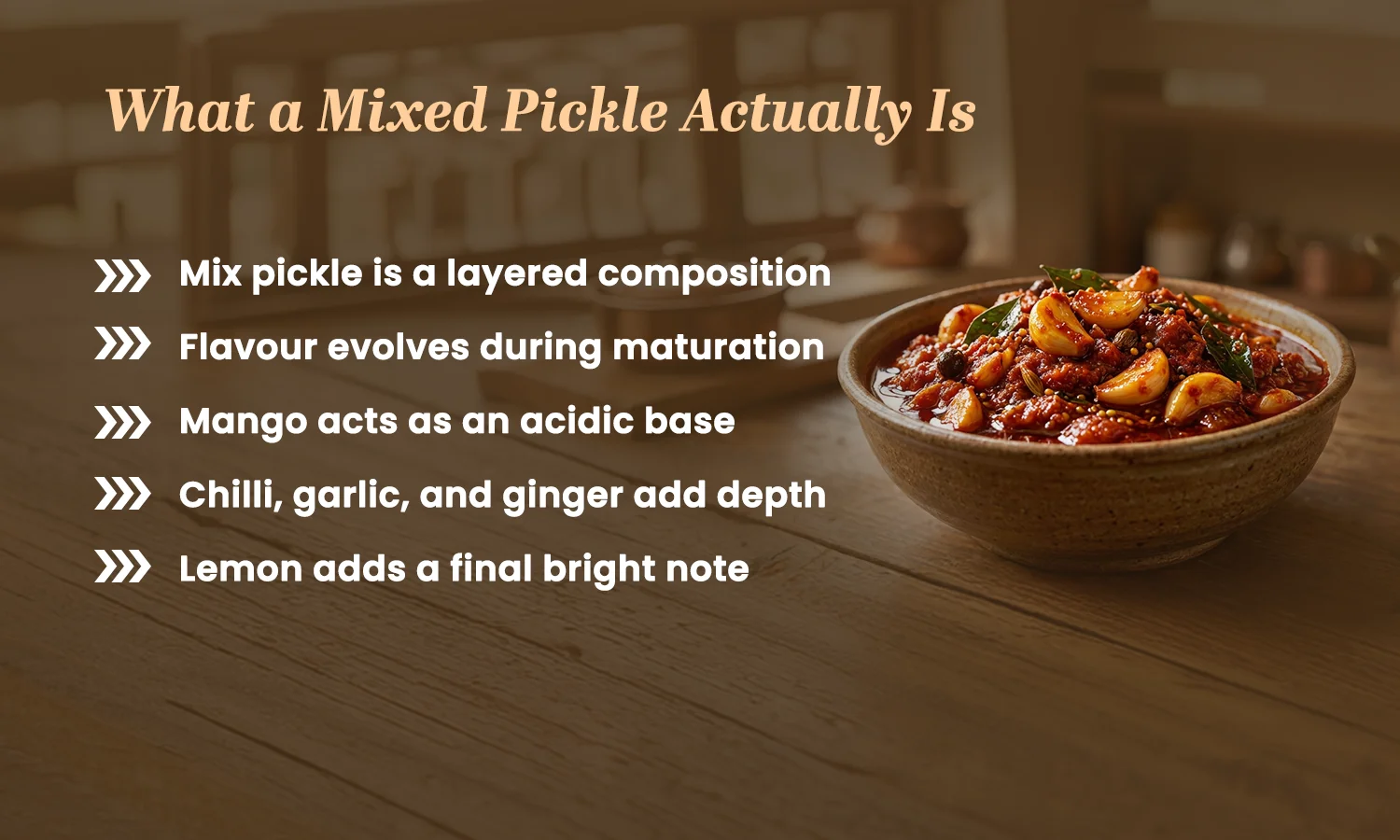
A true mix pickle is not a compromise; it is a composition. Traditional South Indian and North Indian mixed pickles layer 4–7 ingredients that release flavour at different maturation points. Early weeks taste mango-forward; later weeks shift to chilli and ginger. A well-constructed mixed vegetable pickle is, in that sense, a seasonal instrument, not a static product.
The most common mixed pickle ingredients in South Indian formulations are:
- Raw mango: the acidic anchor
- Green chilli and red chilli; heat
- Garlic and ginger; aroma and digestive warmth
- Carrot; textural crunch (carrot pickle also exists as a stand-alone variety)
- Tamarind: a secondary sour note in some recipes, closely related to the standalone tamarind pickle category
- Lemon or lime; finishing brightness
The SGR 777 Mixed Pickle 300g follows this classical layering, six ingredients, gingelly oil base, priced at ₹110. The mixed pickle price typically runs 5–10% higher than a single-fruit pickle because of the ingredient complexity.
When a Single-Ingredient Pickle Wins
A single-ingredient pickle lets one flavour dominate, and some ingredients deserve that solo spotlight. Consider:
- Tomato pickle, impossible to reproduce inside a mixed jar because the water content destabilises other ingredients. The standalone tomato pickle preserves the smoky-tangy profile that gets lost in a multi-ingredient blend.
- Onion pickle, onion's sweetness collapses against the raw mango's acidity. It needs its own jar.
- Bitter gourd pickle, bitter gourd's flavour is assertive and divisive; hiding it in a mix wastes it.
- Coriander pickle and other herb-based pickles, these are finishing condiments, not staples
This is why SGR 777’s pickle range includes both: the Tomato Pickle 300g and the Hot Onion Pickle 300g sit alongside the mixed pickle, because each solves a flavour problem the other cannot.
Types of Pickles in India: A Quick Classification
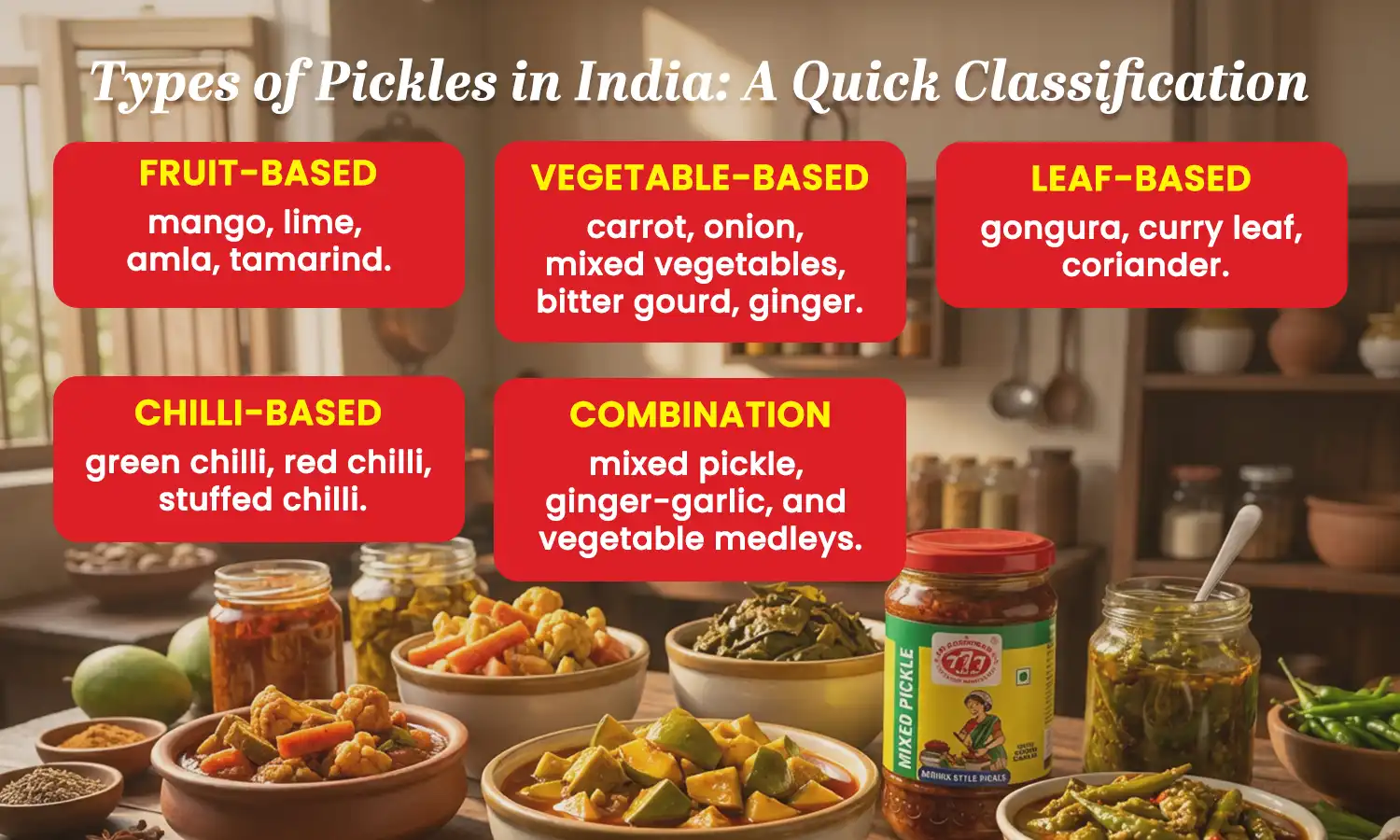
For readers searching for types of pickles in India or pickle types, the Indian pickle universe breaks into five families:
1. Fruit-based; mango, lime, amla, tamarind. The largest category.
2. Vegetable-based; carrot, onion, mixed vegetables, bitter gourd, ginger.
3. Leaf-based; gongura, curry leaf, coriander.
4. Chilli-based; green chilli, red chilli, stuffed chilli.
5. Combination; mixed pickle, ginger-garlic, and vegetable medleys.
The veg pickles category, covering mix veg pickle, mixed veg pickle, and mix vegetable pickle, is one of the fastest-growing sub-segments in 2026, growing at 4.59% CAGR per Mordor Intelligence, faster than fruit pickles despite a smaller base.
Decide Which to Buy First:
Before you decide between our Mixed pickle and single fruit pickle, ask these three questions:
1. How often do you use pickle? Daily users benefit from multiple single-ingredient jars that do not fatigue the palate. Occasional users should start with a mixed pickle.
2. How many people are in the household? A 2-person home rarely finishes five jars before they degrade. A mixed pickle is more efficient.
3. What do you eat? Rice-heavy diets demand variety; multiple jars win. Roti-heavy diets work well with a single mixed pickle and a garlic pickle.
A practical starting kit for an Indian household in 2026: one mixed pickle, one avakaya or cut-mango pickle, and one garlic or ginger pickle. That three-jar set covers 90% of daily meal pairings.
What About Pickle Mix vs Mixed Pickle? Are There Any Differences?
This is a good question, but it is often confused. Pickle mix typically refers to a dry spice blend used to make pickles at home, mustard, fenugreek, chilli, and turmeric in pre-measured ratios. Mixed pickles are the finished product. If a packet says mixed pickles or vegetable pickles on the label, it is the ready-to-eat category.
Browse both single and mixed options in the full SGR 777 pickle catalogue. Most households end up with a shelf that contains one mixed jar and two or three favourites.
FAQs
What Is in a Traditional Mixed Pickle?
Typically raw mango, green and red chilli, garlic, ginger, carrot, and a tangy finisher (tamarind or lime). A gingelly or mustard oil base carries the spices and preserves the mix.
Is Mixed Pickle Healthier Than a Single Pickle?
Not inherently. Health benefits depend on oil quality, salt level, and ingredient freshness, not whether the jar is mixed or single. A well-made single pickle and a well-made mixed pickle deliver similar nutritional profiles per tablespoon.
Why Is Mixed Pickle Priced Differently?
Because it uses more ingredients and longer layering. Expect a 5–10% premium over a single-ingredient pickle at equivalent quality tier.
How many types of pickle does SGR 777 offer?
Over 15 varieties, covering fruit, vegetable, leaf, chilli, and combination categories. The mixed pickle is the brand’s entry-point recommendation for new buyers.