Overview
What Ingredients Are Used in Laddu?
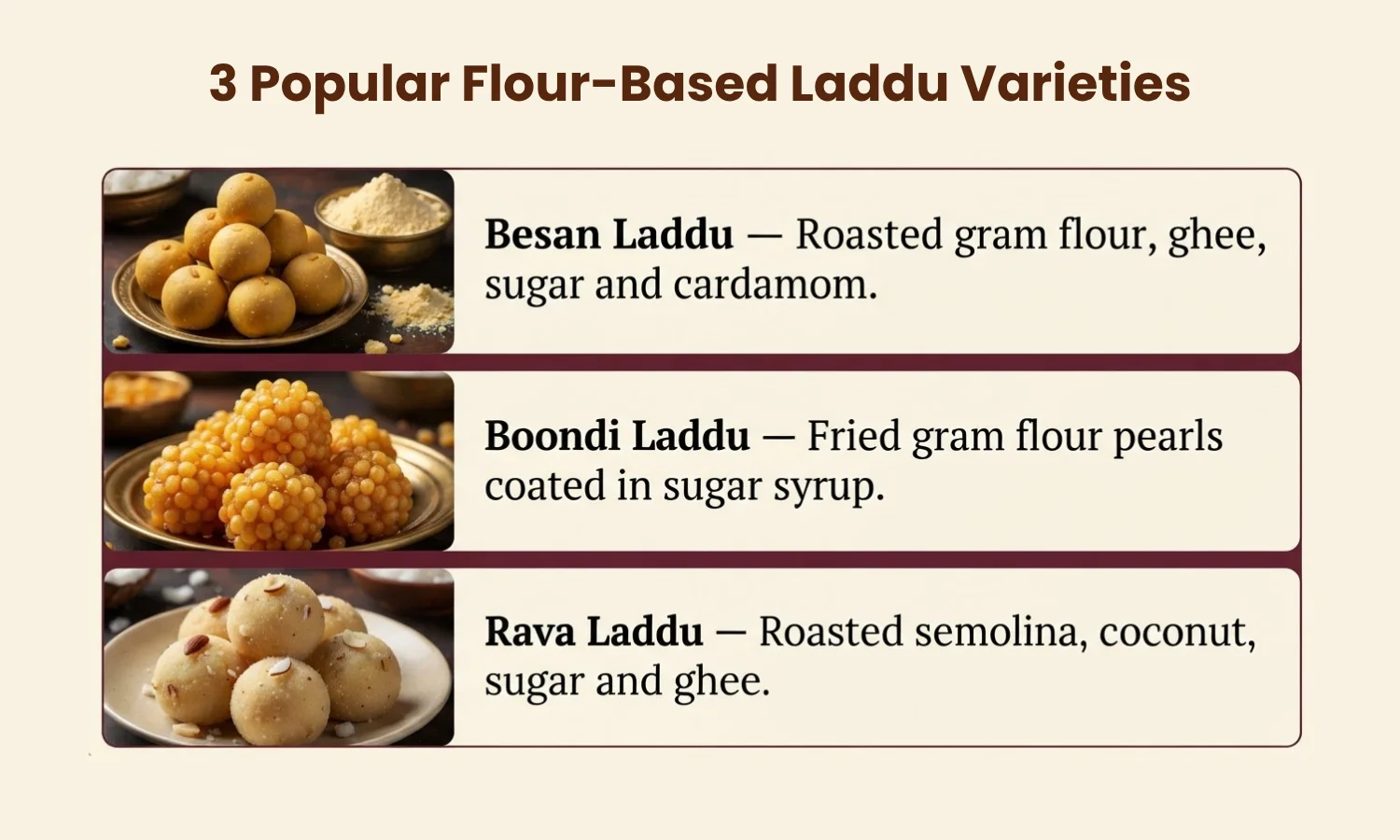
3 Popular Flour-Based Laddu Varieties
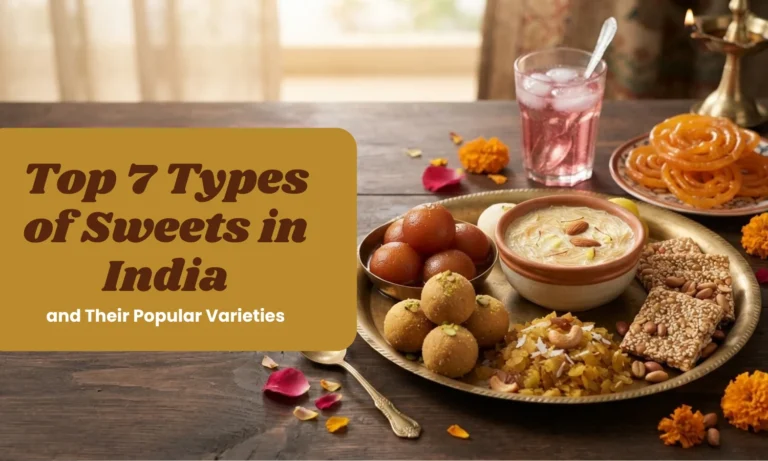
In terms of nutrition, many wonder about its calorie value. On average, 1 gulab jamun calories range between 125–150. If you’re counting calories in one gulab jamun, this may feel indulgent, but during festivals, the joy it brings outweighs the numbers.
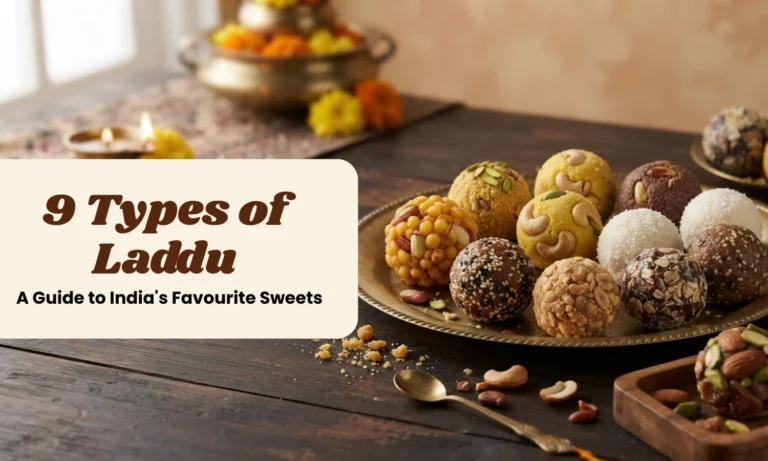
Besan ladoo is the best known of all. Gram flour is roasted slowly in ghee until it smells nutty, then mixed with sugar and cardamom.
Boondi laddu takes a different route. Tiny pearls of fried gram flour are dipped in sugar syrup and pressed into balls, which gives a softer and juicier bite.
Rava laddu is popular in South Indian homes. Roasted semolina is combined with grated coconut, sugar, and ghee, then bound with warm milk or syrup. It is grainy, mild, and quick to make. Among flour-based types of laddus, it is also the easiest for a beginner, because the semolina needs only a light roast and the mixture rarely turns hard.
Which Laddus Use Coconut, Millets, and Nuts?
- Coconut ladoo is made with freshly grated or desiccated coconut cooked with sugar or condensed milk until it holds together. Households that say coconut laddu usually mean the same sweet, though the fresh version needs to be eaten sooner. Fresh coconut gives a milky sweetness.
- Ragi laddu uses roasted finger millet flour, jaggery, and ghee and is common in Karnataka and Tamil Nadu homes. It has an earthy depth that feels nothing like the coconut version.
- For something richer, dates ladoo pounds dates with roasted nuts and ghee and needs no added sugar when the dates are soft.
- A dry fruit laddu uses almonds, cashews, pistachios, and figs, often sweetened only by the fruit itself.
Sesame and Peanut Laddus for Cooler Months
Which Types of Laddu Are Suitable for Diwali?
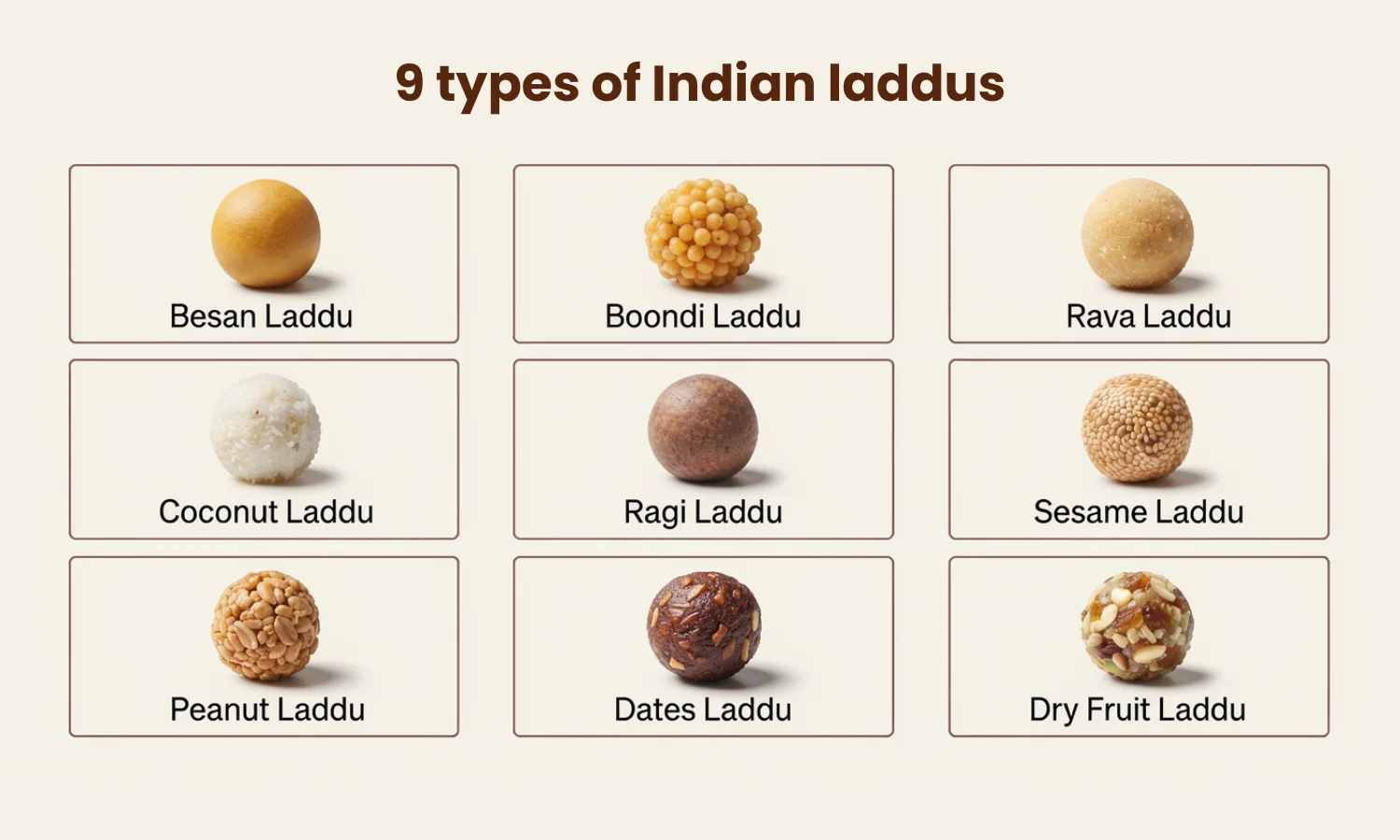
Types of Laddu: A Quick Summary
| Laddu Type | Key Ingredients | Flavour & Texture Profile | Best Suited For / Notable Features |
|---|---|---|---|
|
Besan Laddu |
Gram flour, ghee, sugar, cardamom |
Nutty, rich, smooth texture |
Classic festive sweet; popular for Diwali and family celebrations. |
|
Boondi Laddu |
Gram flour pearls, sugar syrup, cardamom |
Soft, moist, syrup-coated texture |
Traditional choice for festivals, weddings, and religious occasions. |
|
Rava Laddu |
Roasted semolina, sugar, ghee, optional coconut and nuts |
Lightly grainy, mild sweetness |
A relatively simple homemade sweet popular in South Indian households. |
|
Coconut Laddu |
Fresh or desiccated coconut, sugar or condensed milk |
Soft, moist, coconut-rich flavour |
Suitable for quick sweet preparations; storage depends on the ingredients used. |
|
Ragi Laddu |
Roasted finger millet flour, jaggery or sugar, ghee |
Earthy flavour with a dense texture |
A millet-based sweet prepared in different regional styles. |
|
Sesame Laddu |
Sesame seeds, jaggery |
Toasted, nutty flavour with a firm texture |
Commonly prepared for festivals such as Pongal and Makar Sankranti. |
|
Peanut Laddu |
Roasted groundnuts, jaggery or sugar |
Rich, roasted peanut flavour; slightly crunchy |
A simple sweet made with groundnuts and a sweetener; check for peanut allergies. |
|
Dates Laddu |
Dates, almonds, cashews or other nuts, optional ghee |
Naturally fruity sweetness with a chewy or crunchy texture |
A fruit-based variation; additional sweeteners may not be necessary, depending on the recipe. |
|
Dry Fruit Laddu |
Almonds, cashews, pistachios, figs, dates or other dried fruits |
Rich flavour with a chewy or crunchy texture |
Suitable for festive gifting; sweetness depends on the fruits and any added sweeteners. |
Make Fresh Laddus at Home with 777 Foods
Key Takeaways
- Laddus differ by base flour, sweetener, and region, so choose by taste and shelf life.
- Besan, boondi, and rava are the safest picks for gifting and festival boxes.
- Coconut laddus taste best fresh, while roasted flour laddus last longer.
- Shape the mixture while it is warm, or it will turn crumbly.
- Knowing the main types of ladoo helps you plan a festival box with variety.