Overview
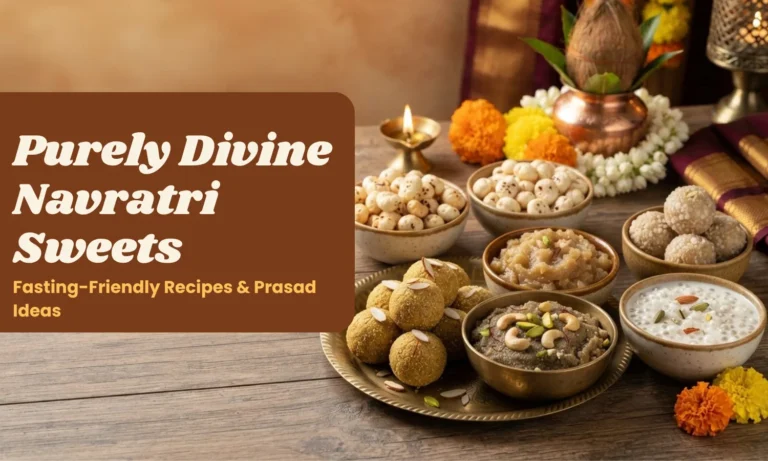
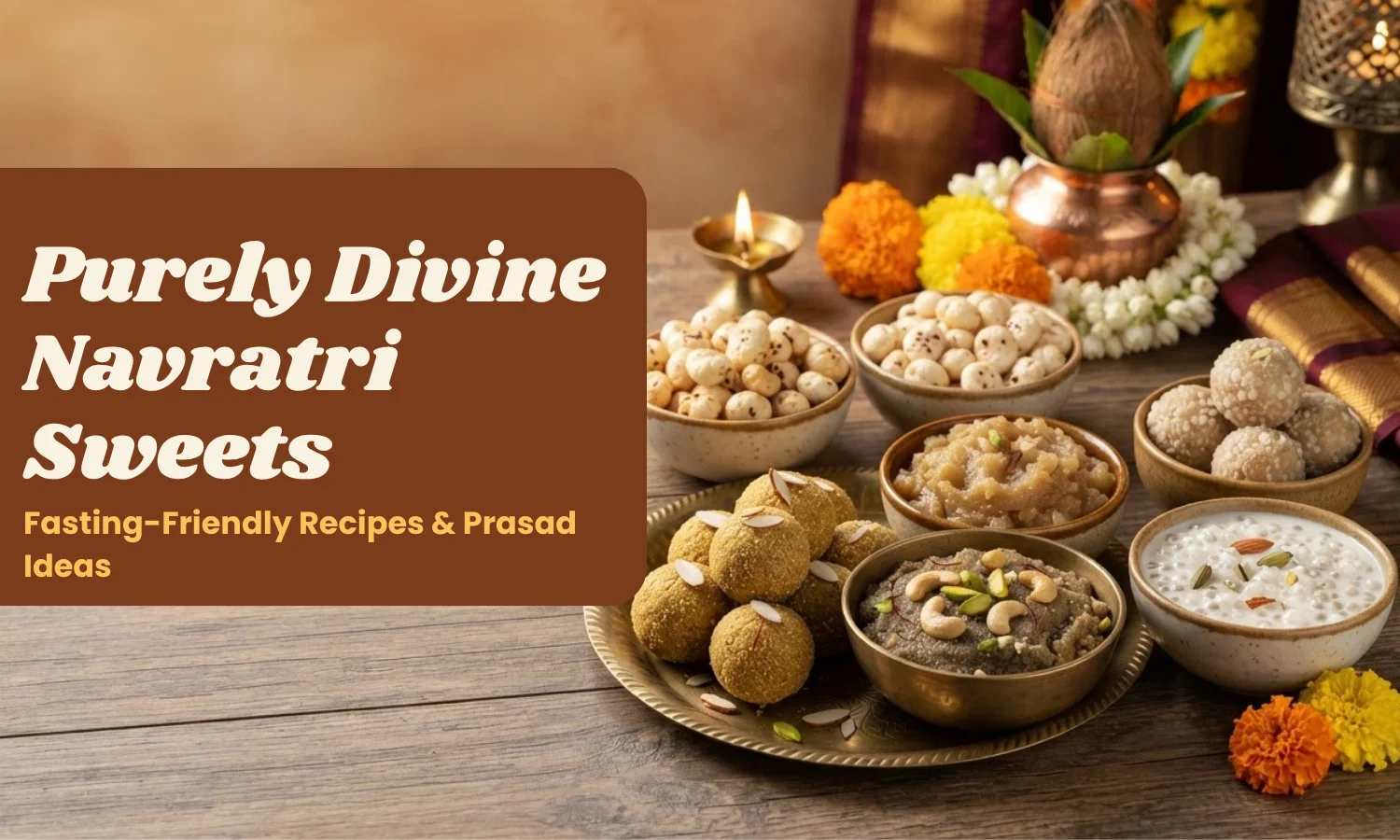
Navratri sweets are festive desserts prepared during the nine nights of Navratri, many of them made from fasting-friendly ingredients such as sabudana, rajgira, makhana, singhara flour, milk, and jaggery. Kheer, halwa, and ladoo are the most common forms. Practices vary by region and family, so follow what your household observes.
Navratri brings a special kind of planning. The prayers, the fasting rules, and the evening gatherings all run on a tight schedule. Sweets are part of the ritual too, offered to the goddess and shared afterwards. Yet many people hesitate in the kitchen because the rules about grains and flours feel confusing. A little clarity makes Navratri sweets easy to plan and even easier to enjoy.
Can We Eat Sweets During the Navratri Fast?
This is the first question in most homes. Many people ask, “Can we eat sweets in Navratri fast?” and the short answer is yes in most traditions, as long as the ingredients follow the fasting rules. Rules differ by region and family, but fasting kitchens usually avoid wheat, rice, lentils, onion, and garlic and use rock salt in place of regular salt. Which sweets can be eaten in Navratri fast depends on those rules. Sweets built on milk, fruit, jaggery, and flours from sabudana, rajgira, kuttu, or singhara are the usual picks.
Fasting-friendly desserts follow the same simple logic as the wider range of Navratri food items, so one set of rules covers both. Once you know the rules, shopping becomes simple, because the pantry list is short and easy to remember.
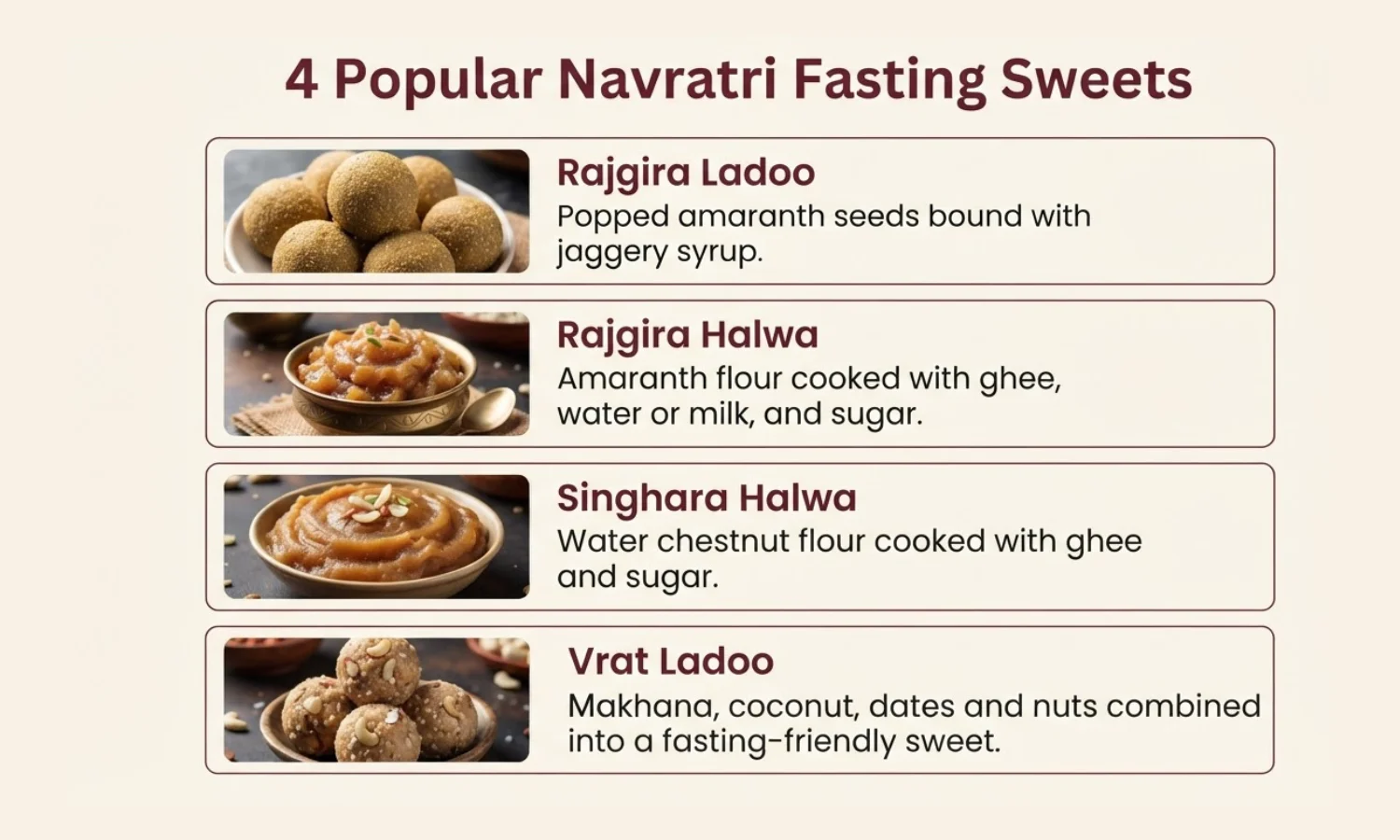
Halwa and Ladoo from Fasting Flours
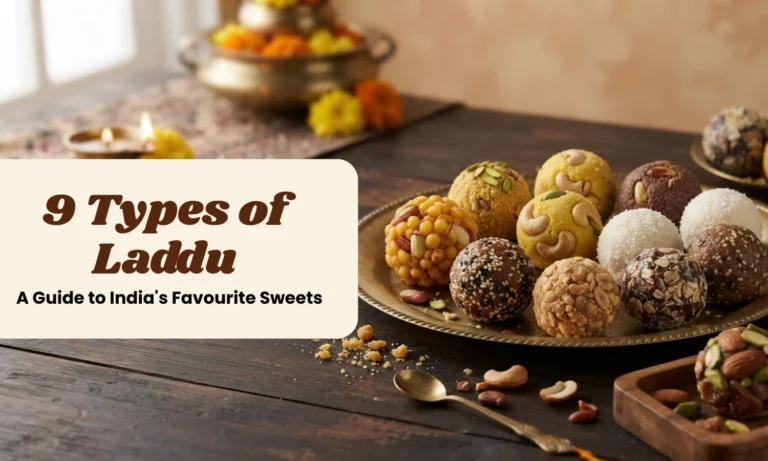
- Rajgira ladoo is made by popping amaranth seeds and binding them with warm jaggery syrup, which gives a light, crunchy ball.
- Rajgira halwa roasts the flour in ghee and then cooks it with hot water or milk and sugar until it turns glossy.
- Singhara halwa works the same way with water chestnut flour and has a slightly nutty, earthy taste.
- For a flexible option, a vrat laddu can be built from makhana, coconut, dates, and nuts, with nothing that breaks the fast.
Among all fasting sweets, these are the easiest to store. They suit busy weeks, and guests who visit for the evening prayers will happily take a piece of these Navratri sweets home.
Why Is Kheer So Popular During the Fast?
Kheer feels light, soothing, and filling at once, which explains why it appears on nearly every fasting table. Sabudana kheer simmers soaked tapioca pearls in milk with sugar and cardamom until they turn translucent. Makhana kheer roasts fox nuts in a little ghee, crushes them lightly, and cooks them in milk until creamy. Both are quick, and both use ingredients widely accepted for fasting. Jaggery or rock sugar can replace white sugar if your family prefers, but add jaggery after the milk comes off the flame so it does not curdle.
Prasad Through the Nine Days
Many families follow a list of offerings across the nine nights. A commonly followed Navratri prasad for nine days list includes ghee, sugar, kheer, malpua, banana, honey, jaggery, coconut, and sesame in that order. The order varies by region and temple, so treat it as a guide and adjust it to your own family tradition. Some homes follow a different order, and others offer a single sweet on all nine nights.
In South Indian homes with a Golu display, naivedyam often features sakkarai pongal, payasam, and kesari alongside sundal. When planning Navratri sweets for 9 days, choose one main sweet each evening and keep the rest simple. For visitors, the best sweets for Navratri are dry ones such as ladoo, which travel well in a small box.
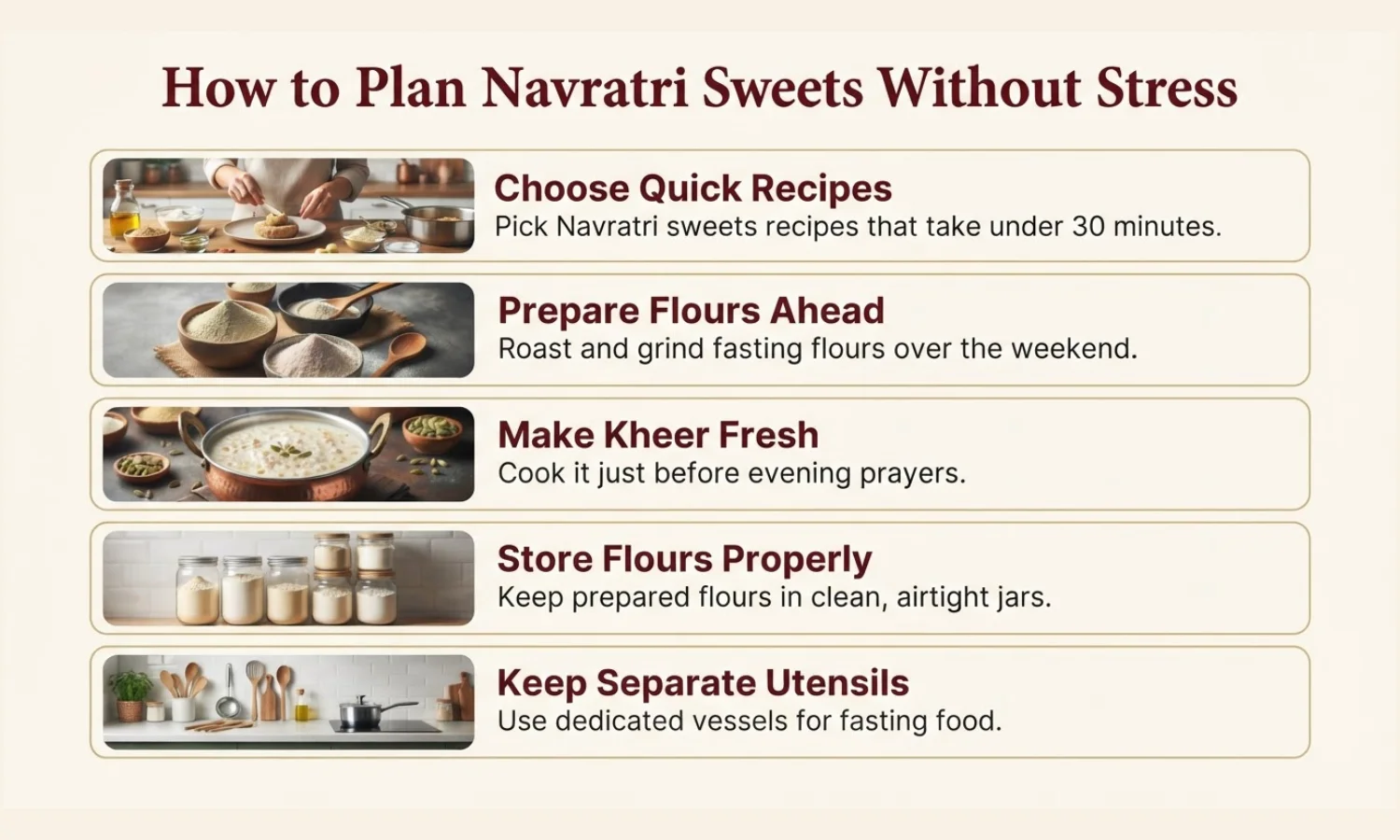
How Do You Plan the Recipes Without Stress?
- Keep a short list of Navratri sweets recipes that take under thirty minutes, because the evenings are busy with prayers, family, and visitors.
- Roast and grind the flours over the weekend and store them in clean, airtight jars.
- Fresh kheer tastes best on the day it is made, so cook it just before the evening prayers and keep a lid on the pan to hold the warmth.
- Many families keep separate vessels for fasting food, which helps everyone in the house follow the rules without confusion.
Convenient Sweet Mixes from 777 for Non-Fasting Days
If some family members are not fasting, ready mixes can help simplify their festive menu. Consider 777 Besan Ladoo Instant Mix or 777 Gulab Jamun Mix for preparing sweets according to the instructions on the pack.
Check the ingredient list and preparation directions before use, and confirm current availability on the official 777 website. For those observing Navratri fasting, choose recipes and ingredients that match their household’s fasting practices.
Key Takeaways
- Most families eat sweets during the fast if the ingredients are permitted.
- Sabudana, rajgira, makhana, and singhara flour are the usual base ingredients.
- Kheer and halwa are the quickest Navratri sweets, while ladoo suits visitors and gifting.
- Add jaggery after the milk cools slightly to prevent curdling.
- Keep 777 Foods mixes ready for family members who do not fast.
FAQs
What are the easiest Navratri sweets for beginners?
Kheer made with tapioca pearls or fox nuts and ladoo made with popped amaranth are the simplest. Each uses only a few ingredients and needs basic cooking skills.
Can I use sugar in fasting desserts?
In most homes, yes. Some families prefer rock sugar or jaggery. Rules differ by region and family, so check with your elders or temple priest if you are unsure. This also applies when you prepare Navratri sweets for offering.
How long can these desserts be stored?
Dry sweets such as amaranth ladoo stay good for about a week in an airtight container. Milk-based kheer and halwa should be eaten the same day or refrigerated and finished within a day. Reheat gently and use a clean spoon.
Is it fine for people with diabetes to eat Navratri sweets?
Fasting-friendly does not mean sugar-free. Jaggery, dates, and honey still raise blood sugar, so portion size matters. People managing diabetes should check with their doctor before choosing recipes or fasting for long periods.
What can I offer if I cannot cook elaborate sweets?
Simple offerings are accepted in most homes. Fruit, jaggery, coconut, sugar, and ghee can be offered with devotion. If you want to try a few Navratri sweets later, start with kheer and keep the quantity small.