Overview
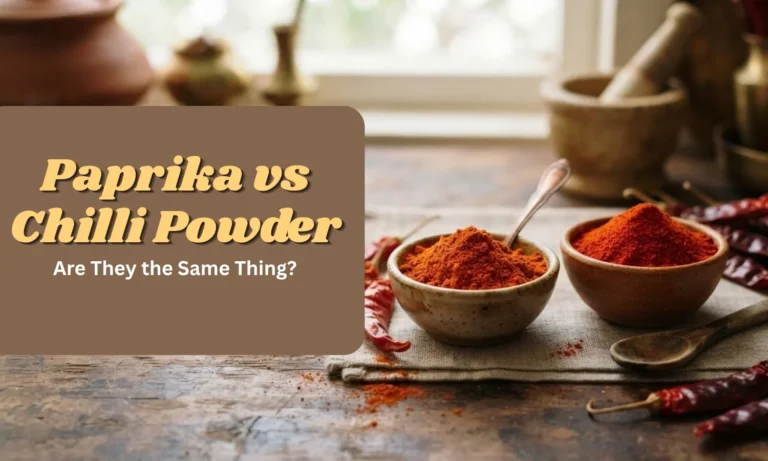
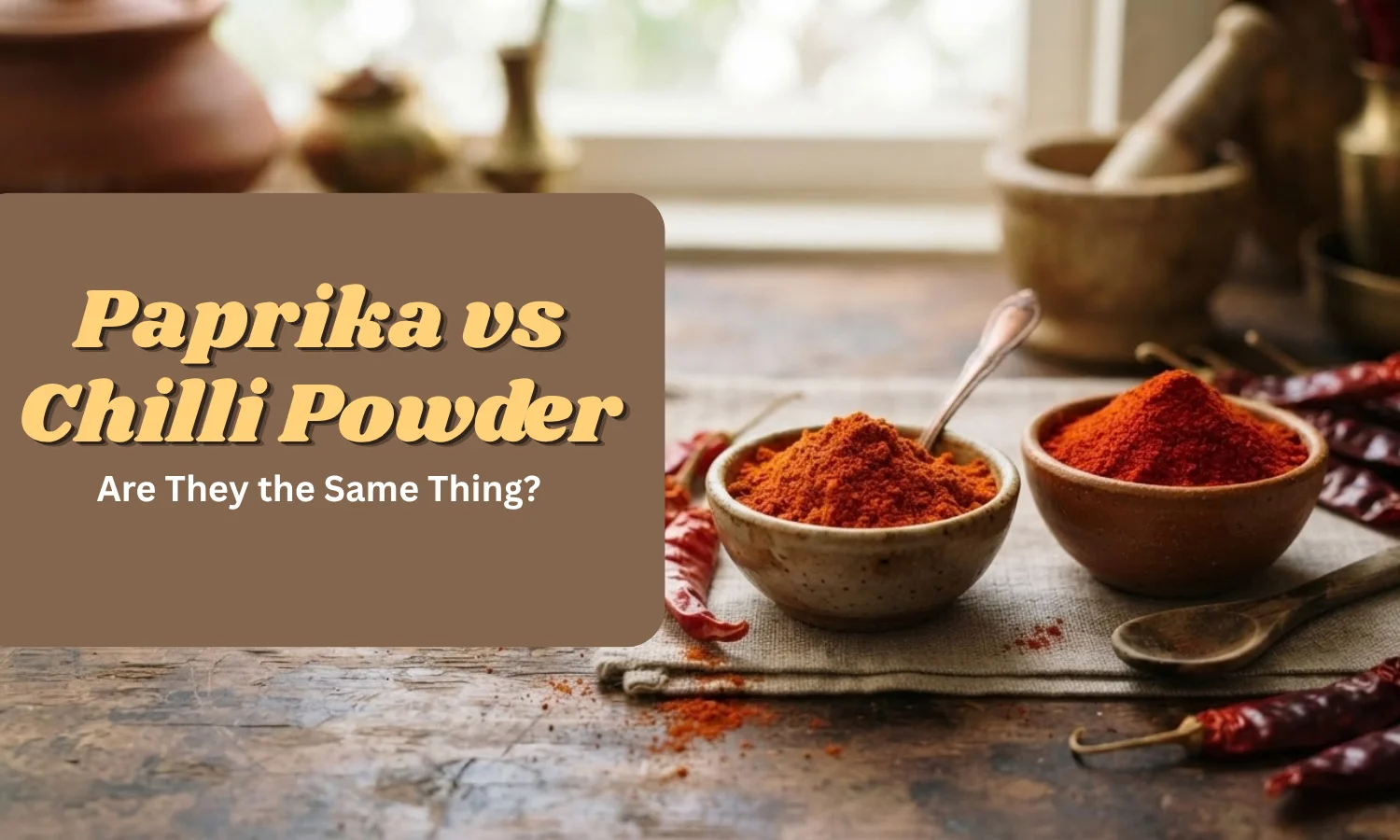
Paprika vs chilli powder is a common point of confusion, especially for cooks following international recipes. Paprika is made from sweet or mildly hot peppers and offers a gentle, slightly sweet flavour with strong colour, while Indian chilli powder made from varieties like Kashmiri or Guntur delivers noticeably more heat. The two can sometimes substitute for each other, but not always without adjusting the recipe.
What Is Paprika and How Does It Differ From Chilli Powder?
“Are paprika and chilli powder the same?” This is one of the most searched questions among home cooks trying to follow a recipe that calls for an ingredient not commonly stocked in an Indian kitchen. Paprika is a ground spice made primarily from sweet or mildly hot pepper varieties, most commonly associated with Hungarian and Spanish cuisine, and its flavour profile leans towards a gentle sweetness rather than sharp heat.
The difference between paprika and chilli powder starts with the source pepper itself. Chilli powder in Indian cooking is typically made from hotter varieties such as Kashmiri, Byadgi, or Guntur chilli, each carrying a distinct heat level, while paprika is generally made from a milder pepper cultivated specifically for colour and subtle flavour rather than pungency.
Paprika vs Chilli Powder: How Do Their Heat Levels Compare?
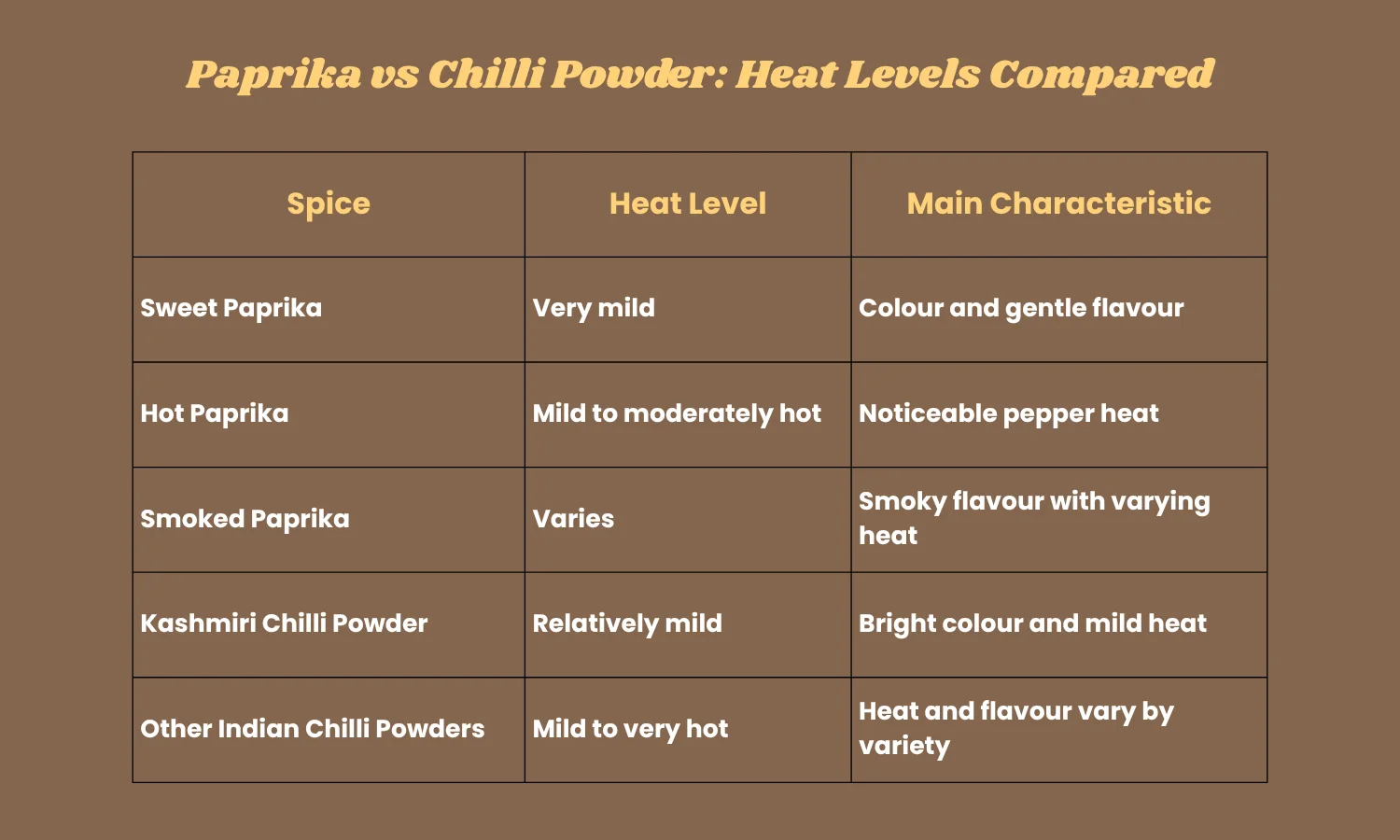
The heat level of paprika depends on the type used. Sweet paprika is generally very mild, while hot paprika can provide noticeably more heat. Smoked paprika may also be mild or moderately hot depending on the pepper used. Chilli powder has an even wider range because it can be made from different chilli varieties.
In Indian cooking, Kashmiri chilli powder is generally valued for its bright red colour and relatively mild heat, while other chilli varieties can provide a stronger level of pungency. This means that paprika vs chilli powder cannot be compared using one fixed heat level.
When substituting paprika with chilli powder, consider both heat and flavour. A mild chilli powder may work when the recipe mainly needs colour, while a hotter chilli powder can significantly increase the spiciness. Similarly, regular chilli powder will not reproduce the smoky flavour of smoked paprika.
Therefore, the best substitute depends on the specific type of paprika used and the role it plays in the recipe.
Difference Between Paprika and Red Chilli Powder
The difference between paprika and red chilli powder mainly comes down to the type of pepper used, heat level, flavour, and colour. Paprika can range from sweet and mild to hot or smoky, while red chilli powder varies depending on the chilli variety. Both can add a red colour to dishes, but their flavour and heat may differ.
| Feature | Paprika | Red Chilli Powder |
|---|---|---|
|
Pepper used
|
Mild or sweet pepper varieties
|
Different dried red chilli varieties
|
|
Heat level
|
Usually mild, but varies by type
|
Mild to very hot, depending on variety
|
|
Flavour
|
Sweet, earthy, fruity, or smoky
|
Chilli-forward with varying pungency
|
|
Colour
|
Red to deep red
|
Red to deep red
|
|
Common use
|
Colour, mild flavour, seasoning
|
Colour, flavour, and heat
|
|
Best substitute
|
Depends on the recipe
|
Kashmiri chilli can work when mild heat and colour are needed
|
When comparing paprika vs red chilli powder, consider whether the recipe needs colour, heat, or a specific flavour. They can sometimes be substituted, but the final taste and spiciness may change.
Paprika vs Kashmiri Chilli Powder: The Closest Comparison
Paprika vs Kashmiri chilli powder is arguably the closest comparison among all the variations, since both are known primarily for mild heat and strong red colour rather than pungency.
“Are paprika and Kashmiri chilli powder the same?”
The answer is technically no, since they come from different pepper cultivars grown in different regions, but their culinary behaviour in a dish can be similar enough that many recipes treat them as near equivalents.
Paprika and Kashmiri chilli powder substitution generally works well in marinades, rubs, and dishes where a rich red colour with limited heat is the goal, though the flavour will carry subtle differences that an experienced palate may notice, particularly in the case of smoked paprika.
Paprika Powder vs Chili Powder and Cayenne Pepper
Paprika powder vs chili powder substitution questions often expand to include a third ingredient, cayenne pepper, which is significantly hotter than both standard paprika and most Indian chilli powder mixes. Paprika vs cayenne pepper highlights just how wide the heat range within the broader pepper family actually is, since cayenne sits far above paprika and even above Guntur chilli in terms of raw pungency.
“Is paprika powder and chilli powder the same?” ultimately depends on which type of paprika and which type of chilli powder are being compared, since sweet paprika and Kashmiri chilli sit relatively close together, while hot paprika and Guntur chilli occupy a middle ground, and cayenne pepper stands apart as the clear outlier in terms of heat.
Can I Use Red Chilli Powder Instead of Paprika?
This is a practical question for Indian kitchens following an international recipe that specifically calls for paprika. In most cases, a mild Kashmiri chilli powder makes a reasonable substitute for sweet paprika, particularly in dishes where colour matters more than an exact flavour match, though the subtle sweetness of true paprika will be missing.
For recipes that call for smoked paprika specifically, a direct substitution with regular Indian chilli powder will not replicate the smoky flavour, so it is best reserved for dishes like some traditional Indian foods where that particular note is not essential to the final result.
Choose the Right Chilli Powder for Your Recipe
Paprika vs chilli powder ultimately comes down to source pepper, heat level, and flavour complexity rather than the two being fully interchangeable ingredients. For most colour-focused Indian recipes, a mild Kashmiri chilli powder can stand in for paprika reasonably well, while dishes that depend on paprika’s specific sweetness or smokiness may need a more careful substitution or a small adjustment in expectations.
Explore the entire range of 777 products and shop for the 777 Premium Red Chilli Powder for your next recipe.
Key Takeaways
- Paprika vs chilli powder differ mainly in the source pepper, with paprika made from milder cultivars and Indian chilli powder made from hotter varieties like Kashmiri, Byadgi, or Guntur.
- In terms of heat, paprika and chilli powder are not the same, since even mild Indian chilli powder can carry more pungency than standard sweet paprika.
- Paprika vs Kashmiri chilli powder is the closest comparison among the variations, since both are known for mild heat and strong red colour.
- Paprika vs cayenne pepper shows the widest heat gap, with cayenne sitting well above both paprika and most Indian chilli powder mixes.
- “Can I use red chilli powder instead of paprika?” It works reasonably well for colour, especially with a Kashmiri variety, though the subtle sweetness or smokiness of true paprika will not be replicated.
FAQs
Are paprika and chili powder the same in every recipe?
It depends on the specific recipe and how central the heat level is to the final dish. For colour-focused preparations, they can often be swapped, but for recipes where the exact heat matters, the substitution may change the outcome noticeably.
Can smoked paprika be replaced with Kashmiri red chilli powder?
Smoked paprika vs Kashmiri chilli powder differ mainly in the smoky flavour that smoked paprika carries from its specific drying process. Kashmiri chilli powder can replicate the colour reasonably well, but it will not deliver the same smokiness without an additional smoked ingredient added separately.
Which is spicier, paprika or chilli powder?
In most cases, Indian chilli powder is spicier than paprika, particularly when made from Byadgi or Guntur chilli. Sweet paprika sits at the mild end of the spectrum, closer to Kashmiri chilli, while hot paprika falls somewhere in between depending on the specific product.