Summary
Want to learn a proper veg biryani recipe with authentic layering and aroma? This guide covers rice selection, spice balance, and the dum technique behind a restaurant-style vegetable biryani for weekend cooking.
Introduction:
Veg biryani recipe lovers know there is nothing quite like opening a freshly cooked pot to that rich, fragrant aroma. Recreating those distinct restaurant-style layers at home comes down to a few fundamental steps rather than complicated culinary secrets. Once you master the simple art of spice balancing and steam cooking, you can easily serve a memorable dish every single time.
What Sets Biryani Apart From Vegetable Pulao
Biryani and pulao are often confused, though the two dishes differ meaningfully in technique. A vegetable pulao cooks rice and vegetables together in one pot from the start, while a proper vegetable biryani recipe involves layering partially cooked rice over a separately prepared vegetable gravy, then finishing everything together under a sealed lid on low heat, a process known as dum cooking. Whether it’s a pulao or biryani, a side dish of the 777 citron pickle can enhance the taste of your meal.
Choosing the Right Rice for Veg Biryani
Long-grain basmati rice is essential for a good veg dum biryani recipe, since its structure holds up well through the layering and steaming process without turning mushy. Rice should be soaked for at least twenty minutes before cooking and only partially boiled, roughly seventy percent of the way, before layering, since it continues cooking further during the dum stage.
Veg Biryani Ingredients That Build the Flavour Base
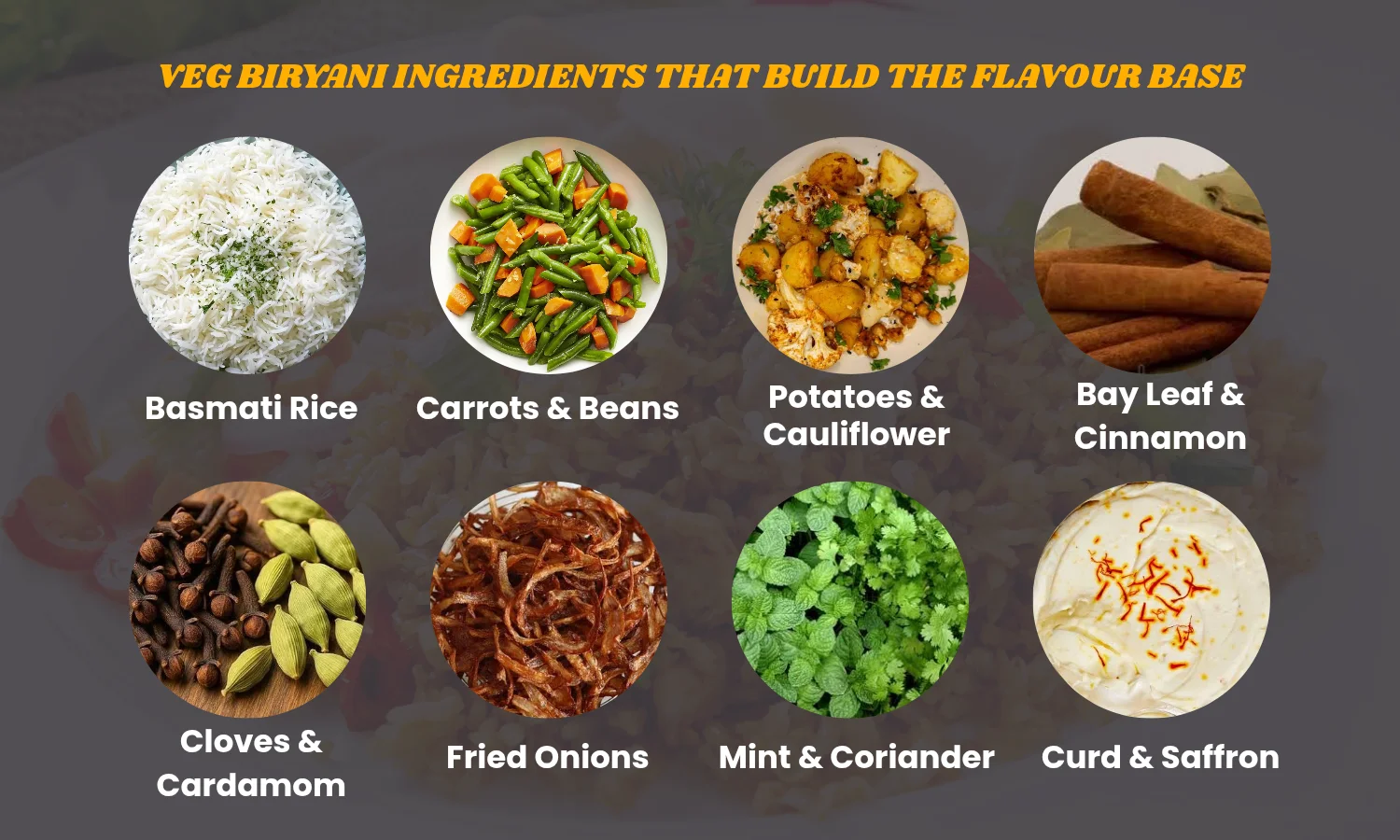
A dependable list of veg biryani ingredients includes basmati rice, mixed vegetables such as carrots, beans, potatoes, and cauliflower, whole spices like bay leaf, cinnamon, cloves, and cardamom, along with fried onions, mint, coriander, and a small amount of curd for the gravy base. Saffron soaked in warm milk is optional but adds both colour and aroma to the finished dish.
How to Make Veg Biryani Step by Step
Understanding how to make veg biryani starts with preparing the vegetable gravy separately.
- Cook the mixed vegetables in a base of fried onions, ginger-garlic paste, tomatoes, and curd, seasoned with a biryani-specific spice mix, until the vegetables are just tender and the gravy has thickened slightly.
- Meanwhile, boil the soaked basmati rice with whole spices and salt until roughly seventy percent cooked, then drain immediately to stop further cooking.
- In a heavy-bottomed pot, spread half the vegetable gravy at the base, layer the partially cooked rice over it, and sprinkle with fried onions, mint, and coriander; then repeat with the remaining gravy and rice.
- Seal the pot with a tight-fitting lid or a layer of dough around the rim for a more traditional seal, and cook on the lowest possible heat for twenty to twenty-five minutes. This final steaming stage is what develops the distinct aroma and texture associated with proper biryani.
Serve the veg biryani with a side of the 777 mint leaf chutney, onion raita, or 777 mixed pickle.
Exploring Different Veg Biryani Types

Vegetable biryani has evolved into a diverse culinary staple across India, with each region adapting local rice varieties, cooking techniques, and spice profiles to create unique versions. From dum-cooked aromatic rice layered with spiced vegetables to tangy, broth-infused preparations, these regional variations reflect the rich cultural heritage and distinct flavour preferences of their origins.
Here are the veg biryani types across India that have developed regional identities.
- Hyderabadi-style biryani leans on a rich, spiced gravy and a generous use of fried onions.
- Kolkata-style versions often include potatoes as a signature ingredient.
- South Indian veg biryani versions tend to use a slightly different spice mix, often incorporating coconut or a distinct blend of whole spices unique to the region.
- Ambur-style veg biryani uses short-grain Seeraga Samba rice cooked with a tangy dried red chili paste, curd, and mint, giving it a distinctive reddish colour and punchy flavour.
- Lucknowi (Awadhi)-style veg biryani focuses on subtlety and aroma over heat, relying on a delicate pakki-style cooking process with milk, saffron, kewra water, and gentle whole spices.
Tips to Make Restaurant-Style Veg Biryani at Home
The gap between a home-cooked biryani and a restaurant-style veg biryani often comes down to two factors: the quality of fried onions and the patience of the dum stage. Follow these tips to prepare a restaurant-style veg biryani right at home.
- Fry onions slowly until deeply golden and slightly crisp, adding a sweetness that is difficult to rush.
- Avoid opening the pot early during the dum stage. This helps preserve the steam and aroma that define a proper biryani.
- Drizzle warm ghee along the edges and top layer of the biryani, along with saffron milk or rose/kewra water, before sealing the pot.
Choosing a Veg Biryani Side Dish
A good veg biryani side dish balances the richness of the main dish rather than competing with it. A simple onion raita, a cooling cucumber salad, a light gravy like a mirchi ka salan, or a 777 coriander leaf chutney are common accompaniments across most Indian households serving biryani for a special weekend meal.
Simple Veg Biryani Recipe for First-Time Cooks
For those attempting homemade biryani for the first time, a simple veg biryani recipe that skips the dum sealing step, opting instead for a covered pot on low heat, still delivers a satisfying result while being more forgiving of small errors in timing or rice-to-water ratio.
And don’t forget to finish your meal with a delicious dessert like a big gulab jamun, which can be easily prepared using the 777 gulab jamun mix.
Key Takeaways
- Biryani differs from pulao mainly through its layering technique and separate dum cooking stage.
- Long-grain basmati rice, partially cooked before layering, is essential for the right texture.
- Slow-fried onions contribute significantly to the sweetness associated with restaurant-style biryani.
- A well-sealed pot during the dum stage preserves the steam and aroma central to the dish.
- Raita or a light salan makes an ideal side dish that balances biryani's richness.
Complete Your Biryani Weekend
A good pickle on the side rounds out any biryani meal perfectly. Try 777 Foods’ Vadu Mango Pickle or Andhra Avakaya Pickle alongside your next batch of homemade biryani for that extra tang. Shop the full range at 777 Foods.
FAQs
What is the main difference between a veg biryani recipe and a vegetable pulao?
Biryani involves layering separately cooked rice and gravy followed by a sealed dum cooking stage, while pulao cooks rice and vegetables together in one pot from the start.
What rice works best for a veg dum biryani recipe?
Long-grain basmati rice, soaked and partially cooked before layering, holds its shape and texture best through the dum process.
How do I make a simple veg biryani recipe without the traditional dum-sealing method?
Cooking everything in a tightly covered pot on the lowest possible heat, without opening it during cooking, still delivers a good result for beginners.
What is the best veg biryani side dish to serve alongside it?
A cooling onion raita or a light salan gravy both balance the richness of biryani well without overwhelming the meal.